
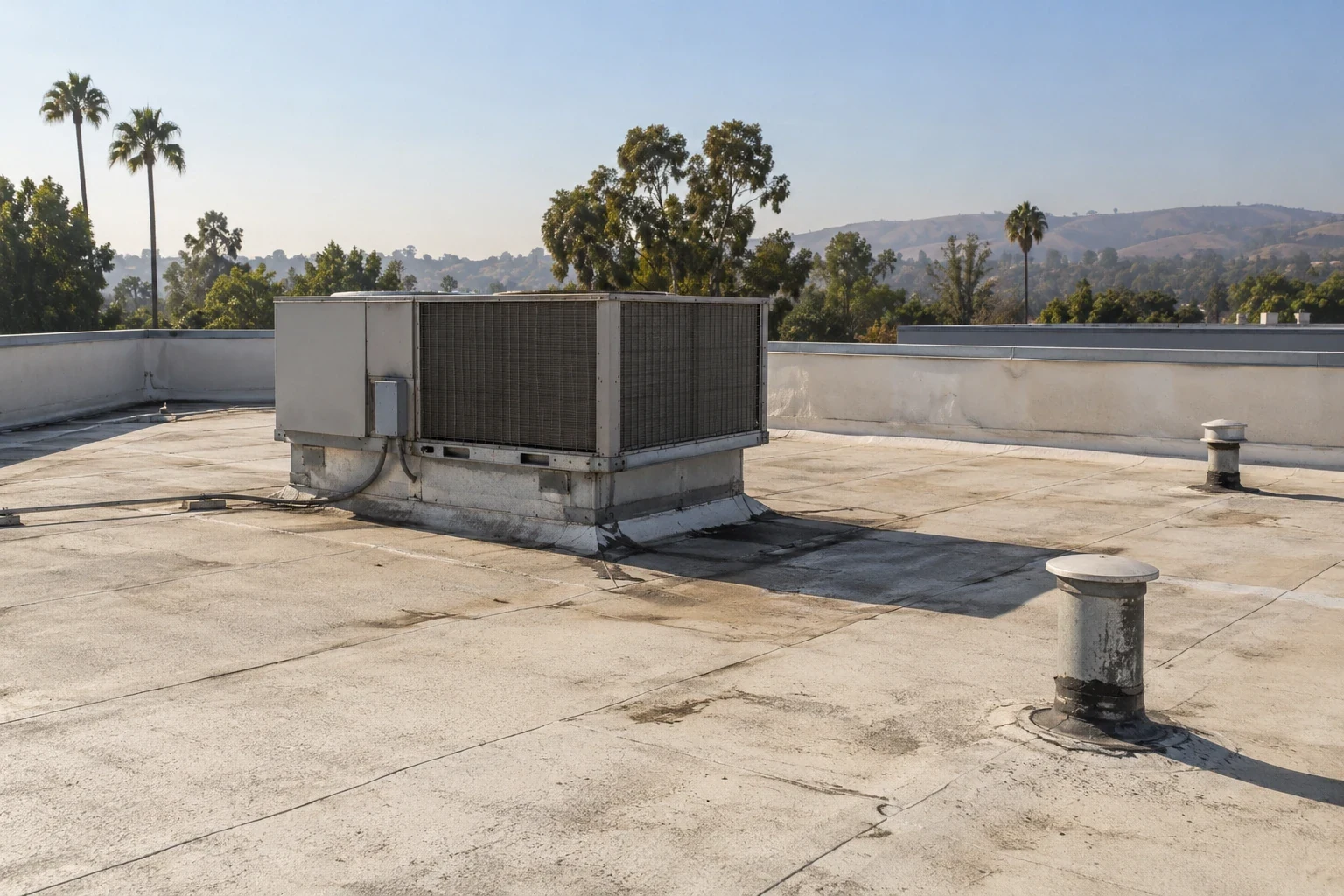
Public Agency Roofing in Huntington Beach, CA
A public counter cannot reopen safely while water and ceiling hazards remain unresolved. We establish the affected building area, authorized facilities contact, and safe inspection route before developing the roof scope. Commercial Roofers Huntington Beach supports public agencies planning repairs in Huntington Beach, CA with clearly located findings and practical protection measures. The owner needs a distinction between work required now and investigation needed before a wider renewal decision.
Huntington Beach has public land uses within a developed mix of commercial, industrial, residential, and open-space areas. Nearby Tustin Town Center includes civic and service functions beside the older commercial core. Public portfolios can therefore contain different access arrangements and operating needs. The actual building, roof condition, and agency rules establish the work sequence rather than a single assumption about government facilities.
Who can authorize the first protection step?
A facilities representative should identify active water, rooms requiring restriction, electrical concerns, and any unstable ceiling condition through the agency's emergency procedures. We coordinate roof access with that representative and identify protection appropriate to the observed opening. Our emergency response operates outside normal office hours, including weekends and holidays, but the permitted action and spending authority need to be clear before work begins.
The work order distinguishes temporary protection from a permanent repair. It identifies the affected roof section, inspection limits, materials or measures used, and follow-up need. Public entities coordinating education facilities can align that process with district roof work priorities. Agency-owned medical properties may require the additional operating coordination involved in healthcare roof protection. We preserve those building-specific restrictions while preparing a concise report for the person authorized to route the next approval.
What makes a roof scope suitable for public review?
An observable defect needs a roof-plan location, description, and proposed correction. We show preparation, compatible materials, removal boundaries, detail connections, and protection of occupied space. Where concealed moisture or deck condition remains unresolved, we identify the test or allowance rather than implying the quantity has been established. The agency can then distinguish priced work from an assumption needing investigation.
A condition report for facilities review should support the scope with photographs and clear findings. Drainage, seams, perimeter attachment, wall transitions, and equipment openings may each need a different correction. We state which section was accessible and what further access changes the recommendation. For competing scopes, that information helps the owner compare like work boundaries. Permit review, design involvement, and procurement requirements should be identified through the agency's process, with roofing responsibilities specified before the project moves into construction.
How can public service continue beside the work area?
Material handling near a public entrance requires a protected route and clear restrictions. We review visitor circulation, staff access, deliveries, emergency paths, and equipment staging with the site contact. Noisy removal and preparation may need a separate window from work that can proceed safely above occupied space. The roof phase should identify the rooms below it and how they will be protected.
Tustin Town Center combines civic functions with central commercial properties, illustrating how public buildings may share approaches with other activity. In the Tustin Town Center area, as elsewhere, actual entrances and lift locations need confirmation. For Huntington Beach facilities, the operating team identifies the required service hours and notice constraints. We set daily closure limits and show what changes if work stops for weather or an unexpected concealed condition. The agency receives a usable service-continuity decision before removal, rather than a broad assurance that construction will have no operational effect.
Which roof conditions justify a capital request?
Isolated flashing defects may support a repair where adjoining material remains suitable. A pattern of repeated seam failures, damaged insulation, poor drainage, or deteriorated decking needs a wider review. We identify the conditions that make renewal necessary and distinguish them from maintenance tasks. Moisture investigation can help define removal where a surface walk does not establish the extent.
A public facility renewal plan compares correction, coating, recover, and replacement according to the actual assembly. Coating requires a compatible, prepared, dry substrate and suitable drainage. Recover must satisfy structural, moisture, attachment, layer, and detail conditions. Replacement can remove damaged material but adds removal exposure and protection needs. The agency should see those consequences alongside the scope. A planned capital project can also coordinate mechanical changes so new curbs and supports are incorporated before the final roofing details are closed.
What does the local code cycle mean for an alteration?
Huntington Beach adopted the 2025 California Building Code for the cycle beginning January 1, 2026. California's 2025 energy standards apply to covered nonresidential permit applications submitted from that date. The applicable alteration requirements should be reviewed for the proposed work, not inferred from the size of the leak that prompted it. We identify the roof assembly and detailing information needed for the project review.
An agency building replacement scope should describe insulation, attachment, drainage, penetrations, and perimeter work as required by the project. Roof access and material storage restrictions remain separate construction planning items. Where design or another trade's work is necessary, we identify the dependency and the information needed before installation. This lets the public owner review the proposed correction with its responsible professionals and approval process. An estimate becomes useful when its included work and outstanding requirements are explicit enough to support that review.
How should weather and completion be reported?
Newport Beach Harbor's climate normals provide a nearby coastal reference with rainfall concentrated during cooler months. A public building program can schedule drainage review and compatible repairs ahead of winter while using current forecasts for exposed work. Santa Ana events can bring warm, dry offshore winds that change handling and temporary protection. We reduce or reschedule exposed tasks where conditions require it and record the roof's status at the stop point.
The completion file identifies finished details, installed materials, approved scope changes, and any interim protection still needing replacement. The return check should have an accountable next step. A public building maintenance sequence can keep drainage and repaired details under review after handoff. Share the affected facility, interior water report, roof plan, access contact, and service hours. We will define the protection or inspection action and the evidence needed for the agency's next work decision.
Commercial Roofing Questions
Can an urgent leak be addressed before a larger project is procured?
The agency can authorize a defined protection or repair scope through its applicable process. We identify the immediate need, work limit, and remaining permanent correction. That separation helps facilities act on an active water problem while keeping the later project requirements and approvals clear.
What if roof access is restricted to escorted hours?
Provide the authorized window and access procedures before the visit. We define what can be inspected and safely closed within that period. Inaccessible sections stay identified in the report so the agency can arrange a return instead of assuming the first visit covered the entire building.
How do you handle damage discovered after approved removal begins?
We document the exposed condition, affected boundary, and proposed correction, then route the scope change to the authorized representative. Temporary protection and the daily closure plan address the open area while that decision is made. The final report connects the discovery to the approved work.
Which records help facilities assess the next rain report?
Keep roof plans, completed repair locations, photos, outlet work, and temporary-measure records together. A new room report can then be compared with the actual roof boundary and remaining investigation. We identify whether the next action is a return check, a different leak investigation, or additional correction.

Proudly Serving Huntington Beach and Nearby Cities

Commercial Roofers Huntington Beach
Huntington Beach, Westminster, Seal Beach, Fountain Valley,
Garden Grove, Newport Beach and nearby Orange County cities