
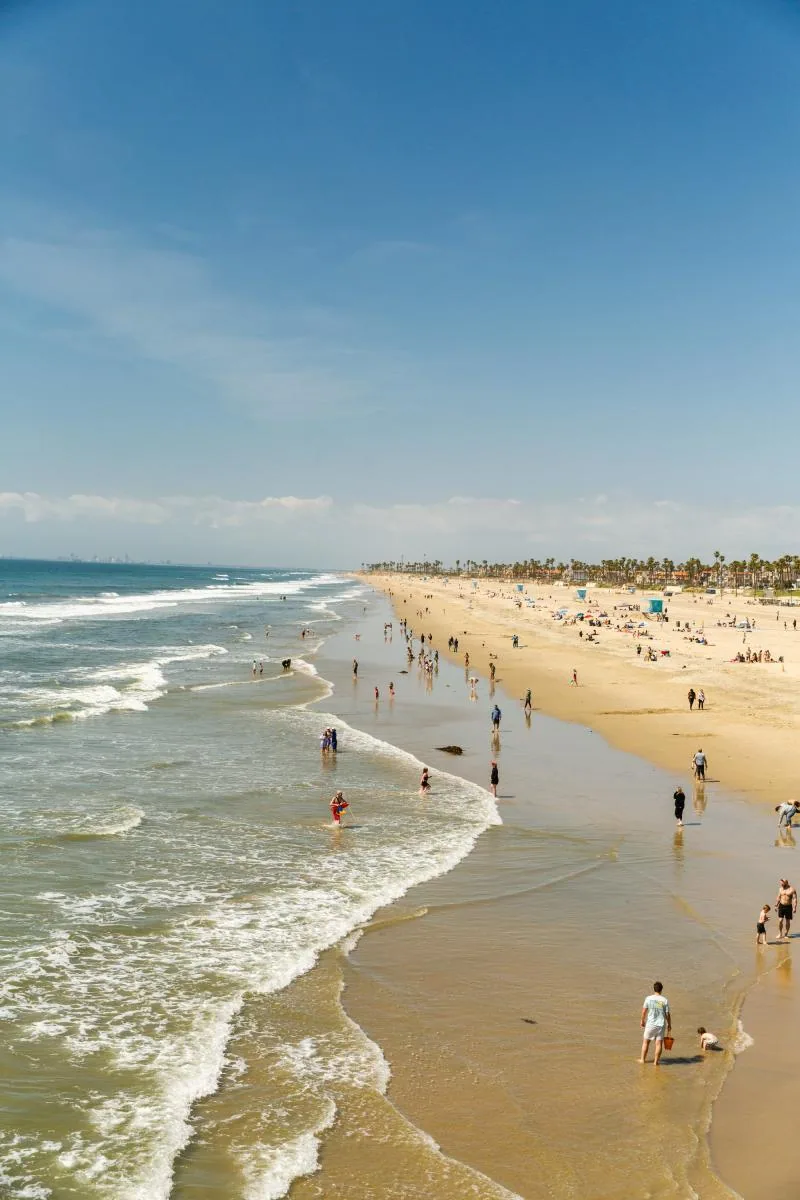
Commercial Roofing in Huntington Beach, CA
Commercial roof work in Huntington Beach, CA starts with the room that cannot remain exposed. A warehouse inventory area, an occupied office, and a public counter each require a different protection boundary before roofing opens overhead. Commercial Roofers Huntington Beach inspects the affected roof and explains whether the immediate task is a flashing correction, moisture investigation, or temporary closure. Give us the interior report and building access contact so that first visit reaches the right area.
The city combines industrial employment districts with commercial, residential, mixed-use, and public land. Gothard Street and Northwest Industrial concentrate its industrial activity, while the broader economy includes professional offices and healthcare services. Those differences matter when setting work hours and interior protection. We examine each building's installed assembly rather than selecting a roof method from its use alone. Urgent water entry can receive attention after hours, during weekends, and on holidays once safe access is arranged.
Which roof detail connects to the interior report?
A drip near a rooftop unit needs a check of the unit perimeter and its mechanical drainage. We compare the reported room with seams, penetrations, wall connections, and roof outlets, recording the relationship on a marked roof drawing. That inspection separates an opening in the roofing from a plumbing or condensate problem. If another trade needs to examine a component, we identify the required handoff instead of covering an intact membrane beneath an unresolved water mechanism.
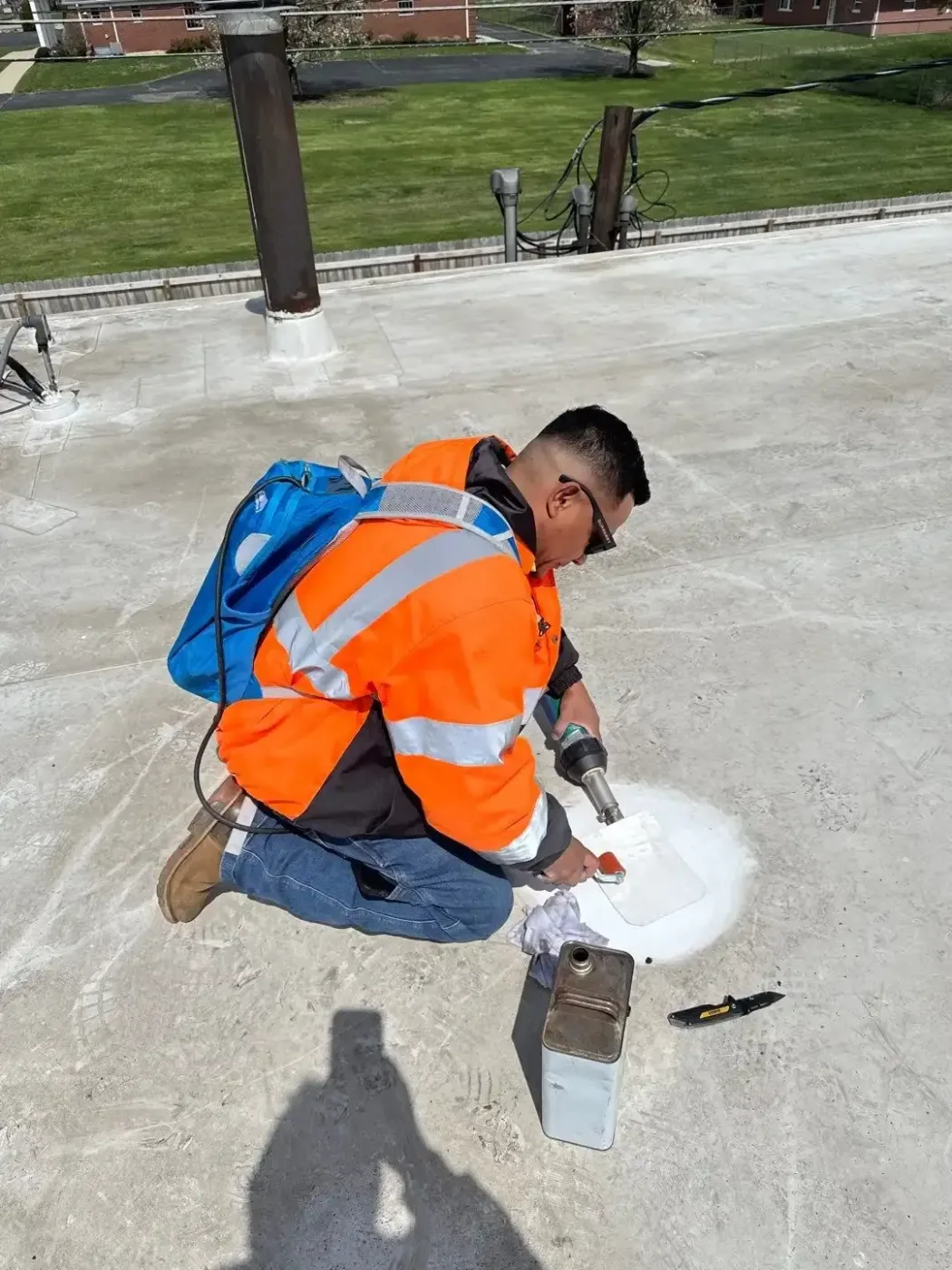
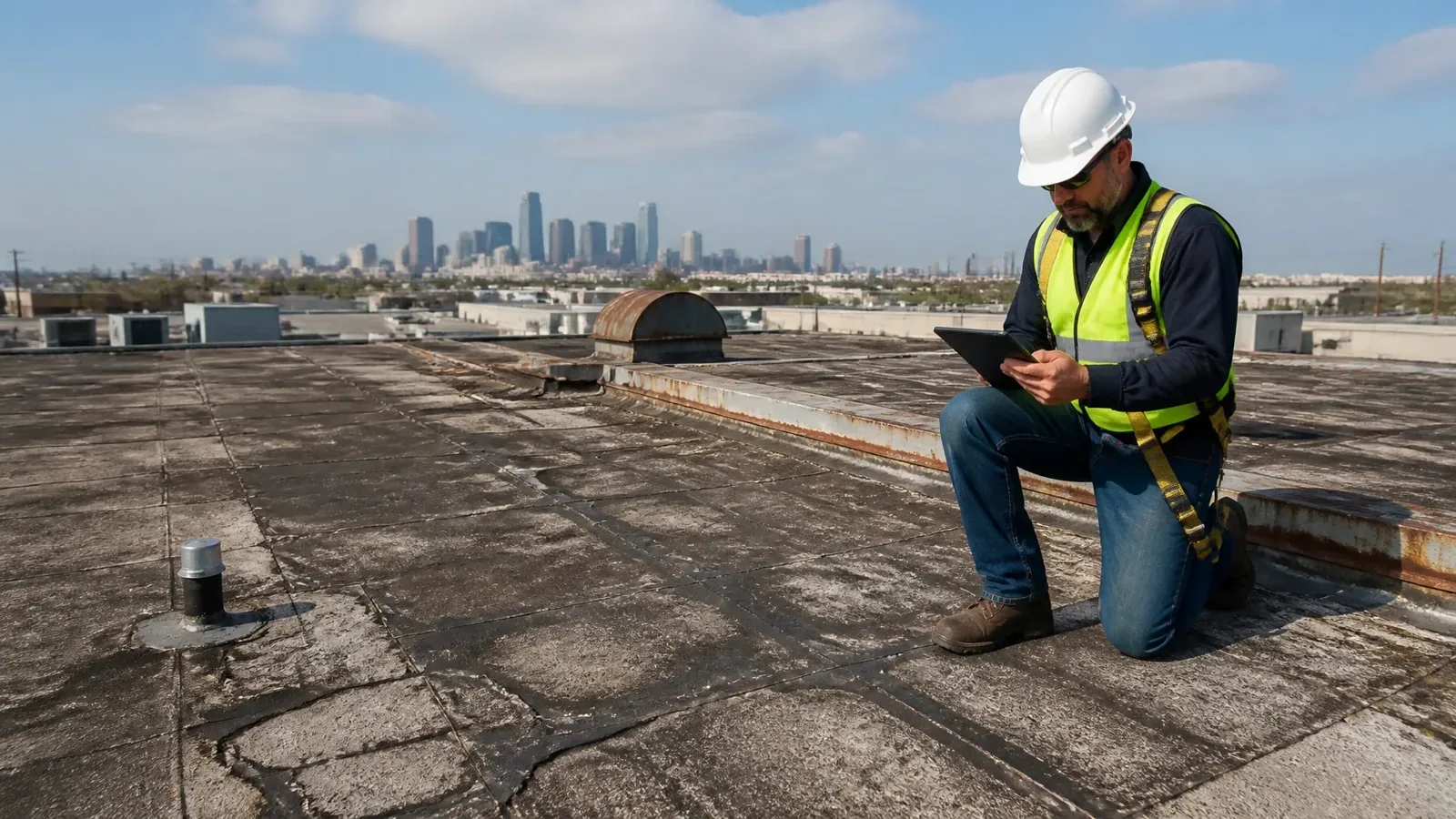
Loose coping, displaced supports, and split patches also require attention when the interior remains dry. A hands-on inspection of roof connections and drainage can establish which details need repair before rainfall reaches them. Photographs include surrounding features as well as close views, allowing the owner to locate the finding later. Roof sections that cannot be accessed remain identified, with a useful next visit or test assigned rather than a broad condition judgment for unseen material.
Can the roof discharge water without retaining a pool?
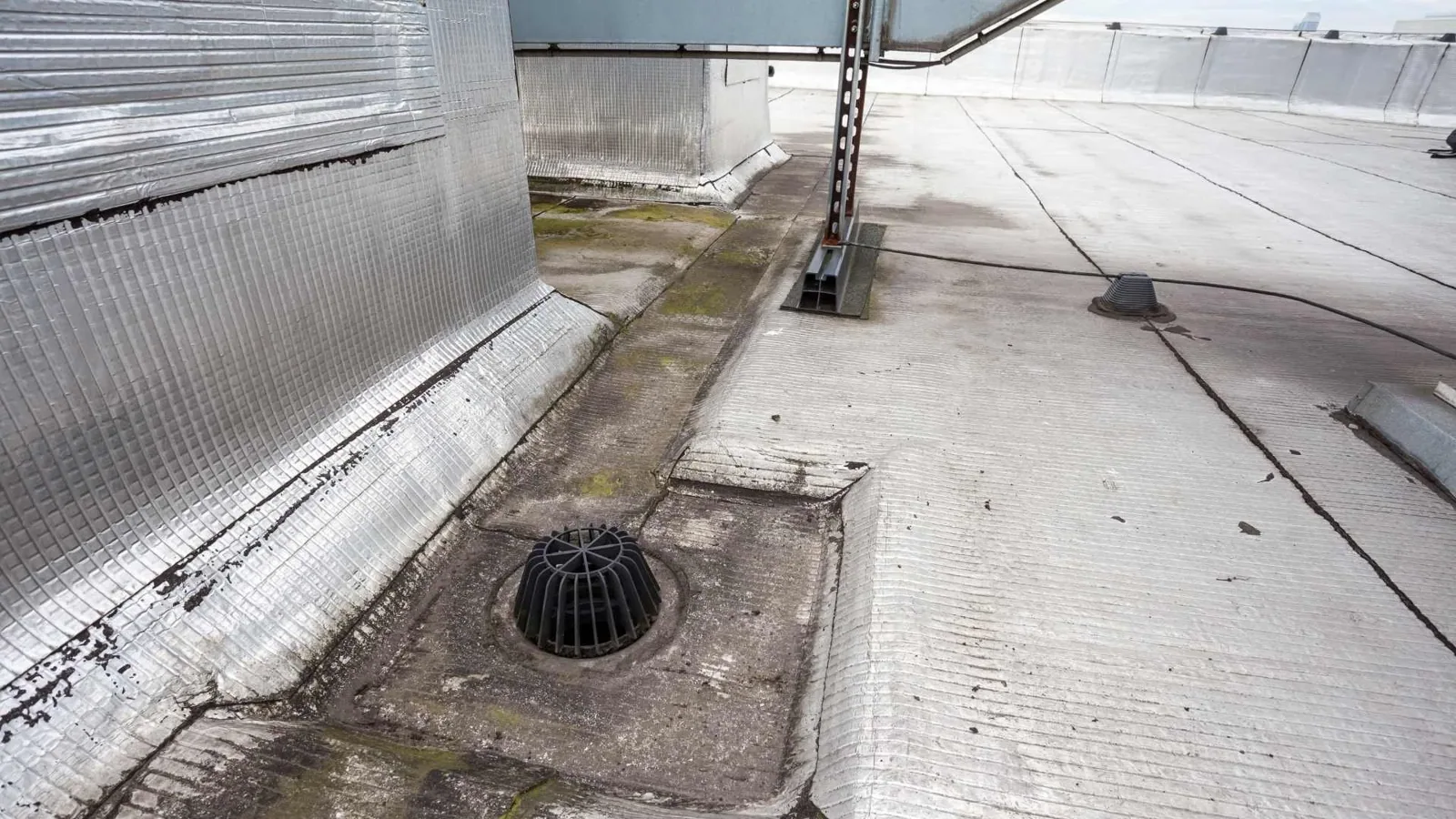
Sediment beside an outlet can show where water remained after the last rain. We inspect the bowl, membrane connection, scupper opening, and accessible discharge, then compare them with the surrounding roof elevations. Cleaning corrects a debris obstruction; it does not raise a depression below the inlet. A damaged drain fitting, settled insulation, or downstream restriction calls for a different correction and sometimes another trade. The repair scope should show which condition was found.
Nearby Newport Beach Harbor records a winter-weighted rainfall pattern with summer precipitation close to absent in the normal record. That gives owners a useful seasonal reason to inspect drainage before the wetter interval, while actual forecasts determine exposed construction dates. During repairs to roof outlets and their flashing, temporary materials must preserve runoff and overflow routes. We also check where discharge reaches occupied entrances or service areas, because moving water off the roof is only part of managing its path.
What determines whether existing layers can remain?
Soft insulation or a recurring stain across several rooms can change an otherwise localized repair. We review accessible layers and choose confirmation openings where moisture or substrate condition affects removal. A roof can look uniform while containing dry serviceable material beside wet or poorly attached areas. We map those differences before proposing retention. The owner receives the intended removal limit and the finding that would require a revised boundary if concealed conditions differ during work.
A recover needs an existing assembly suitable for the added construction, including its attachment, weight, moisture condition, and applicable review. Coating also requires compatibility and a stable receiving surface after failed details are corrected. Broad deterioration may instead call for replacement that addresses the concealed roof layers. We compare those choices through the material that each removes or retains, not simply through membrane appearance. Drain heights, wall flashing, and equipment curbs must still accommodate the finished assembly.
How will the work fit the building's operating day?
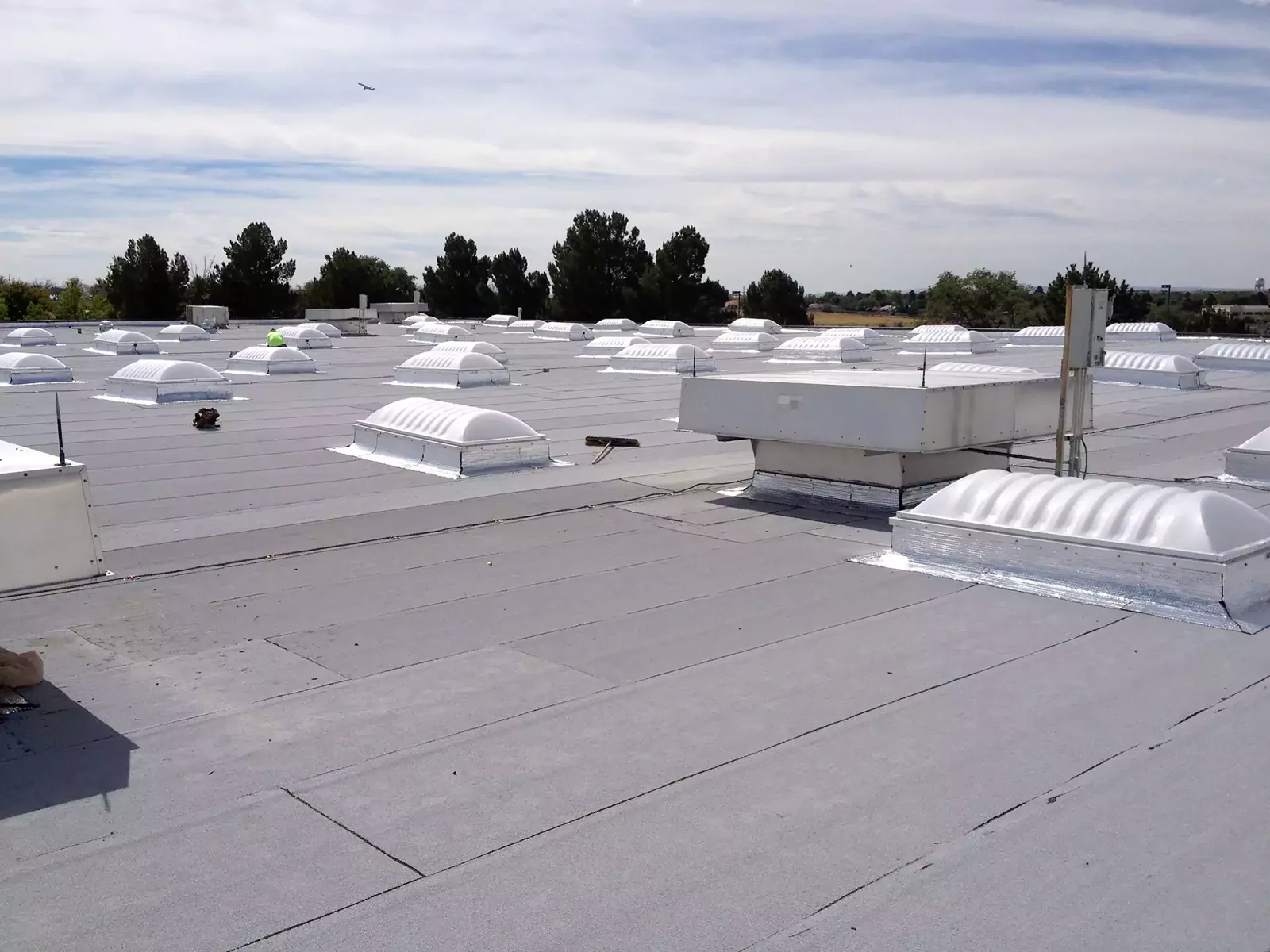
Material delivery can conflict with a loading shift before roofing has even started. We review the usable staging area, interior occupancy, air intakes, and movement routes with the building contact. A work zone above stock needs contents protection and a removal route that stays away from loading activity. An office or clinical area may require noise and ventilation coordination. The daily opening is sized to fit those restrictions and the available closing window.
For roof work in the Gothard Street district, the operating discussion starts with the manufacturing, warehouse, or office function actually below the work. An owner coordinating buildings in the Northwest Industrial area can use the same inspection standard while keeping separate tenant schedules. We record the working route for each property, including where lifts and removed material can be placed. A regional district name cannot establish that a particular yard has spare room for construction.
Which conditions could change the planned installation?
A damp receiving surface can delay adhesion or preparation even on a day without forecast rain. We assess the material and manufacturer's applicable installation requirements before opening the work area. Offshore Santa Ana conditions can also bring hotter, drier coastal weather and change exposed handling or lifting decisions. The crew needs a stopping detail that closes the roof safely if the working interval shortens. Roof removal proceeds only while the planned dry-in boundary remains achievable.
Huntington Beach's current building-code adoption uses the 2025 California Building Code, effective with the cycle beginning in 2026. Proposed alteration work requires its applicable permit and design review identified before construction. Insulation changes, revised attachment, and drainage modifications can affect that scope. We assemble the roof information needed for the project team to assess those requirements. Uncertain deck condition receives a defined examination or structural referral rather than being hidden inside a membrane selection.
What should the owner receive with the finished work?
Restricted access, wet-layer disposal, fabricated edge details, and equipment moves can change the effort beyond the visible patch. We identify those drivers in the proposed scope, then photograph concealed findings that alter it during removal. Completed work is marked by roof position, with the repaired connections and retained adjacent roofing shown together. A temporary closure stays distinct from permanent work so the next facilities contact can tell what still requires attention.
A written roof record connected to the building plan supports future maintenance and replacement decisions. It should retain inspection dates, actual repairs, drainage observations, and unresolved trade items. The return check revisits the original symptom after suitable rainfall or an approved test. Share subsequent equipment changes as well, since a new support or opening can affect the same repaired area. Clear roof positions make that comparison useful without treating every later drip as failure of the entire assembly.
Commercial Roofing Questions
Can you inspect an industrial roof and an office roof during the same property visit?
Separate roof access and interior contacts should be arranged for both areas. We examine their assemblies individually and check the connecting walls or drainage where relevant. A combined visit can coordinate access, but the findings and repair boundaries stay attached to the roof section they describe.
Should a dry interior delay inspection of loose perimeter metal?
Moving metal can expose a roof termination or create an overhead hazard before water appears indoors. Keep people clear of the affected edge and arrange examination. We check the receiver and neighboring attachment, then identify securing work and the permanent connection that needs correction.
Why does the replacement scope include equipment curb changes?
A thicker assembly can reduce available flashing clearance around existing equipment. We assess that relationship before installation and coordinate necessary curb work with the equipment trade. Including it early avoids finishing a membrane against a transition that cannot receive the required detail.
What helps you plan around a building that opens before sunrise?
Provide arrival times, active entrances, delivery periods, and a contact available during the work window. We separate noisy or obstructive tasks from those movements where practical. The agreed sequence also identifies interior protection and the roof area that can close within the shift.

Proudly Serving Huntington Beach and Nearby Cities

Commercial Roofers Huntington Beach
Huntington Beach, Westminster, Seal Beach, Fountain Valley,
Garden Grove, Newport Beach and nearby Orange County cities