
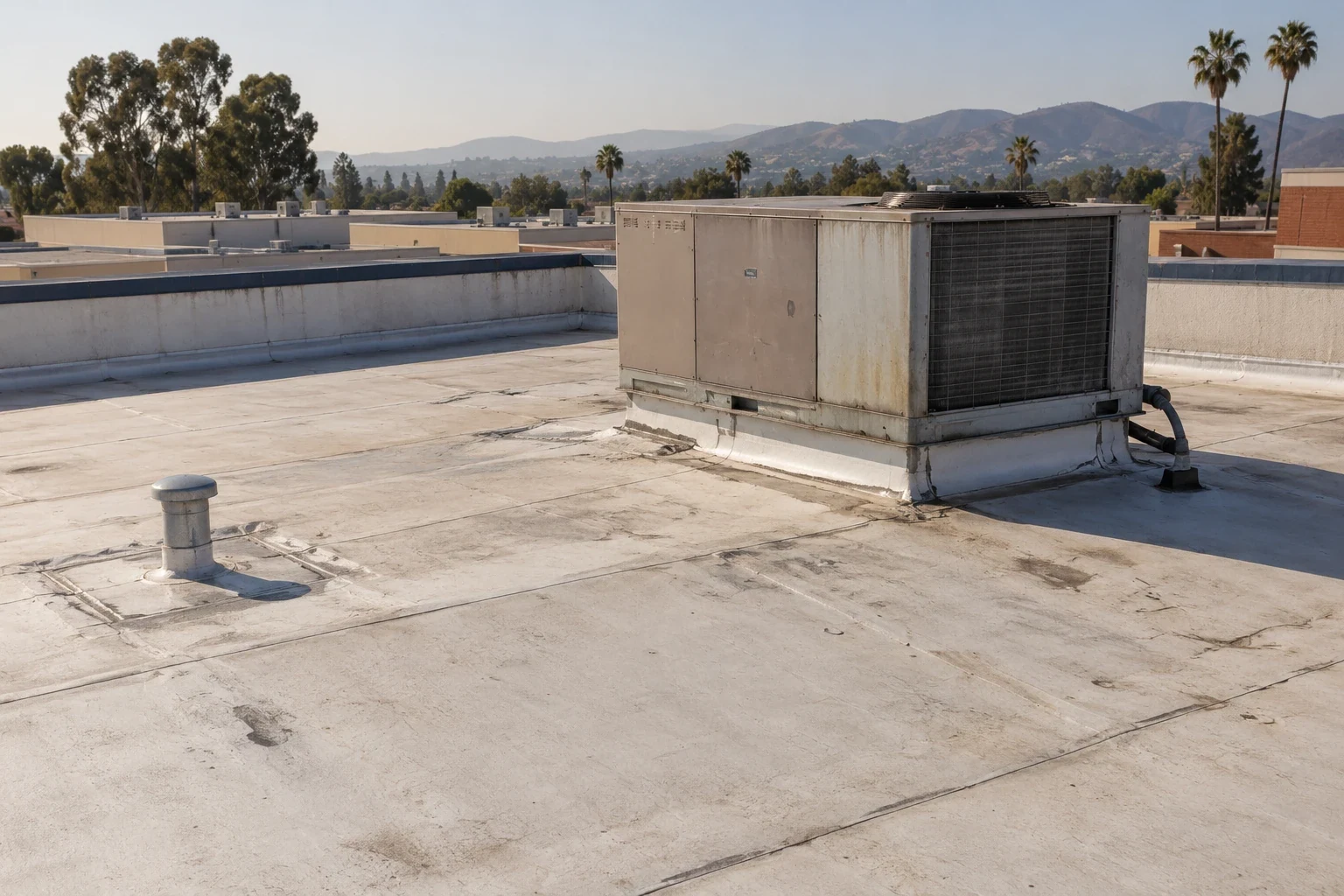
School District Roofing in Huntington Beach, CA
Several campus water reports need a district priority list that preserves the affected room at each site. We establish the immediate interior risk, authorized access contact, and available inspection window before assigning a roof action. Commercial Roofers Huntington Beach works with school districts in Huntington Beach, CA to separate urgent protection from investigation and planned renewal. A campus schedule should show what students and staff can use safely while roof work is underway.
Huntington Beach includes public uses alongside commercial and industrial districts. Its marine-coast setting shares a nearby seasonal reference with Newport Beach Harbor, where rainfall normals are weighted toward winter. That pattern makes pre-rain drainage checks and suitable dry work periods useful planning considerations. The actual school roof and the district's operating rules still establish each work boundary.
Which campus report moves to the front of the queue?
Active water above a classroom, kitchen, electrical area, or occupied corridor needs an immediate campus report. School personnel should restrict hazardous spaces and follow district procedures for ceiling and electrical concerns. We identify a safe roof approach with the authorized contact, then determine whether temporary cover or another protection measure is appropriate. Response can be arranged at any hour, including school holidays, with access and weather conditions assessed first.
Reports from different campuses should retain room identifiers, timing, photos where available, and any previous repair location. A recurring drip after a recent correction calls for comparison with that repair, not automatic repetition of it. Districts coordinating public oversight can align public owner roof approvals with the actual urgent need. If leased facilities are involved, property management coordination helps identify access and repair responsibility without delaying safe interior protection.
How does the district compare unlike school roofs?
A campus can have separate classroom wings, administrative areas, shared-use buildings, or other roof sections. We confirm what is present and record each assembly independently. Differences in drain layout, repair history, insulation moisture, and access can produce different priorities within the same site. A district-wide rating should not conceal a leaking small section beside a larger sound one.
A campus roof condition report marks observations on a roof plan and identifies what needs further testing. We explain which concerns affect immediate room use and which support future renewal. A surface survey can describe seams and flashing without fully resolving concealed moisture. Where that uncertainty changes scope, testing should be authorized separately. The district then has comparable decision fields across schools while preserving the roof-specific details needed to plan repairs, communicate with staff, and review a capital request.
Which work fits a school closure?
A closure may allow noisy preparation or broader access, but the roof still needs suitable weather and a complete daily dry-in sequence. We review arrival and dismissal routes, staff activity, deliveries, site events, and any programs continuing during the closure. Material staging should not block required emergency routes or leave school circulation dependent on an unfinished work zone.
Downtown Huntington Beach has pedestrian-oriented retail streets, while Northwest Industrial includes office and industrial buildings. A school near either setting needs its own entrance and staging assessment rather than an assumed district-wide access plan. For facilities in the Huntington Beach service area, we confirm the actual roof hatch, ladder route, escort need, and restricted spaces. A phased roof replacement over occupied rooms can divide work by section when a full closure is unavailable. Each phase identifies the rooms below and the conditions for returning them to normal use.
What does the district need before approving removal?
A replacement proposal should identify retained and removed layers, insulation work, perimeter reconstruction, flashing changes, and the daily opening boundary. Selective tests may clarify wet material or deck condition before the district authorizes a wider scope. Where uncertainty remains, we show the allowance or approval needed if concealed damage is encountered. The campus contact should know what happens if the planned removal reveals a larger affected area.
Recover and coating alternatives require the existing assembly to meet the relevant suitability conditions. Coating needs compatible, sound, dry material and suitable drainage. Recover adds weight and height, so attachment, structural considerations, layer limits, moisture, and transitions require evaluation. Through district roof capital planning, we explain the technical basis and operational consequences of each choice. A smaller initial work boundary is useful only if it addresses the defect; the district should be able to distinguish a contained repair from renewal deferred by temporary protection.
How should drain work and weather checks be scheduled?
Debris at a roof outlet can interfere with drainage without a visible tear in the field membrane. We inspect strainers, scupper openings, gutters, and low points, then confirm the route water is intended to follow. Mechanical equipment or an added walkway may alter that route. The condition report identifies whether cleaning, a roof correction, or another trade's piping investigation is needed.
Newport Beach Harbor has near-zero summer average precipitation, while cooler months carry most normal rain. Districts can use suitable drier windows for preparation and openings, with current weather checked before work. Santa Ana events can bring warm, dry offshore winds that affect handling, temporary covers, and exposed boundaries. A school roof outlet correction should be closed and recorded before forecast rain. We identify the maintenance need at each campus so one completed cleaning visit does not leave a separate damaged outlet unresolved.
What should campus staff receive at handoff?
The campus handoff identifies completed roof sections, repairs, installed materials, and any restrictions still required. Photos correspond to roof-plan marks so district maintenance personnel can locate the work. Temporary covers and unresolved testing remain clearly identified, along with the next return action. The school decides room release through its own procedures using that current roof status.
Keep the repaired roof information with the district's equipment and maintenance records. Future rooftop service should respect new flashing and avoid unplanned penetrations. A school-specific roof scope documents the building details while the district tracks priorities across sites. Send campus reports, roof diagrams, calendar constraints, and the authorized access contact. We can establish the first safe inspection and distinguish immediate corrections from work that needs a longer closure. The resulting program gives each school a defined next action rather than a general instruction to wait for district-wide replacement.
Commercial Roofing Questions
Can the district group inspections without grouping all repairs?
A coordinated survey schedule can improve access planning while leaving each campus with its own repair scope. We identify active leaks, visible defects, and testing needs separately. The district can then authorize urgent work before deciding how to package larger renewal projects.
What if a school closure ends before the roof phase is complete?
The daily work boundary should already include a closure method and interior restrictions. We report completed sections and temporary protection before the school resumes its schedule. Any unfinished permanent detail receives a return action so campus staff can distinguish protected interim work from final completion.
Does a dry classroom during summer establish that the roof is sound?
Dry weather can leave a previous water route inactive. We inspect the roof details, compare repair history, and recommend testing where concealed moisture could affect renewal. The district should use the actual findings and limits rather than assume the absence of a current drip resolves an earlier report.
How can maintenance staff prepare for the first survey?
Gather room-specific water reports, roof plans, previous repair descriptions, access rules, and calendar restrictions. Identify equipment that requires special coordination and areas the inspection cannot enter. We use those details to define a productive site visit and the next work authorization.

Proudly Serving Huntington Beach and Nearby Cities

Commercial Roofers Huntington Beach
Huntington Beach, Westminster, Seal Beach, Fountain Valley,
Garden Grove, Newport Beach and nearby Orange County cities