
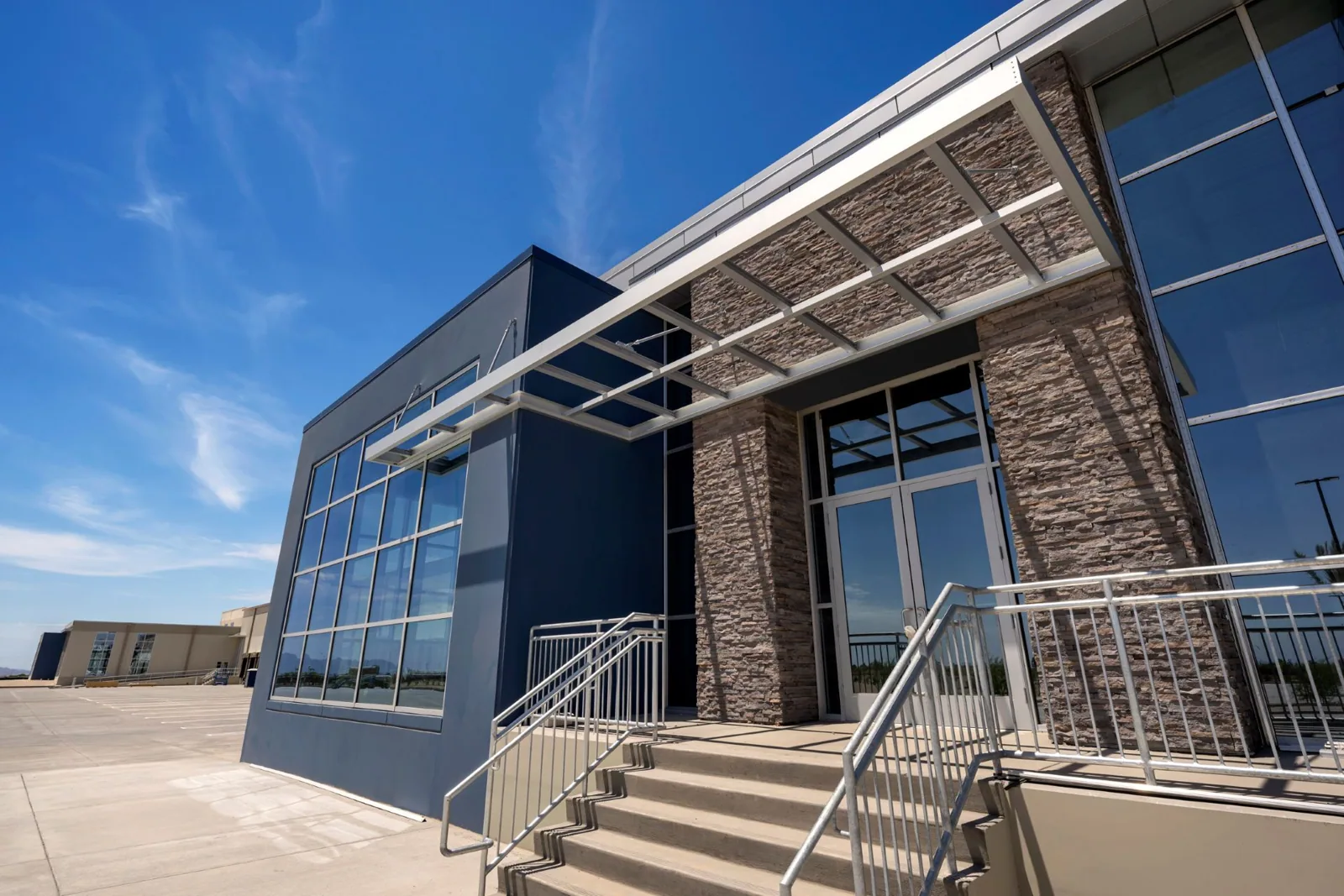
Cold Storage Roofing in Huntington Beach, CA
A freezer-roof leak can affect temperature control before water reaches a visible ceiling. The first call should identify the room, refrigeration status, stored product, and the roof area above it. We help secure active water entry, then inspect the membrane, flashing, insulation, and vapor-control details before proposing a repair. A temperature-controlled building in Huntington Beach, CA, still needs its own field assessment: coastal climate normals do not reveal its roof layers, mechanical conditions, or moisture path.
Gothard Street includes warehousing and manufacturing uses, while the Northwest Industrial Subarea contains industrial, research-technology, office, and business-park properties. Newport Beach Harbor normals show a mild coastal baseline, with rain concentrated in cooler months. Those local contexts help with access and seasonal scheduling; the cold room's interior conditions and the installed roof assembly set the technical scope. We coordinate with the refrigeration contact before any work near equipment, intakes, or insulated wall transitions.
Where can warm, moist air reach the cold side?
Air leakage at a curb, pipe sleeve, wall transition, or panel joint can move moisture toward a colder layer. The visible symptom may be condensation, frost, wet insulation, or an interior stain, but each needs its own check. We inspect the roof-side flashing and membrane, ask when the condition occurs, and compare it with refrigeration cycles and maintenance records. The repair plan should identify whether the defect lies in roofing, mechanical work, wall construction, or more than one connection.
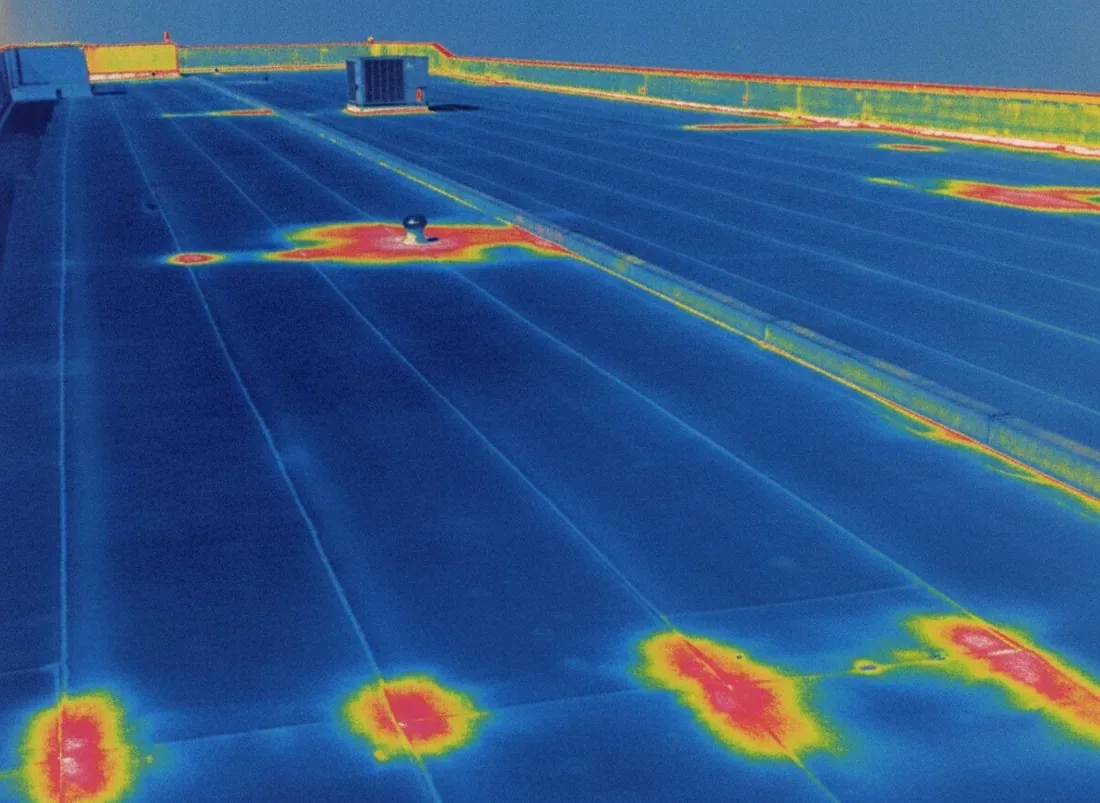
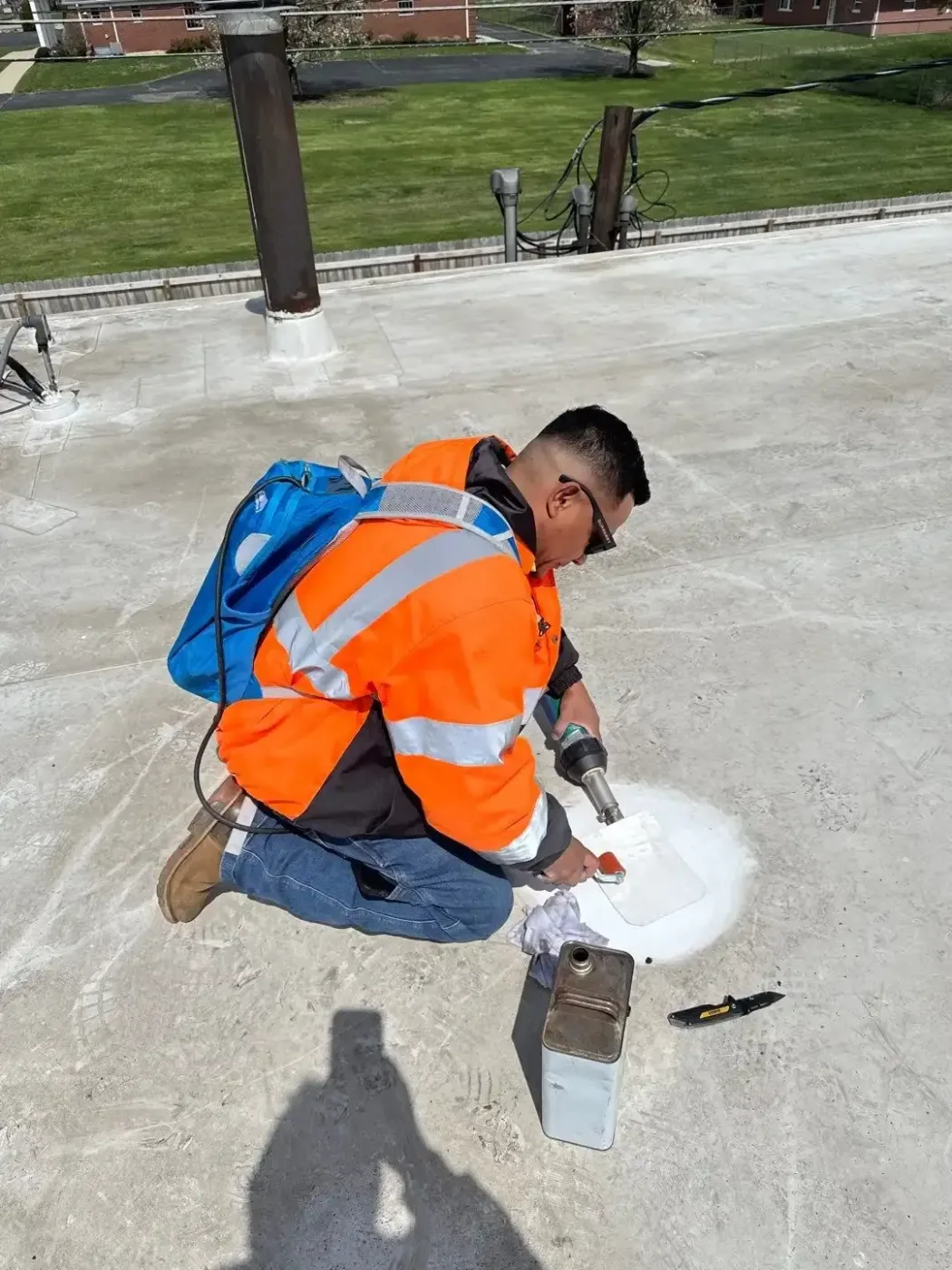
Freezer rooms may use a separate vapor retarder beneath the roof assembly. Cutting into the wrong layer or sealing a wet interface can trap moisture and complicate the repair. We review available drawings, locate the existing assembly, and mark a limited test area when hidden conditions affect the recommendation. A moisture survey may help map areas for confirmation; test cuts establish the material condition at their locations and require proper restoration of each layer.
What must stay online during roof work?
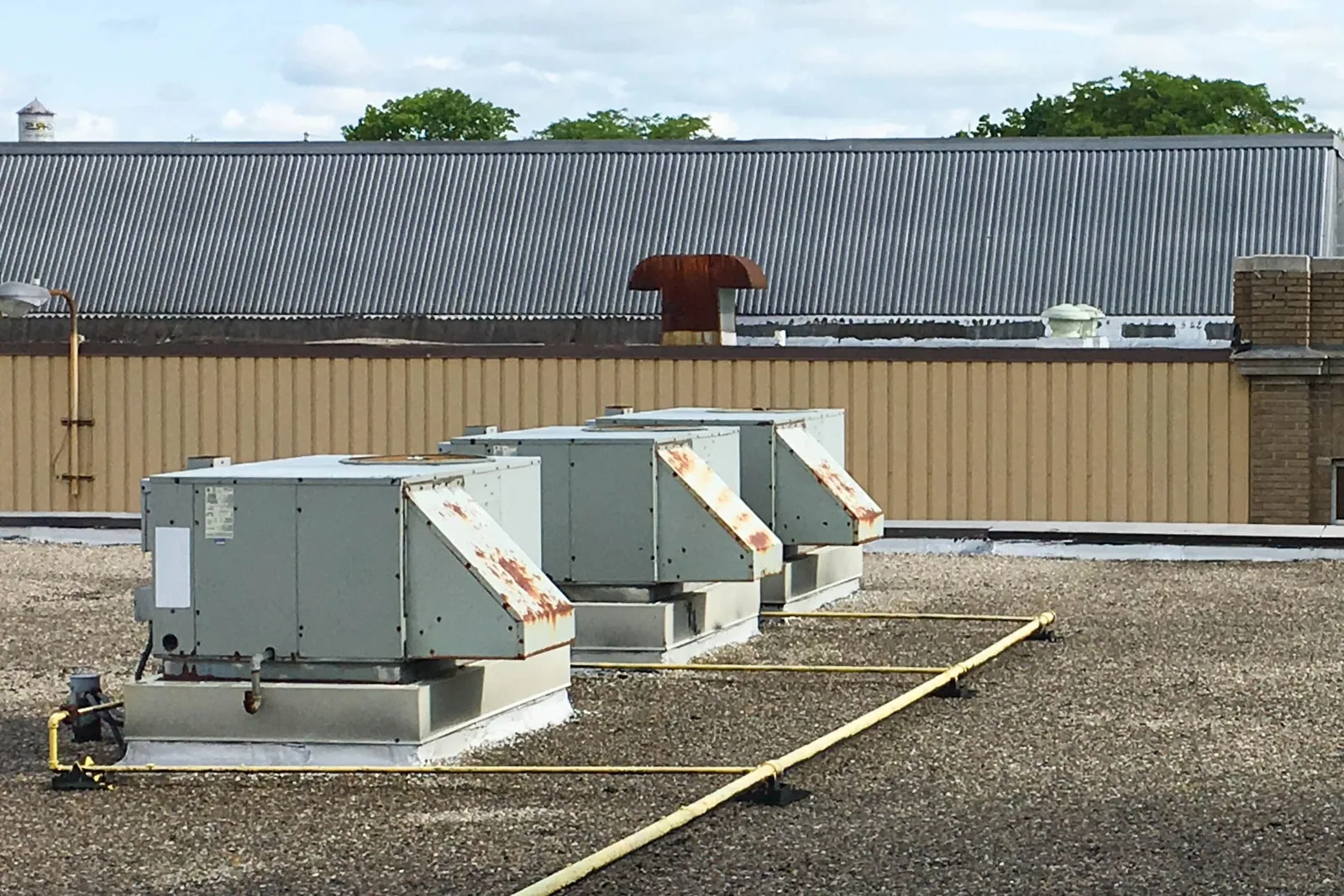
Before staging, identify evaporators, condensers, refrigerant lines, electrical routes, roof hatches, and service clearances. The refrigeration contractor confirms which equipment can remain in operation and which connection requires an isolation window. Roofing scope should state who disconnects, protects, and restores each system interface. We do not assume a unit can be lifted or a process paused from its location on the roof; the facility team sets that sequence with the mechanical trade.
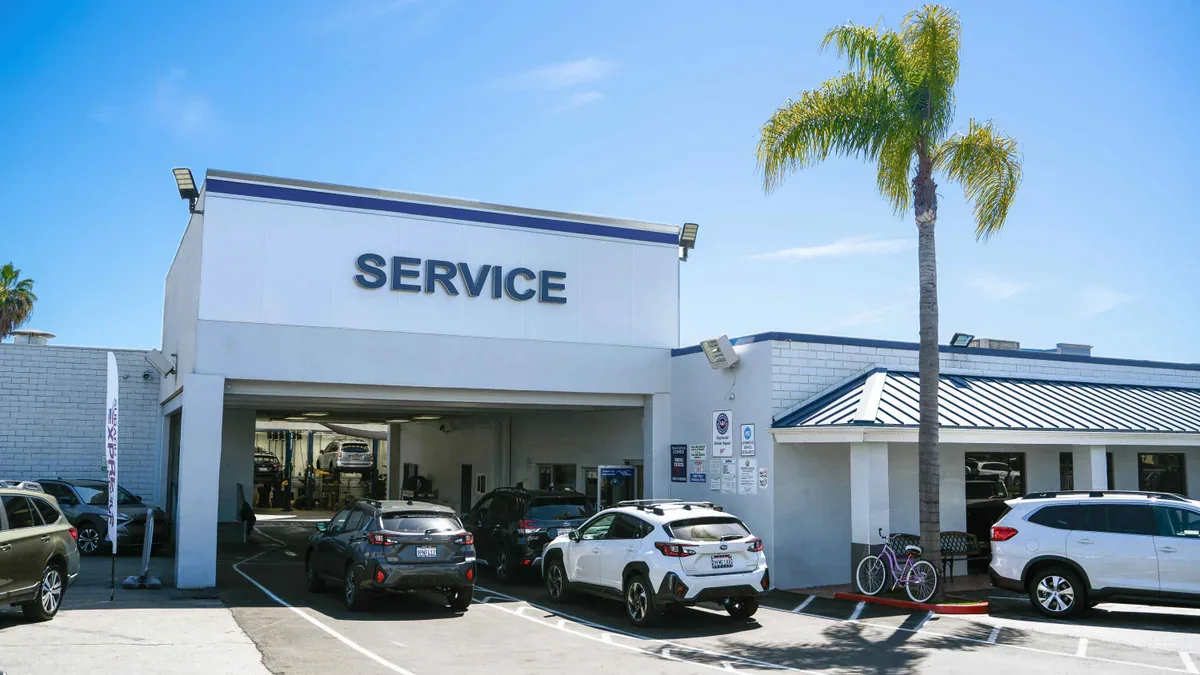
Delivery and work access also affect product protection. Gothard Street's warehouse properties sit among manufacturing and auto-service uses; a Gothard Street roof visit may share yard circulation with those operations. A curb and support review measures the transition and confirms service clearance before a new membrane is installed. The site's operations lead identifies where a lift, crane, or temporary material staging can occur without interrupting cold-room access.
How should drainage and interior moisture be separated?
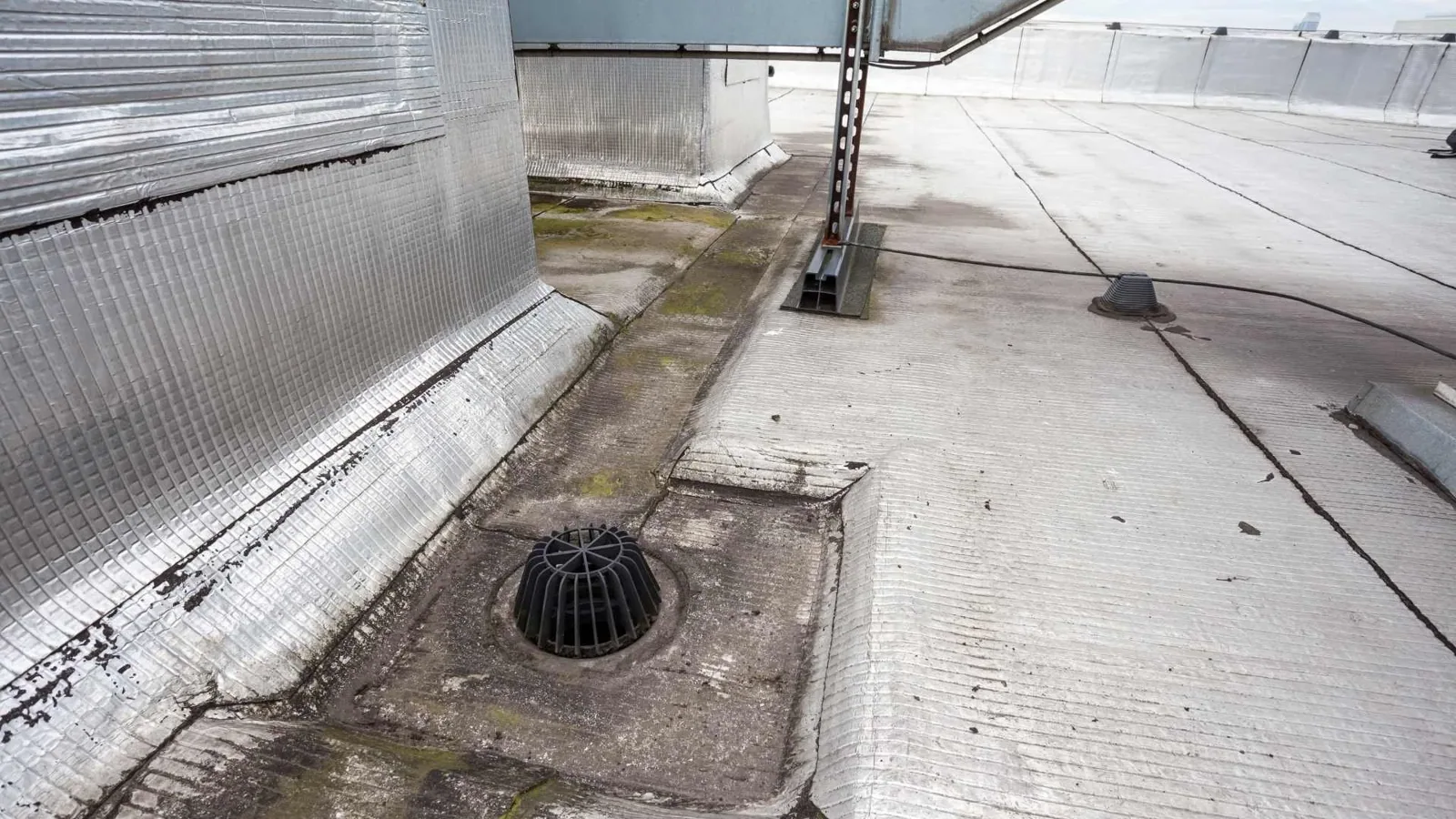
A blocked drain can hold water on the roof, but condensation inside a cold room follows another mechanism. We trace the surface slope to each drain, scupper, and overflow, inspect the membrane around the outlet, and compare water marks with reported interior conditions. Keep outlet restrictions and vapor-control concerns as separate findings until inspection connects them. That distinction prevents a drain cleaning from standing in for a failed roof transition or an interior humidity issue.
Rainfall is concentrated in the cooler season at the nearby Newport Beach Harbor station, so a clear drain route matters when seasonal storms arrive. The actual roof controls how water leaves: tapered insulation, deck slope, outlet height, and overflow capacity are building-specific. A drain and scupper inspection can identify outlet maintenance or repair. If a leak path remains unclear, a roof inspection records seams, curbs, and nearby layers against the room report.
Can repairs fit the refrigeration schedule?
A work window should account for delivery cutoffs, freezer access, product transfer, mechanical attendance, and the time needed to restore each roof layer. We divide the project into areas that can be opened and closed securely within that window. The daily plan names the dry-in boundary, who checks interior protection, and the condition that stops work. If hidden insulation or deck damage changes the sequence, we protect the opening and get direction before moving beyond the agreed scope.
Santa Ana winds can bring warm, dry offshore conditions and higher temperatures along the coast. We check live wind, surface temperature, and material requirements before applying adhesives, coatings, or temporary covers. Newport Beach Harbor normals help describe the regional baseline, but they are not a job-day forecast. The facility contact receives a status update if the work window shifts, and the cold-storage team confirms any action needed to preserve product or equipment operation.
Which roof option fits the existing layers?
A localized repair is appropriate when the membrane and adjacent insulation are dry and attached, and the flashing can tie into sound material. A recover review checks existing layers, moisture, deck condition, drainage, edge height, and the added load and height of another assembly. If wet insulation extends beyond the opening or the vapor retarder is discontinuous, patching only the top surface may leave the cause unresolved. The recommendation states which layers are confirmed and which need testing.
For broader work, replacement planning includes vapor-control details, insulation thickness, cover board, equipment curbs, wall transitions, drains, and temporary interior protection. A warehouse roof inspection may share questions about loading and access, while cold storage adds temperature separation and mechanical coordination. A replacement scope should show sequencing around product storage. A distribution center roof review shares dock and inventory concerns, while a freezer assembly adds tighter temperature and vapor-control requirements. Where TPO is considered, a TPO system review compares the assembly with the approved details and existing conditions.
What should the facility file retain?
Keep the room report, refrigeration log, test locations, roof-zone photographs, material records, and daily closeout together. The turnover should state whether each layer was opened, restored, or left for follow-up and who accepted the mechanical handoff. Mark the completed detail and any remaining monitoring point on the roof plan. A later service visit can compare the condition with a baseline rather than guess which curb or wall joint changed.
For a facility in Huntington Beach's Gothard Street or Northwest Industrial area, send the roof plan, refrigeration schedule, equipment list, interior moisture reports, access restrictions, and site contact before inspection. The property team can then coordinate a visit without implying that every building in either subarea has the same assembly. We return a roof-specific recommendation, identify what remains uncertain, and explain which test or repair would resolve the next decision.
Commercial Roofing Questions
Could frost or condensation come from the roof assembly?
It can, particularly where warm moist air reaches a colder layer, but an interior symptom alone does not locate the opening. We inspect penetrations, vapor-control transitions, membrane, and refrigeration records before assigning the responsible detail.
Can a roofer work while the freezer remains in service?
Some work can proceed with the refrigeration system operating if access, vapor protection, and the roof opening can be controlled. We coordinate shutdowns or lifting with the facility and mechanical contacts before setting the work window.
How do you prevent moisture from being trapped under a repair?
We identify the assembly and test suspect insulation when its condition changes the scope. The repair detail addresses each layer that is opened, and the closeout records the area and restoration method.
What should happen if a leak reaches product storage?
The facility team should protect or move exposed goods when safe and report the room, time, and refrigeration status. We secure the roof opening, document the affected zone, and coordinate the permanent correction with operations.
Does every cold-storage reroof need a vapor retarder?
The assembly design and temperature conditions determine the vapor-control approach. We document existing layers and equipment interfaces so the project designer can specify a compatible system rather than assume one detail fits every building.

Proudly Serving Huntington Beach and Nearby Cities
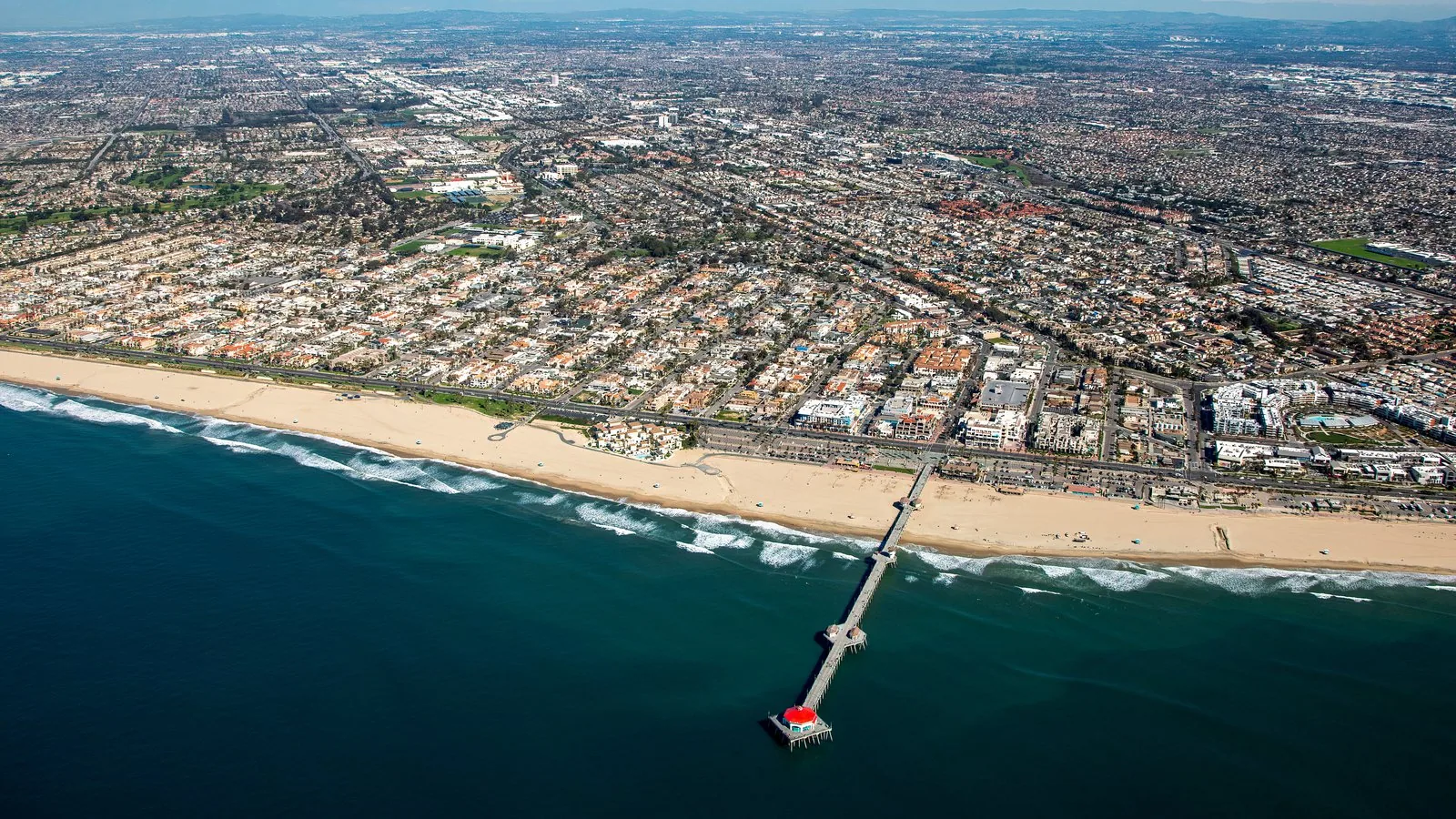
Commercial Roofers Huntington Beach
Huntington Beach, Westminster, Seal Beach, Fountain Valley,
Garden Grove, Newport Beach and nearby Orange County cities