

Investor and REIT Roofing in Huntington Beach, CA
A pending acquisition leaves little time to resolve an unexplained roof allowance. We begin with safe access to the investment property and identify the roof sections that affect the purchase decision. For owners and REITs evaluating Huntington Beach, CA buildings, Commercial Roofers Huntington Beach separates observable repairs from questions about concealed moisture, attachment, and deck condition. The result should help the owner decide what needs investigation before closing and what can enter the operating budget afterward.
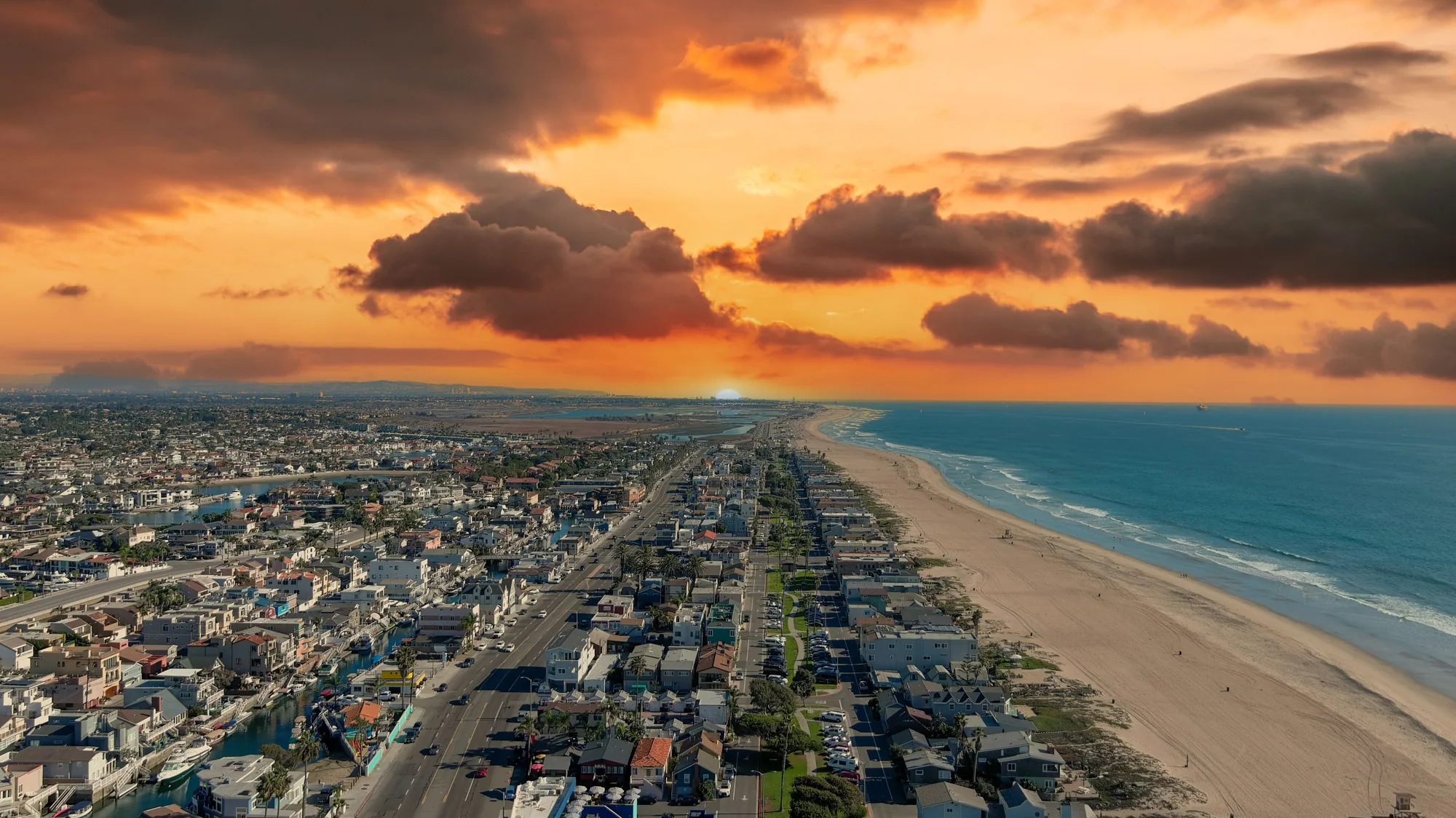
Northwest Industrial contains offices, business parks, commercial pads, and industrial buildings. Downtown Huntington Beach has a different commercial and visitor setting, including pedestrian-oriented retail streets. An acquisition survey needs to reflect the actual occupancy and roof geometry in either area. Land use provides context for access planning; inspection establishes the condition relevant to the investment.
What roof uncertainty could change the purchase decision?
A seller's recent patch invoice may identify completed work without explaining the remaining assembly. We compare the repair history with current seam condition, flashing transitions, perimeter details, and evidence of standing water. A dry interior during the visit can coexist with concealed insulation moisture. We describe the limits of the inspection and identify which further test would materially change the renewal scope or anticipated disruption.
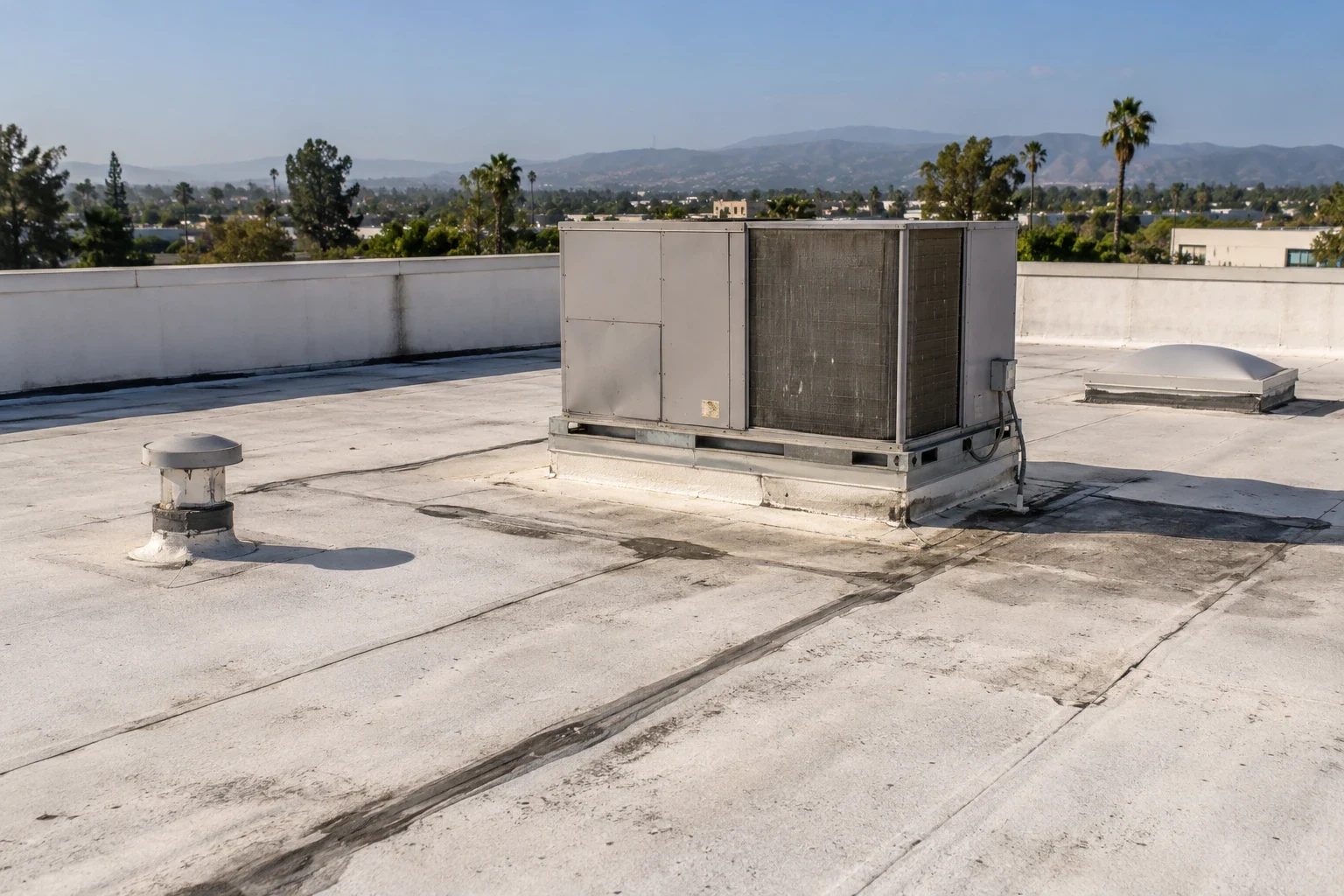
A purchase roof survey should locate findings on a roof plan, distinguish systems where visible, and describe inaccessible sections. If a recover is being considered, layer count, structural considerations, fastening, moisture, and detail height require attention. We can propose selective openings or moisture investigation within the owner's authorization. The findings then support an actual decision: proceed with defined repairs, obtain more information, or evaluate removal. That sequence avoids assigning a broad replacement allowance to every uncertain section simply because the transaction deadline is approaching.
How does roof condition connect to the hold period?
A sound roof field with several isolated curb defects presents a different investment choice from widespread splitting or saturated insulation. We identify which components can be repaired independently and whether the surrounding assembly supports that repair. The hold strategy may affect the desired work timing, but it should not override conditions that threaten occupied space. Immediate protection and longer-term renewal can be authorized as separate scopes.
Investors with leased operations coordinate tenant notifications and access through property management roof decisions. Owners planning hotel improvements need the booking and room sequence considered alongside hospitality roof coordination. We translate those constraints into inspection access, daily exposure limits, and potential shutdowns. The capital discussion then includes the cost drivers that matter: retained layers, damaged insulation, perimeter reconstruction, equipment changes, permit requirements, and the amount of work that can be completed inside the available operating window.
Which comparison makes a renewal budget defensible?
A proposal for coating should state how the existing roof will be evaluated, cleaned, repaired, and prepared. Compatibility, sound adhesion, drainage, and dryness are central to that option. Coating over wet insulation leaves the underlying problem in place. A recover comparison should explain why retaining the old assembly is appropriate and how drains, curbs, and perimeter transitions will accommodate the new layers.
Replacement introduces removal and can reveal deck repairs that a surface survey could not fully define. We show those uncertainties as explicit allowances or investigation items, then describe a daily dry-in boundary. A capital renewal comparison should explain each alternative's work extent and operational consequence. In the Northwest Industrial area, the mix of office and industrial properties requires a building-specific schedule rather than one common disruption assumption. The owner can then compare scopes on equivalent terms and reserve funds for identified needs.
How should climate influence a portfolio reserve?
Newport Beach Harbor's nearby coastal normals describe a mild marine setting with rainfall weighted toward the cooler months. That seasonal pattern supports planning intrusive work during an appropriate dry period while prioritizing drainage before winter. It does not replace current forecasts or reveal a building's moisture condition. Roof preparation and material cure requirements still govern the actual start date.
Santa Ana conditions can bring warm, dry offshore winds to the coast. A planned lift, loose materials, temporary cover, or exposed work boundary may need a revised sequence during those conditions. We account for weather-sensitive tasks separately from tasks that can continue safely. For a portfolio reserve, include the corrective work that inspection supports and the foreseeable preparation needed to execute it. Avoid treating the coast as a uniform exposure zone: specific surface condition, equipment layout, drainage, and perimeter attachment determine what gets repaired at each asset.
What happens between approval and the first removal?
An occupied investment property needs confirmed access, tenant coordination, material staging, and interior protection before tear-off. We align the roof sections with the suites or operating areas below. The work sequence states what can be opened, how it will be closed, and what condition triggers a smaller daily boundary. A roof plan with the operating areas identified lets the owner assess disruption before approving the schedule.
Huntington Beach's current building code cycle uses the 2025 California Building Code, effective from January 1, 2026. Covered nonresidential permit applications also fall under the applicable 2025 state energy requirements. We identify the project requirements and permit-related scope needed for the proposed alteration. A phased occupied reroof can address access and protection, while insulation and cover board choices address assembly needs. These decisions belong in the authorized work scope before replacement materials arrive at the building.
Which records should remain with the asset?
A completed project should leave the owner with roof-section drawings, installed material information, repair photos, applicable warranty documents, and a maintenance handoff. We connect concealed-condition discoveries to approved changes so the final assembly and work extent are understandable later. Temporary items or return visits remain identifiable until they are resolved. A clean closeout is especially useful if management changes before the next roof service.
For a continuing portfolio, roof asset tracking can preserve those details alongside inspection priorities. Update the file when mechanical equipment is added or another trade alters a penetration. The owner then has a basis for comparing a new leak report with the previous repair boundary. Send the building schedule, purchase deadline or hold objective, available roof records, and access contact. We will identify the inspection or protection step that reduces the decision's immediate uncertainty.
Commercial Roofing Questions
Can you review a roof before we take ownership?
Access authorized by the current owner allows us to inspect the agreed sections and report findings within the transaction schedule. Send existing surveys and repair records early. We flag inaccessible areas and tests still needed so the purchase team can distinguish an inspection finding from an unresolved assumption.
Does a recent coating remove the need for moisture testing?
A newer surface can conceal an older wet assembly. We check visible condition and the coating history, then recommend testing when trapped moisture could change the purchase or renewal decision. The investigation should target useful questions rather than assume surface appearance establishes the entire roof condition.
How do we separate operating repairs from renewal needs?
Place contained repairs with sound surrounding material in their own scope. Widespread deterioration, recurring water, and unsuitable retained layers may justify renewal planning. We describe the technical reason for each recommendation so your internal budget treatment follows the actual work, subject to your accounting process.
Will the survey predict an exact remaining roof life?
Condition, hidden moisture, maintenance, and future alterations affect serviceability. We provide observable findings, testing recommendations, and prioritized work instead of an unsupported expiry date. Those details offer a practical basis for reserves and phased decisions while keeping uncertainty visible to the asset team.

Proudly Serving Huntington Beach and Nearby Cities

Commercial Roofers Huntington Beach
Huntington Beach, Westminster, Seal Beach, Fountain Valley,
Garden Grove, Newport Beach and nearby Orange County cities