
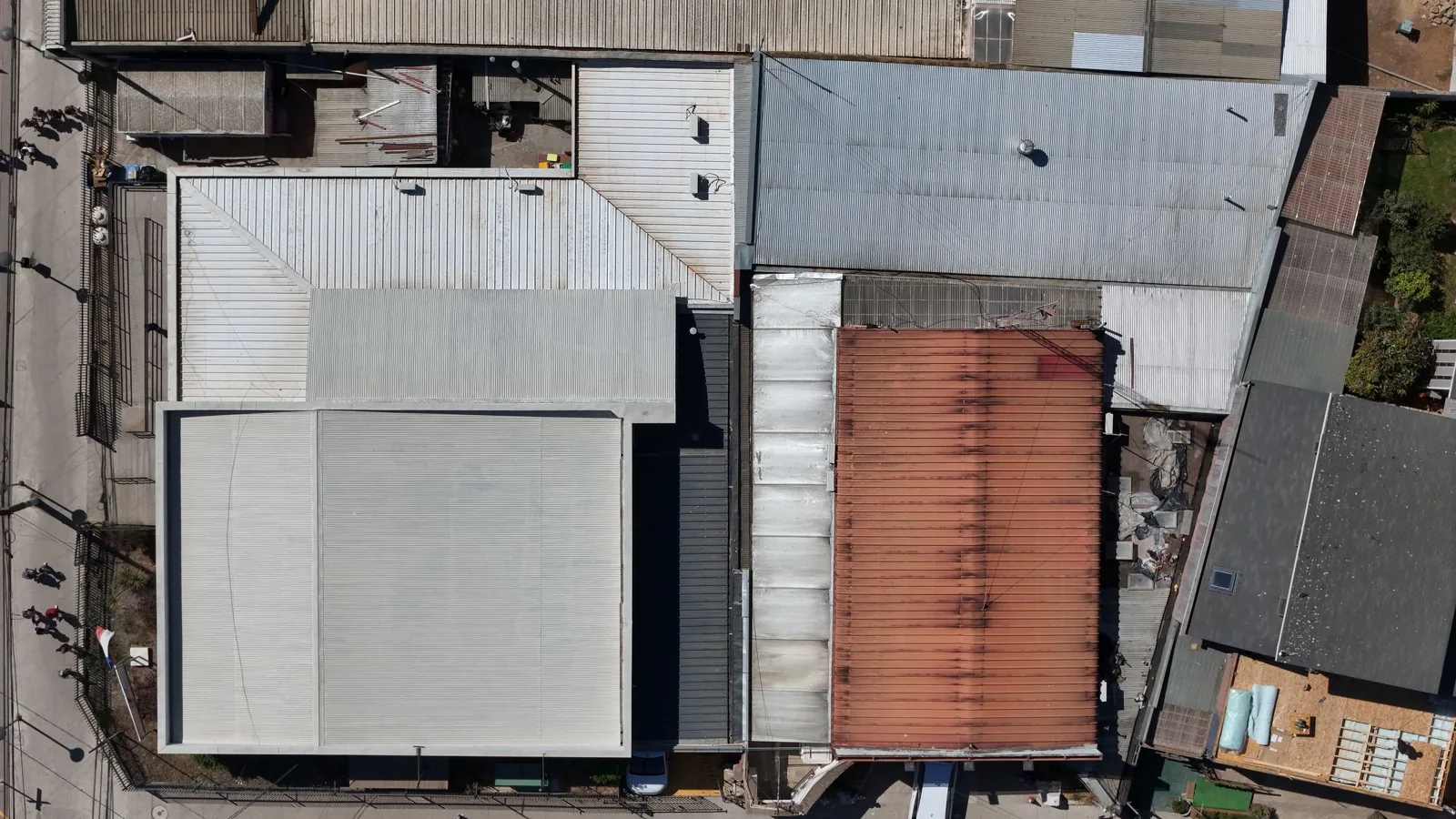
Warehouse Roofing in Huntington Beach, CA
A warehouse leak needs two locations on the first call: where water appears inside and which roof zone sits above it. We identify the inventory or equipment at risk, arrange safe access, and protect an active opening before setting a permanent repair boundary. In Huntington Beach, CA, the Gothard Street Subarea includes warehouse and manufacturing properties among auto repair, retail, and office uses. Each building has its own loading pattern, roof layout, and operating window, so the inspection begins with the site contact and a roof plan.
Nearby coastal air temperatures are moderate, and Newport Beach Harbor climate normals show rainfall concentrated in winter and near-zero summer averages. That seasonal pattern makes drainage and weather windows important to warehouse maintenance planning. It does not tell us how a particular roof is performing. We inspect the low points, drains, scuppers, seams, curbs, and perimeter, then connect those findings to the affected storage or shipping area.
Which warehouse operation sits below the repair?
Before a roof walk, confirm dock hours, forklift lanes, receiving cutoffs, occupied aisles, and the person who can approve a temporary interruption. That information helps place lifts, debris routes, and material staging without blocking a working entrance. The roof plan should identify each section above inventory, offices, battery charging, or mechanical areas. Those uses guide interior protection, but they do not establish the roof assembly or the extent of a leak.
Not every storage building has the same roof geometry. A distribution center roof review may need to account for active dock doors and longer conveyor or sorting runs; a manufacturing plant roof review also checks exhaust, process equipment, and trade access. We confirm the actual building use and equipment schedule before applying those distinctions. On a warehouse, the inspection still records roof zones, transitions, drainage, and the interior area below each repair. That lets the operations lead match the proposed work window to the right aisle or shipping function instead of treating the whole facility as one open work area.
Gothard Street's employment area extends between Edinger and Ellis avenues, with a Union Pacific right-of-way along its eastern side. The district's warehouse and auto-repair mix can create different delivery and access conditions from properties in the Northwest Industrial Subarea, where offices, business parks, and industrial or research uses are also present. For either setting, we confirm the actual gate, lift route, and work hours with the building contact before dispatch.
Where does water travel across the roof?
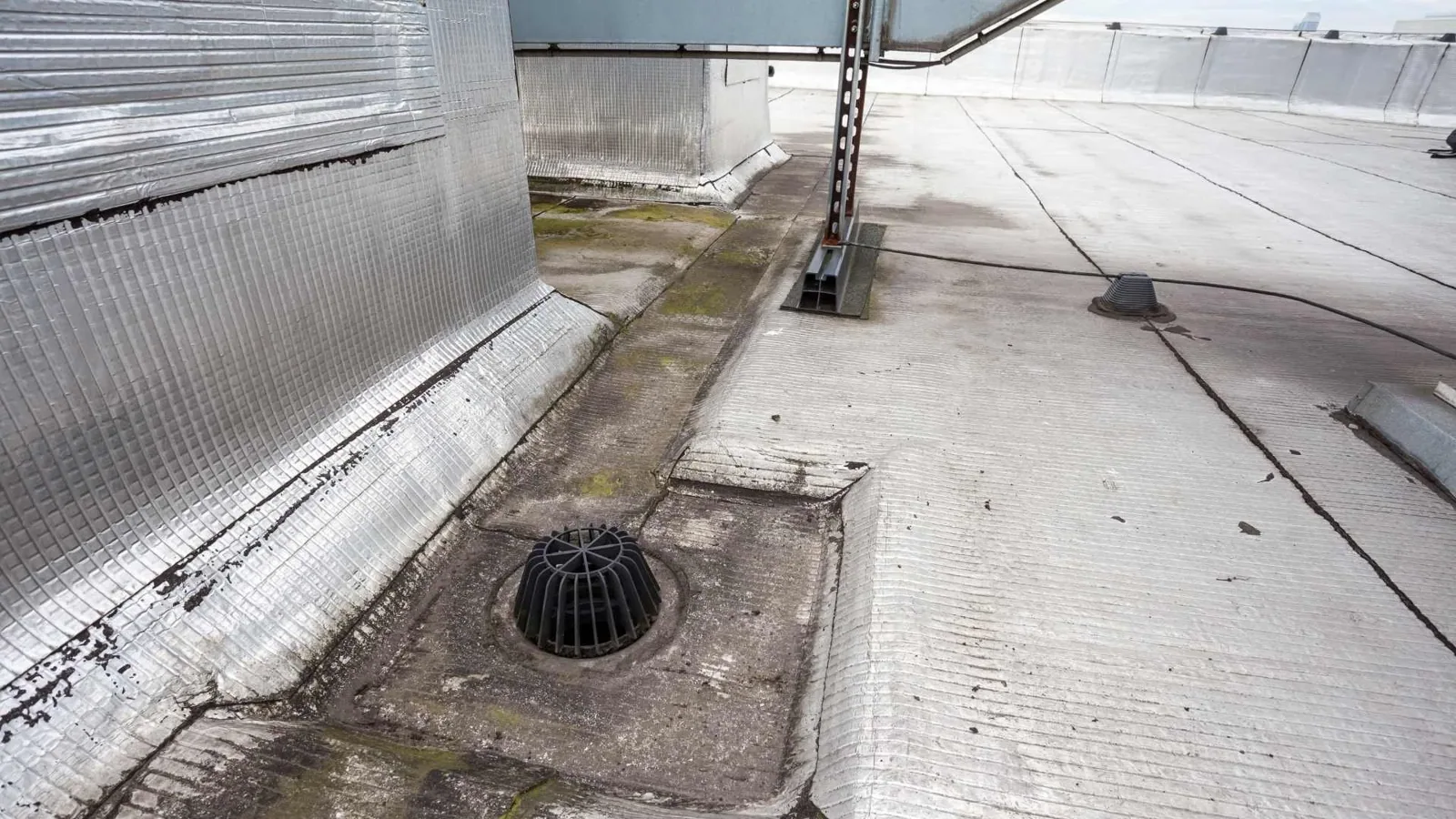
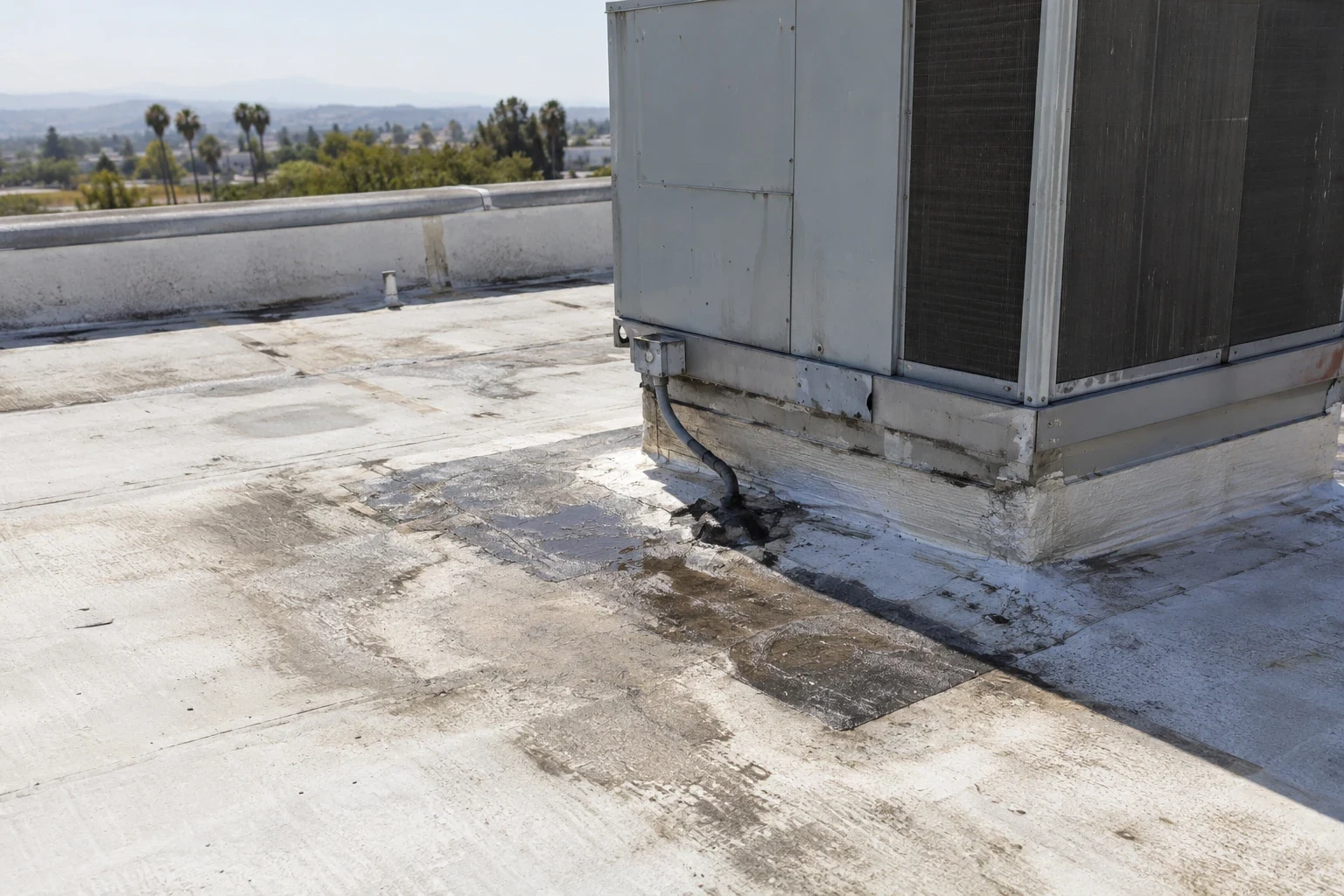
Water may travel from an open seam or curb before it reaches a warehouse ceiling. We record the time and location of the interior report, then trace the roof slope toward drains and scuppers. Sediment lines, wet insulation indications, patched areas, loose laps, and backed-up outlets are separate observations. A drain and scupper inspection can address a confirmed outlet problem; a membrane opening requires a compatible repair tied to sound material.
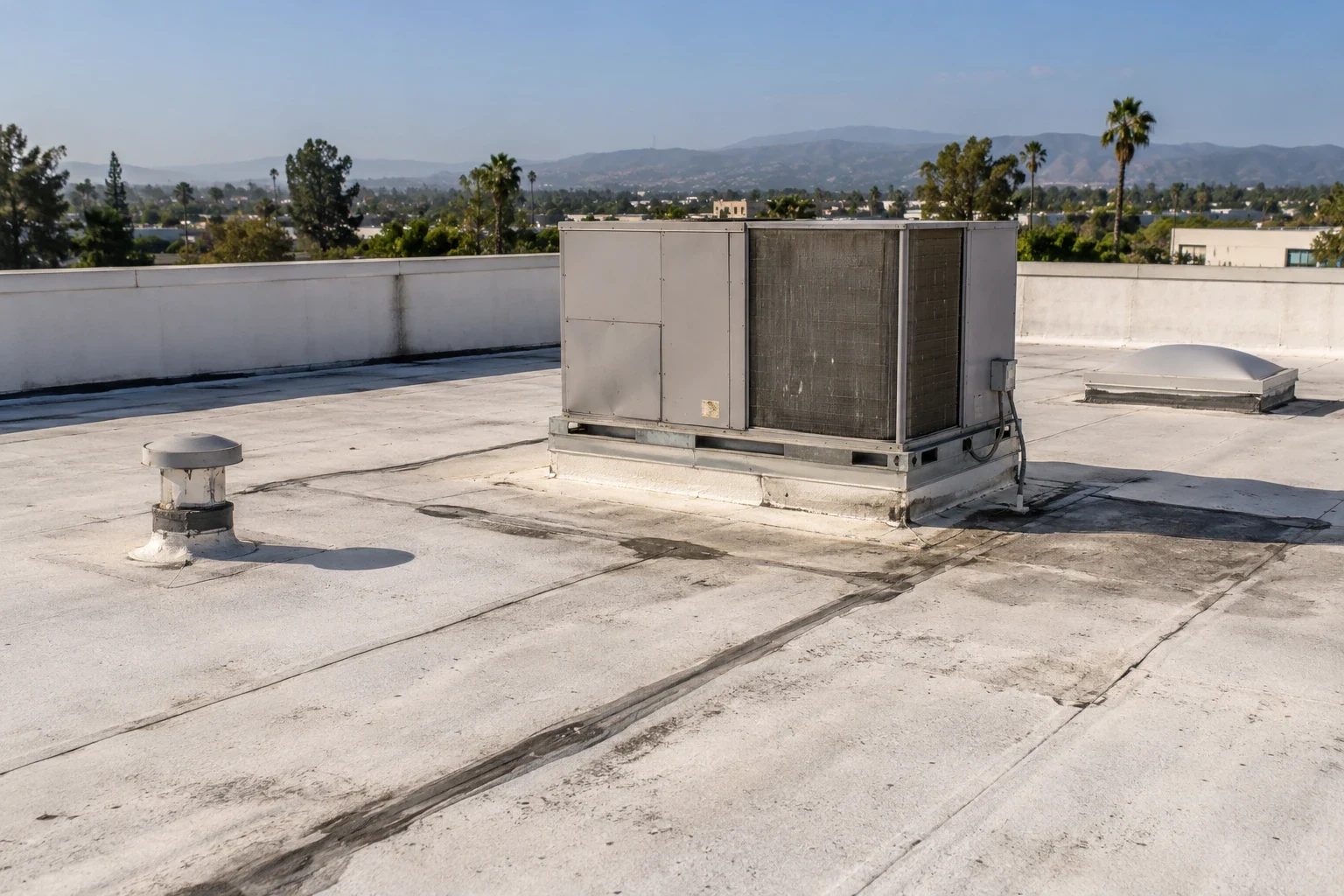
Distribution and storage roofs often carry rooftop units, exhausts, skylights, and service paths. We mark each penetration near the reported water route and note any equipment that limits access. Where the leak remains active, an interior leak investigation compares the room report with roof findings and identifies any test needed before opening concealed layers. The work record should show what is known, what was inaccessible, and which location needs a return check.
How will the work protect stored goods?
Inventory protection starts with a clear roof-zone boundary. We coordinate aisle closures, temporary covers, interior containment, and any product move with the warehouse manager before removing material overhead. If a rack cannot be reached safely, it remains outside the active work area until the site team clears a route. The daily plan identifies where the crew will open the roof, how the area will be closed, and who receives the shift update.
Huntington Beach commercial frontage follows corridors such as Beach Boulevard, Adams Avenue, Edinger Avenue, and Warner Avenue. A warehouse near these busy routes may need a staging plan that accounts for local traffic and customer or employee access, while an industrial property may prioritize truck circulation. We verify those needs at the property. For larger active buildings, occupied-building reroof planning ties each roof phase to the rooms and operations below.
When does a repair become a replacement?
A local puncture or failed flashing can support a repair when surrounding membrane, attachment, and substrate remain sound. Repeated seam separation, widespread moisture, weak attachment, or deck deterioration can broaden the work. We identify which condition was observed and where concealed layers need testing before comparing a patch, recover, or replacement. A warehouse roof repair scope should state preparation, compatible material, tie-in, and the area included.
Replacement planning accounts for removal depth, insulation, cover board, edge details, equipment, haul-off, and the area that can be opened during each weather window. Keeping the warehouse assembly under another roof requires verified dryness and secure retained layers. The new thickness must also work at drains, equipment, and perimeter transitions. A replacement plan maps daily dry-in limits and any shutdown or access changes. Where TPO is under consideration, a TPO roof assembly must match the deck, insulation, attachment, and project requirements.
What should the warehouse manager receive?
Closeout identifies the warehouse section inspected, roof materials observed, work completed, temporary measures, and any test or repair still open. We mark drains, seams, and penetrations on the roof plan and attach photos that show each detail in context. The record should also note access limits, product protection, and the person who authorized any scope change. A later maintenance visit can compare the same field marks rather than rely on a general note that the roof was repaired.
Newport Beach Harbor normals provide a nearby coastal reference, but a site's drain spacing and roof slope govern actual drainage performance. Seasonal review before winter rain can catch debris, open laps, or a changed outlet condition while access remains straightforward. Send the roof plan, leak location, dock calendar, equipment schedule, repair history, and access contact. We can inspect the affected zone and return a written recommendation tied to the warehouse operation.
If the report follows a temporary cover, it names who will inspect it after changing weather and what condition triggers a return visit. Clear handoff details keep an interim measure from being mistaken for the permanent repair.
Commercial Roofing Questions
Can roof repairs proceed while the warehouse is receiving shipments?
The work area and delivery schedule determine whether phases can overlap. We review lift access, dock lanes, inventory below, and the dry-in boundary with the site contact, then identify any short restriction before materials are moved.
What should we do first if water is over stored product?
Move or cover exposed goods when it is safe, keep staff clear of ceiling or electrical hazards, and identify the room and time of the report. We then protect the opening and trace the roof route before defining permanent work.
How is an inventory-area drip connected to the exterior defect?
The aisle or storage position is plotted against the roof layout, including outlets and equipment transitions. We examine details that could feed that position rather than assume the stain sits directly below an opening. Any unconfirmed connection remains a separate testing decision in the report.
Can a roof section be replaced without closing every dock?
Often the roof can be divided into workable zones, but lift placement, delivery lanes, fire access, and interior protection set the sequence. We confirm the operating plan and show each daily work boundary before tear-off.
Which records help compare warehouse roofing proposals?
Provide roof plans, prior repair scopes, leak reports, equipment locations, and access limits. We describe confirmed quantities separately from concealed conditions or allowances so the owner can compare the same work boundary.
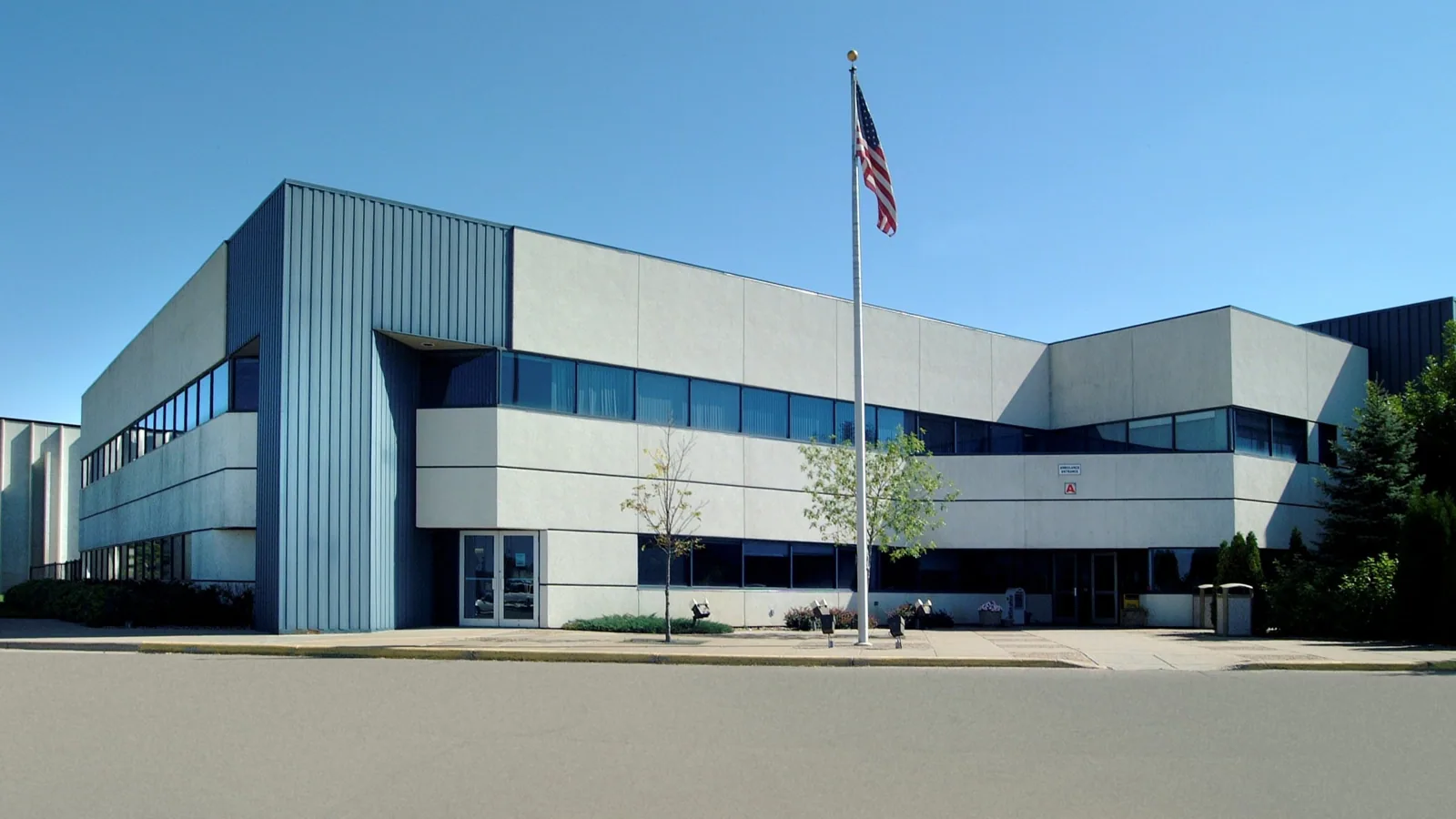
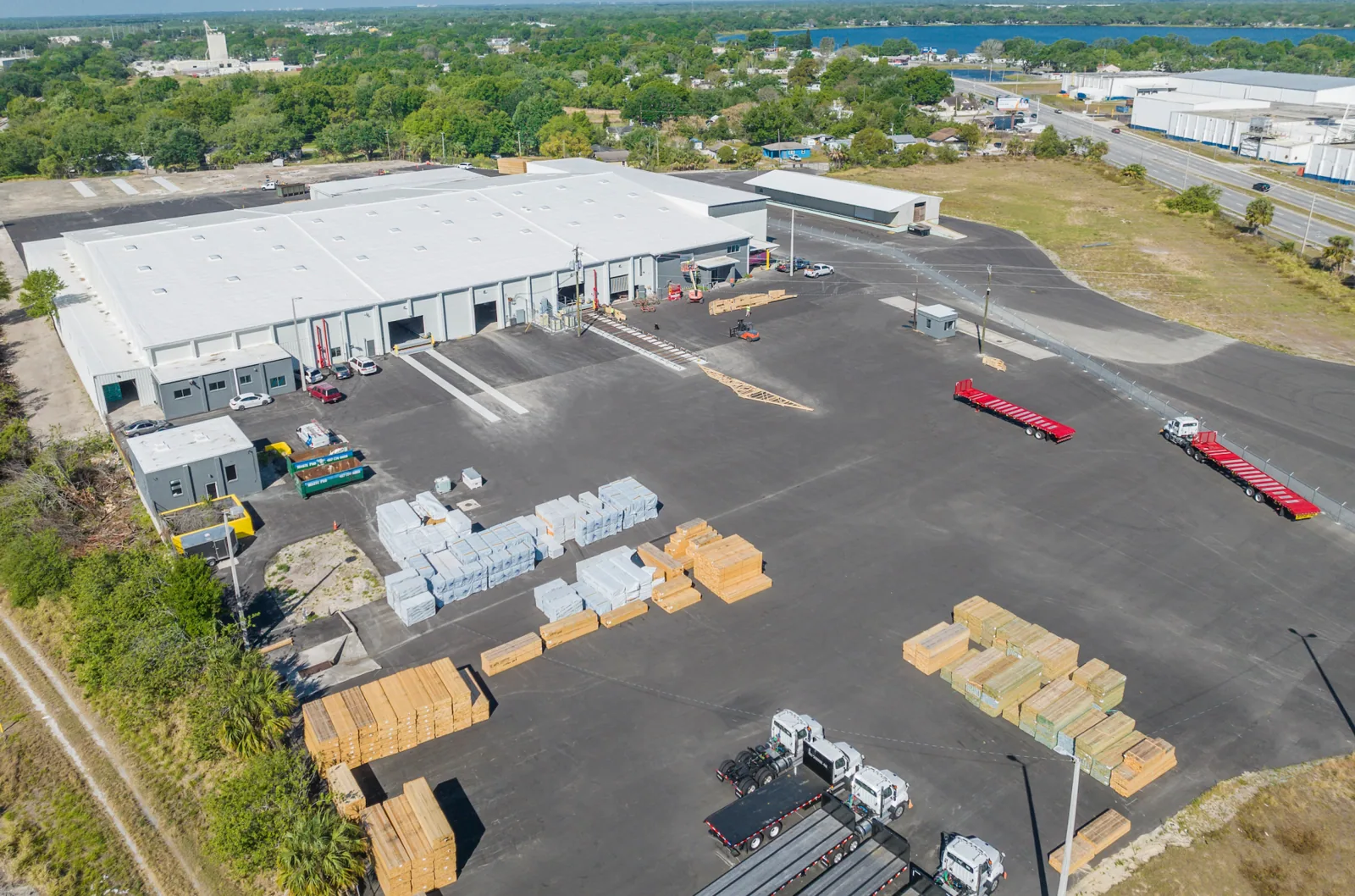

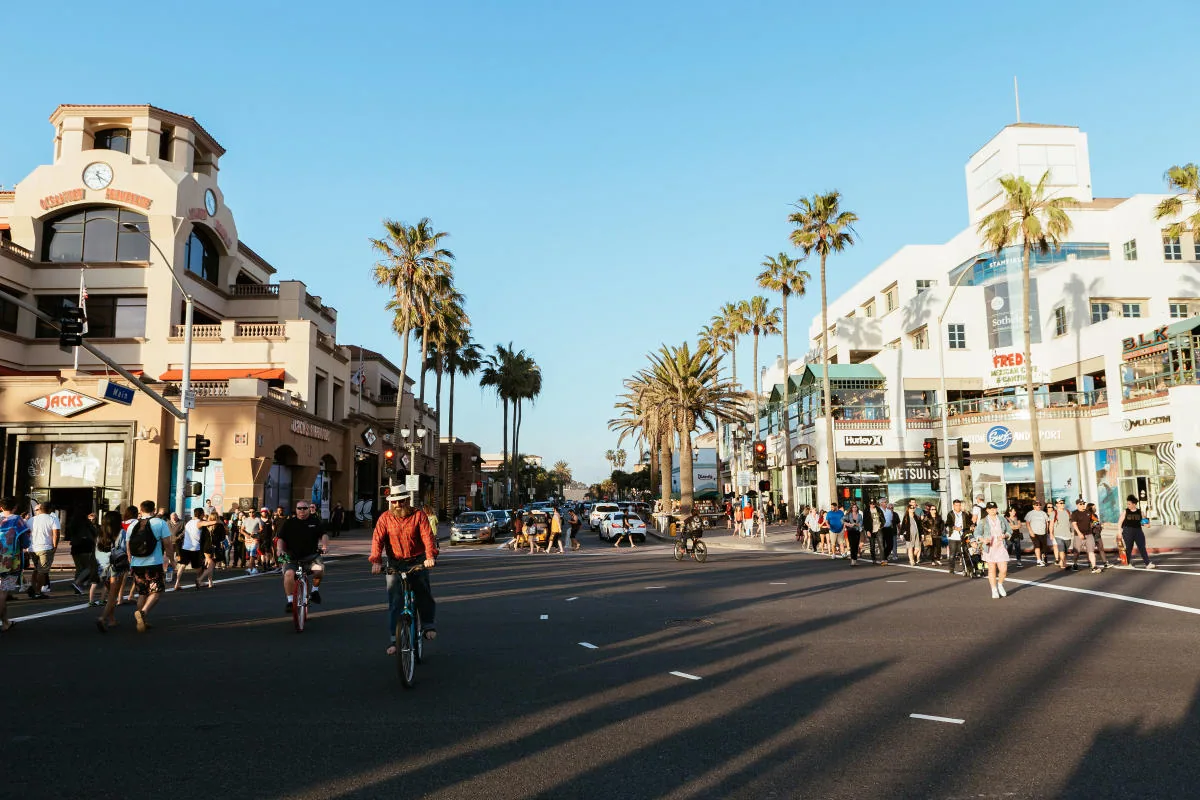
Proudly Serving Huntington Beach and Nearby Cities
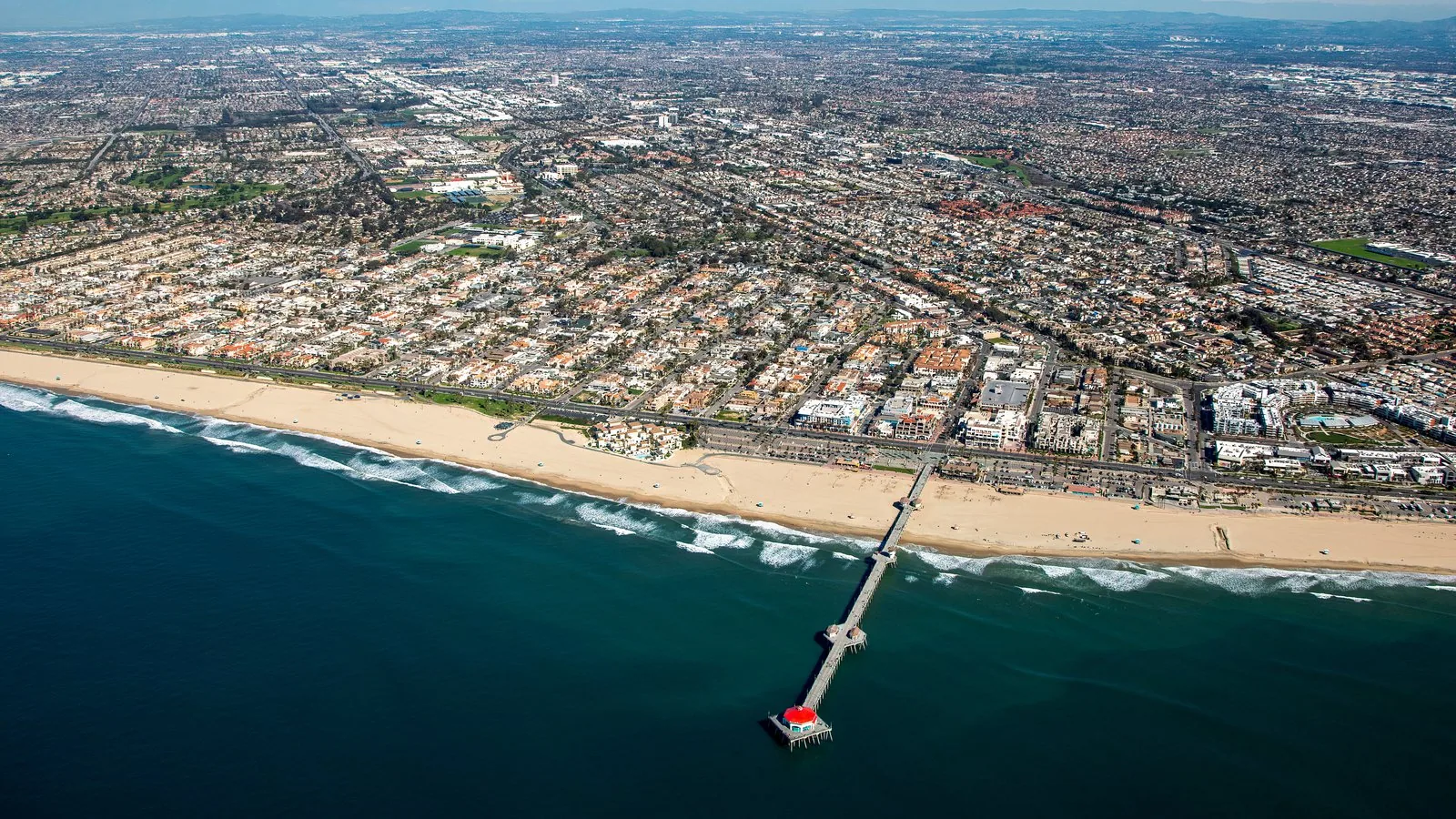
Commercial Roofers Huntington Beach
Huntington Beach, Westminster, Seal Beach, Fountain Valley,
Garden Grove, Newport Beach and nearby Orange County cities