
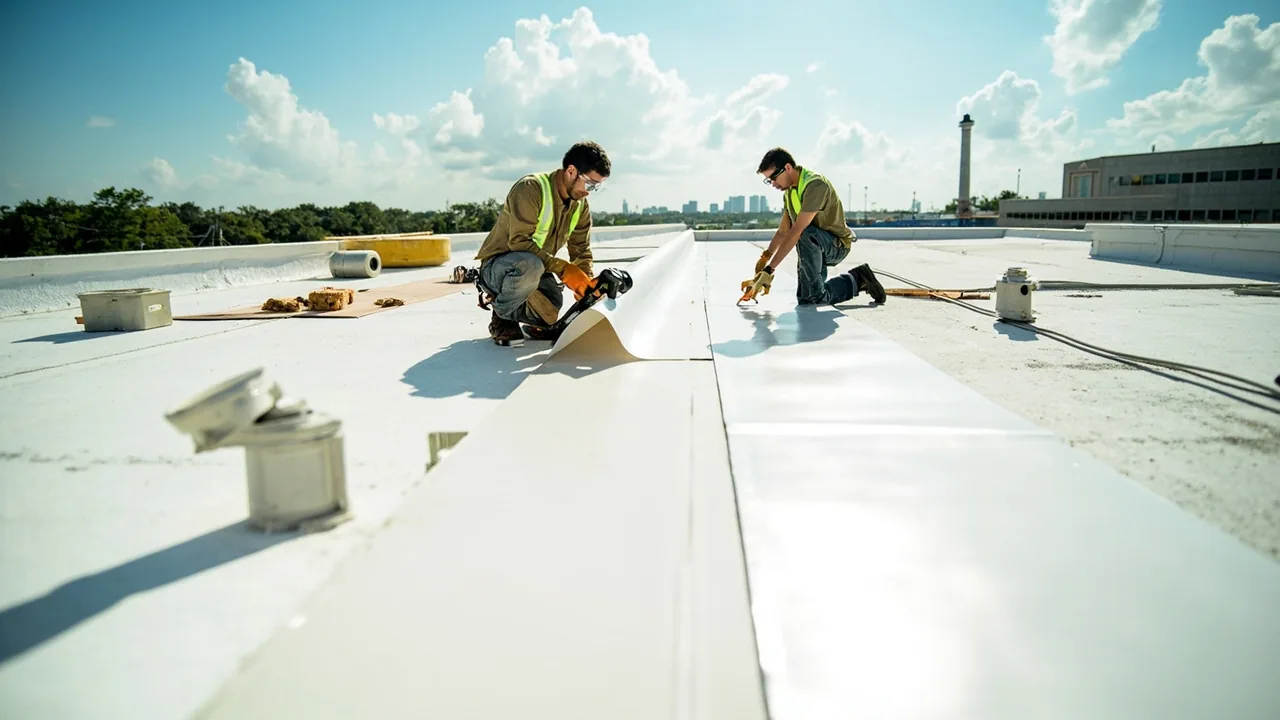
PVC Roofing in Huntington Beach, CA
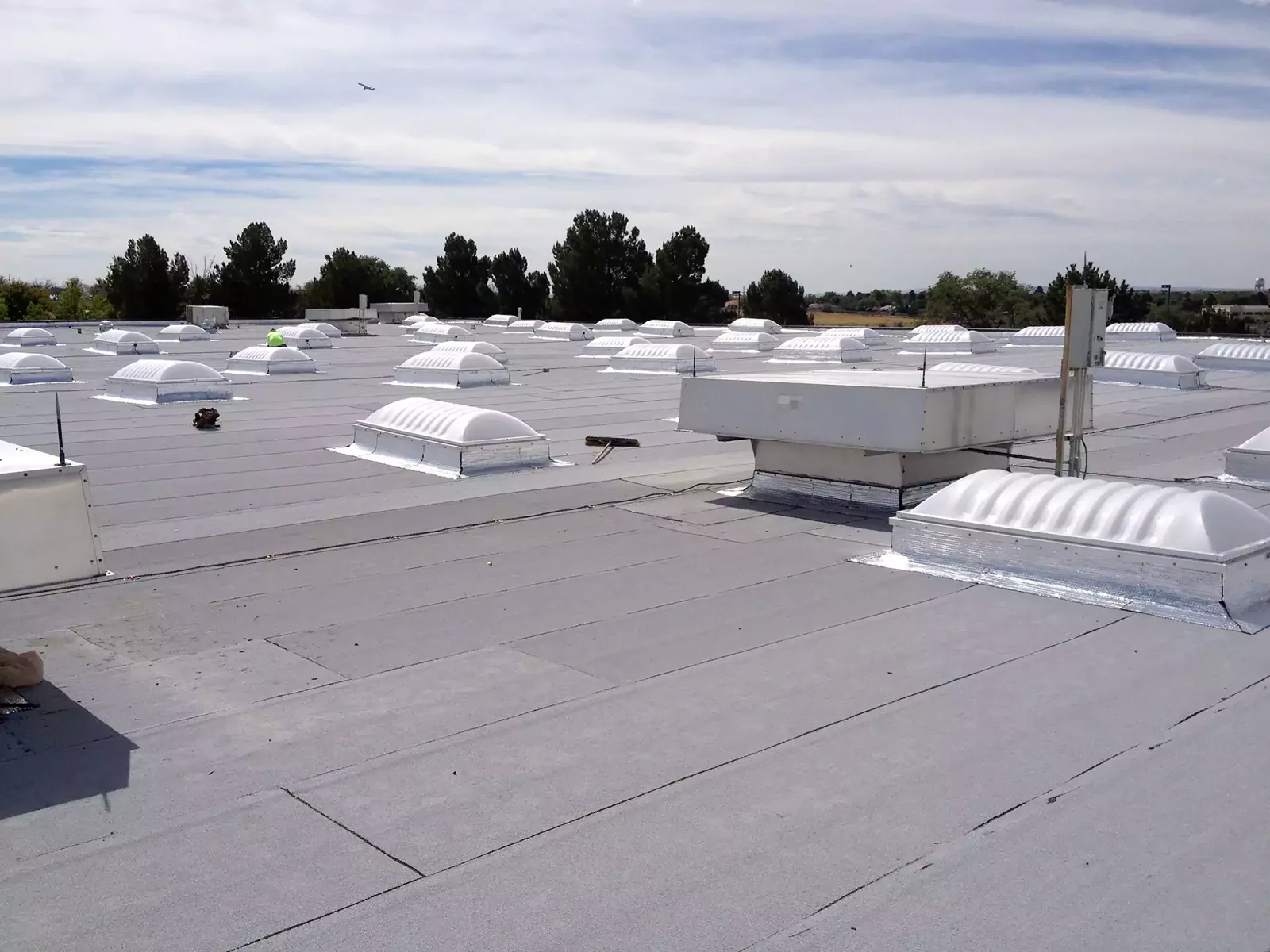
A grease trace beside an exhaust curb can be a clue to inspect the PVC, not a repair instruction by itself. Commercial Roofers Huntington Beach works on PVC commercial roofs in Huntington Beach, CA, by identifying the membrane, tracking its water route, and checking how the sheet meets each opening. We document stains or surface changes, then inspect the welds, drain bowl, and flashing before setting a boundary. The first safe step is to control access and protect the area below if water is active.
Pacific Coast Highway includes visitor-serving commercial properties, while the Northwest Industrial Subarea mixes offices, business parks, research, and industrial uses. Each presents a different delivery and equipment window. Newport Beach Harbor normals show that most annual rain falls in cooler months. For PVC work, we schedule welding and adhesive details in a weather window that suits the product and the condition of the substrate.
What changes when a PVC roof faces kitchen exhaust?
PVC roof sheets form a single-ply thermoplastic surface whose seams join by heat welding. Its formulation can make it suitable for some commercial settings where oils or grease are part of the operating environment, but the proposed assembly still needs to match the exposure and product requirements. We ask where exhaust lands, how often the area is cleaned, and whether service staff cross the roof. Those details guide the inspection route and help locate surface changes before a leak develops.
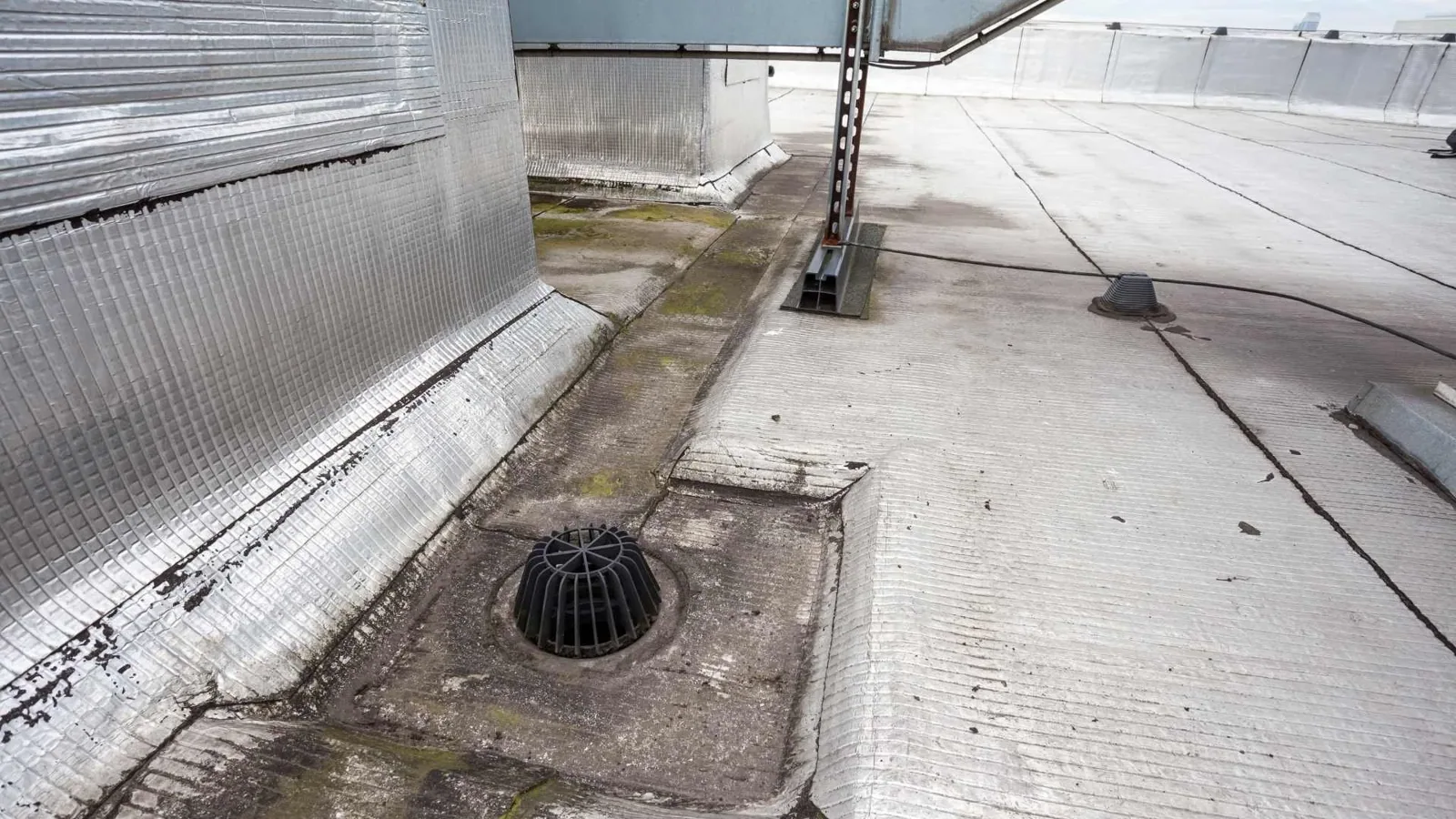
At a curb, grease residue can interfere with preparation, while repeated cleaning may affect nearby sealants or coatings. We inspect the membrane and welds for swelling, discoloration, embrittlement, and open edges, then compare the affected area with the equipment schedule. A localized detail can be repaired when the surrounding sheet is stable. If exposure extends across a larger field, we map it before proposing a replacement material or protection method.
The Northwest Industrial Subarea contains industrial and research-technology uses as well as offices and small commercial pads. That mix makes equipment scheduling and roof access part of the job plan. We confirm the operating contact for the actual property rather than infer an exhaust source from the district.
How do you check seams, drains, and corners?
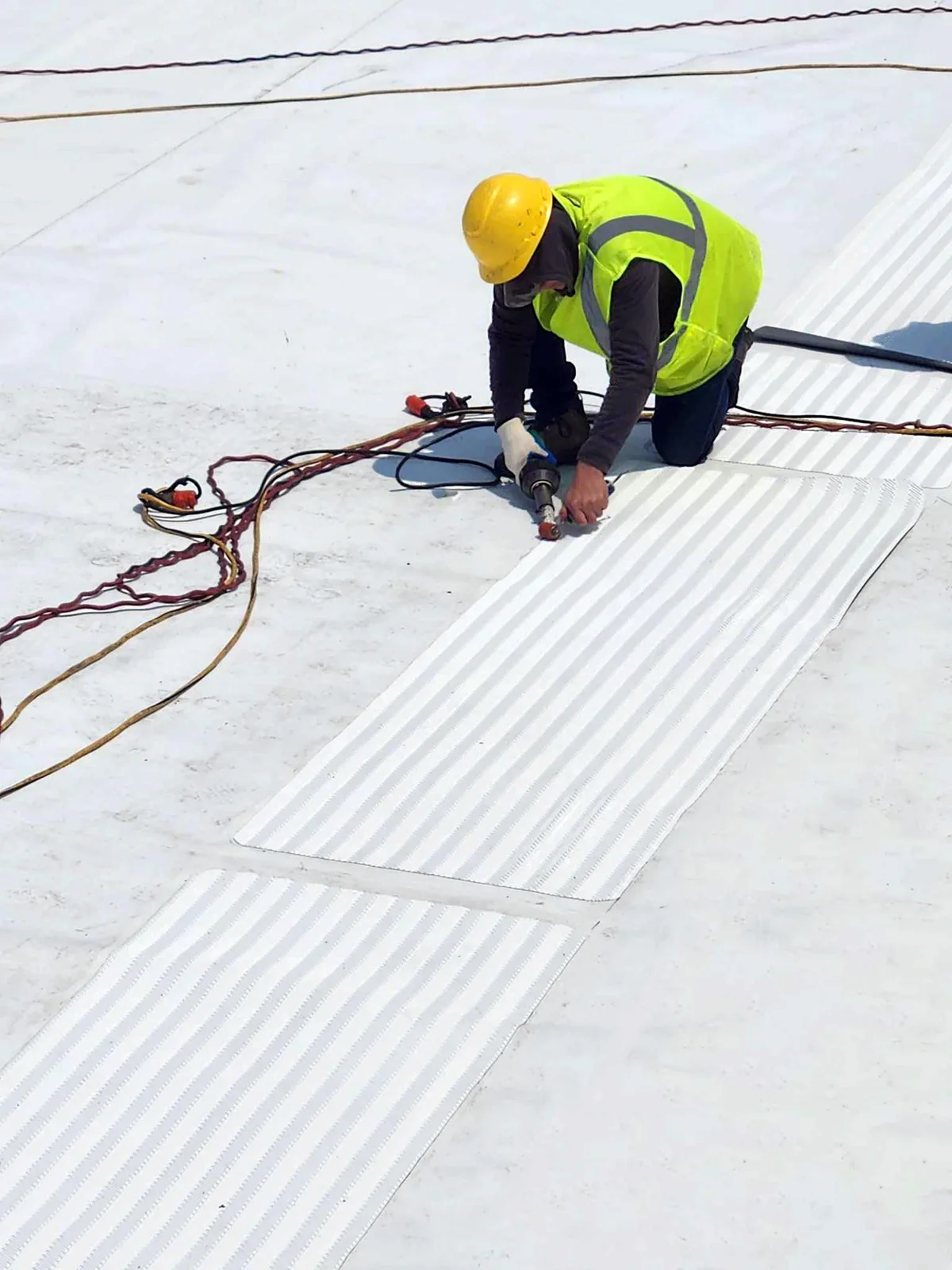
A PVC weld should have a continuous bond without fishmouths, cold spots, or an open channel at its edge. We probe suspect areas where the assembly allows it and look at transitions where sheets meet curbs, walls, drains, or other materials. A seam can appear closed while its termination is pulling away. We mark the full repair extent on the roof plan and photograph both the close detail and its position in the section.
At a drain, the membrane should enter the bowl and clamp securely without narrowing the opening. We check debris, standing-water lines, overflow route, and whether a raised repair has created a dam. Drain and scupper work can correct a defined outlet or connection problem. The leak investigation continues upslope if a stain or wet area points to another seam or penetration.
If insulation moisture could affect whether the sheet is retained, we identify a test location and state what decision depends on the result. A marked roof inspection can organize that evidence before more material is opened. We keep suspected moisture apart from confirmed wet insulation in the estimate.
What must be ready before PVC installation?
New PVC needs a stable substrate, a compatible insulation or cover-board layer, and an attachment method suited to the deck and wind design. We review the drawings and approved product documents, then compare them with exposed edges and field conditions. A roof with additions may have different heights, slopes, or materials. Those transitions need their own details rather than one assumed sheet layout across the whole property.
Fastened systems need the specified pattern and secure substrate. Adhered systems depend on surface condition and adhesive compatibility. Ballasted assemblies carry different structural and perimeter considerations. We record the system selected, attachment, membrane thickness, cover-board joints, and edge restraint so the owner can follow what was installed. Insulation and cover-board work can be coordinated with the membrane when thermal upgrades or substrate repair are included.
Covered nonresidential alteration permits filed from January 1, 2026 fall under California's 2025 energy-efficiency requirements. The designer reviews the project scope and permit date. Our proposal defines the roof assembly and visible work limits that feed that review.
When should PVC be repaired or replaced?
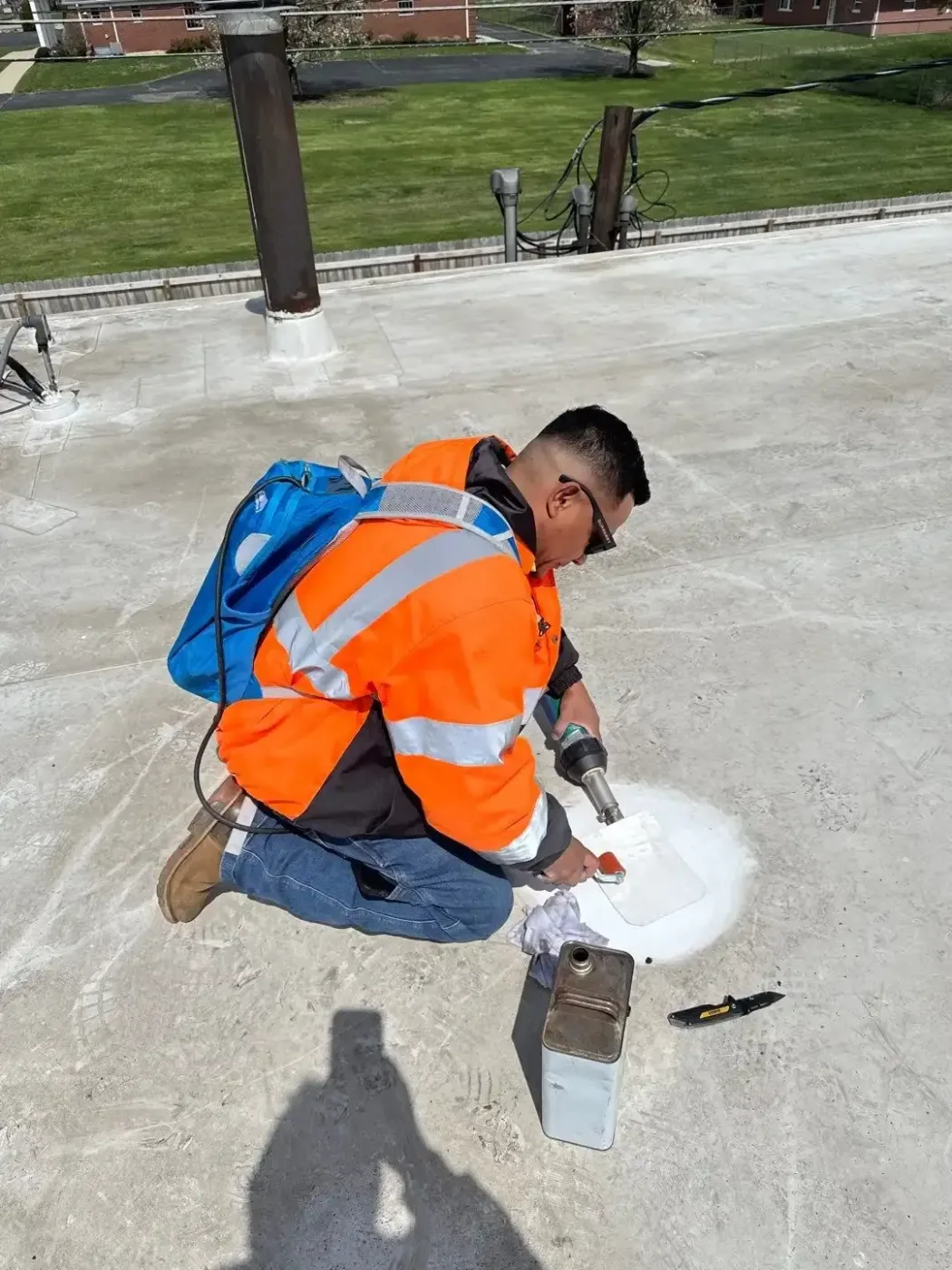
A puncture or open weld may be a local repair if the field sheet remains attached and clean enough to prepare. We remove failed material, prepare the receiver, weld a compatible patch, and inspect the finished perimeter. Where a curb has moved or a sheet has pulled tight, the repair may need a broader tie-in. The repair record states whether any area nearby was inaccessible or left for testing.
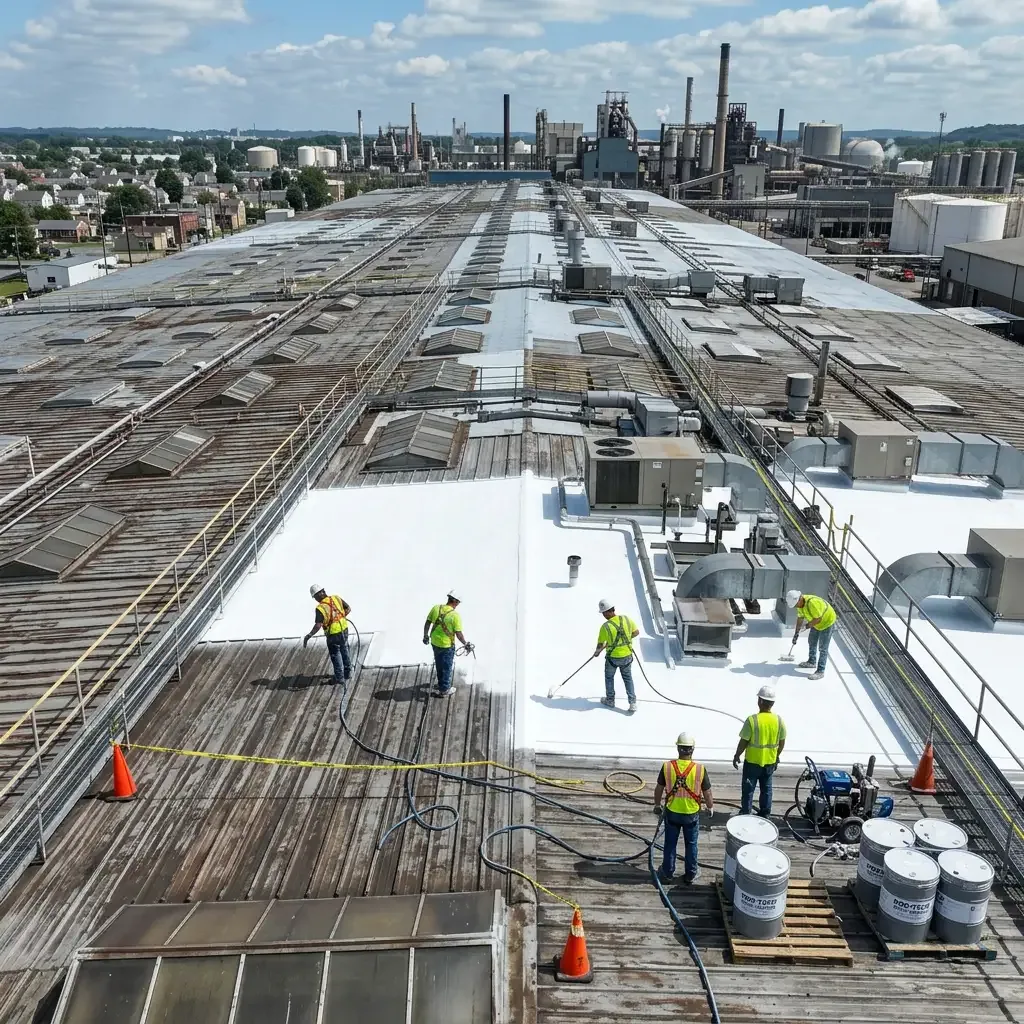
Repeated failures, wet insulation, loose attachment, or brittle membrane across several zones can change the decision. A recover can preserve a suitable base, but only when moisture, drainage, curb heights, and edge details allow another layer. Replacement is considered when the assembly cannot support a reliable tie-in. A replacement plan identifies removal depth, protection below, staging, and daily dry-in limits before work starts.
PVC project pricing reflects roof entry, insulation and substrate corrections, old-sheet removal, edges, outlets, equipment handoffs, and the daily opening limit that can be closed safely. For active entry, emergency response runs around the clock, including holidays. Temporary cover remains separate from the permanent correction and follow-up visit.
How can the roof record help on the next visit?
Closeout should show the PVC system observed, the repaired weld or flashing, materials and preparation, photographs, and any test result. Mark the work on the same roof map used during inspection. If another trade changes a curb or line, add its location and the roofing handoff to the service file. A later technician can then distinguish an original weld from a field repair and see where the assembly changed.
Maintenance checks the sheet, seams, drains, equipment curbs, walk paths, and perimeter terminations. It also notes chemical residue or recurring cleaning at exhaust discharge points. A preventive visit can track those observations over time. When the owner compares PVC with KEE membrane or TPO roofing, the comparison should include exposure, attachment, seams, insulation, warranty terms, and the work needed at existing curbs.
Send the roof plan, leak location, equipment list, service history, access contact, and expected work window. We will inspect the membrane and return a repair or replacement scope tied to the roof sections reached.
Commercial Roofing Questions
Does PVC roofing tolerate grease near an exhaust fan?
The specified membrane and its exposure limits matter. We inspect residue, surface condition, welds, and the exhaust path, then compare the finding with the product requirements before proposing a repair or replacement material.
How do you repair a split PVC seam?
We extend the inspection past the visible split, remove loose or contaminated material, prepare the sheet, and heat-weld a compatible patch. The finished edge is checked and marked on the roof plan.
What must remain sound beneath a proposed PVC overlay?
An overlay requires retained layers that meet the proposed design’s moisture, securement, compatibility and loading conditions. We establish those findings and check outlet elevations, perimeter height and curb clearance before recommending that the old roofing stay.
What should a replacement estimate say about rooftop equipment?
List each unit or curb that affects the roof work, who controls any shutdown, and which trade restores the equipment connection. The roofing scope identifies the receiving surface and final flashing handoff.
How are PVC repairs documented?
The closeout connects the membrane type, weld or flashing detail, preparation, photographs, and remaining work to a roof-zone mark. That gives the next service visit a location it can check again.

How we inspect, scope and complete this work

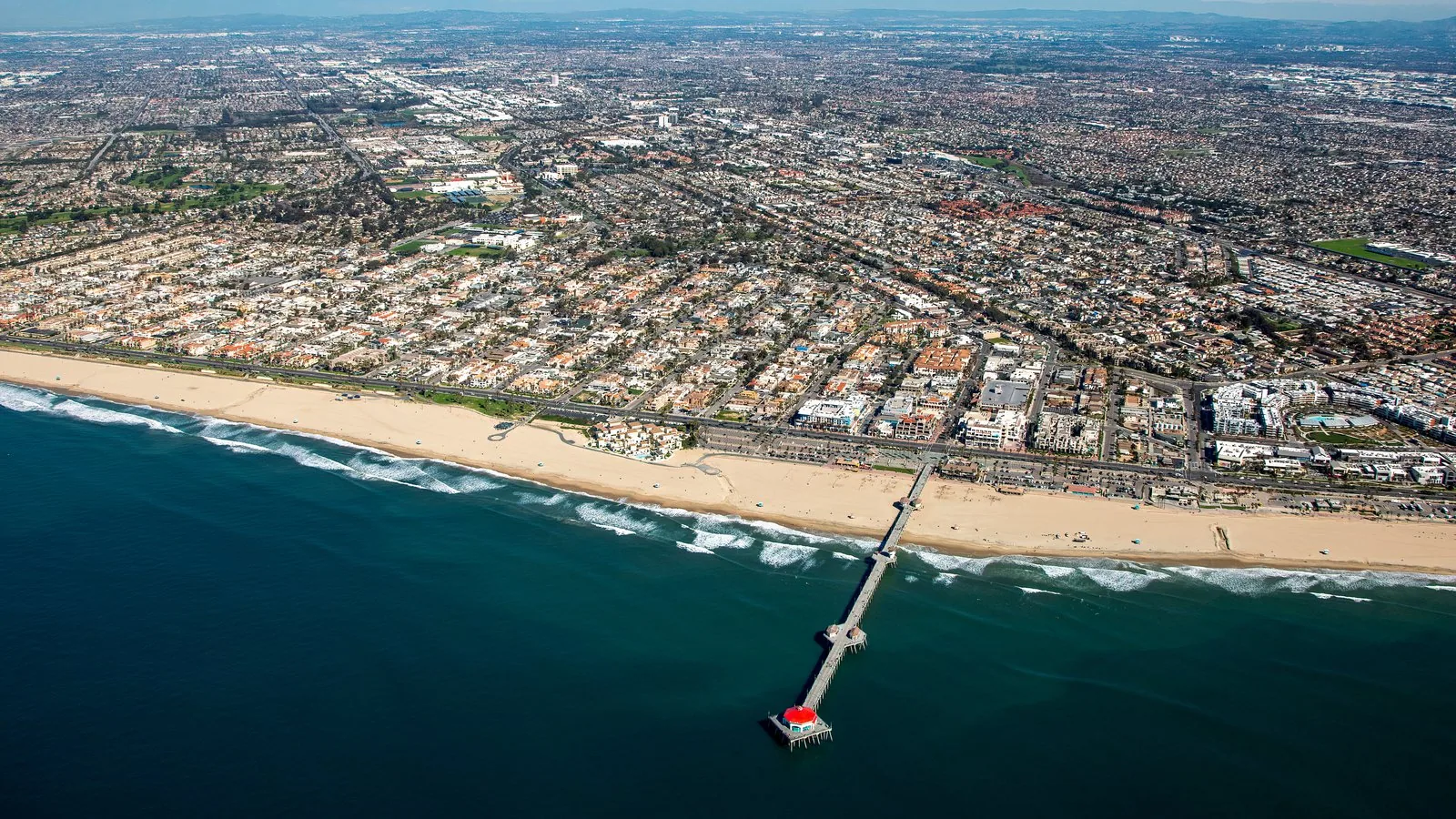
Proudly Serving Huntington Beach and Nearby Cities
Commercial Roofers Huntington Beach
Huntington Beach, Westminster, Seal Beach, Fountain Valley,
Garden Grove, Newport Beach and nearby Orange County cities