
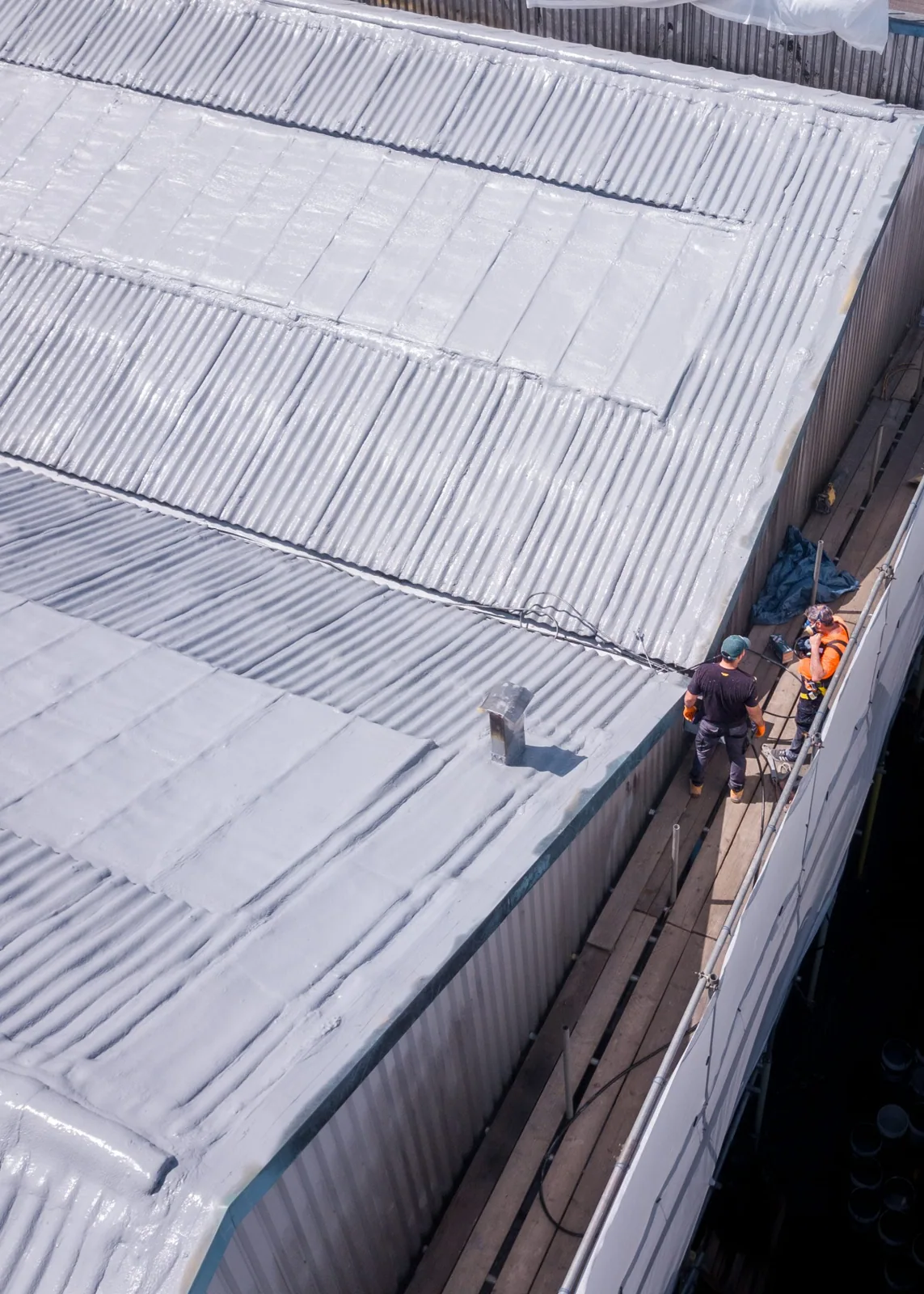
Silicone Roof Coatings in Huntington Beach, CA
A reflective surface can still have a failed seam or a wet layer below it. Commercial Roofers Huntington Beach evaluates silicone roof coatings in Huntington Beach, CA, by checking the existing roof, coating adhesion, thickness, drainage, and transitions before recommending restoration. A coating can protect a suitable substrate, but it does not repair every roof condition. The first safe step is to control access, protect the occupied area if water is active, and locate the entry point before defining the repair extent.
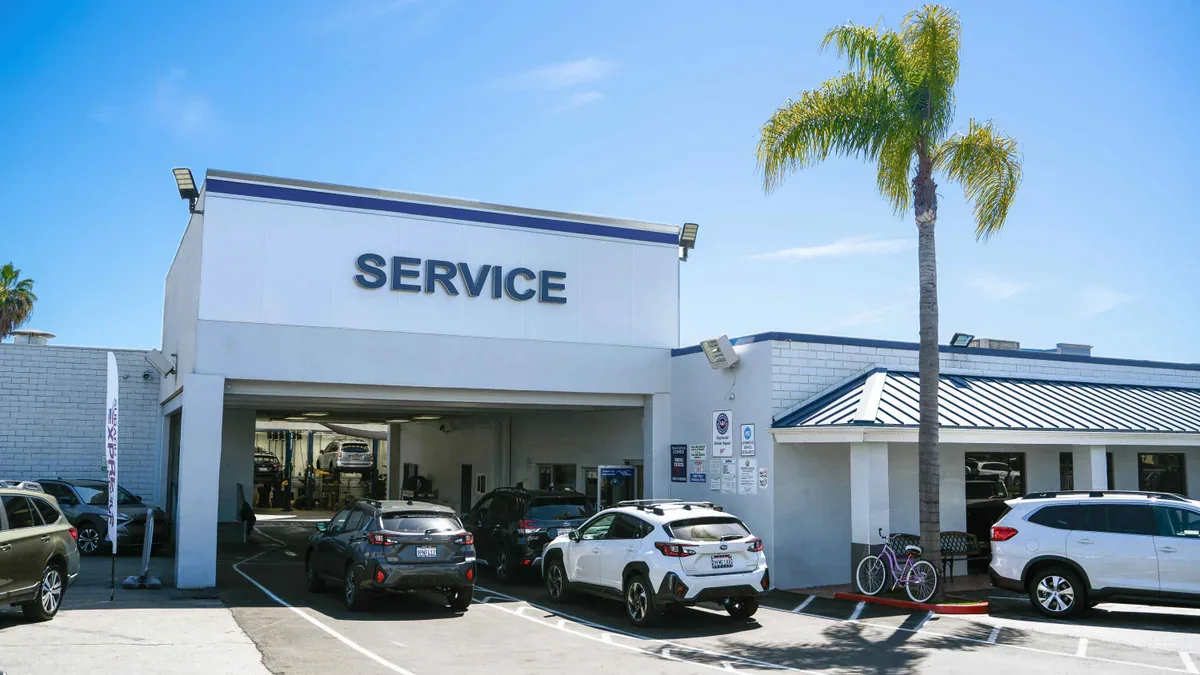
The Gothard Street Subarea has warehouse, manufacturing, auto repair, retail, and office uses. The visitor-facing Pacific Coast Highway coastal corridor can require staging around customers and deliveries. Winter is the wetter interval in the nearby Newport Beach Harbor normal record. Drainage and dry-in planning matter; current conditions govern the work window.
What does a silicone coating protect?
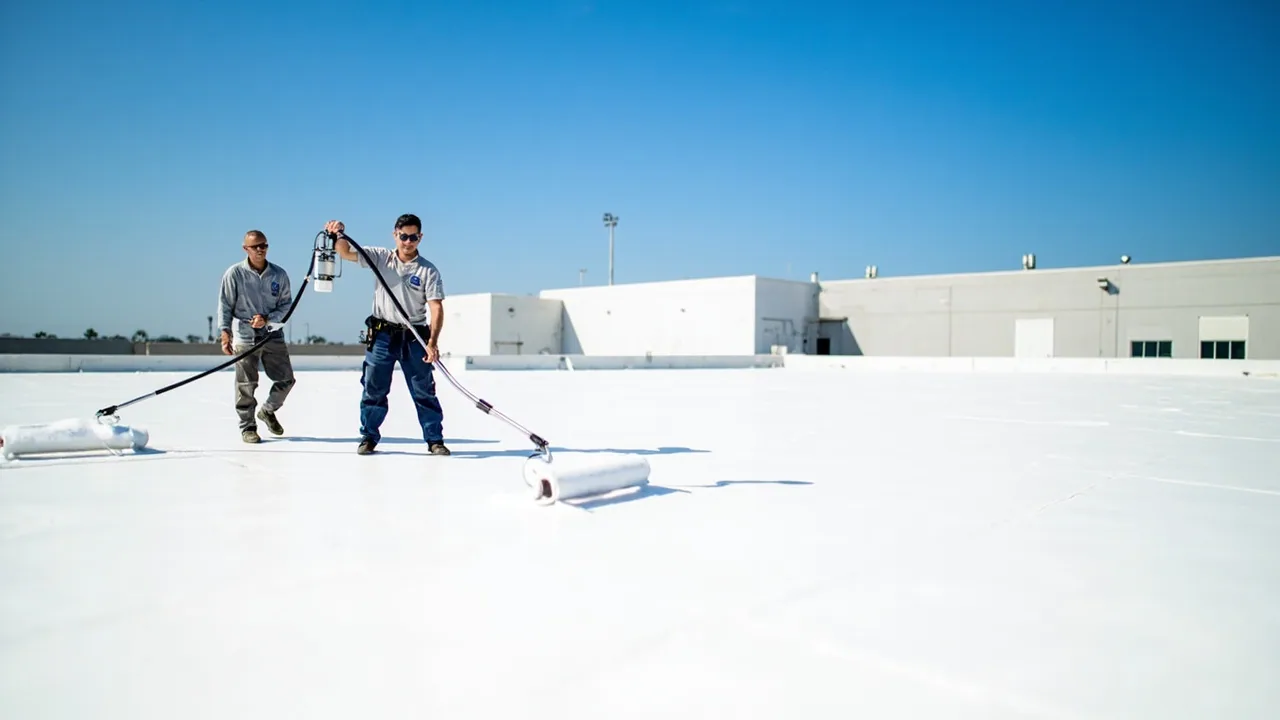
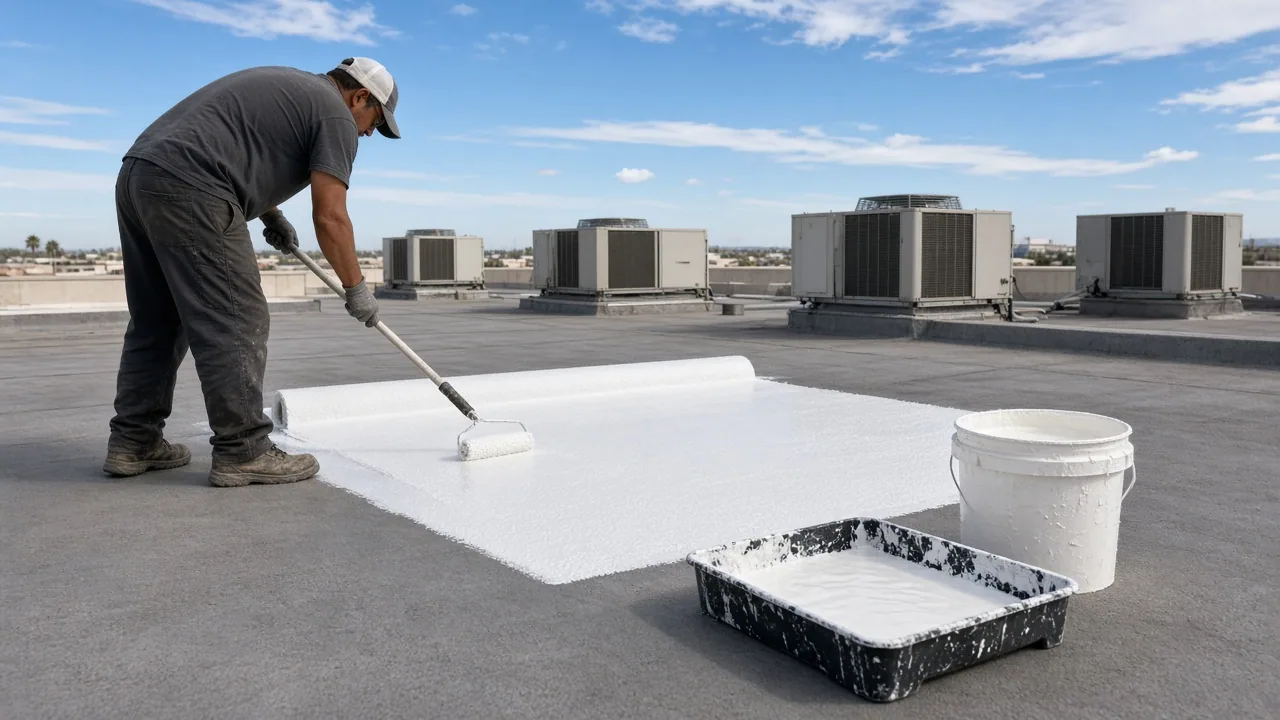
Silicone roof coatings form a liquid-applied protective layer over a compatible roof surface. The coating may help shield an existing assembly from exposure when the substrate is sound, dry, and prepared correctly. Performance depends on the specific product, existing roof, application thickness, reinforcement at details, and maintenance.
The roof beneath may be metal, modified bitumen, a membrane, or another system. Before applying silicone, identify the substrate and existing coating layers, then check whether the proposed system can bond to them. Drains, scuppers, equipment curbs, walls, and edges need details that remain continuous and preserve water flow.
Silicone surfaces can collect dirt or debris, and ponding can remain a concern if drainage is inadequate. We inspect low areas, outlets, blisters, cracks, punctures, and coating wear. Where prior coatings are unknown or adhesion is questionable, a test area or manufacturer review may help guide the scope.
How is restoration suitability evaluated?
Inspection starts with the roof below the coating. We check for moisture, loose material, corrosion, movement, failed flashing, open seams, and drainage problems that a new layer would not correct. The surface is reviewed for adhesion, contamination, wear, blisters, and thin areas. Photographs and a marked plan help define where the coating is intact and where repairs are needed first.
Interior leak locations are compared with roof transitions and drainage routes. Water may travel below a coating before appearing inside, so the closest surface defect may not be the source. If moisture in the assembly could change the decision, testing should identify the method and area examined. The report also notes roof locations that could not be safely accessed.
In the Northwest Industrial Subarea, office, research, business park, and industrial sites can have different equipment and access requirements. A commercial roof inspection documents broader system condition; a roof coating restoration review considers restoration fit. The preparation and cure requirements for acrylic roof coatings differ from silicone, while spray foam roofing needs its shaped insulating layer assessed beneath the coating.
What preparation does a silicone system need?
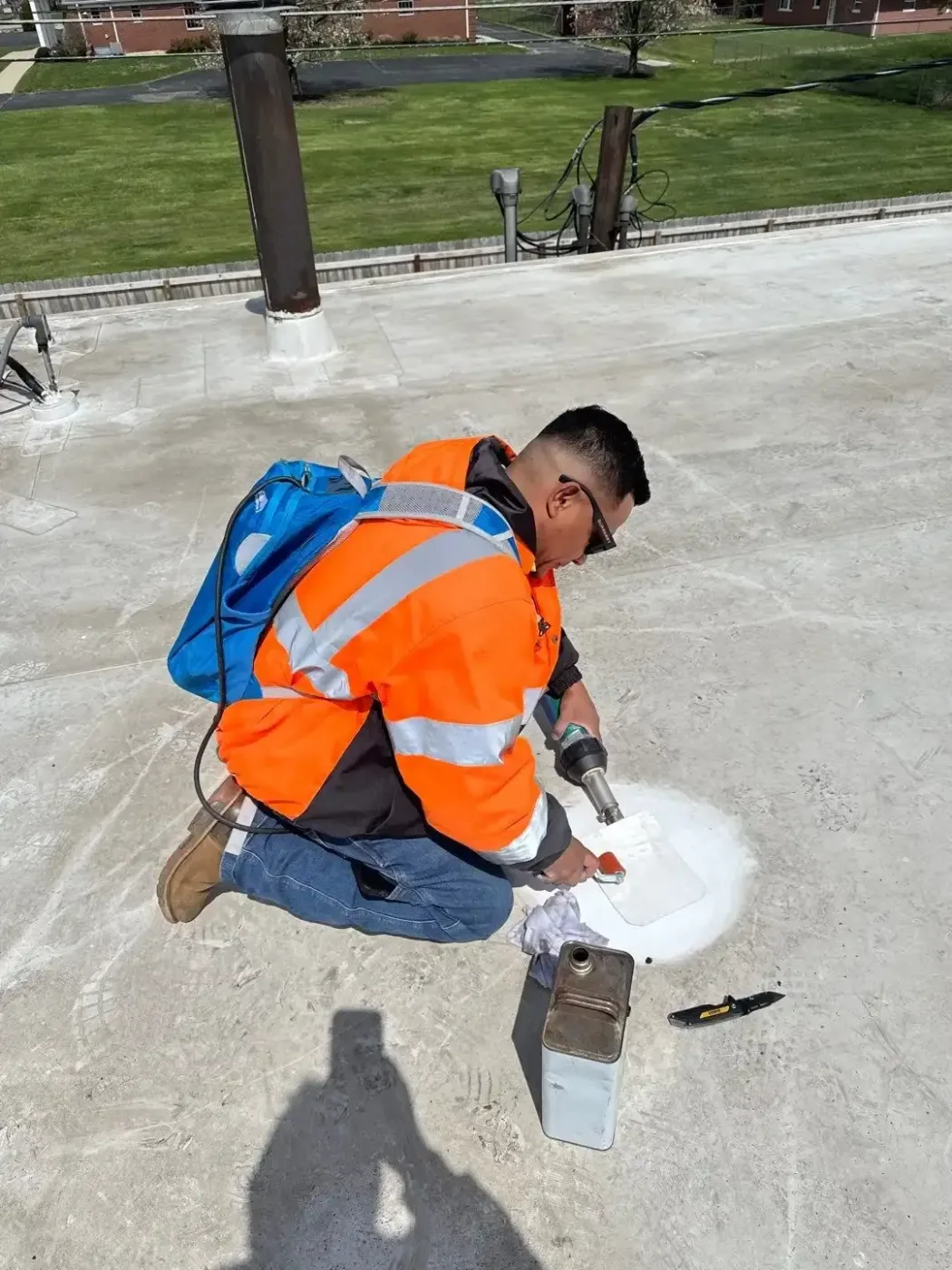
Preparation can include removing dirt, loose coating, oxidation, or incompatible residue; repairing blisters and open details; and ensuring the substrate is dry. The manufacturer’s instructions govern preparation. Applying material over a contaminated or wet surface can weaken adhesion and conceal an unresolved leak path.
Before installation, identify repair areas and test adhesion where needed. System details determine reinforcement around laps, curbs, and pipe openings. The coating must be applied at the specified rate and thickness, with coverage checked at edges and around equipment. Drainage paths should remain open, and the system should not bridge moving joints in a way that prevents expected movement.
The scope should list cleaning, repairs, primer or reinforcement, application areas, and conditions excluded. If the roof has wet insulation, failing metal, or unstable membrane, those conditions need a separate correction. A temporary patch for an active leak can reduce exposure, but permanent restoration should wait until the substrate and work conditions are suitable.
When is a repair enough, and when is recoating considered?
A localized repair may suit a small puncture or isolated detail when surrounding coating is well bonded and the underlying roof is dry and sound. Widespread erosion, thin coverage, recurring leaks, or extensive failed details may call for a broader restoration assessment. If the assembly is wet or deteriorated, adding silicone can trap the problem rather than resolve it.
Recoating can be considered when the existing system remains a suitable base and the surface can be prepared to meet product requirements. The new layer should match the existing chemistry, restore protective thickness, and integrate with repaired transitions. A full replacement may be more appropriate where the underlying roof has broad failure, repeated patch layers, or structural concerns.
The prepared receiver must remain accessible for inspection before silicone hides its surface. We show repaired seams and cleaned transition areas, then perform the adhesion checks appropriate to the selected system. Any proposed change to insulation or roof configuration receives its relevant alteration review. The construction record identifies where the coating can proceed and where substrate repair remains unfinished, allowing the owner to approve a defined area instead of an uncertain surface treatment.
How do access and weather shape coating work?
Coating projects require surface preparation, material delivery, and time for application and cure. A warehouse may need delivery lanes open, a manufacturing property may have process limits, and a visitor-facing business may need customer routes protected. Beach Boulevard, Pacific Coast Highway, and Five Points serve dining, hospitality, and entertainment uses, where scheduling can matter. We coordinate access points, air intakes, adjacent vehicles, pedestrian protection, and tenant notice.
Newport Beach Harbor climate normals show rainfall concentrated in cooler months, but a long-term average does not determine a work day. Offshore Santa Ana flow may warm and dry the coastal work area. Wind, surface moisture, temperature, and the coating’s application requirements govern readiness. The crew should define how the roof will be protected if weather interrupts work before a continuous layer is complete.
Before mobilization, agree on daily work zones, ventilation precautions, staging, and who can approve a pause or change. At closeout, identify areas complete, areas awaiting cure, and any detail that needs owner direction.
What should be monitored after restoration?
Keep product data, batch details, application records, repair photographs, inspection maps, and warranty terms with the roof plan. The closeout should state surface preparation, repaired details, application areas, and any adhesion or moisture testing performed. Record conditions that were visible but left outside the approved work.
Maintenance checks can look for new punctures, thin areas, debris, blocked drains, open flashing, or damage after equipment service. Keep foot traffic to approved routes and review new penetrations before installation. Inspect drainage pathways and outlets regularly.
If water appears inside, note the room, date, and recent weather, then compare the report with the roof map. The route may start away from the stain. A follow-up inspection can determine whether the coating, underlying roof, or a separate transition needs attention and keep the next work scope evidence-based.
Commercial Roofing Questions
What makes an existing assembly suitable for silicone restoration?
No. The existing roof must be identified and evaluated for moisture, attachment, surface condition, drainage, and compatibility. Some surfaces need specific preparation or primer; others may be unsuitable for coating. We document the substrate and any testing needed before recommending a system.
Will silicone change the slope toward a roof outlet?
A coating does not correct poor drainage by itself. Drainage, slope, outlets, and low areas should be evaluated first. The coating detail must preserve water flow, and any standing-water condition should be addressed as part of the scope where feasible.
How can I tell if an existing silicone coating is failing?
Look for erosion, thin spots, blisters, splits, loose edges, or exposed substrate, but have the underlying roof checked as well. Interior stains or ponding may point to a separate issue. The inspection should map the condition and distinguish visible coating wear from concealed moisture.
Can a silicone-coated roof be recoated?
Recoating may be possible when the existing layer is compatible, sufficiently bonded, and properly prepared. The new system’s adhesion and thickness requirements must be followed. If the substrate is wet or failing, correct those conditions before adding another layer.
What information is useful before requesting a coating inspection?
Share the roof type, prior coating product if known, application date, leak reports, maintenance history, and site access limits. Product records and photos help, but the visit verifies the actual roof and identifies whether testing is needed.



Proudly Serving Huntington Beach and Nearby Cities

Commercial Roofers Huntington Beach
Huntington Beach, Westminster, Seal Beach, Fountain Valley,
Garden Grove, Newport Beach and nearby Orange County cities