
KEE Roofing in Huntington Beach, CA
A membrane label identifies a product family, but seams and transitions still need inspection. Commercial Roofers Huntington Beach repairs and replaces KEE roofing in Huntington Beach, CA, after confirming the sheet and assembly. KEE is a ketone ethylene ester modified PVC formulation; manufacturer instructions determine the compatible repair. The first safe step is to control roof access, protect occupied areas if water is active, and locate the affected detail before setting a repair boundary.
The Northwest Industrial Subarea includes offices, research, technology, and industrial uses. The Pacific Coast Highway coastal corridor serves visitor-facing businesses with different access needs. Cooler-season precipitation dominates the nearby Newport Beach Harbor normal record. Drainage deserves attention, while current conditions determine whether a seam operation can proceed.
Where a roof meets a higher wall, movement and water flow can stress the flashing. We check whether termination bars, counterflashing, and sealant remain intact and whether the detail allows expected movement.
What does KEE change in a PVC-alloy roof?
KEE is a modifier used in some PVC membranes; it does not specify every roof detail or make every repair material suitable. Reinforcement, thickness, surface treatment, attachment, age, and manufacturer instructions can change preparation and repair. We review product records and inspect the sheet before proposing a patch or weld.
The assembly may include insulation, cover board, a vapor retarder, fasteners or adhesive, and a deck. Seams, edges, drains, wall transitions, and equipment curbs keep the membrane continuous. Owners can share invoices, closeout photographs, warranty documents, and prior repair records. If records are missing, we note visible markings and explain what remains uncertain rather than identify a product by color alone.
A successful material match also depends on what earlier crews applied. Old coatings, repair tapes, and cleaners can change the surface, so we record visible layers before selecting a compatible preparation method.
Where should the roof review begin?
We begin at the reported concern and follow the drainage route toward a drain or scupper. The review covers seams, field punctures, abrasion, flashing, ponding, debris, and signs of membrane or substrate movement. Photographs and a location map connect each observation to the roof plan.
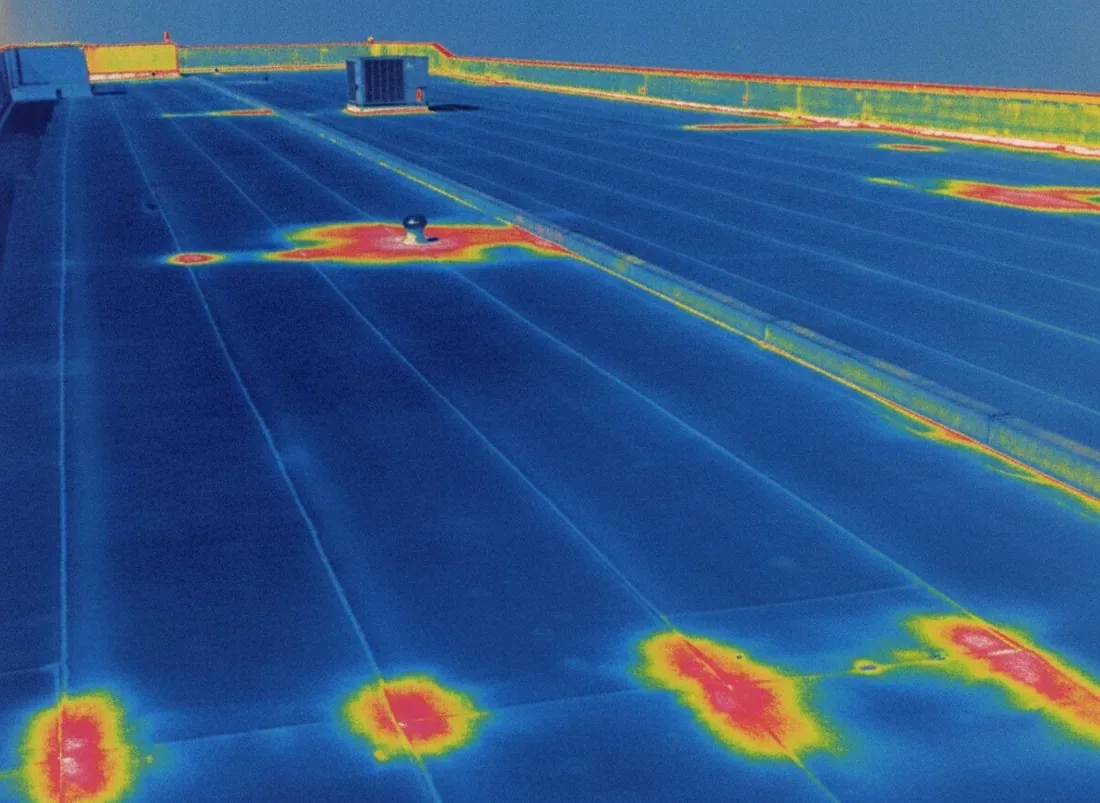
Water can travel over a deck before appearing at an interior stain. The KEE investigation locates each room report against its adjoining seams, then identifies any concealed check needed before the receiver is opened. Moisture evaluation may show whether wet insulation extends beyond the visible mark. In the 760-acre Northwest Industrial Subarea, escorts, production coordination, or restricted routes may affect access. A commercial roof inspection establishes the accessible connection, while an infrared moisture survey can locate suspect areas for confirmation when its method suits the assembly. Compare PVC roofing and TPO roofing; their chemistry and seam procedures differ.
Drain bowls and overflow points deserve separate attention. A primary outlet may be clear while an emergency overflow is blocked or set too high to reveal a developing drainage problem.
How is a KEE repair selected?
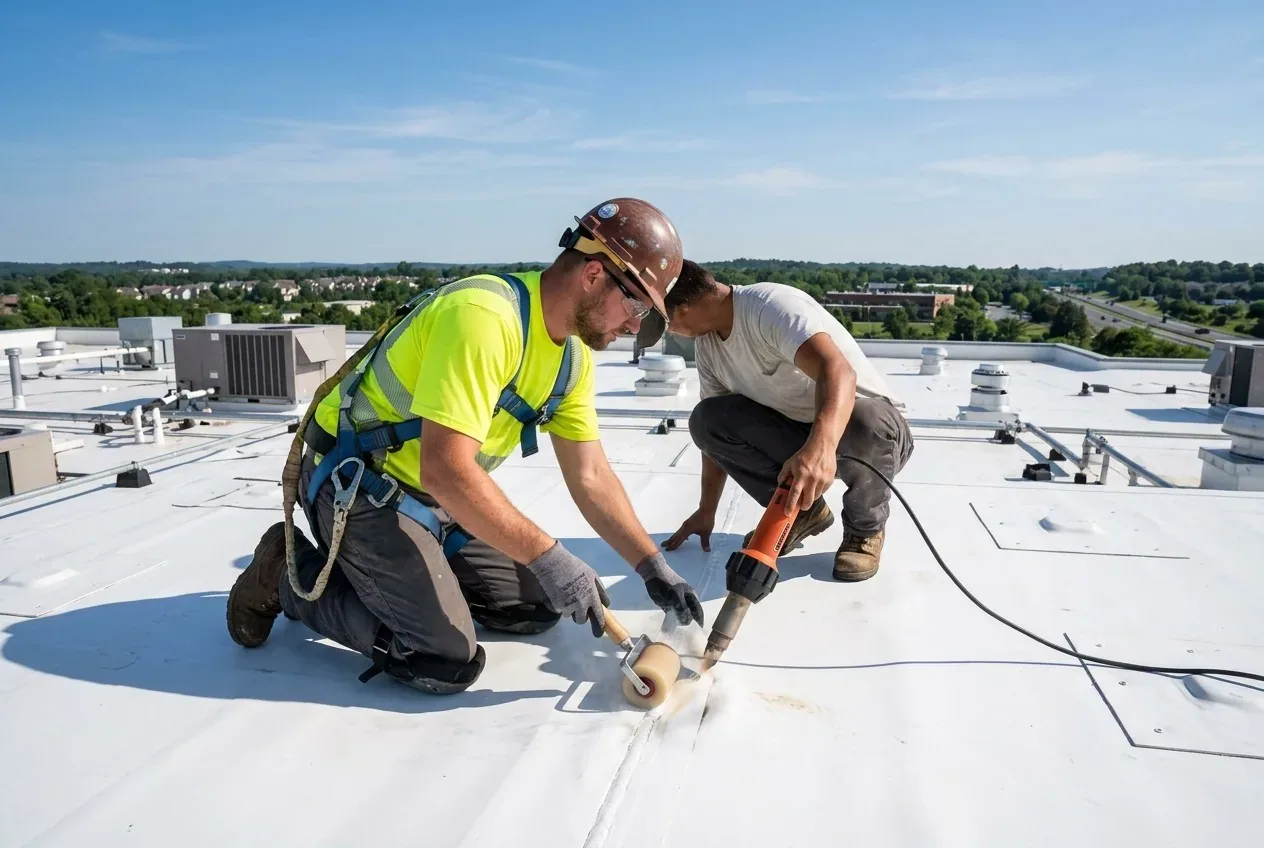
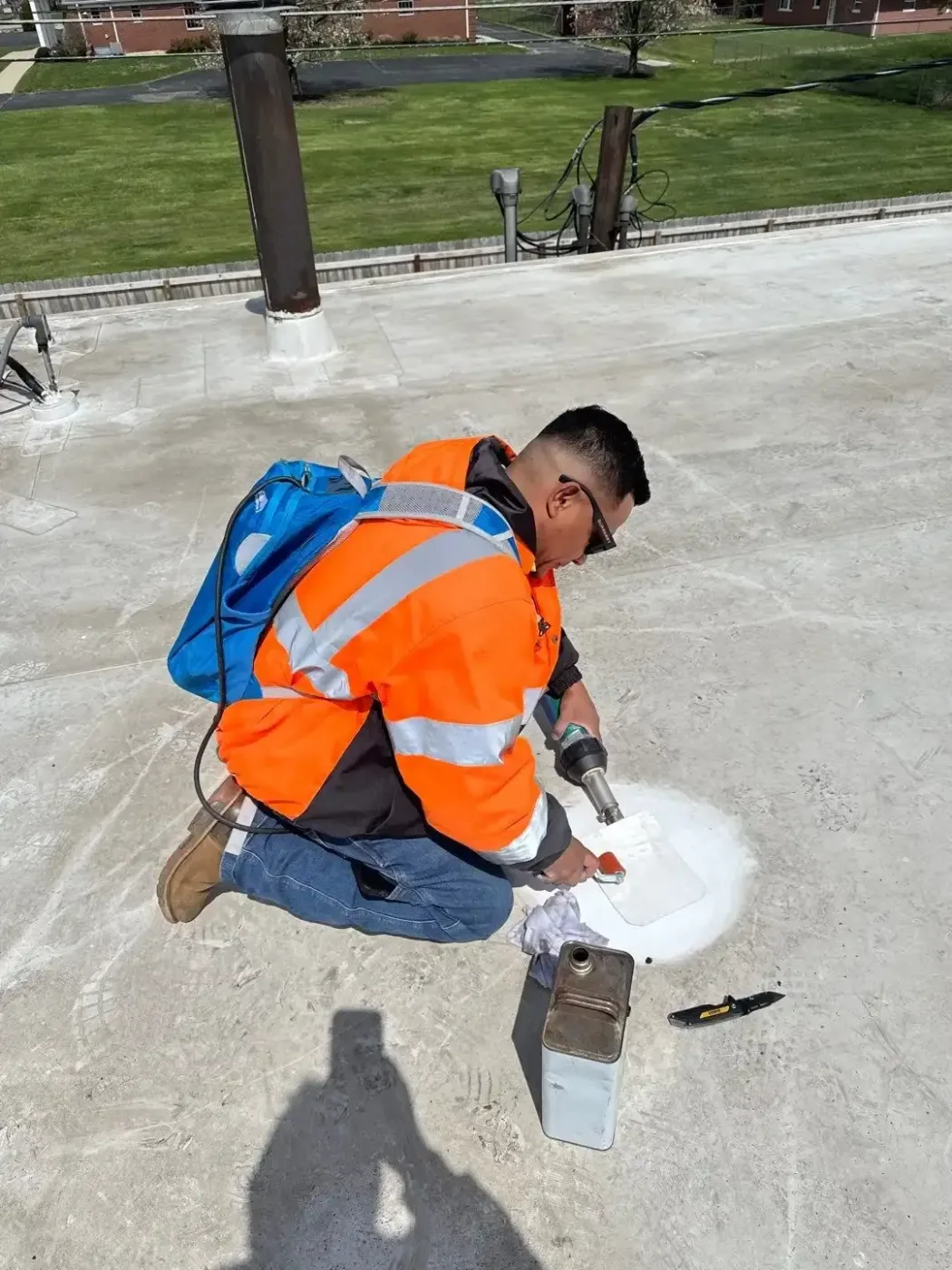
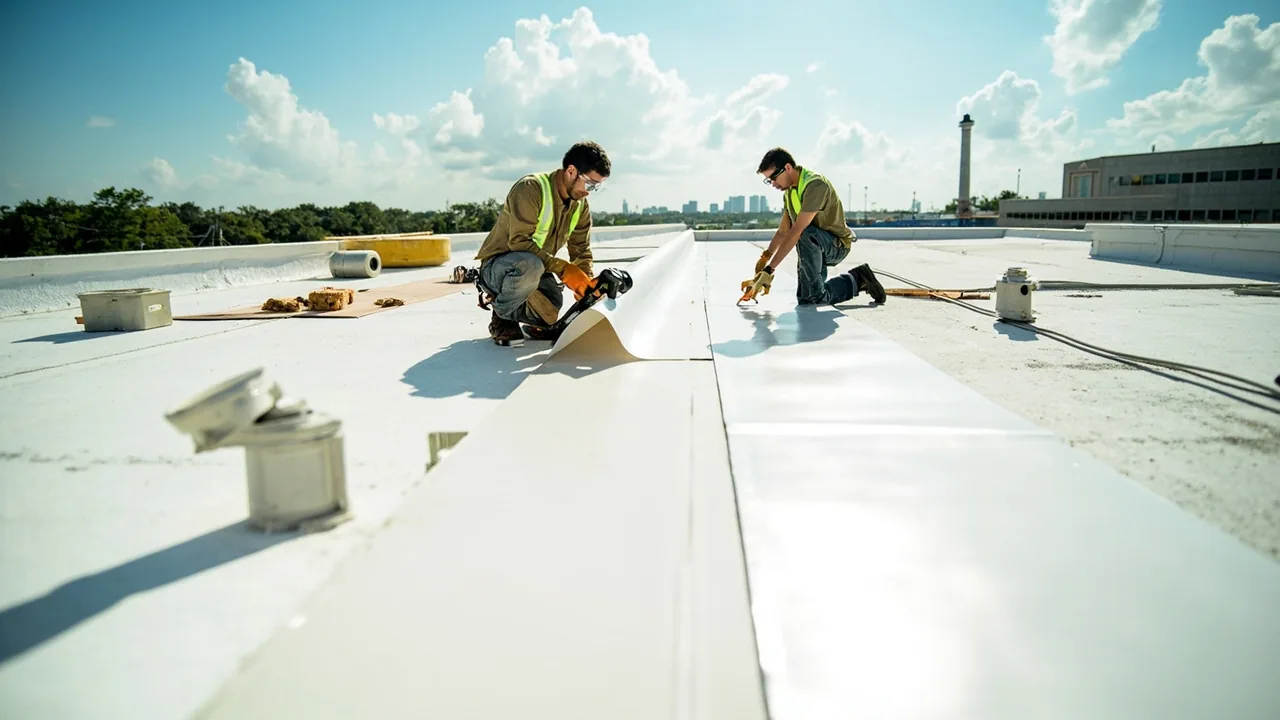
Repair selection starts with product and surface confirmation. A KEE-compatible sheet may be heat welded when the existing membrane and repair system allow it. Other details may require a specified cleaner, primer, adhesive, or flashing accessory. We follow product instructions for preparation, temperature, overlap, and testing.
The area must be dry, clean, and sound enough to accept a tie-in. A seam opening needs a seam correction; a patch over a larger bond failure can leave the weak edge in place. Drain and curb work should continue the membrane through the transition without interrupting water flow. The written scope states what it addresses and what remains. If a warranty applies, confirm whether a particular procedure or notice is required. Temporary protection for an active leak should be recorded separately from permanent repair.
Where a repair cannot be completed on the first visit, the owner should know what was temporarily secured and what remains exposed. We identify the return-work trigger and keep that limit clear.
When should the owner consider replacement?
Replacement may be appropriate when seam or flashing problems extend across several areas, moisture affects substantial insulation, the membrane is deteriorated, or repairs keep recurring. Inadequate drainage or failing edges may also require assembly-level work. The assessment should explain why a local repair is insufficient.
Before a recover, review moisture, attachment, weight, compatibility, and code requirements. Wet or unstable layers may need removal. A new KEE assembly can change the height at an outlet or equipment opening even when the deck remains. We measure those relationships and identify the retained material available for each transition. Moisture confirmation, attachment and project requirements govern the retention decision. The scope describes any curb adjustment and the daily closing connection before another layer is ordered, keeping the chosen sheet connected to the construction beneath and beside it.
Replacement planning also considers rooftop equipment and future penetrations. An owner can reduce later disruption by consolidating planned work and agreeing on flashing responsibility before a new curb is installed.
How do site use and weather affect installation?
Work planning starts with people and operations below. An office may have sensitive equipment, an industrial tenant may need an open production route, and a hotel or restaurant may require deliveries to continue. Customer circulation near Five Points and the visitor businesses beside Beach Boulevard or Pacific Coast Highway enters the delivery discussion. We confirm roof access, material storage, lift locations, and interior protection before work.
KEE work may use welding or adhesives, so surface and weather conditions matter. Newport Beach Harbor records show winter-focused rain but cannot clear a specific work day. A Santa Ana period may replace marine conditions with warmer, drier air from inland. We check the forecast and product requirements, then define how exposed work will be protected if plans change. For multi-day work, confirm active roof zones, restricted routes, and who can approve scope changes.
Delivery timing, tenant notices, and a clear pedestrian path should be settled with the property contact. These details keep the crew’s work zone away from active entrances and loading activity.
What should a KEE roofing record capture?
Closeout should identify the roof area and product, describe preparation and repair details, and include before-and-after photographs. Record seam tests and moisture checks when performed, along with inspection limits. List deferred conditions separately with a next action.
Keep product data, warranty papers, approvals, and contractor notes with the roof plan. Staff can log drain cleaning, equipment changes, foot traffic, and leak reports by date and location. After service, keep drains open and use designated walk paths. Report new moisture with the room and timing; water can travel, so a later review should retrace its route instead of assuming the last repair failed.
Photographs should show orientation as well as close detail. A roof-plan reference or labeled grid lets maintenance staff find the completed work without relying on the original crew.
Commercial Roofing Questions
Why does a KEE label still require sheet identification?
KEE is a modifier in some PVC formulations, but product, reinforcement, surface, and repair instructions vary. We confirm the installed sheet and records before choosing materials or a seam method. Color or a generic roof label is not enough to establish compatibility.
Can you weld a repair onto any KEE membrane?
Only when the specific membrane and repair system support welding and the existing surface can be prepared correctly. We check product guidance, sheet condition, and tie-in area. If identification is uncertain, we explain what records or testing are needed before permanent work.
Will a KEE roof tolerate grease or rooftop chemicals?
Exposure depends on the substance, concentration, temperature, duration, and membrane formulation. We document the location and observed change, then compare it with product guidance. A general KEE label does not establish that a chemical exposure is harmless.
When does a KEE roof need replacement instead of another repair?
Review replacement when deterioration, moisture, or repeated failures extend beyond isolated details. We map affected areas and explain repair limits. A recover also needs moisture, attachment, structural, and code review before it is selected.
What should be ready before a KEE roof inspection?
Share the roof plan, product or warranty records, leak locations, access rules, and operating limits. Tell us whether equipment or tenants need notice. These details focus the visit, while the inspection verifies actual roof conditions.

How we inspect, scope and complete this work
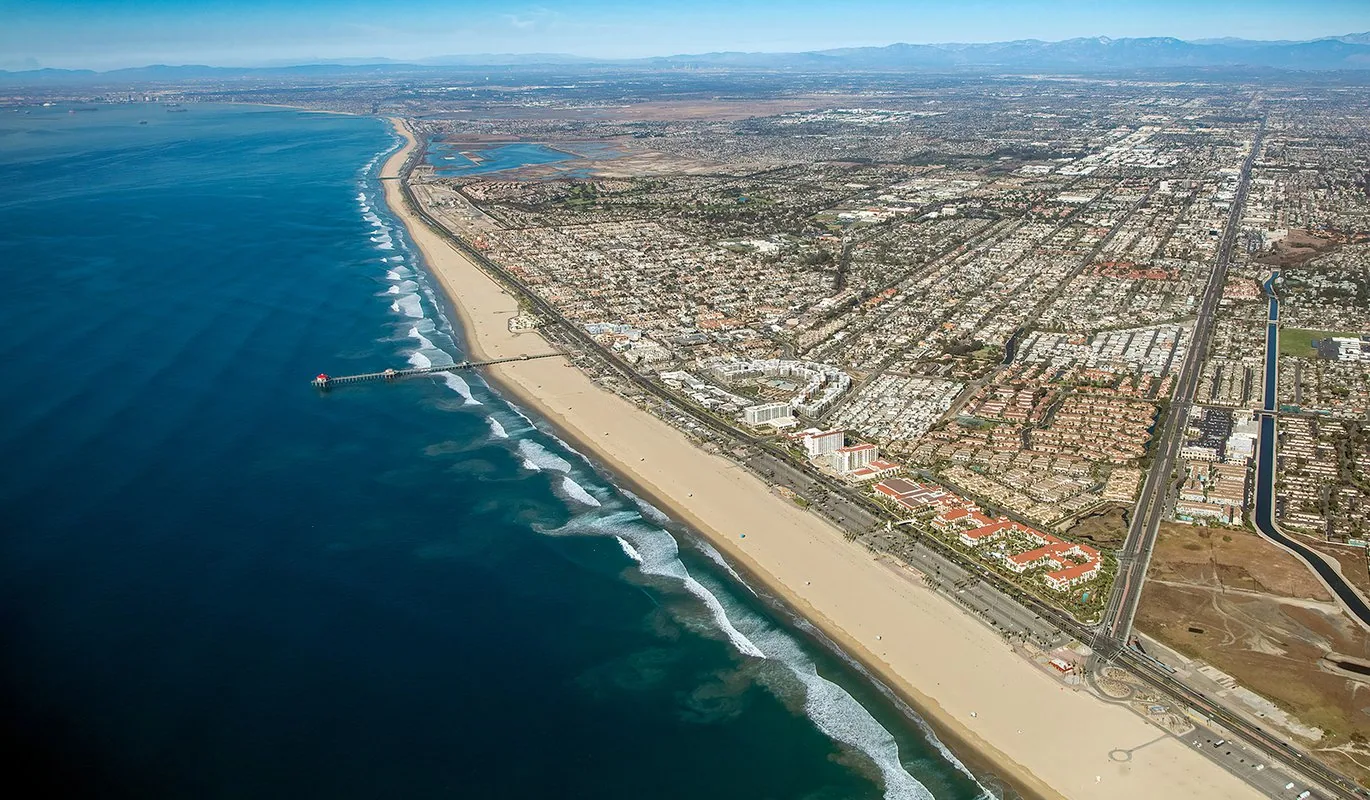

Proudly Serving Huntington Beach and Nearby Cities

Commercial Roofers Huntington Beach
Huntington Beach, Westminster, Seal Beach, Fountain Valley,
Garden Grove, Newport Beach and nearby Orange County cities