
Commercial Roof Leak Repair in Huntington Beach, CA
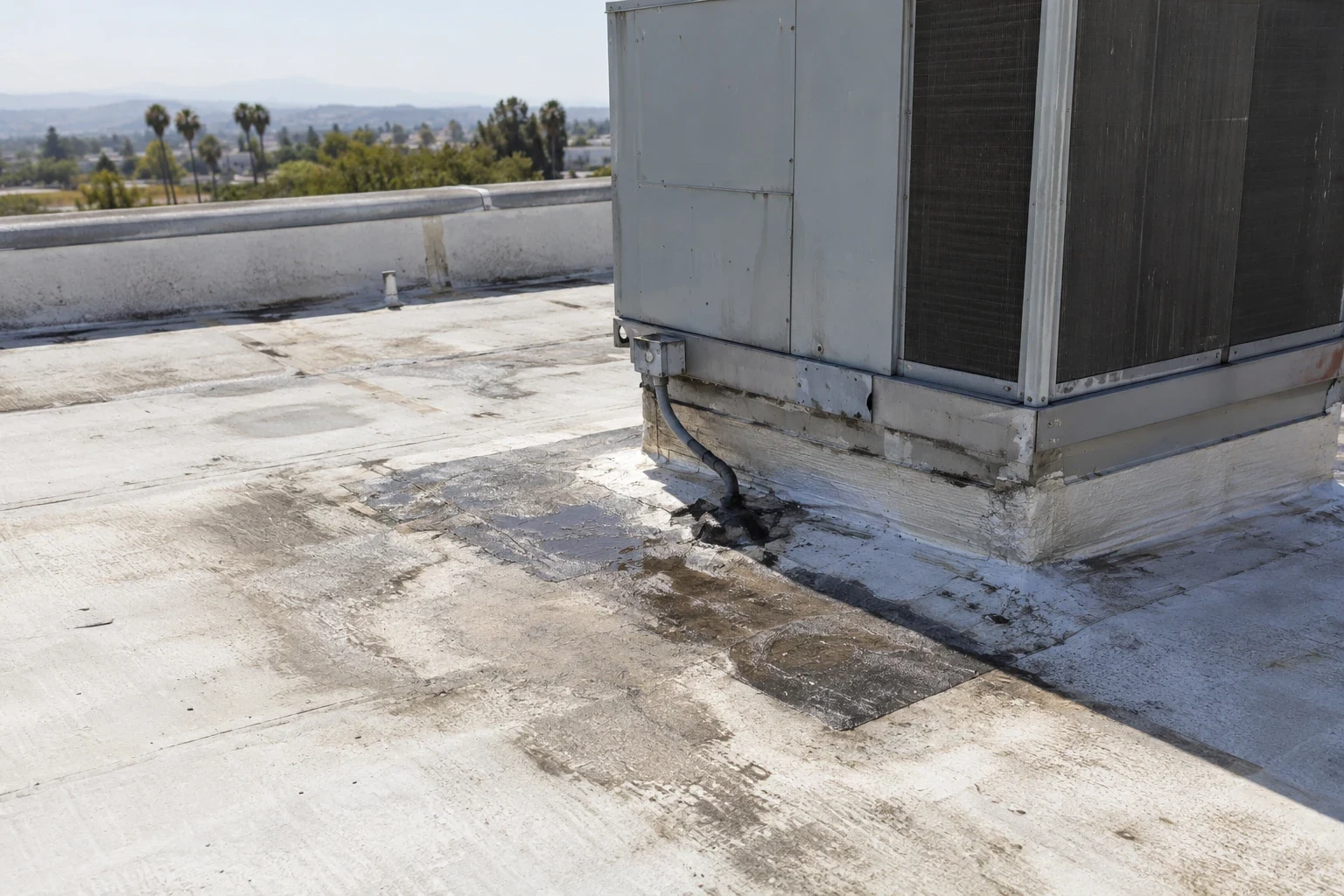
A fresh ceiling mark needs a safe interior response and a roof inspection that follows the water route. Commercial Roofers Huntington Beach traces and repairs commercial roof leaks in Huntington Beach, CA. We record where water appeared, when it began and what equipment was operating, then inspect the roof area above and around the report. The first safe step is to protect people and contents below while the site contact arranges roof access.
Huntington Beach’s Gothard Street Subarea includes industrial, warehouse, repair, retail and office uses. Along Pacific Coast Highway and Five Points, visitor-serving properties bring different access demands. The leak report identifies the building and affected operation; the roof plan helps locate seams, edges, drains and curbs that may explain it.
Where does the reported water travel?
The point where water appears indoors may be far from the opening above. We compare the room mark, drip timing and recent rain with roof transitions and drainage. The inspection looks at penetrations, seams, parapets, drains and wall connections around the likely route. A wide photograph establishes the roof position, and close images show the condition that needs correction.
If several rooms report water, each symptom receives its own record. A shared roof path may connect them, or the reports may involve separate openings. We avoid combining them until the field check supports that decision. The inspection record maps the observed zones and identifies any area requiring additional access or testing.
Newport Beach Harbor climate normals record most rainfall in winter and very little in summer. That nearby coastal station gives seasonal context, while the leak timing and actual roof condition determine the repair. A dry stretch does not close a leak report if the detail remains open.
Which roof details need a closer check?
Water enters at more than one kind of weak point. A seam can separate, flashing can pull from a curb, a fastener can back out or a drain connection can open. We identify the roof material and inspect each nearby detail before selecting a repair. If an old patch covers the suspected opening, the scope notes whether it must be removed to examine the receiver underneath.
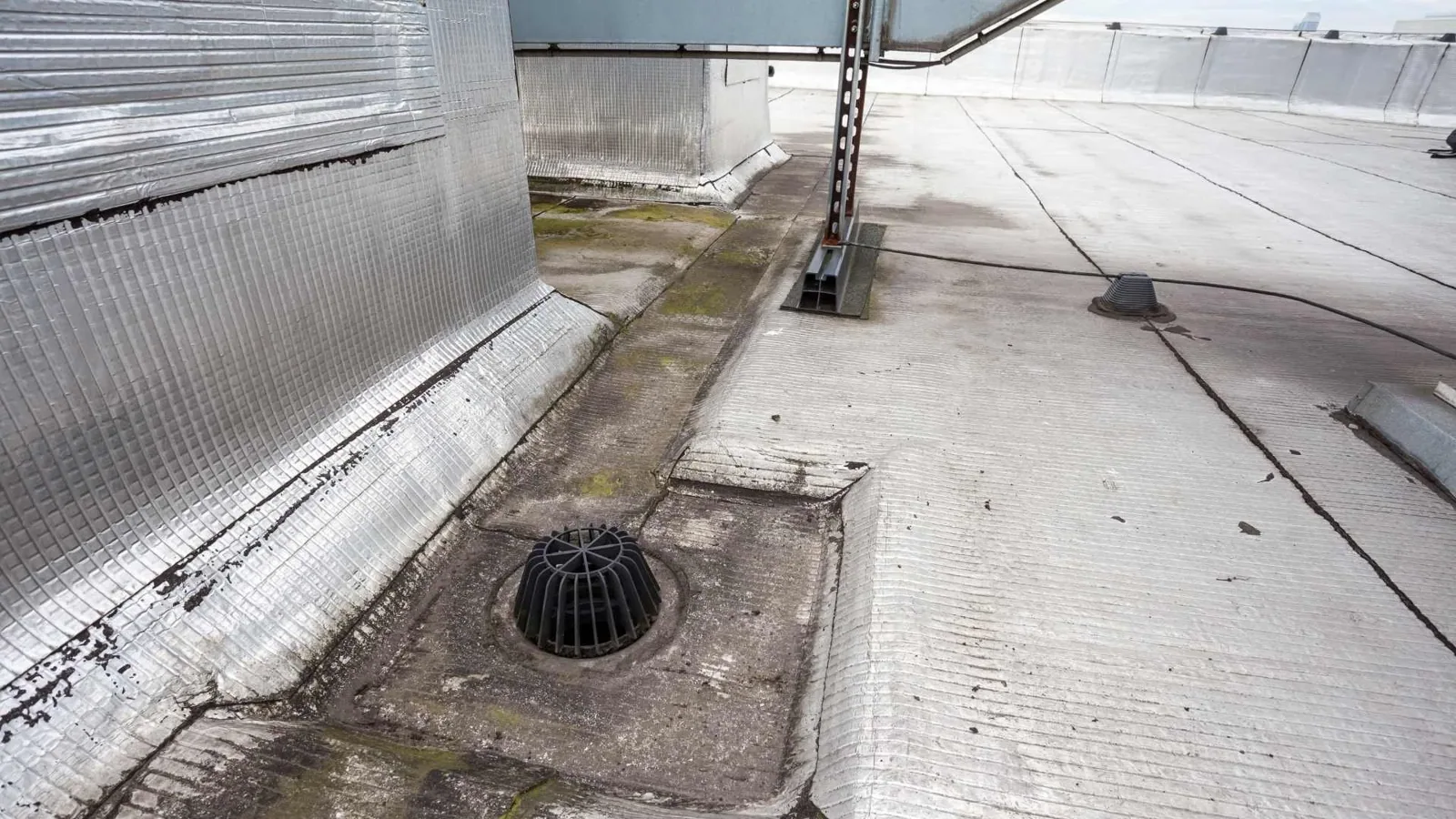
Drainage can keep water against a seam long after rainfall stops. We check whether the outlet is blocked, the bowl connection is damaged or a low area changes the flow. Drain and scupper repairs can address outlet conditions alongside the leak correction. The owner receives separate work lines for cleaning, membrane repair and any drainage change requiring further design.
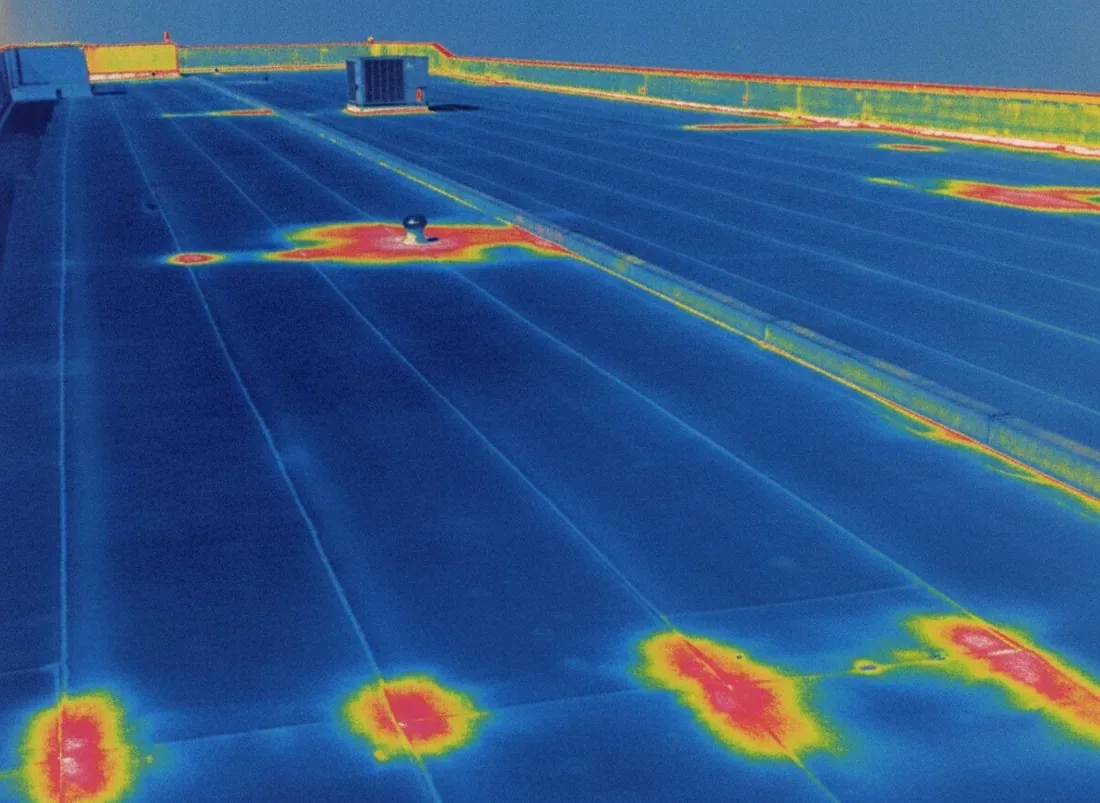
Where moisture extent affects whether insulation must be removed, we mark test points and explain the confirmation method. Infrared moisture testing may help identify areas for verification when the roof surface and weather conditions support it.
How do we stop active entry?
When water is still entering, we protect the interior and roof opening in the safest sequence available. The site contact identifies affected rooms, electrical concerns and access limits. A temporary cover or patch can reduce further exposure while permanent material and testing are arranged. We label the temporary measure and state what remains open, so a short-term dry-in is not mistaken for the finished repair.
Our emergency crew answers calls around the clock, all week and on holidays. The response starts with the reported condition and a safe access plan. If a storm or active wind changes roof access, interior protection continues until a crew can work safely. Once on the roof, we document the dry-in boundary and any adjacent detail that needs a permanent correction.
Repair timing depends on roof access, wet insulation, material compatibility and any equipment or interior coordination. The manager can approve protection first and decide on a broader scope after the leak path is mapped.
What makes a permanent repair hold?
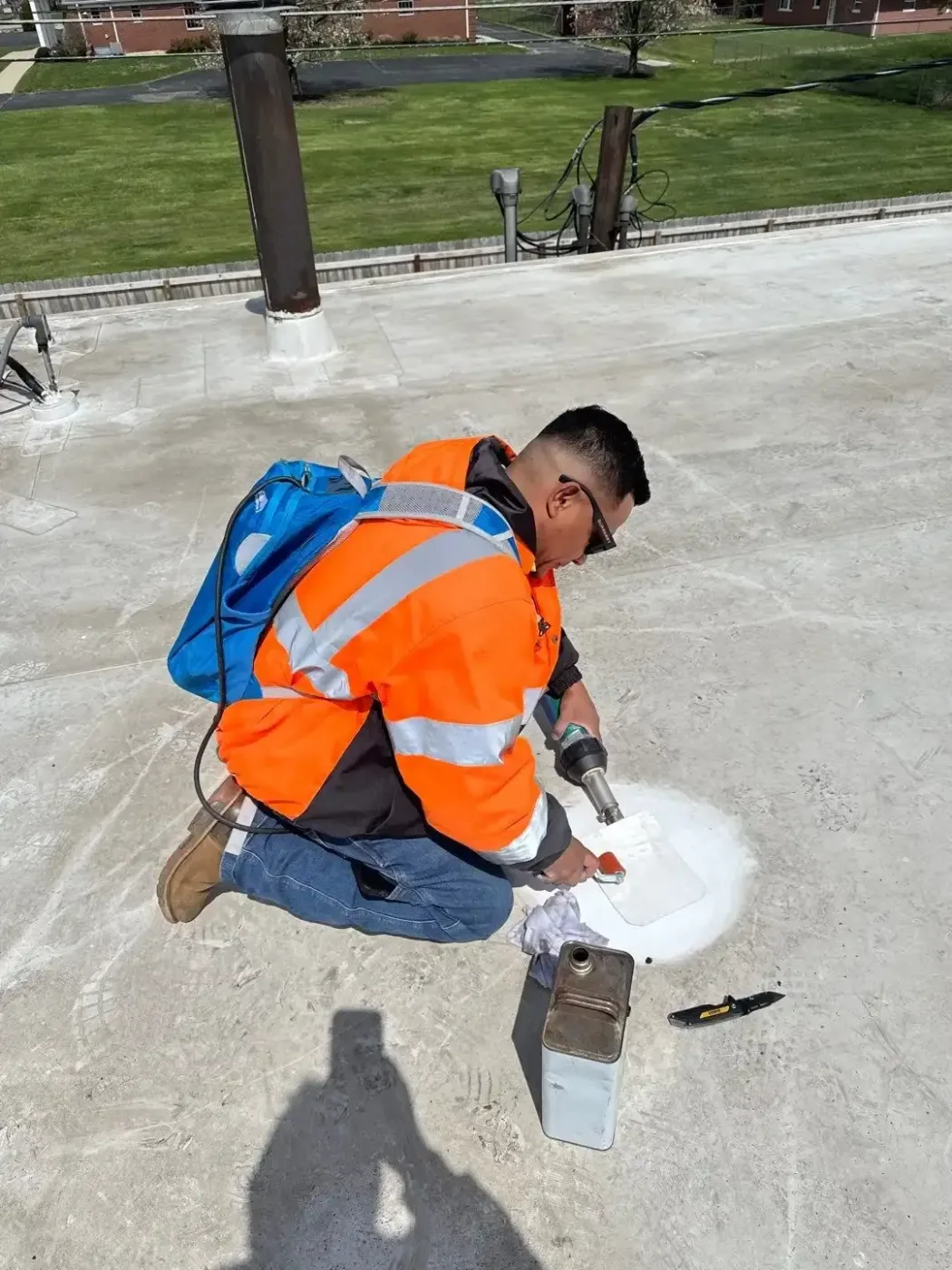
A permanent correction begins with a sound surface and compatible materials. We remove loose or failed patches, prepare the receiver and restore the seam or flashing detail. At a curb or wall, the repair must connect the membrane to the surrounding assembly, not merely cover the visible split. If a mechanical support moves, the responsible trade must stabilize it before the roofing connection is closed.
We mark the completed area and photograph the edge of the repair. A return check can compare the same location after rain or equipment service. If the roof has multiple systems, the work record identifies which material was repaired and any nearby transition left for follow-up. Planned commercial roof repair addresses non-emergency defects with a similar marked boundary and closeout record.
Santa Ana events can bring warm, dry offshore winds and change field conditions. We schedule exposed work for a suitable weather window and secure the repair if conditions shift. The wind event informs timing; the inspected detail determines the correction.
When should leak repair lead to a larger scope?
A local patch may be right when adjacent material is sound and moisture has not spread beyond the repair area. Repeated calls at the same seam, several wet test points or failed attachment can support a wider examination. We show those findings on the plan and identify what additional test would change the choice between repair, recover and replacement.
An overlay adds material and can affect drains, edge heights and curb flashings. Recover evaluation checks moisture and attachment before another layer is considered. If those conditions do not support retention, replacement planning defines the removal and rebuild work.
Huntington Beach began using the current California building-code cycle in 2026. Permit scope and submitted plans establish which review applies when a leak repair expands into alteration work.
How is the leak file closed?
The closeout joins the interior report, roof-zone mark, photographs, completed correction and any open item. We note where the temporary cover ended and the permanent repair began. A manager can then compare a later symptom with the original route instead of relying on a room description alone. If no roof opening was found, the report states what was examined and which next test or building trade could help.
Keep roof findings with work orders for plumbing, HVAC and exterior walls when those systems were involved. A condition report organizes photos and recommendations for future review. At the Gothard Street Subarea, site access and yard activity vary by property, so confirm the route and operating window before a return check.
Tell dispatch which rooms are wet, attach the roof plan and include the site contact, access instructions and hours when repair can proceed. We will trace the likely path and document the correction for a return check.
Commercial Roofing Questions
Why is water appearing away from the roof leak?
Water can move along a deck, insulation joint or roof transition before entering the room. We compare the interior location with nearby roof details and record the likely route and evidence.
How should the site contact restrict an actively leaking room?
Keep people clear of wet flooring and electrical hazards, protect contents where safe, and tell the site contact when and where water appeared. The roof access contact can then arrange the first inspection window.
Can you repair a leak before the full cause is known?
We can install a temporary cover when conditions allow, then mark what remains to be examined. A permanent repair follows the field findings or testing that defines the opening and receiver.
Do you inspect drains during leak service?
Yes, when the drain path may relate to the report. We check outlet condition and membrane connection, then separate cleaning or drainage work from the leak patch in the scope.
Which repeat-leak findings justify checking concealed insulation?
Testing is useful when insulation moisture would change the repair extent. We mark each test location and explain what confirmation is needed before removing or retaining material.


Proudly Serving Huntington Beach and Nearby Cities

Commercial Roofers Huntington Beach
Huntington Beach, Westminster, Seal Beach, Fountain Valley,
Garden Grove, Newport Beach and nearby Orange County cities