
Commercial Roofing in Gothard Street Subarea, Huntington Beach, CA
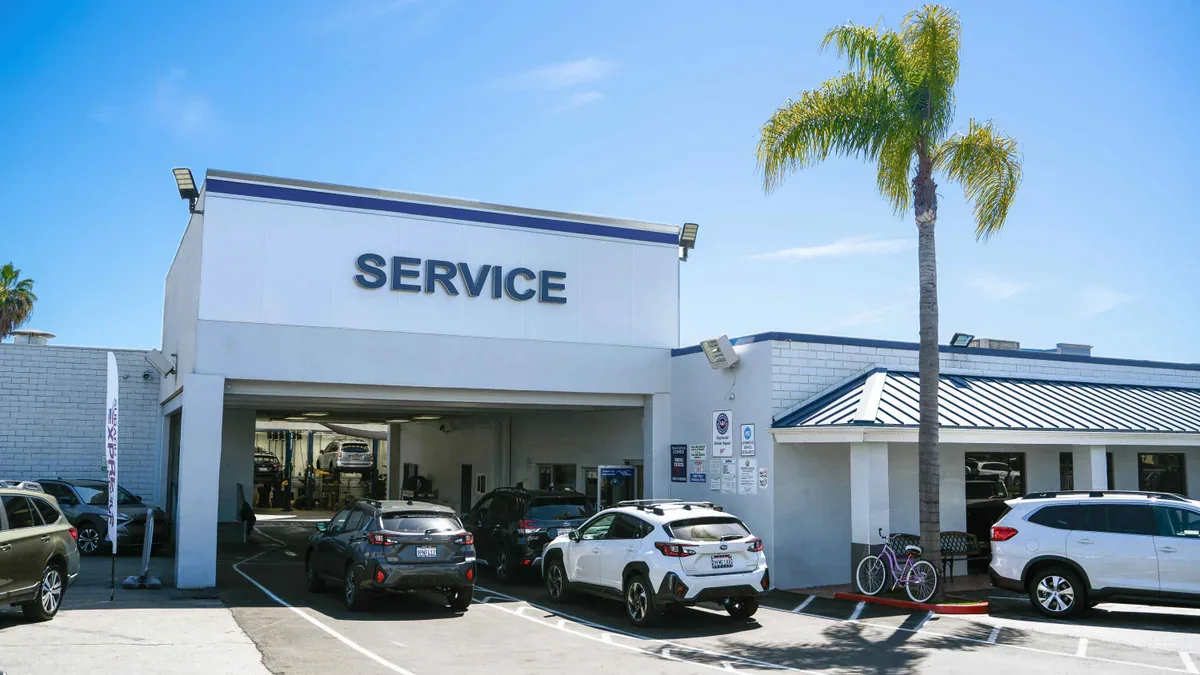
Roofing above a working shop in the Gothard Street Subarea needs the equipment schedule before the removal schedule. We inspect the reported opening, identify what sits below it, and establish a protection boundary with the building contact. Commercial Roofers Huntington Beach handles commercial roof repairs and replacement in this district of Huntington Beach, CA. A warehouse bay, auto repair area, and adjoining office can share access while needing different limits on dust, water exposure, and overhead work.
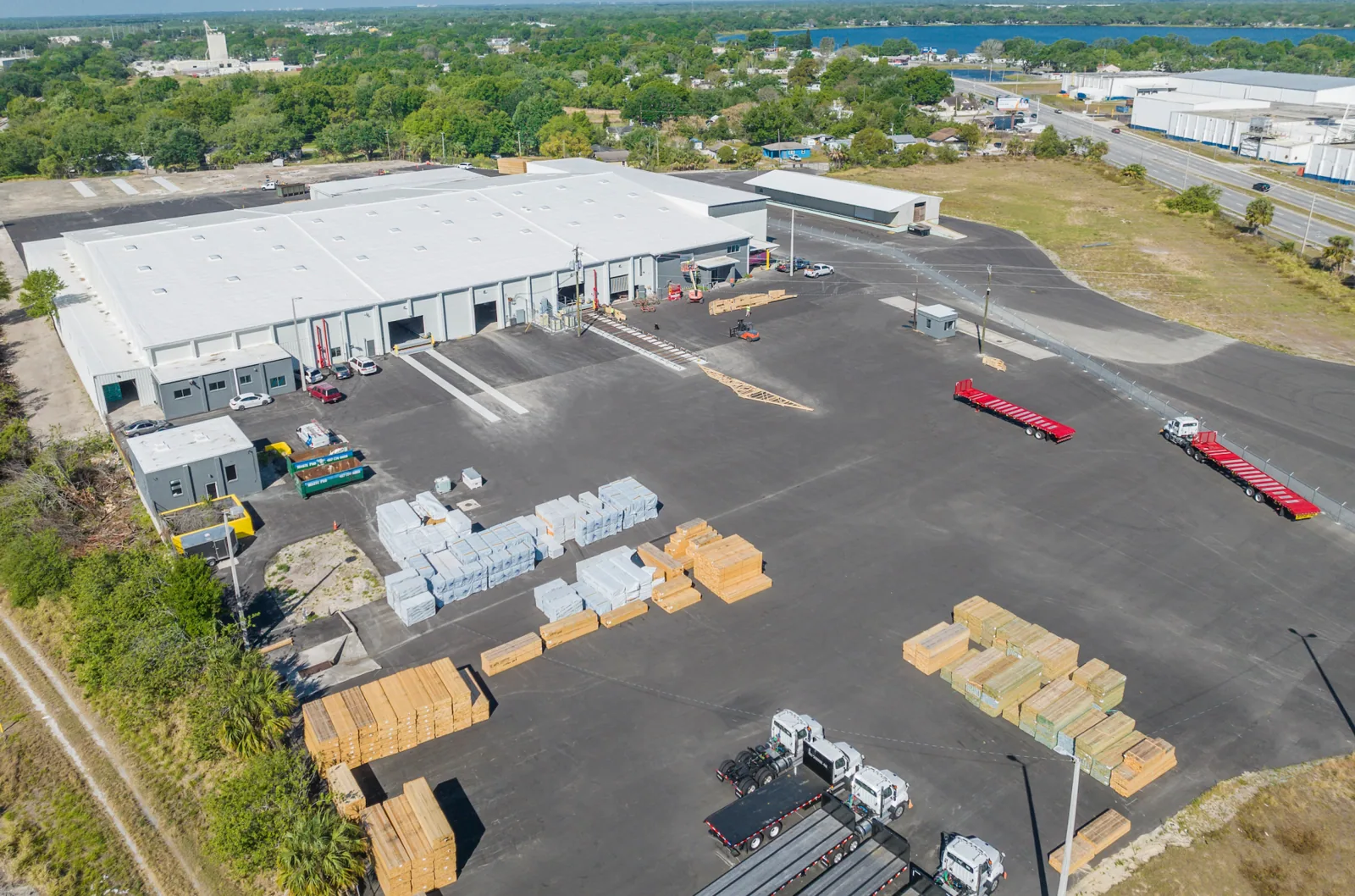
The employment area extends between Edinger and Ellis avenues and covers 422 acres. Its smaller manufacturing and warehouse buildings, auto repair uses, scattered offices, and industrial parks create a varied operating setting. The Union Pacific right-of-way lies just east of the district. We use the actual property entrance and yard arrangement to set roofing access, keeping material movement within the approved building work area. The district's geography helps orient the visit; the roof findings establish what needs repair.
Which shop activity can pause beneath an opening?
An open production process or vehicle on a lift can prevent removal above the room until the operation moves or stops. We review the proposed roof area with the person responsible for that activity, identifying equipment that needs relocation and contents requiring protection. A barrier below the opening must address the actual exposure, including falling fragments or water released from wet layers. Roof work and interior operations receive separate boundaries so unrelated activities can continue where safe.
A loading route also needs room for its ordinary traffic while roofing materials arrive. We identify lifting positions, collection points, and where removed material can leave without crossing an active work station. For roof work over manufacturing equipment, the work sequence includes any process shutdown needed for overhead removal. Management receives the expected restriction before the shift starts, and an operational change prompts a revised plan before the crew opens another roof area.
Did an equipment change leave an incomplete roof detail?
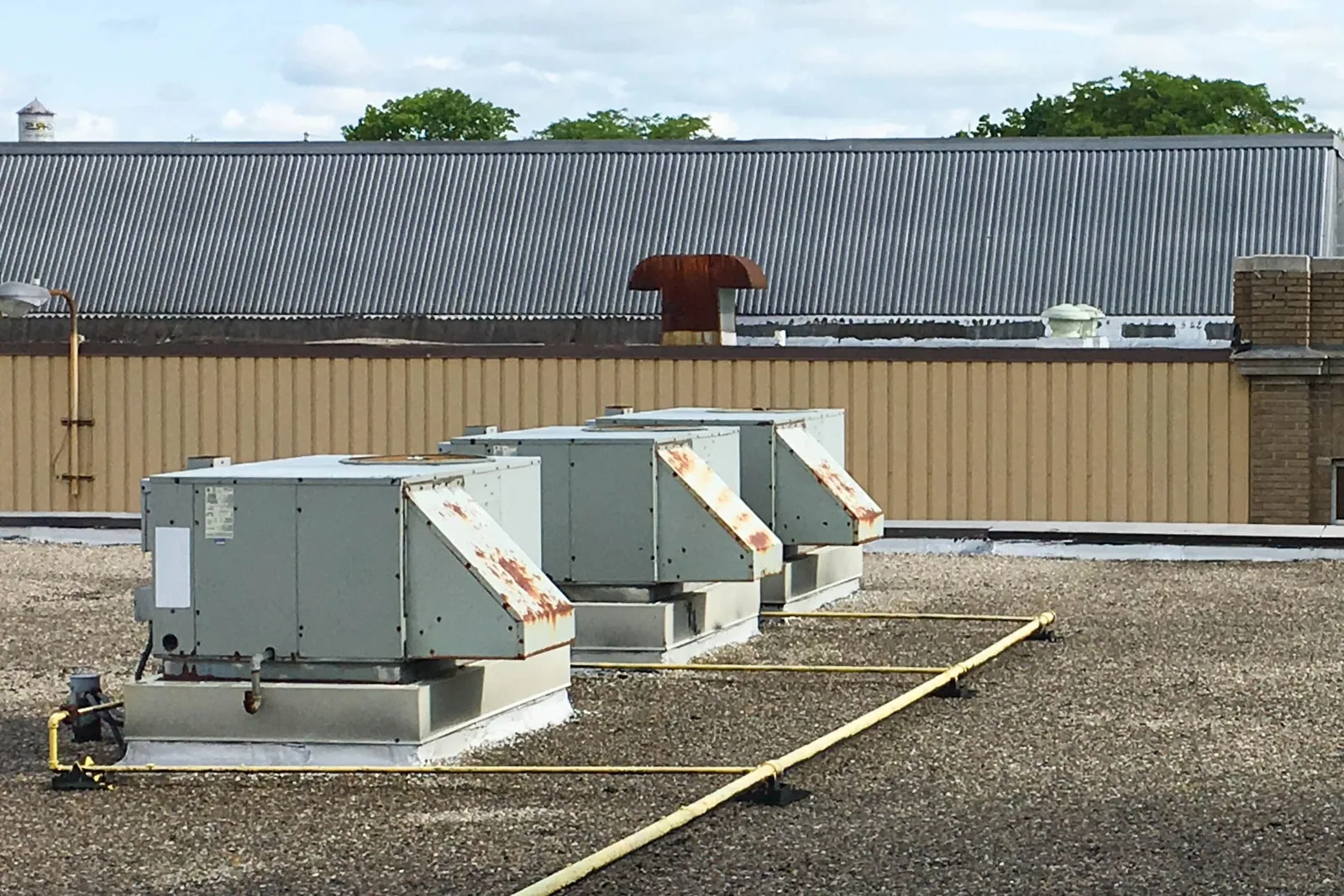
A removed pipe can leave a patched opening that still contains loose supporting material. We inspect abandoned penetrations, added curbs, pipe boots, and service supports, comparing them with available equipment information. Active components need compatible flashing and a usable maintenance route. Unused openings need complete closure through the affected assembly rather than sealant spread over a remaining hole. The roof plan identifies which component belongs to the building operation and which no longer serves it.
Recurring water beside a unit can originate in its roofing connection or its own drainage. We examine the curb and surrounding seams while the mechanical contact checks the operating component where needed. Correction of curbs and roof-mounted supports may be required before a membrane repair can close against stable construction. The inspection also checks nearby damage from service traffic, separating a split seam from a puncture made by a tool or hard-edged support.
What should be cleared before roof water reaches stored material?
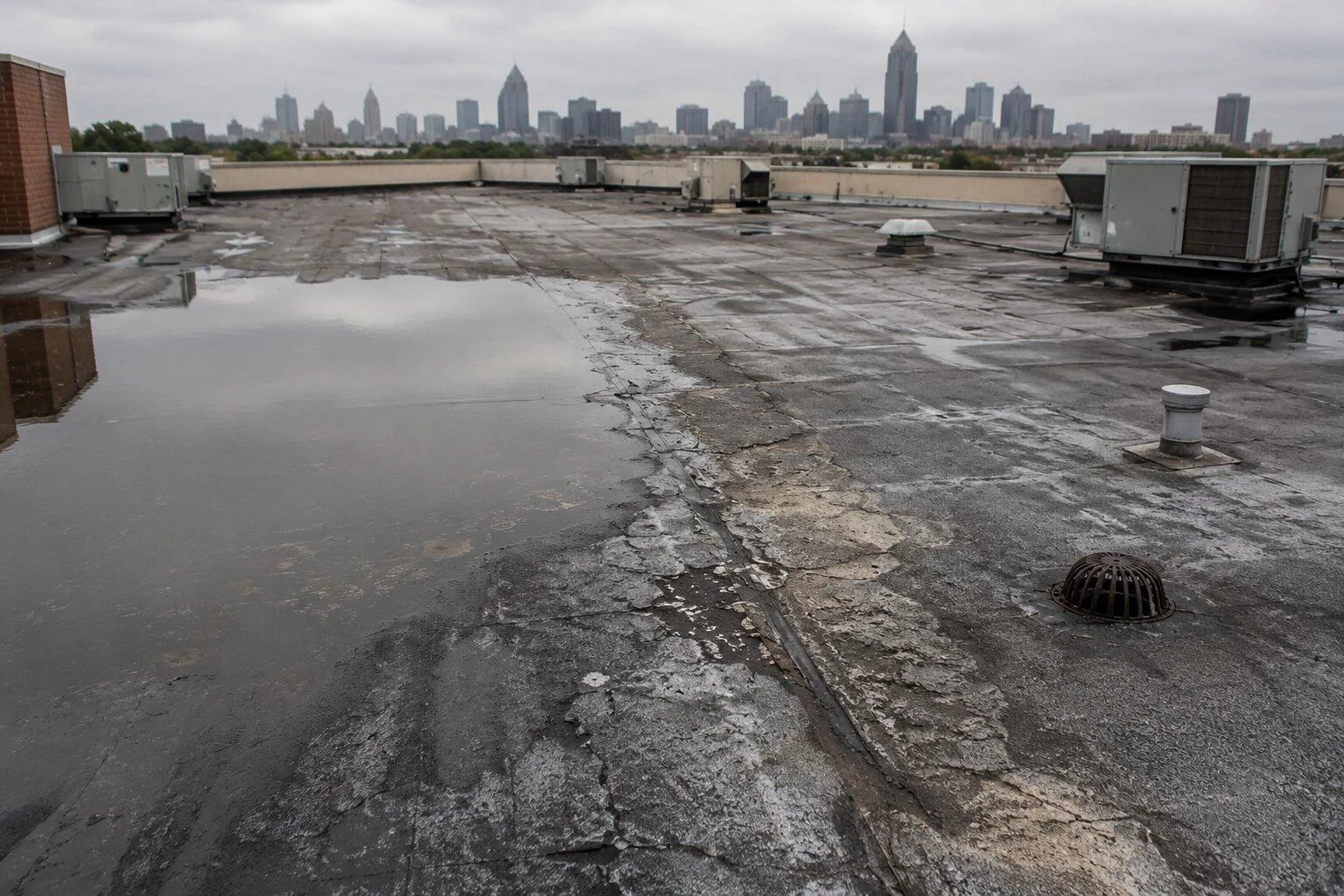
A gutter spilling beside a loading door can affect warehouse access without a leak through the roof field. We inspect gutter attachment, outlet condition, downspout connections, and visible discharge, then compare those findings with the interior report. On a low-slope section, debris and previous patches can obstruct flow toward a drain. We show which obstruction can be removed and which low area requires an assembly correction, keeping drainage work distinct from an unrelated flashing repair.
Newport Beach Harbor's normal climate has a pronounced cooler-season rainfall concentration, while the summer months contribute very little precipitation. That nearby coastal pattern supports addressing blocked outlets before winter work becomes urgent. A persistent pool on the roof needs its own extent marked even after cleaning. The crew verifies an accessible drain path before temporary protection is placed. If the restriction continues in a concealed discharge line, the work record identifies the additional drainage service needed.
Can a repair stop at the visible seam failure?
A narrow separation may admit water into insulation well beyond the exposed line. We examine the adjoining membrane, compare interior symptoms, and select moisture confirmation locations where removal would change. Testing can separate a dry neighboring assembly from a wet area needing reconstruction. We explain those limits before adding new material, so the owner can compare a seam correction with work that also removes damaged layers and restores support beneath the membrane.
Recovering a suitable existing roof may reduce removal over occupied areas, but the retained assembly still needs adequate attachment, dry serviceable layers, and room for the new details. A coating requires appropriate preparation and compatible roofing underneath. Neither choice corrects weakened decking or unstable supports. We assess those conditions before proposing retention. Where a full replacement is needed, insulation, curb heights, roof edges, and drainage are resolved together rather than treated as items separate from the new waterproofing.
How can exposed work close before the next operating shift?
Preparation can take longer at a wall junction than across an open membrane field. We size the daily removal area for the actual details and the time needed to close them, including material delivery and any equipment handoff. The proposed dry-in limit states where work can stop safely if the interval shortens. A partly rebuilt curb should not remain dependent on another trade arriving without a confirmed appointment. That coordination occurs before the old flashing is removed.
During Santa Ana weather, offshore winds can increase coastal heat and dryness and affect loose-material handling. Application limits and safe access are checked against conditions at the roof, not merely the season. An owner scheduling another property in the Northwest Industrial Subarea should keep its own tenant and access window separate. Work in the wider Huntington Beach area can follow consistent inspection requirements while using different daily opening limits for each building.
Which findings change the price and the next visit?
Equipment moves, extensive wet insulation, difficult wall transitions, and restricted debris removal can enlarge the effort behind a roof repair. We identify those drivers with the finding that makes each necessary. During removal, concealed conditions are photographed and connected to the affected roof position before a change in extent is discussed. Completed work includes connection checks suited to the material, cleared accessible outlets, and a record of any remaining mechanical or structural task.
The return check follows the repaired seam, curb, or drainage area after suitable rain or an approved test. Building staff can help by locating a later drip against the same room or bay references used during inspection. Emergency reports remain welcome through overnight hours and holiday or weekend shifts. Give the access contact and affected operation so temporary protection can be considered safely. A defined return task keeps an interim closure from being mistaken for a finished roof assembly.
Commercial Roofing Questions
Can roof work proceed while our auto repair bays have vehicles inside?
The bay beneath active overhead removal may need to clear. We examine the roof opening, lifting activity, and interior exposure with the service contact before agreeing on protection. Adjacent bays can have different restrictions when safe separation and usable access are available.
Why examine a warehouse office when the drip report came from the shop?
Connections between roof levels or interior spaces can affect the water route. We inspect the adjoining area where drainage, flashing, or the reported symptoms justify it. The purpose is to locate the correct boundary, with office access coordinated separately from shop activity.
Will replacing the membrane require relocating existing rooftop units?
Clearance, support condition, and the planned detail determine which equipment needs movement. We identify those requirements early and coordinate the unit work with the responsible trade. Material can then be selected with the final curb and support arrangement known rather than assumed.
What should a manager send after water reaches stored inventory?
Provide the affected bay, timing, photographs taken safely, and a contact able to arrange roof and interior access. Keep people clear of wet electrical components or unstable ceilings. We compare the report with the roof layout and set an initial protection step and inspection extent.


Proudly Serving Huntington Beach and Nearby Cities

Commercial Roofers Huntington Beach
Huntington Beach, Westminster, Seal Beach, Fountain Valley,
Garden Grove, Newport Beach and nearby Orange County cities