
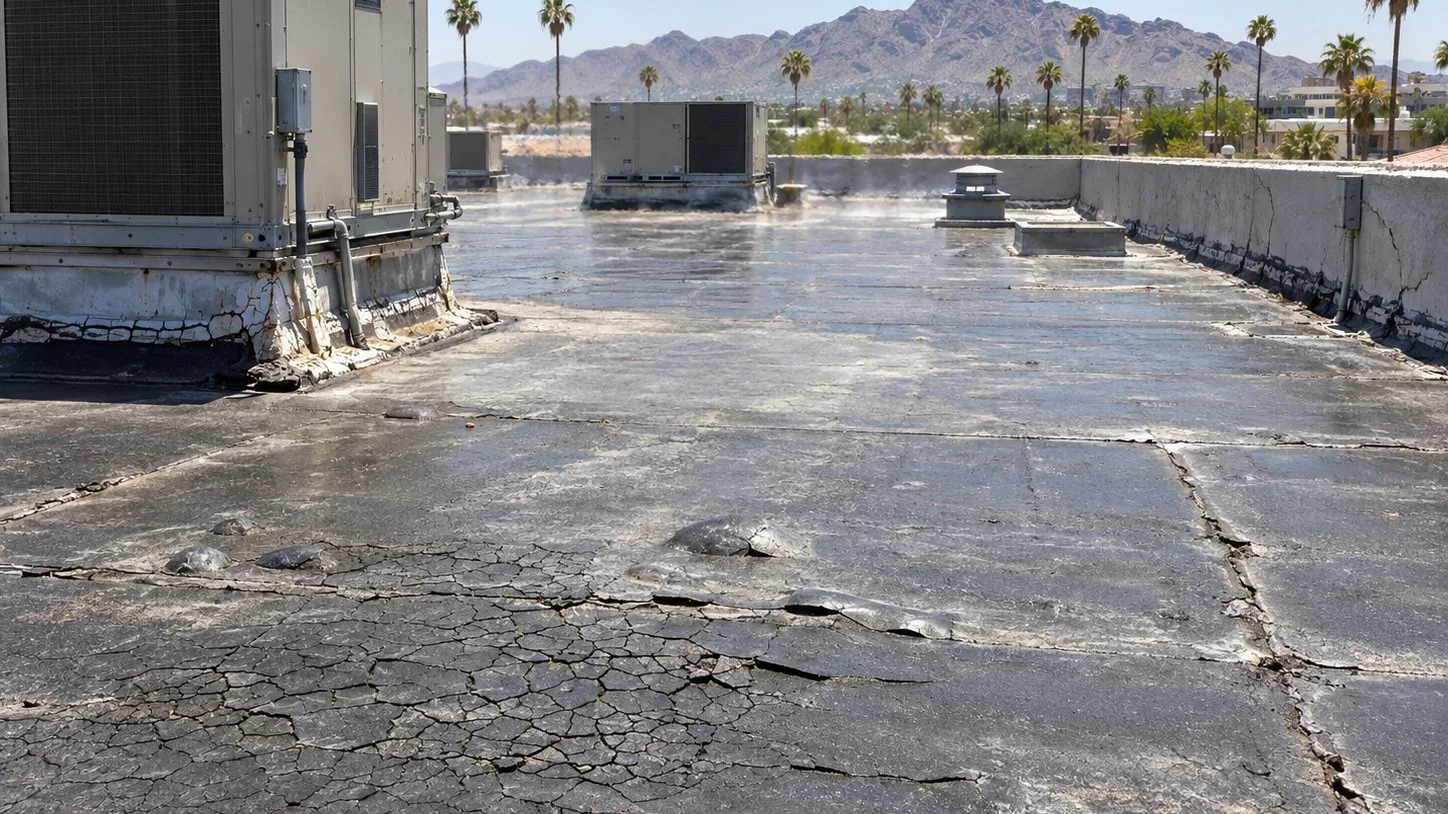
Emergency Commercial Roof Repair in Huntington Beach, CA
An active ceiling drip requires interior hazard control and an authorized roof route before the crew can protect the opening. Commercial Roofers Huntington Beach provides emergency commercial roof repair in Huntington Beach, CA, at any hour, including weekends and holidays. We ask where water appeared, what is operating below and who can authorize roof access. The crew then identifies an accessible area, protects the interior where practical and establishes a temporary dry-in boundary.
Downtown streets and commercial properties along Pacific Coast Highway bring pedestrian access into some response plans. A loading property in the Northwest Industrial Subarea may need a clear truck route instead. The response plan adapts to the site contact’s access window and the roof condition found.
What is the first safe step?
Keep people clear of wet floors, ceiling material and electrical hazards. The site contact can move contents if it is safe, place a container under active dripping and record which rooms are affected. Do not enter a roof area until access is approved and conditions allow it. We use those details to direct the crew and determine what protection is needed below before the roof is approached.
Offshore Santa Ana conditions can raise coastal temperatures and change whether roof access remains safe. Rain, wind or visibility may also change what a crew can safely do. We explain the next safe action and whether roof access must wait. Interior protection stays in place until an approved dry-in measure can be installed.
The emergency call records the address for dispatch, roof access contact, active leak area and building operations. That information is used to reach the correct property and coordinate the visit, without presuming the opening before inspection.
How is the roof opening located?
We compare the room report and its timing with the roof plan and recent weather. The crew checks the likely area for a split seam, displaced flashing, puncture, open curb or drainage issue. Water can travel below a membrane or deck before it reaches the interior. The first visible drip helps narrow the search, but photographs and roof-zone marks establish what was actually found.
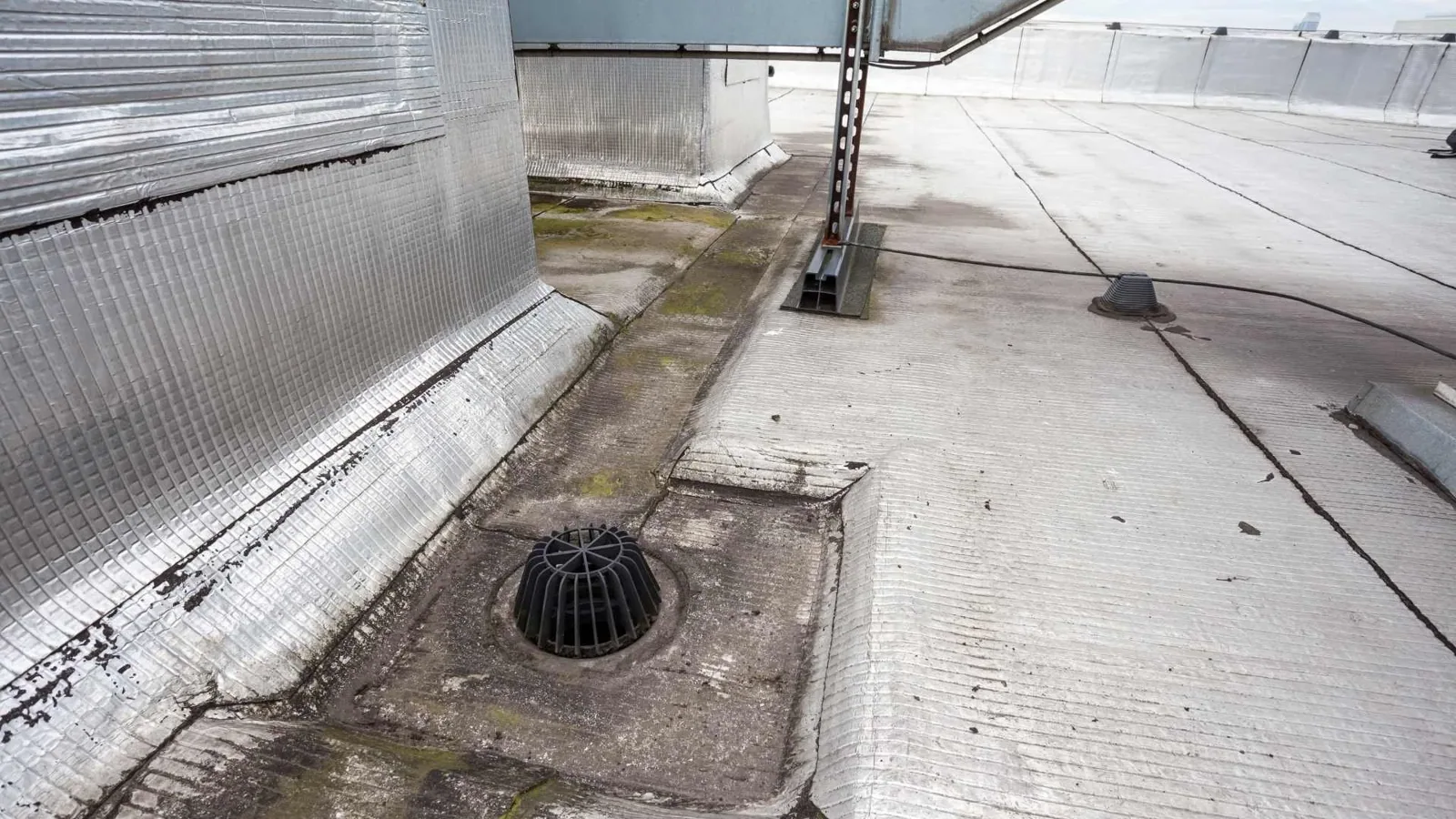
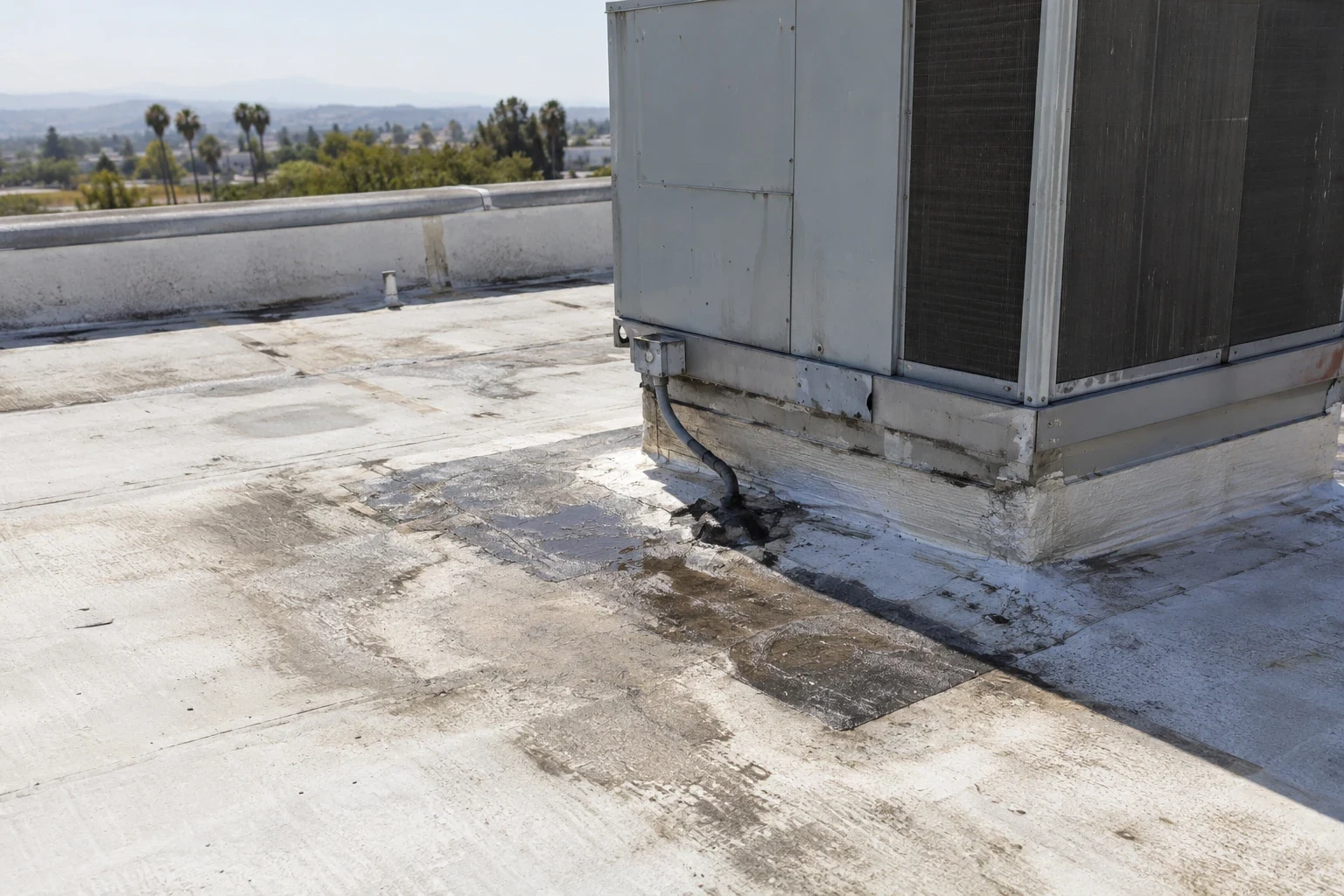
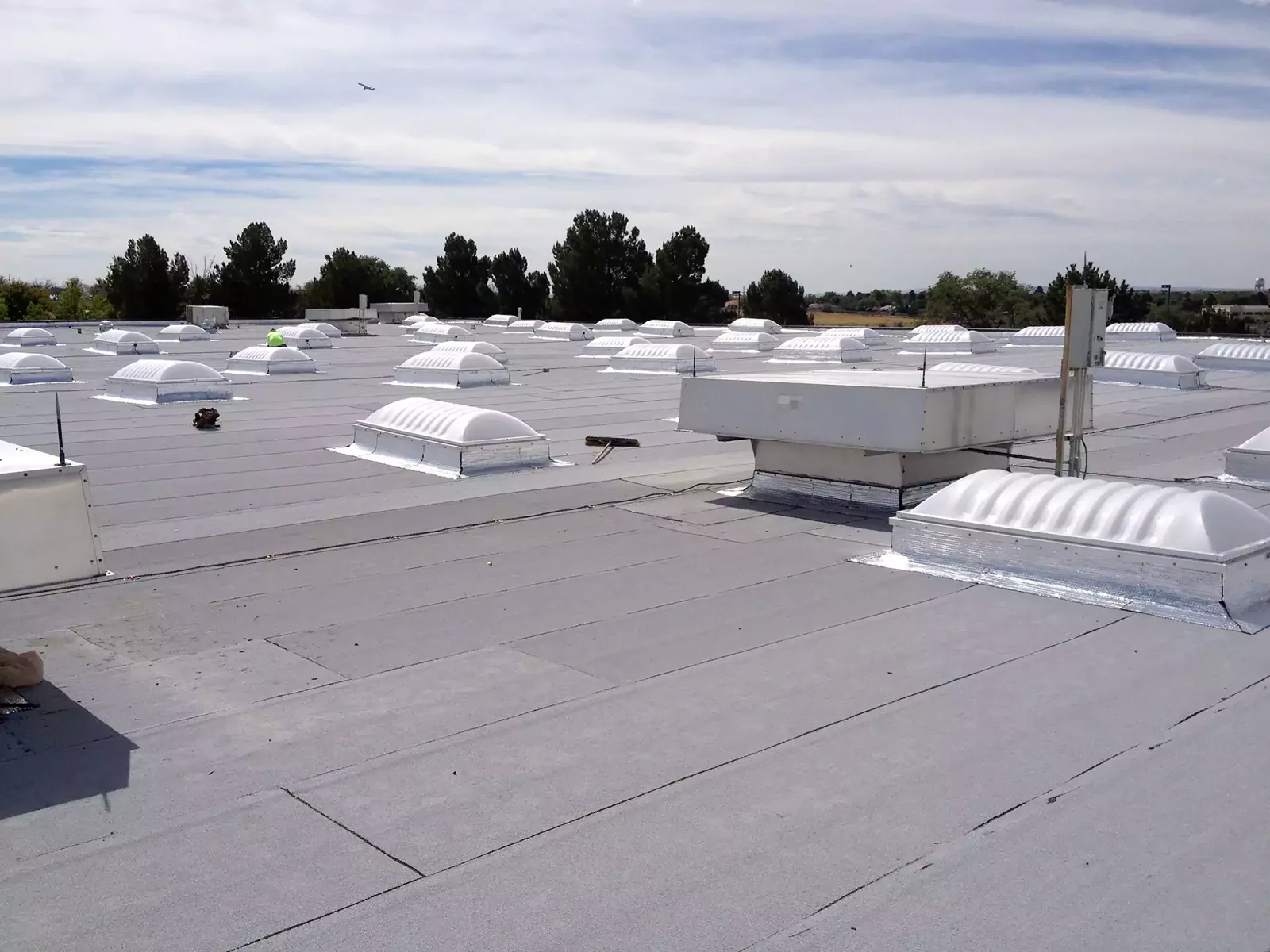
At a roof edge or parapet, we look for a path that could carry water toward the reported room. Around equipment, the inspection includes curb flashing, adjacent seams and any recent service work. If a drain or scupper is part of the route, its outlet and membrane connection receive separate marks. Drain and scupper repair can be included when an outlet condition needs more than temporary protection.
If conditions prevent a full inspection, the record states which areas were reached and what remains. The owner can then approve a return examination or testing after the immediate exposure is controlled.
What does temporary dry-in cover?
A temporary cover or patch protects the opening and adjacent material for the conditions at the visit. We record its location, attachment and limits, including any area still exposed or inaccessible. Temporary work is not written as a permanent repair. It gives the owner a defined protection measure and a clear next step for a compatible correction after weather or material access allows it.
Interior protection can include moving stock, shielding equipment or restricting a room. The site contact confirms which action is permitted and which route stays open. At a store or restaurant, public access may need a different barrier than an industrial service aisle. The crew identifies the area below the temporary roof work so the manager can communicate a clear reopening condition.
Our response crew remains available 24 hours a day. If the initial measure needs adjustment because conditions change, the site contact can report the specific roof-zone mark and what has changed inside. Leak tracing and repair can follow once the temporary cover has reduced immediate exposure.
When can permanent repair begin?
Permanent work follows identification of the roof material, repair receiver and any moisture extent that changes the boundary. We remove temporary material as needed, prepare a sound surface and install a compatible seam, flashing or patch detail. If insulation is wet, the owner may need testing or selective removal before closure. The repair scope separates confirmed work from an additional area that needs an approval or sample.
Equipment or roof-wall movement can prevent a durable tie-in. We note where a mechanical, electrical or exterior contractor must stabilize a component before roofing finishes the connection. A return check confirms the membrane after that handoff. Planned roof repair can handle the permanent correction and closeout after the emergency protection visit.
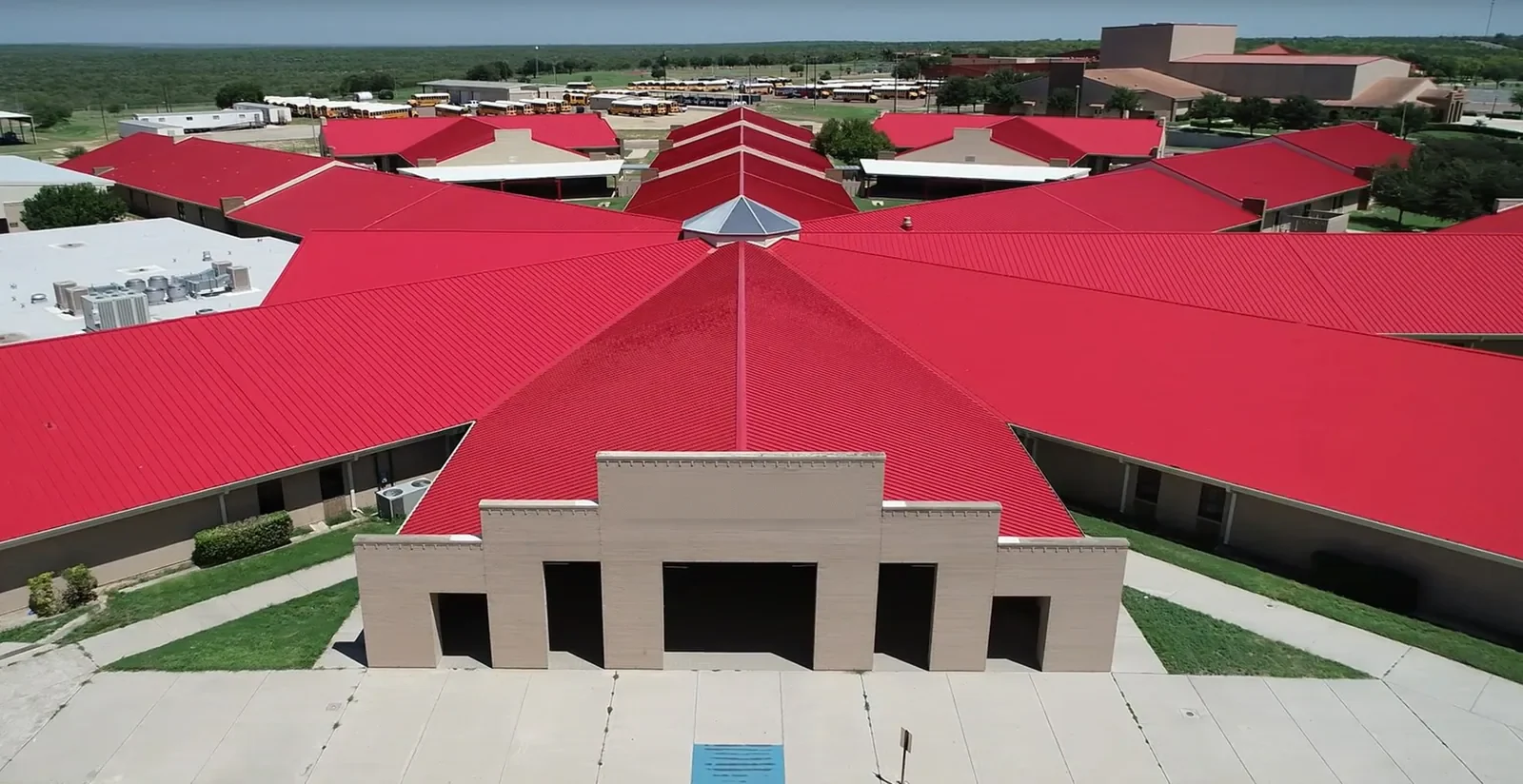
The surface condition may lead to a wider choice. Recover planning evaluates whether a new layer can be added, while replacement planning addresses removal when the assembly cannot be retained.
How do local weather and access affect response?
Newport Beach Harbor climate normals show a mild coastal temperature range and rainfall concentrated in cooler months. Those averages inform seasonal preparation; the job forecast and roof condition determine the response. A dry summer day can still bring wind exposure, and winter rain can make an unprotected opening more urgent. We secure the work at each shift change and avoid leaving a roof boundary dependent on a forecast assumption.
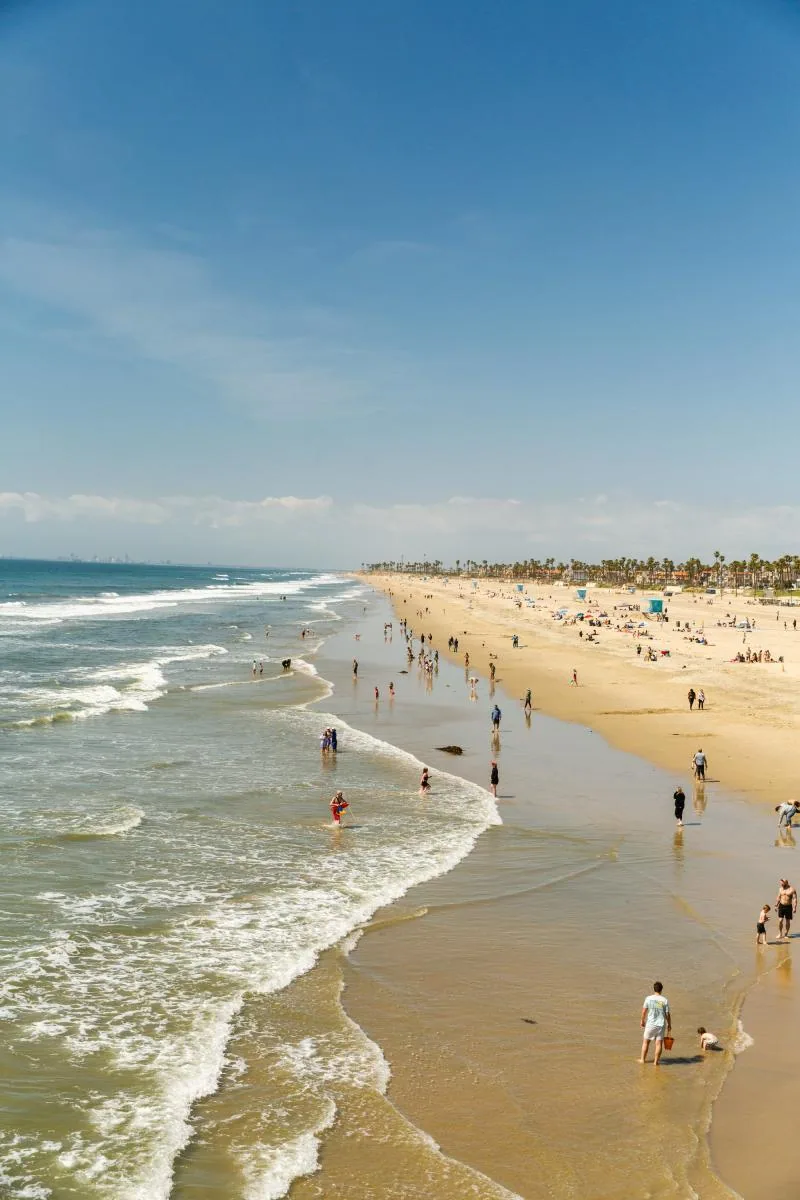
Access also changes across Huntington Beach. Huntington Beach planning identifies downtown commercial and entertainment uses alongside pedestrian-oriented streets. A separate industrial property may instead require a delivery lane to remain open. A site contact can identify yard movement, loading doors, tenant entries and any secure roof hatch. Those details help the crew reach the correct zone without blocking a critical route.
Material delivery and lift placement may follow once the temporary cover is in place. We note staging limits and the earliest reasonable work window, then revise it if the building’s operation or weather changes.
What should the emergency record show?
The closeout record separates dispatch details, interior protection, temporary dry-in and permanent repair. Photographs show the roof zone before and after work, with each image linked to a plan mark. We list any test, trade handoff or inaccessible detail still requiring attention. The owner can then distinguish work completed tonight from the approval needed for the next visit.
For a property in the Huntington Beach service area, the site contact can share roof access instructions and operating restrictions with the dispatch team. A condition report can carry findings into the next maintenance or capital review. Keep the report with invoices, roof drawings and later service records.
For dispatch, identify the site, where water is entering, who can authorize roof access and which areas must stay open. We will establish temporary protection, log its limits and arrange the next repair or test.
Commercial Roofing Questions
What should staff do while waiting for emergency roof service?
Keep people away from wet or unstable areas and report electrical or ceiling hazards. If safe, move contents and place a container below active dripping; leave roof access to authorized personnel.
Does emergency service include a permanent roof repair?
A permanent correction can follow when the material and repair boundary are clear. The first visit may install temporary protection and document testing, access or approval needed for lasting work.
How do you work during wind or rain?
The crew assesses access and exposure at arrival. If roof work is unsafe, interior protection remains the first step until a safe weather window allows dry-in or repair.
What if the leak appears in several rooms?
We record each interior report and compare it with roof zones and water paths. The findings may connect the rooms to one opening or show separate areas that need their own repair limits.
What information should the site contact provide?
Give the dispatch location, affected rooms, water timing, roof access contact, known hazards and operating limits. A roof plan and recent repair history help the crew locate relevant details.


Proudly Serving Huntington Beach and Nearby Cities

Commercial Roofers Huntington Beach
Huntington Beach, Westminster, Seal Beach, Fountain Valley,
Garden Grove, Newport Beach and nearby Orange County cities