
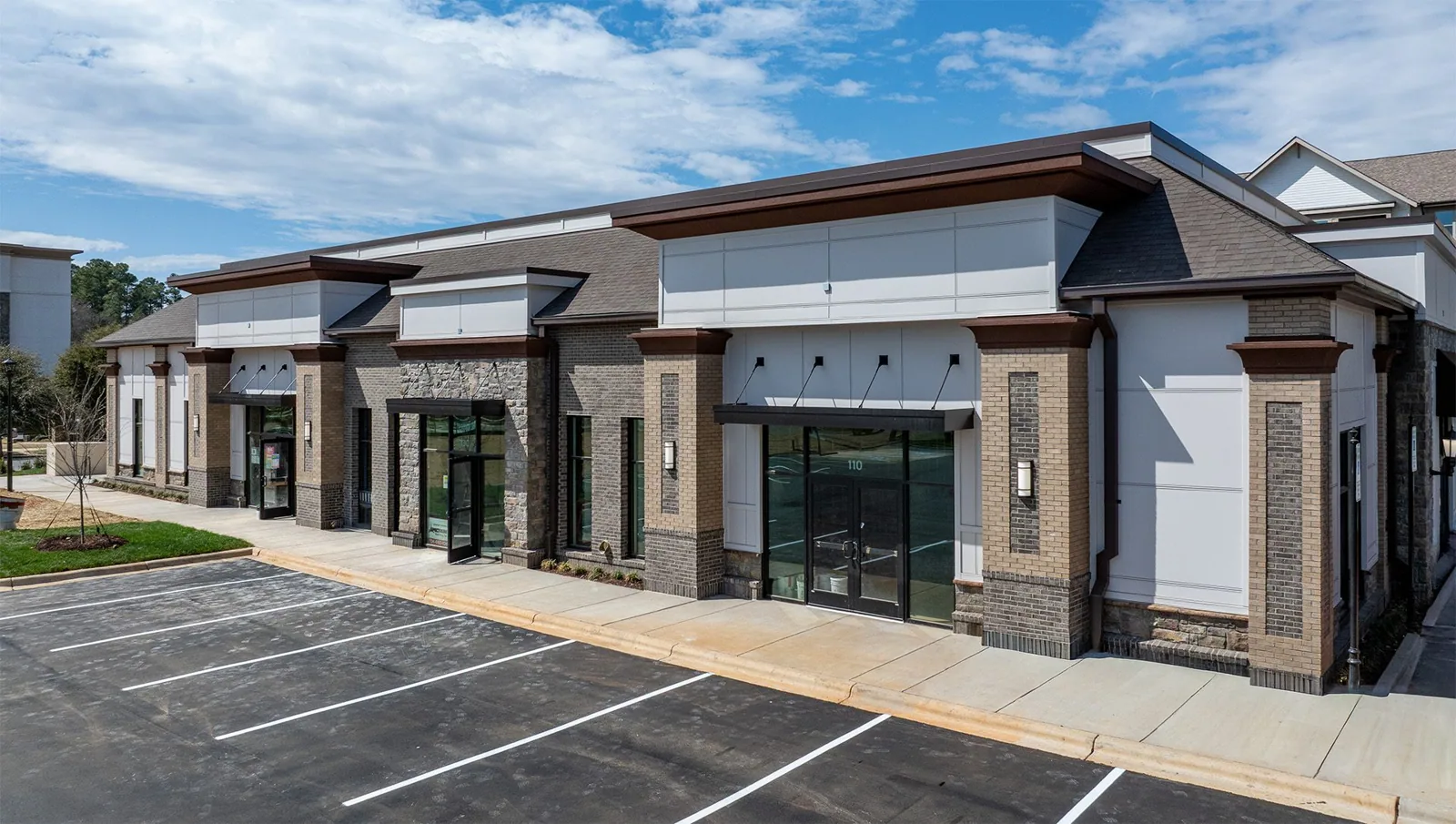
Property Management Roofing in Huntington Beach, CA
Several tenant calls after one rain require a separate roof decision for each building. Commercial Roofers Huntington Beach first identifies the affected suite, immediate interior risk, and person who can provide safe roof access. For property managers in Huntington Beach, CA, the useful result is a work order tied to an actual roof zone, with temporary protection distinguished from permanent correction. A portfolio summary should preserve those distinctions rather than reduce every report to a common leak description.
Commercial buildings along Adams Avenue and Warner Avenue operate differently from manufacturing and warehouse properties in the Gothard Street Subarea. Tenant hours, delivery routes, and equipment access affect the repair sequence. We connect those operating constraints to the observed membrane, flashing, and drain conditions so the manager can authorize a practical next step for each property.
Which building needs attention before the next rain?
A wet ceiling beside energized equipment takes priority over a dry stain waiting for investigation. We ask the site contact to identify active water, restricted rooms, and any ceiling instability before arranging inspection. Staff should keep people clear of hazardous areas and follow the building emergency procedures. Our response remains available through nights, weekends, and holidays, with the first safe protection measure selected after access and conditions are assessed.
Reports from several tenants can describe one connected water route or unrelated defects. We map the room locations against the roof sections, checking drains, wall transitions, equipment curbs, and changes in elevation. The work order records which observations explain the report and which areas need testing. Managers overseeing retail and restaurant operations may need different access restrictions from those coordinating hotel operating schedules. Keeping those restrictions beside the roof findings prevents an approval for one property from being applied to another.
What belongs in the tenant communication?
A scheduled roof opening above an occupied suite needs a clear notice that names the affected area, expected disturbance, and contact for a changed condition. We describe the work boundary, noise-producing tasks, material movement, and any temporary restriction. The property manager can then coordinate tenant notices without promising that every activity will remain unaffected. A brief electrical or mechanical interruption, where necessary, should have its own agreed time and responsible trade.
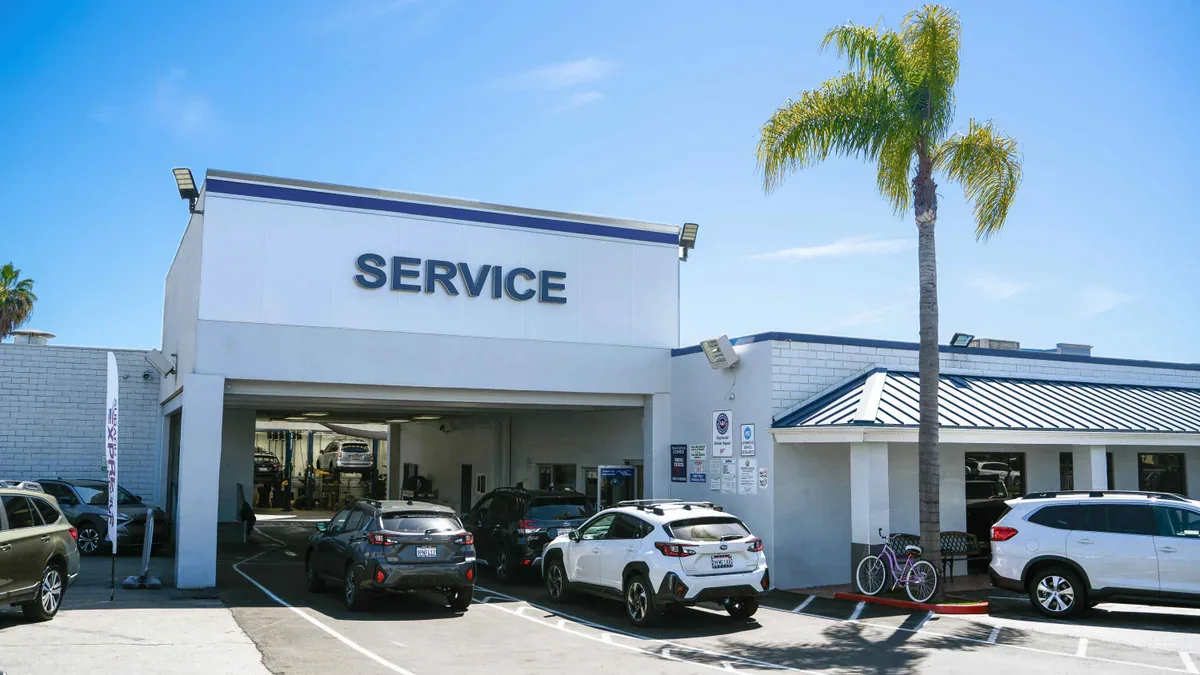
For properties in the Gothard Street employment area, receiving activity and service entrances can influence lift placement. An arterial storefront may instead need a pedestrian protection route maintained during business hours. We inspect the actual approach and show where material and debris will travel. Interior protection follows the room beneath the active roof section, including coverings or a restricted space where appropriate. At daily closeout, the site contact receives the completed boundary and any condition that still limits normal tenant use.
How do roof records become comparable across properties?
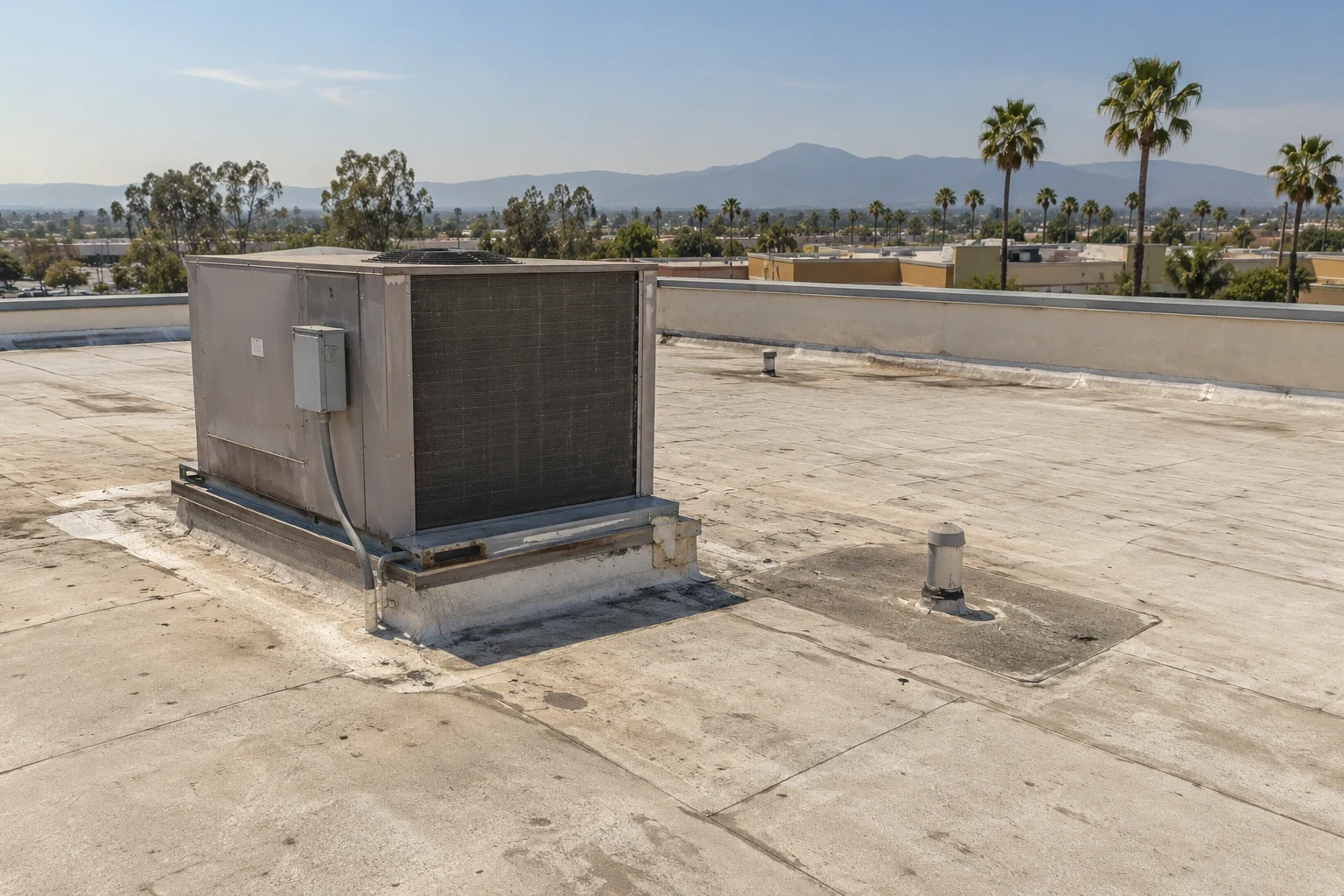
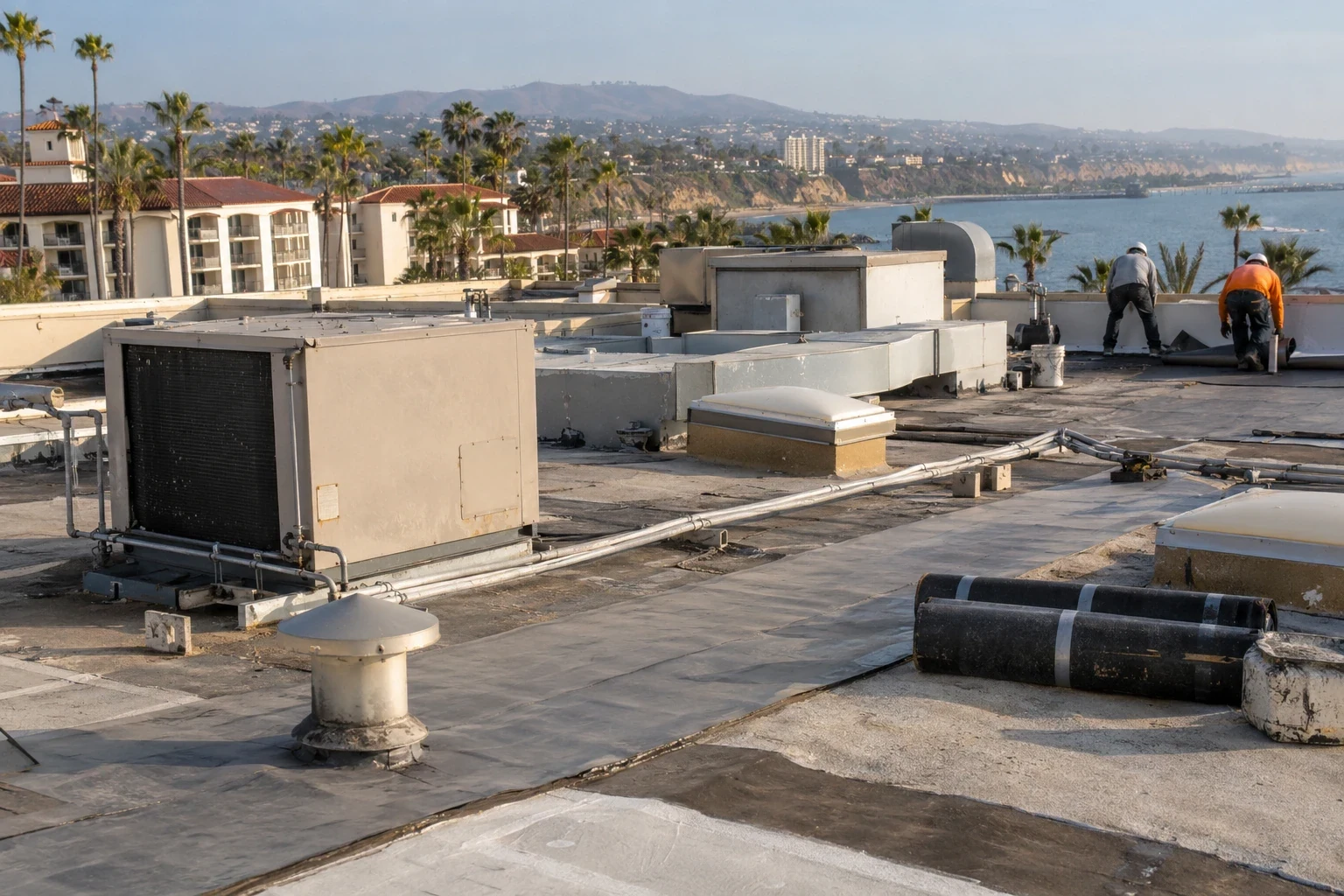
A roof summary becomes useful when the same decision fields describe different assemblies. We identify roof zones, visible system type, drainage direction, known repair history, and moisture concerns. Photographs locate conditions on the plan rather than present a collection of close-up defects without context. A manager can distinguish an isolated curb repair from a section that needs moisture testing, even when both generated a tenant complaint.
We use multi-property roof coordination to keep work priorities and follow-up dates visible while retaining the individual building scope. A written condition assessment separates observed deterioration from concealed conditions that require confirmation. Where insulation moisture could affect the repair extent, an infrared survey may help identify suspect areas, followed by suitable confirmation. Access restrictions and testing limits belong beside the findings so the next budget review reflects what was actually inspected, rather than treating an incomplete roof walk as a complete baseline.
Which repair decision should the owner approve?
A localized flashing separation can support a contained repair when the surrounding material is suitable and the water route is clear. Repeated failures across separate sections deserve a wider comparison. We describe preparation, repair dimensions, removal of damaged material where necessary, and the connection to the retained roof. The proposal identifies what changes if opening the assembly reveals wet insulation or deteriorated decking.
For a larger investment, the choice between coating, recover, and replacement rests on substrate condition, attachment, drainage, moisture, and the project requirements. Coating requires a compatible, prepared roof; it does not make saturated layers serviceable. A recover needs a suitable assembly and enough detail height for the added layers. Replacement exposes concealed conditions but introduces removal, interior protection, and a longer work sequence. We explain these differences through roof renewal budgeting, with immediate repair needs distinguished from work that can be scheduled after further investigation.
How should seasonal maintenance affect the work queue?
Newport Beach Harbor provides a nearby coastal rainfall reference, with cooler months carrying most normal precipitation and summer averages close to zero. Managers can use the drier season to plan drain cleaning, compatible detail repairs, and larger openings before winter rain. Current surface moisture and the forecast still govern preparation and daily dry-in. A scheduled project needs a stop point that leaves the roof closed if weather interrupts the operation.
Debris can collect at strainers, scupper outlets, gutters, and changes in roof level even when the field membrane looks intact. We check whether water reaches its intended outlet, whether a prior repair obstructs that path, and whether mechanical service traffic has damaged a nearby seam. A preventive maintenance visit should record completed corrections and unresolved defects separately. That distinction helps a manager issue a repair authorization instead of repeatedly paying for inspections that leave the same drainage problem open.
What closes a portfolio work order?
A completed work order identifies the property, roof section, original report, installed repair, and photographs after preparation and closure. We include approved changes, temporary measures still present, and the return check needed for a condition that was not resolved during the visit. Each tenant complaint should have a disposition connected to the roof findings. A repaired seam and an unexplained interior drip are different closeout items.
The manager also needs a usable handoff for later mechanical work. We identify protected areas, limitations on traffic, and penetrations requiring coordination before another trade cuts the roof. Keep the completed scope with roof diagrams and available warranty documents. For the next call, send the affected building, tenant report, access contact, and operating window. We can compare the new condition with the prior boundary and identify the protection or inspection needed without losing the property's repair history.
Commercial Roofing Questions
Should every tenant leak receive its own roof visit?
Start by grouping reports by building and roof zone. We review timing and room locations to determine whether one inspection can address connected symptoms. Separate structures or drainage sections may require distinct visits and protection decisions even during the same rain.
Can the manager authorize a temporary measure before the owner reviews renewal?
An agreed emergency authorization can permit protection within a defined limit. We describe the temporary measure, affected area, and follow-up need so the owner can review permanent repair separately. Access permission and spending authority should be clear before work begins.
What makes a recurring leak ready for a larger investigation?
Repeated water after repairs, moisture spreading into adjacent rooms, or uncertain insulation condition warrants a broader roof check. Compare the old repair boundaries with current symptoms. We then recommend targeted testing or additional access before defining a wider removal area.
How can we compare proposals for different properties?
Use the roof section, repair extent, retained material, preparation, protection measures, and concealed-condition allowances as comparison fields. We identify those items in our scope so a smaller patch is not mistaken for a proposal that includes removal and assembly correction.

Proudly Serving Huntington Beach and Nearby Cities

Commercial Roofers Huntington Beach
Huntington Beach, Westminster, Seal Beach, Fountain Valley,
Garden Grove, Newport Beach and nearby Orange County cities