
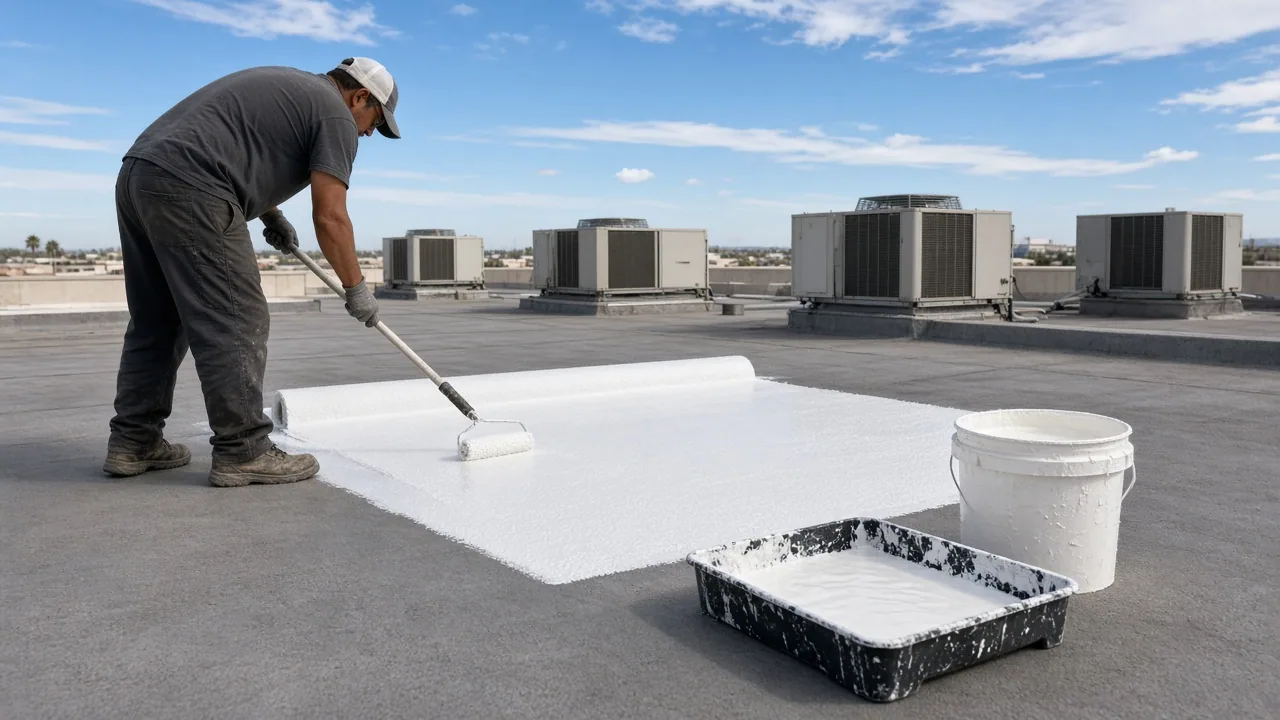
Acrylic Roof Coatings in Huntington Beach, CA
A fresh white surface does not show whether the layer beneath it is dry or firmly attached. Commercial Roofers Huntington Beach evaluates acrylic roof coating systems in Huntington Beach, CA, by checking the substrate, coating adhesion, coverage, seams, and drainage before recommending restoration. Acrylic products have specific application and weather requirements, and not every existing roof is a suitable base. The first safe step is to limit roof access, protect occupied areas if water is active, and trace the leak before setting a permanent repair scope.
Industrial and warehouse properties in the Gothard Street Subarea can require equipment coordination, while visitor-facing uses along the Pacific Coast Highway coastal corridor may need careful staging. Newport Beach Harbor climate normals show most rain in cooler months. Surface moisture and the product’s current application limits determine whether coating work can begin.
What can an acrylic coating do?
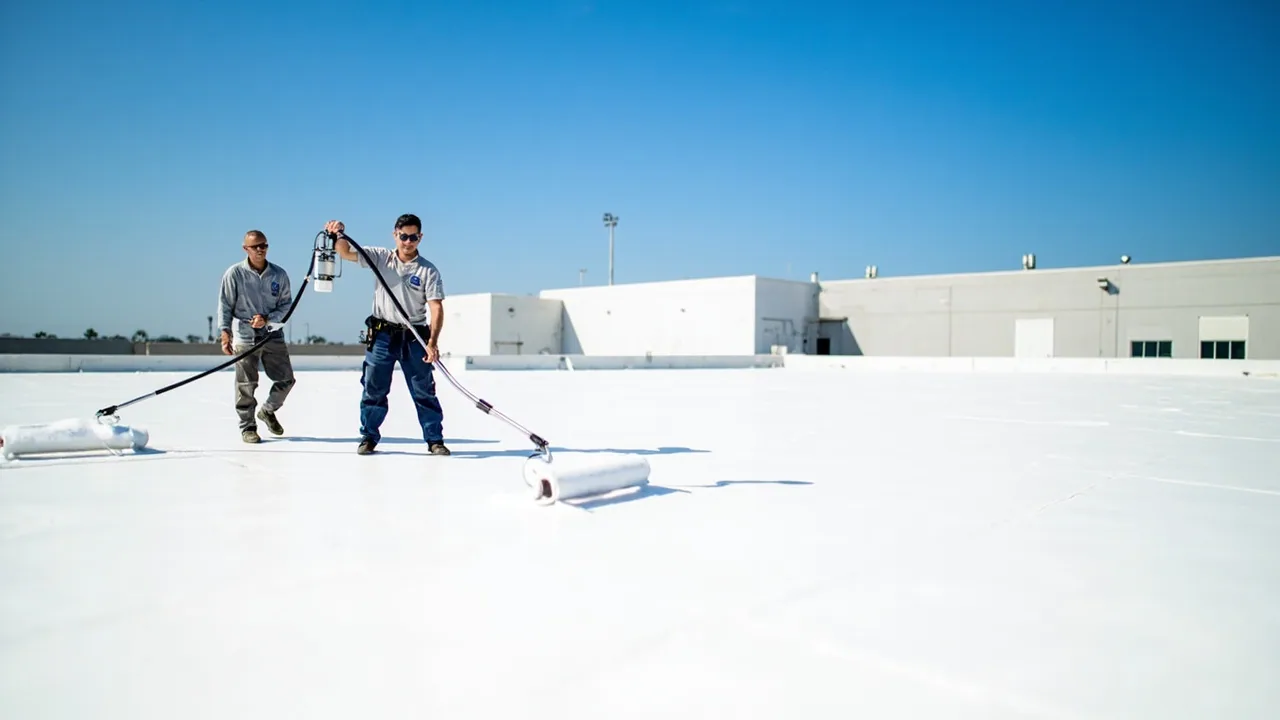
Acrylic roof coatings are liquid-applied products used to create a protective layer over a compatible roof surface. Depending on the system, they can provide a reflective finish and help shield the underlying assembly from exposure. Performance depends on product formulation, thickness, reinforcement, substrate, preparation, and maintenance.
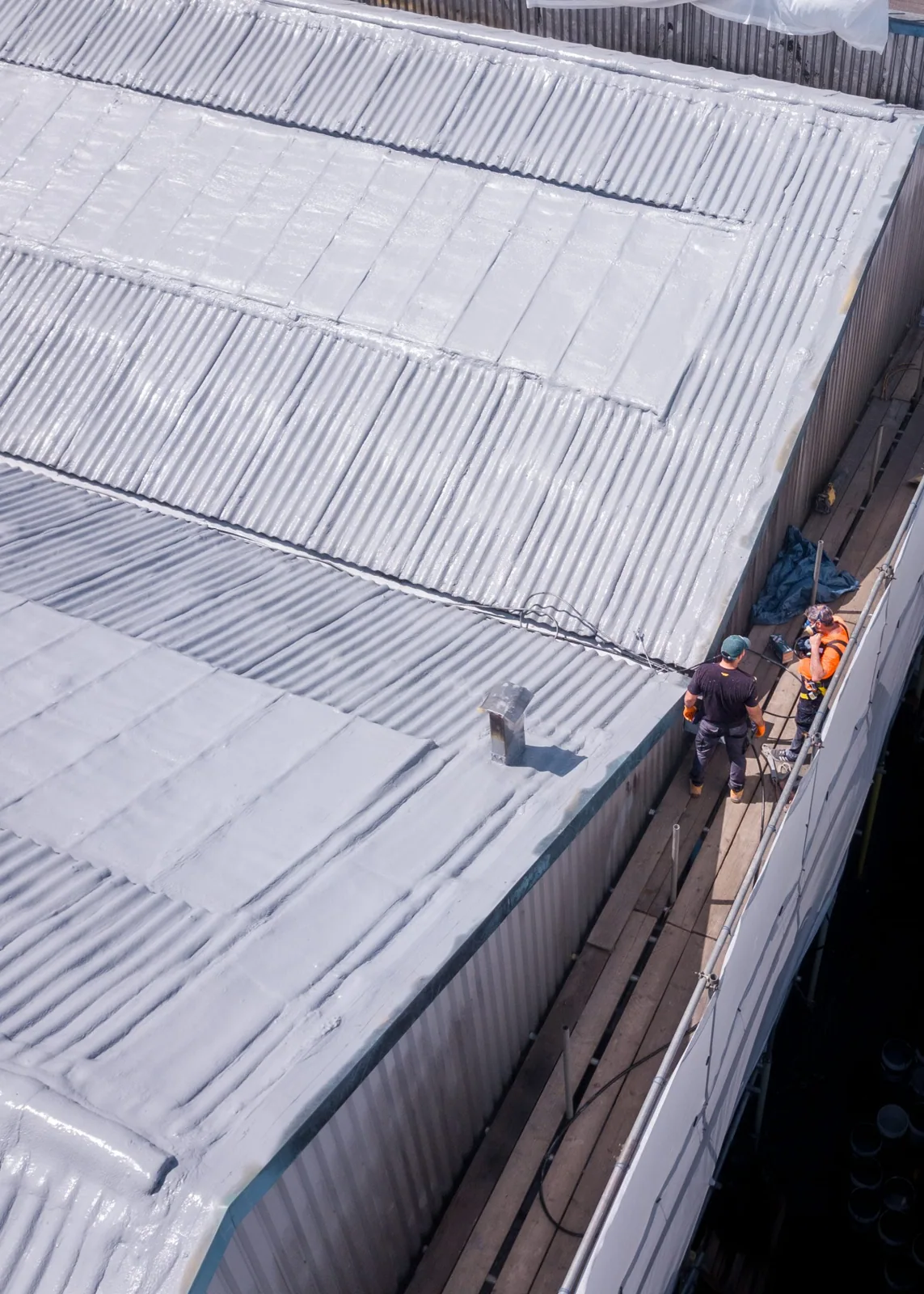
The existing roof may be metal, modified bitumen, a membrane, or another assembly. Each substrate has seams, movement, and repair requirements that remain important after coating. We identify the roof type, review prior coatings, and check whether the new acrylic system can bond. Details around drains, curbs, walls, and penetrations need compatible reinforcement or flashing while preserving drainage.
Acrylic products can require particular temperature, humidity, and curing conditions. Rain or heavy dew before cure can affect application, and ponding limitations vary by product. We check the specific manufacturer’s instructions rather than assuming every acrylic coating has the same limits. Existing warranty terms and maintenance records can also affect the recommended scope.
What does the coating assessment look for?
We examine coating continuity, thin or eroded areas, blisters, cracks, loose edges, contamination, and exposed substrate. The inspection also checks the underlying roof for moisture, movement, failed seams, damaged metal, and open flashing that a new layer would not fix. Drains, scuppers, low spots, and overflow paths are reviewed to understand how water leaves the roof.
Reported interior leaks are compared with roof observations. Water can move under a coating before entering a room, so the closest mark may not be the opening. Where moisture could change the decision, we can recommend testing or limited investigation. The report should identify inspected zones, test locations, access limits, and any unverified area.
The Northwest Industrial Subarea spans industrial, research, technology, office, and business park uses with varied site rules. A commercial roof inspection can document broader assembly condition. A roof coating restoration assessment determines whether a coating is a viable approach. A restoration comparison must distinguish silicone roof coatings from the protective layer over spray foam roofing, checking the receiving material and required preparation for each.
Why does surface preparation matter?
Coating adhesion depends on the surface underneath. Preparation may include cleaning, removing loose coating, repairing blisters, addressing corrosion, and allowing the roof to dry. Dirt, chalking, incompatible sealants, or wet areas can prevent bonding or conceal a leak path.
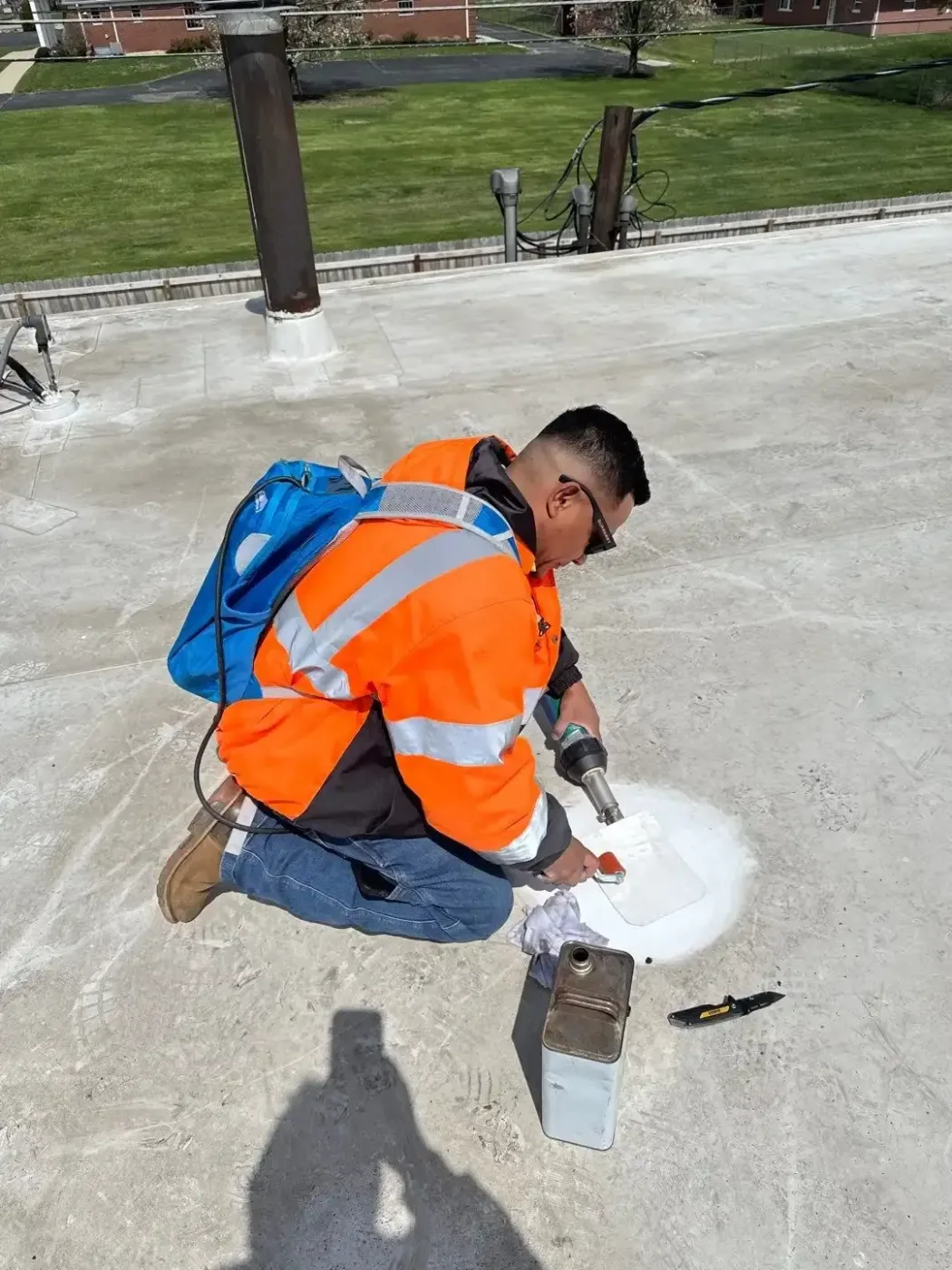
We establish the necessary detail repairs and adhesion checks before application, then confirm that the prepared receiver meets the selected product requirements. Reinforcing fabric may be used at seams, penetrations, or transitions. Application rate and thickness should be checked across the field and at edges. Drains must stay clear, and coating should not block joints or details designed to move.
The written scope should state how the surface will be prepared, what repairs are included, the coating and reinforcement system, and any excluded areas. If moisture or deteriorated substrate is found, resolve it before coating. A temporary leak measure can reduce exposure, but permanent restoration should follow after a sound, dry base is available.
Should the roof be patched, recoated, or replaced?
A local repair may fit a small puncture or isolated detail when the surrounding coating is bonded and the roof beneath is dry. Broad erosion, recurring leaks, thin coverage, or several failed transitions call for a wider restoration review. Where the substrate is wet or unstable, adding a coating can hide rather than correct the concern.
Re-coating may suit a system that remains attached and compatible after preparation. The new material must follow the existing product’s requirements and restore coverage at details. If the roof has widespread deterioration, wet insulation, damaged structural support, or layers that cannot serve as a base, replacement may be the more suitable scope. The assessment should document the evidence and remaining uncertainty.
A thin coating edge beside a drain needs measurement and a preparation decision before the application area is priced. We identify whether the receiving material remains bonded, how the selected product treats reinforcement, and what clearance the outlet needs. Work that changes the assembly is reviewed for its applicable permit and energy requirements. The owner receives that decision with the coating scope, including any insulation or drainage correction requiring separate design.
How do weather and site operations affect application?
Acrylic coating work needs suitable temperature, surface dryness, and time to cure. Application also requires material staging and protection from overspray. A warehouse may need loading lanes open; manufacturing or office sites can have equipment and access limits. Near Beach Boulevard, Pacific Coast Highway, and Five Points, visitor-facing businesses may need customer routes kept clear. We coordinate work zones, air intakes, vehicles, entrances, and tenant notices.
Newport Beach Harbor normals show that rainfall is concentrated in cooler months, but climate averages do not approve an application day. Santa Ana events may bring warm, dry offshore conditions. We review the current forecast, substrate moisture, and product instructions. If weather shifts, the plan should establish how unfinished areas are protected and when crews can safely resume.
We identify curing areas and access restrictions before the next shift. The daily closeout can note conditions, work completed, and any area that needs another coat or inspection after cure.
What should owners document after coating?
Retain the coating product, lot or batch information, application date, preparation notes, photographs, and warranty terms. The closeout should identify the roof sections treated, repairs performed, reinforcement details, and areas left outside the scope. Note any adhesion or moisture testing and its limits.
Later maintenance should check for punctures, thin spots, open flashing, debris, blocked outlets, and damage caused by equipment service. Keep foot traffic within designated routes and review new penetrations before installation. The owner can log drain cleaning, roof access, and interior reports with dates and locations.
If a leak returns, record the room and timing and compare it to the roof plan. The stained room may sit beyond the failed acrylic or flashing detail. A follow-up inspection can determine whether the acrylic layer, underlying roof, drainage, or a separate transition needs attention, then define a repair boundary based on observed conditions.
Commercial Roofing Questions
Can acrylic coating be applied over any roof type?
No. The substrate, existing coating, moisture, attachment, drainage, and product compatibility need review. Some surfaces require cleaning, primer, or reinforcement; others may not be suitable. We identify the assembly and explain any test needed before recommending application.
Can an acrylic coating handle standing water?
Ponding limitations vary by product, and a coating does not correct inadequate drainage. Review low spots, slope, drains, and overflow paths before restoration. Follow the product requirements and include drainage correction where the roof conditions support it.
What controls reopening an acrylic-coated area after application?
Cure time varies with the product, temperature, humidity, coating thickness, and weather. The manufacturer’s instructions govern access and exposure to rain. We explain the protection needed during cure and the condition that allows the treated area to return to service.
Can an existing acrylic roof coating be recoated?
Re-coating may work when the old layer is compatible, well attached, and correctly prepared. The inspection should check adhesion, moisture, and underlying roof condition. Remove or repair unsound areas before adding material so a new coat does not conceal a failure.
What information should I share before a coating estimate?
Provide roof plans, coating product records, application date, leak history, access rules, and known maintenance or equipment changes. Photos can help locate reported areas. A site inspection verifies the surface and establishes whether further testing is needed.
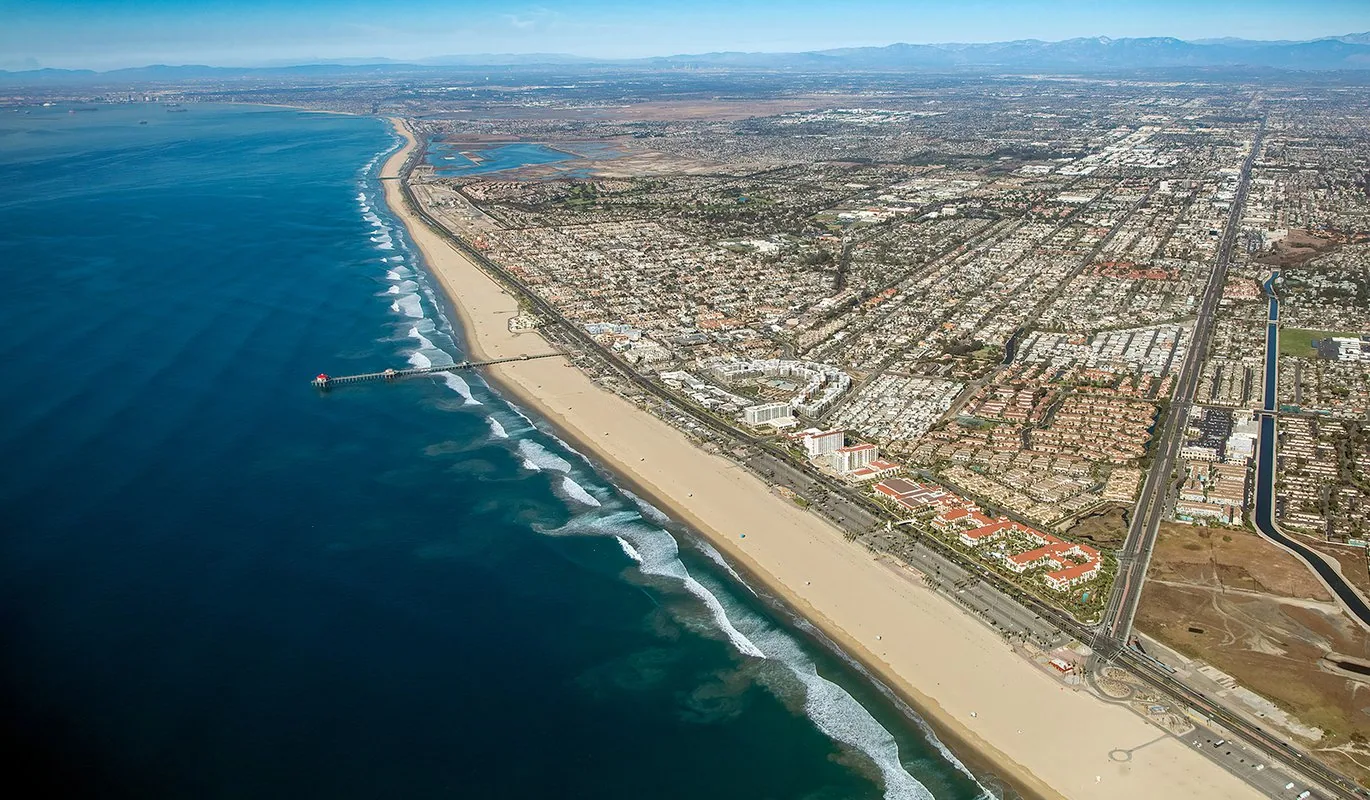


Proudly Serving Huntington Beach and Nearby Cities

Commercial Roofers Huntington Beach
Huntington Beach, Westminster, Seal Beach, Fountain Valley,
Garden Grove, Newport Beach and nearby Orange County cities