
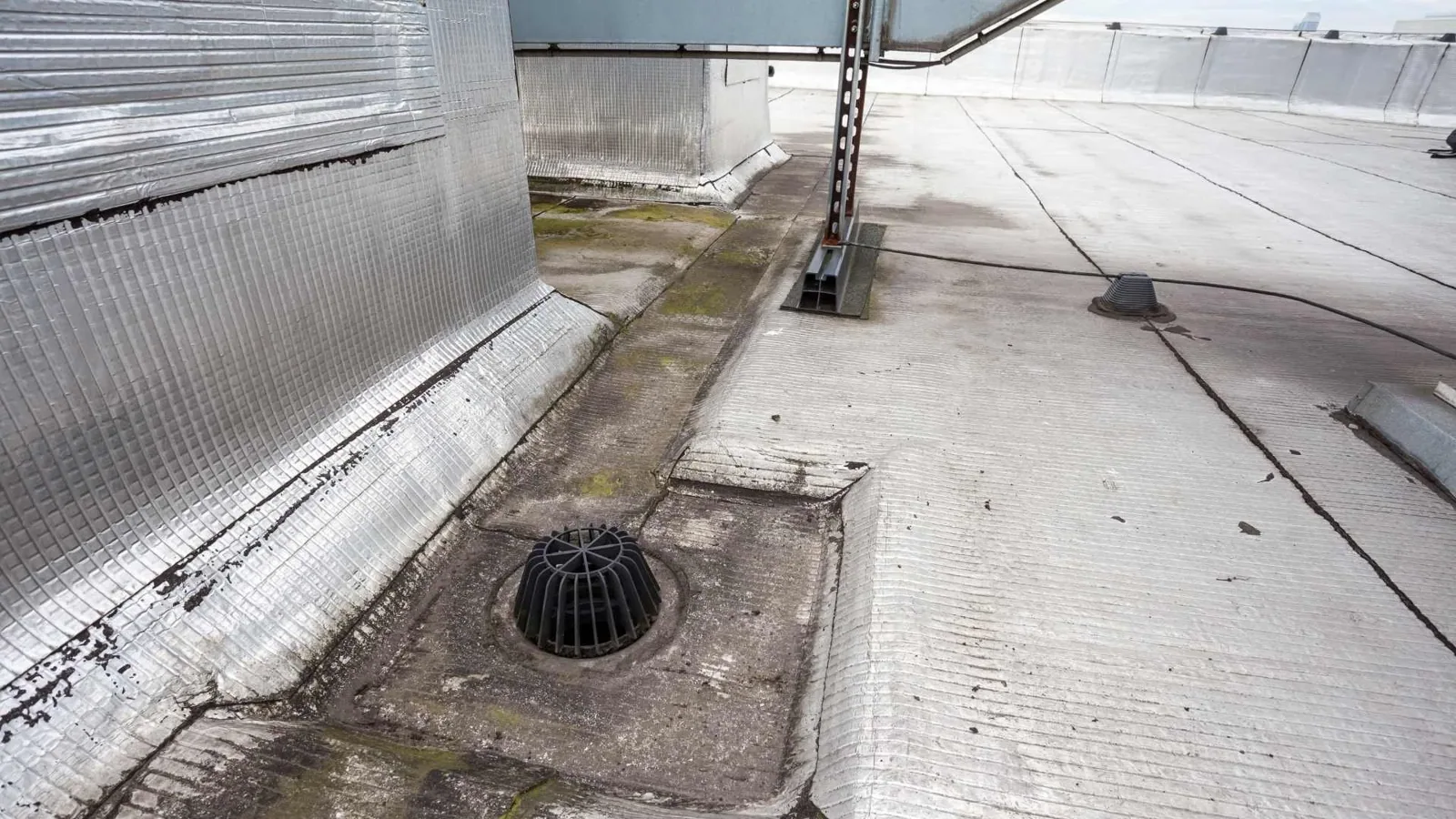
Commercial Roof Drains and Scuppers in Huntington Beach, CA
A drain basket can look clear while water remains in a low area several feet away. We trace the roof plane toward drains, scuppers, overflow openings, and downspouts, then check the membrane or metal connection at each outlet. The work may be a cleanout, flashing correction, slope adjustment, or a wider repair. We mark the actual water route so the property team can see whether the outlet or the roof surface needs attention.
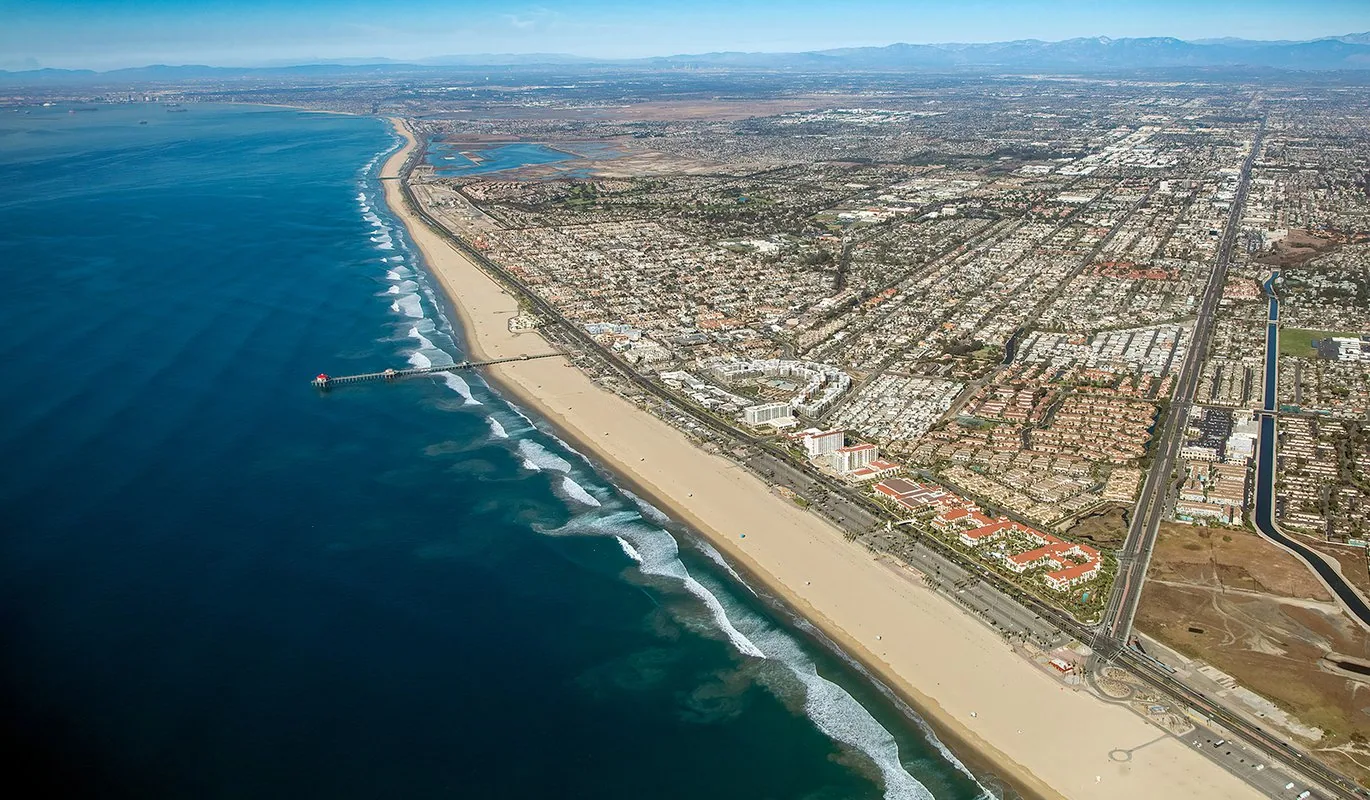
Newport Beach Harbor normals record 9.43 inches of rain annually, concentrated in cooler months. In Huntington Beach, CA, a roof near the Pacific Coast Highway visitor-serving corridor may have different access needs from a warehouse or repair business in the Gothard Street Subarea. We plan the inspection for the building and the path its water is meant to take.
Where should roof water go?
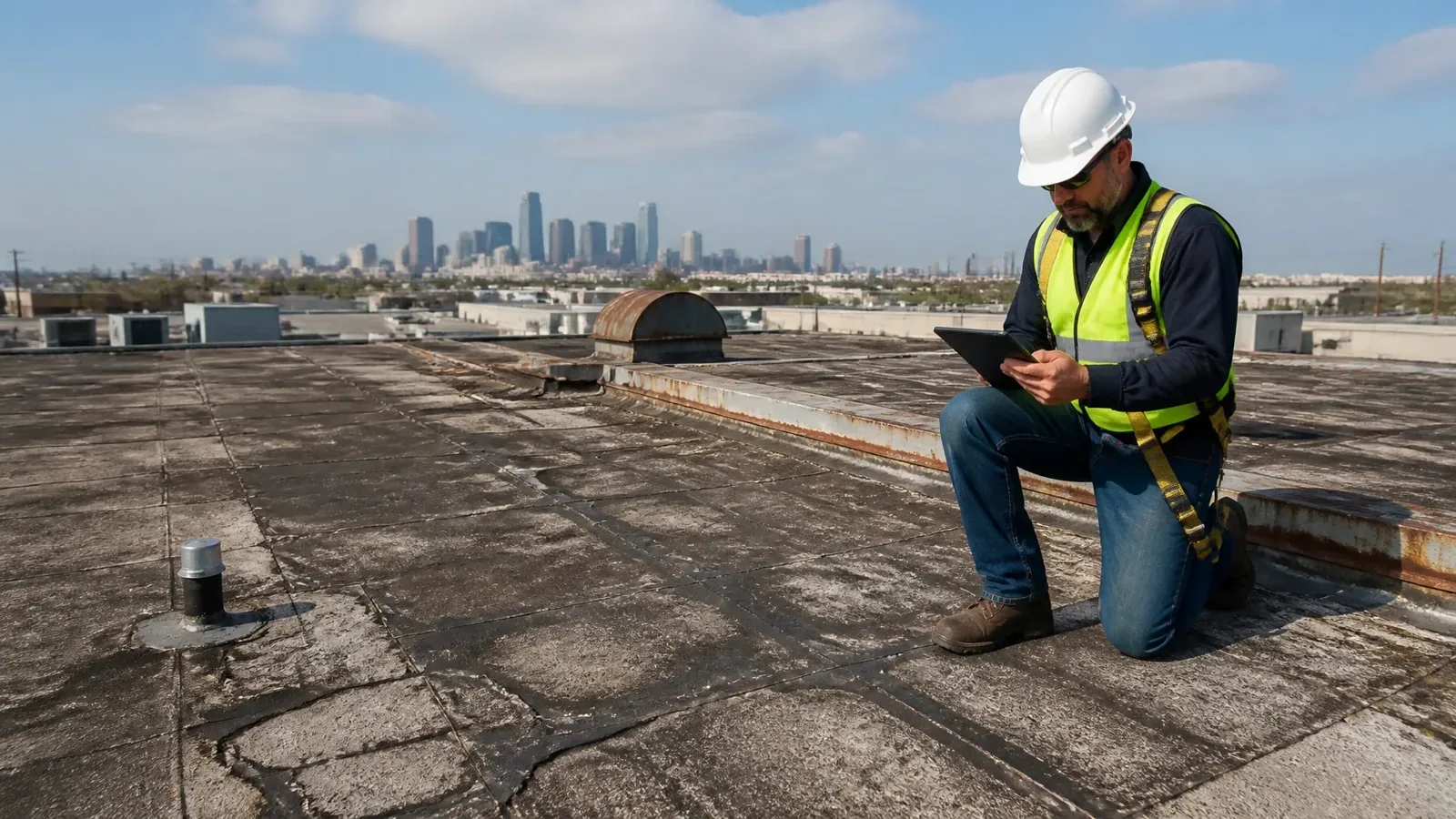
Every low-slope roof needs a continuous route from high points to drains or scuppers, then to an approved discharge point. We check the roof plan, visible slope, bowls, clamping rings, scupper throats, downspouts, and overflow openings. A clogged basket can be cleared, but a persistent low spot after cleaning may involve insulation, deck deflection, or original slope. We record where water remains and how far it extends rather than describe the whole roof as ponding.
We inspect both the fitting and its connection. A drain flange may separate from the membrane; a scupper may have open metal joints or a weak wall flashing; a downspout can detach below the roofline. Each defect calls for work at the correct transition. A roof inspection can document the full path and identify where a test or repair would change the recommendation.
The overflow route matters too. If a primary drain blocks, the secondary outlet needs to be open and positioned to relieve water without sending it through a wall or occupied entrance. We inspect the visible discharge and note any sign that an overflow has been active. Drainage service should leave a clear path to the outlet, not just a clean bowl.
Is ponding from a blockage or roof slope?
Water that remains after nearby areas dry deserves a closer look, but its presence alone does not identify the cause. We compare the low area with roof elevations, drain locations, scuppers, and recent maintenance. Debris at the inlet, a compressed insulation zone, a settled deck, or a detail that redirects flow can produce different patterns. Photographs from the same roof zones after cleaning can show whether the water route changed.
Huntington Beach's coastal weather has very few normal days with freezing temperatures and fewer than one day per year at 90 degrees or above in the nearby Newport Harbor record. That baseline differs from freeze-thaw markets; drainage and membrane details still need inspection after the area's cooler-season rain. The actual assembly and observed water path guide our recommendation, not a generic assumption about coastal roofs.
If the outlet is clear but a low plane remains, tapered insulation or another slope correction may be considered. The plan should show where the correction begins and how it connects to the drain. On a roof with wet material, targeted testing may be needed before adding weight or covering the affected area. A coating does not create positive drainage and should not substitute for correcting the route.
Which roof details need protection?
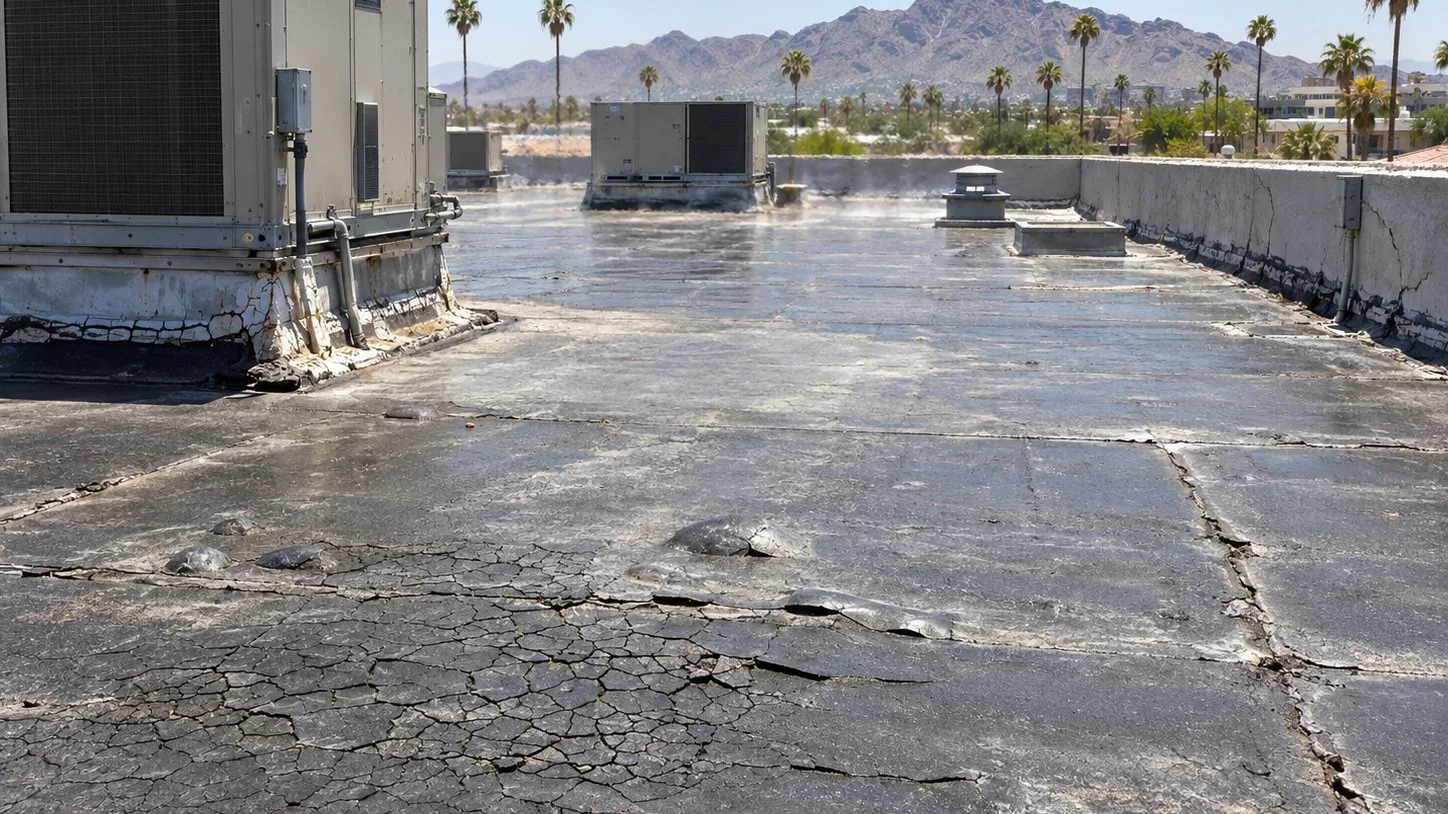
Water concentrates at drains and scuppers, so flashing, membrane, metal edges, and nearby seams deserve close attention. We inspect for cracks, loose clamping rings, open welds, separated sealant, corrosion, and previous patches that no longer bond. The repair material must match the roof system. A TPO or PVC detail is prepared differently from EPDM, modified bitumen, built-up roofing, or metal.
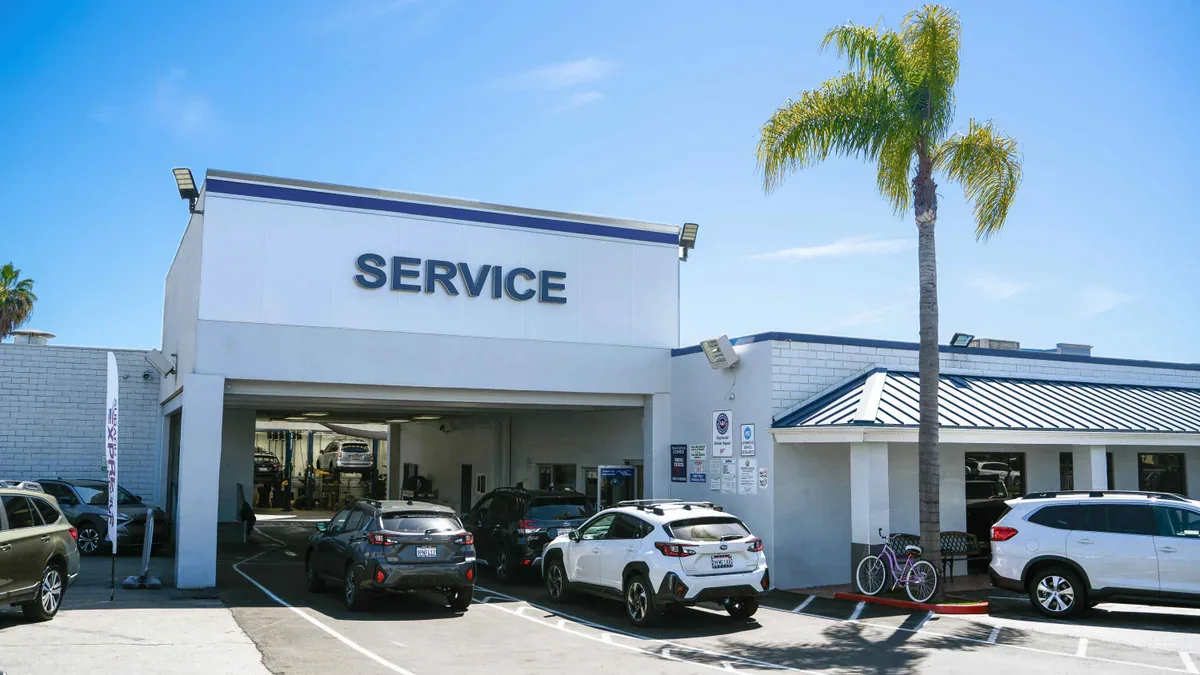
Gothard Street's 422-acre employment area includes manufacturing, warehousing, auto repair, retail, and office uses. Roof access around equipment and rail-side service activity can require a clear staging plan. Along the Pacific Coast Highway corridor, visitor-serving commercial nodes bring their own operating windows. We coordinate access while keeping the repair limit attached to the outlet or roof section actually inspected.
Where the drain flange or scupper connection has failed, a compatible commercial roof repair can address the opening. If multiple drains, low areas, and insulation zones show broader failure, compare a section-level plan with replacement. An emergency response can protect active water entry while permanent work waits for a safe, suitable window.
How do repairs fit the property schedule?
A drain repair can affect indoor space below the roof and access to the area around an outlet. We confirm who can open the hatch, whether a room needs interior protection, and if equipment must remain accessible. We isolate the work zone, keep debris out of drains, and secure the roof at the end of the shift. The site contact should know if testing or a cutout will be needed before the crew starts.
The Gothard Street Subarea contains small manufacturing and warehouse properties alongside office, retail, and repair uses. A maintenance window near active loading may need coordination with trucks; a shop or office may need a different interior route. We identify lift placement, material staging, and any restricted roof section with the person responsible for the site.
For a larger drain or slope project, we can pair the field findings with a photo-backed roof condition report. A TPO roof assembly has distinct welded membrane details, while other systems need their own compatible fittings. Planning a replacement lets the drain layout, overflow paths, and tapered insulation be coordinated as one scope.
What should the closeout confirm?
Closeout should identify which drain or scupper was serviced, whether debris was removed, what flashing or membrane work was done, and where discharge leads. Photographs should include the fitting and enough roof context to find it later. We list any low area that remains and whether it needs observation, testing, or slope work. That record helps the next visit distinguish a recurring blockage from a continuing roof-plane condition.
After cleaning, a return check can confirm the outlet remains open and that no repair edge has lifted. A scheduled roof maintenance visit can revisit drains before the next rainy season and after work by other trades. Share the building plan, leak history, roof material where known, and access contact to arrange an inspection in Huntington Beach or nearby Newport Beach.
When water is active indoors, protect people and contents from below and arrange safe roof access. We inspect the outlet, surrounding field, and any overflow route before recommending a permanent fix. The repair scope states what is confirmed, what remains concealed, and what would warrant a broader correction.
Commercial Roofing Questions
Can cleaning a drain solve every ponding problem?
It can restore flow when debris blocks an outlet. If water remains after cleaning, we inspect slope, insulation, deck, and the route to the next outlet before proposing another correction.
Should the overflow be higher than the main drain?
The roof design and applicable details govern placement. We inspect the installed primary and secondary paths, confirm they are open, and document whether water can reach the intended discharge.
Can you change the slope around an existing drain?
A tapered insulation or other slope correction may be possible after we check the assembly, deck, and drain position. The proposal shows the affected area and transition rather than treating coating as a slope fix.
What should we record after service?
Keep the outlet location, work performed, photos, roof material, and any low area still under review. Add a return check when the repair or flow path needs confirmation after rain.
How we inspect, scope and complete this work


Proudly Serving Huntington Beach and Nearby Cities

Commercial Roofers Huntington Beach
Huntington Beach, Westminster, Seal Beach, Fountain Valley,
Garden Grove, Newport Beach and nearby Orange County cities