
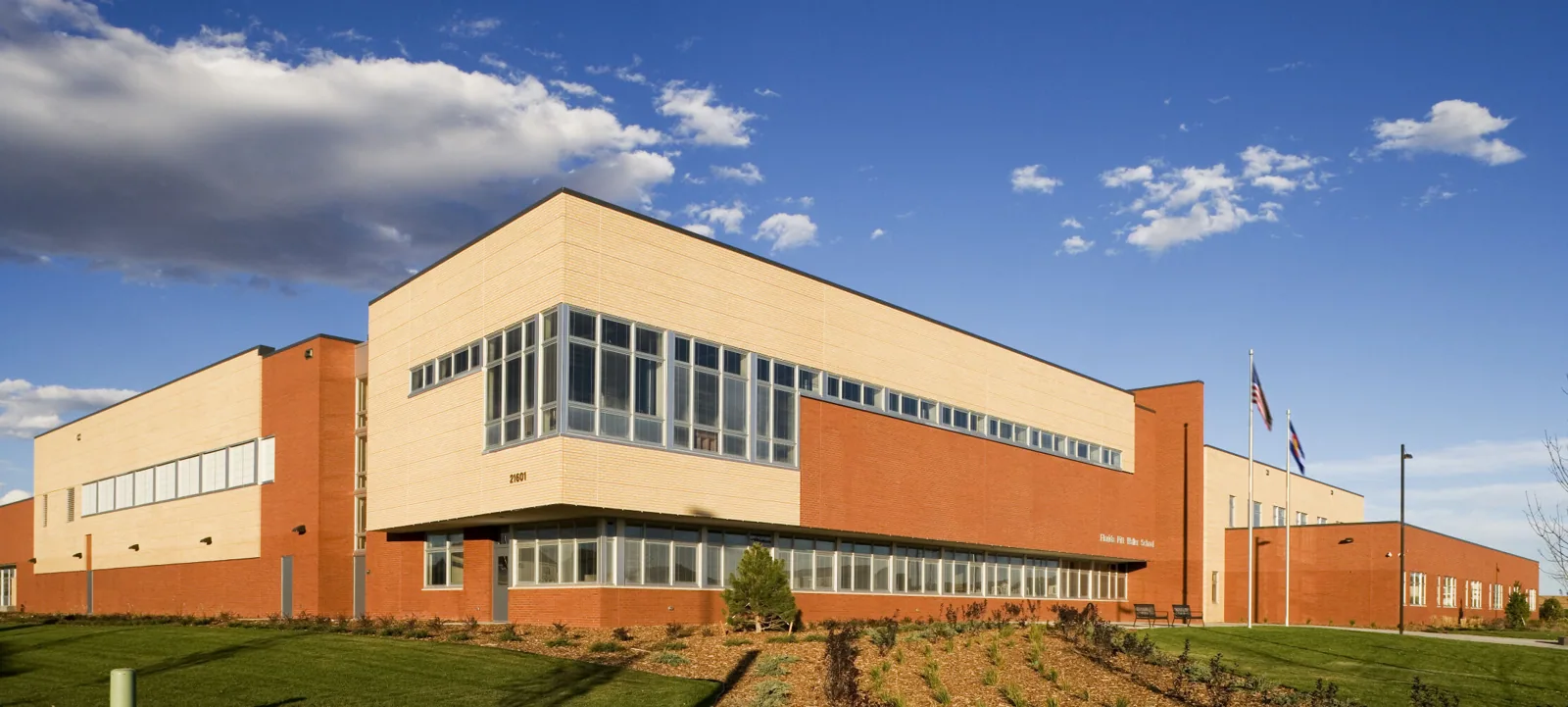
K-12 School Roofing in Huntington Beach, CA
A Huntington Beach, CA, classroom leak report needs a safe first step before the roof is opened. Commercial Roofers Huntington Beach inspects K-12 school roofs, traces reported water, and marks the repair area so school staff can route the right approval. We ask which room is affected, whether students or staff remain in the building, who can authorize roof access, and what operating window is available. The first visit protects the interior where practical and identifies the roof detail that can explain the report.
Huntington Beach’s commercial and public land uses sit alongside Downtown retail streets, the Gothard Street employment area, and the Northwest Industrial Subarea. A school work plan has its own access and occupant controls, but coastal conditions still affect exposed work. Newport Beach Harbor climate normals show mild average highs and rainfall concentrated in winter, while Santa Ana events can bring warmer, drier offshore winds. Current site conditions set the dry-in boundary and schedule.
What is the first safe step for a school leak?
Keep students and staff out of a wet or unstable room, report any electrical or ceiling hazard, and move contents only when the site contact says it is safe. A school representative can identify the affected room, time of water entry, and whether the area can be closed. We use those details to prepare interior protection and choose an authorized roof access route. No one should enter a roof zone until the school contact clears access and conditions allow the inspection.
A drip above a classroom, corridor, or office is a location clue, not a completed roof diagnosis. The water route may follow a deck, curb, wall transition, or roof seam before appearing inside. We compare the report with the plan, inspect the accessible area, and photograph the detail in context. If the suspected source is beyond the approved boundary, the record shows what additional access or test could narrow it.
For an urgent condition, emergency roof response can establish temporary protection while permanent work is scoped. We record the temporary cover, its limits, the interior status, and what approval remains.
How can a roof visit fit the school day?
The school site contact sets the access window, escort, roof hatch or ladder route, staging location, and areas that must remain clear. Student arrival, dismissal, meal periods, and scheduled activities can affect when a lift, material delivery, or noisy task may proceed. We confirm those constraints before assigning the work sequence. If the approved window is limited, the plan identifies which roof zone can be reached and secured before crews leave.
Interior protection should be linked to the active roof zone. Staff identify rooms, equipment, storage, or instructional areas below the work, then confirm how access will be controlled during testing or repair. If the project requires ceiling access, the scope says who opens the room, what protection is needed, and how it will be returned to service. A school district can coordinate multiple sites through its roof work program, while keeping each building's access map and approval record distinct.
Huntington Beach's Downtown area has pedestrian-oriented streets, while Northwest Industrial is a separate office and industrial context. We confirm each school's entrance, staging route, and safe path on site rather than infer access from an area name.
What roof details should the inspection record?
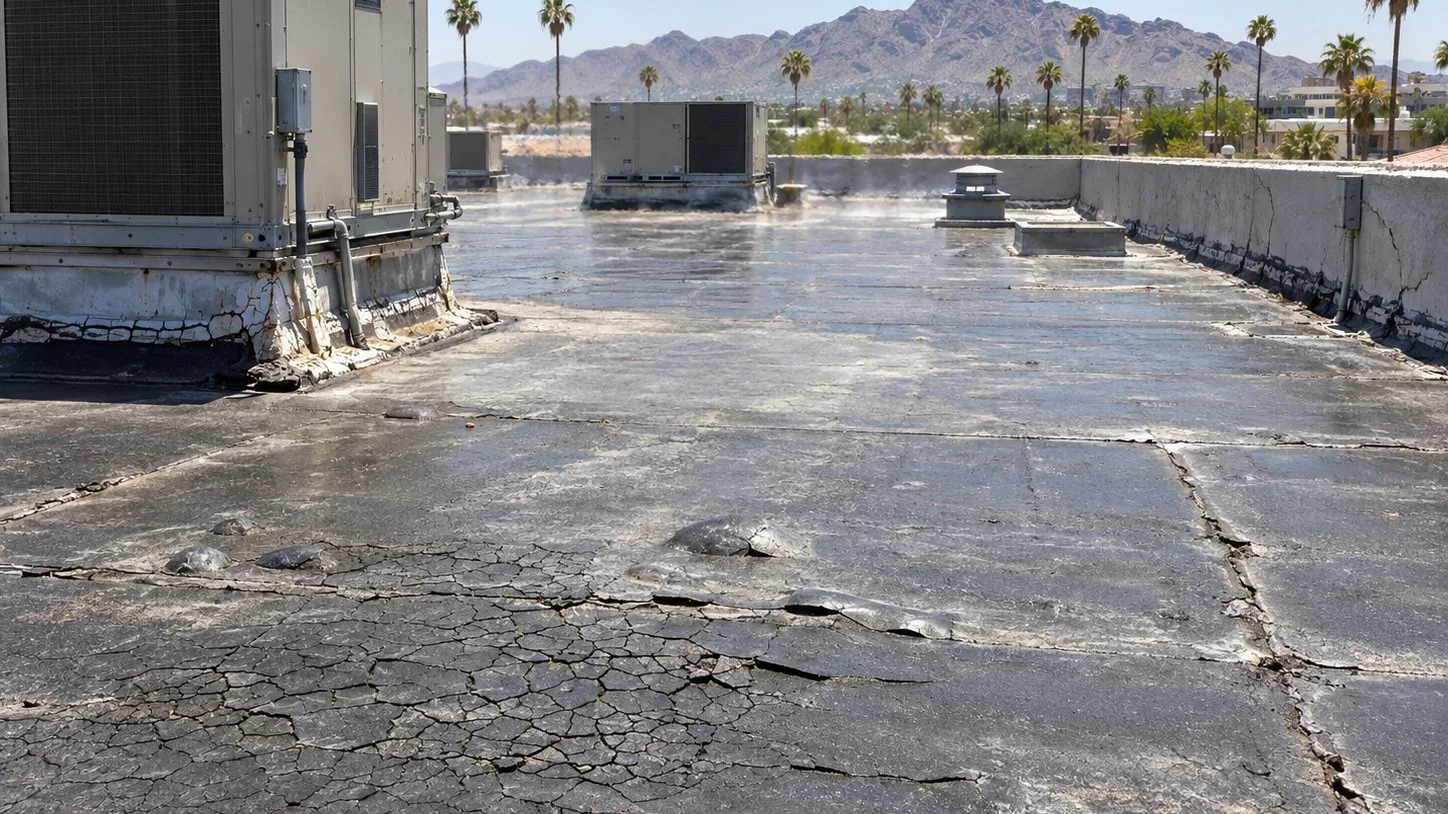
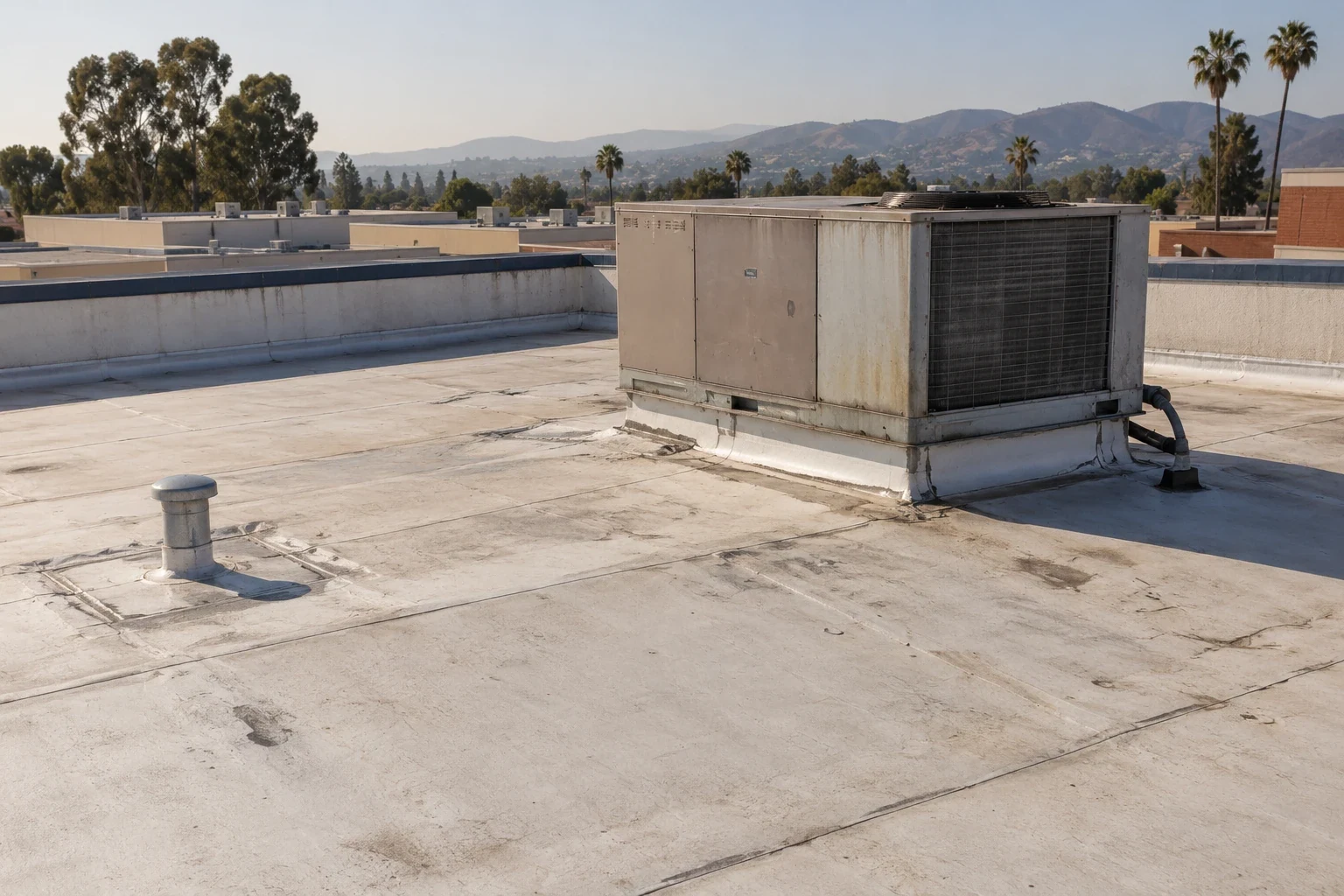
On a low-slope school roof, we examine accessible seams, flashing, parapet transitions, drains, scuppers, penetrations, skylights, and previous repair areas. Each photograph gets a roof-plan mark so a facilities manager can locate it later. We trace the drain path from the field toward the outlet and note debris, standing water, or a connection that needs closer review. A surface check may identify a defect without proving how far moisture extends below the membrane.
Classrooms and shared corridors can be sensitive to dust, noise, or an interruption in use. The inspection record distinguishes visible conditions from questions that require testing or an authorized opening. If wet insulation could change the repair extent, we identify the test location and approval needed before disturbing a layer. If the roof is not fully accessible, we list the excluded area and the condition that would permit a return visit. A commercial roof inspection can document the baseline and the next decision in one condition map.
Where a school has more than one roof level, each section is reviewed on its own. A gym, classroom wing, and administrative area may have separate drains, transitions, or repair histories; we confirm what is present rather than assume. Owners evaluating an adjacent college or university property or office building can use similar report fields, but the access plan and inspected roof remain site-specific.
Which weather window protects an open roof?
Newport Beach Harbor normals show an annual mean high of 68.2 degrees and precipitation concentrated in the cooler months, with summer averages near zero. These nearby coastal observations provide a seasonal planning baseline, not the forecast for a particular school roof. The crew checks the current weather and surface conditions before opening material. During winter rain, a smaller repair zone and a verified dry-in boundary can reduce how much of the roof remains exposed at dismissal.
Santa Ana weather can replace the campus’s mild marine conditions with warmer air and dry offshore flow. Wind affects safe movement, temporary cover, and material handling; the crew may change the sequence when conditions require it. We record the area completed, protection left in place, and any return action. This is especially useful when a school day ends before the roof task can be finished, because the site contact can see whether the classroom below may reopen and what still needs approval.
Should the school repair, recover, or replace?
A localized repair may fit a contained defect when adjacent material is sound and the water path is understood. Repeated seam failures, widespread moisture, weak insulation, or a growing repair history may justify more testing or a capital comparison. We mark confirmed conditions and leave hidden moisture as an open question until a suitable test answers it.
For a school overlay, we must establish that retained layers are dry and secure and that the revised roof elevation preserves drainage and workable flashing heights under the project design. Replacement may require removal, insulation or deck work, and phases coordinated around the school calendar. A recover assessment identifies the limits of retaining the existing assembly; a replacement scope identifies removal and rebuild work. We state the assumptions, exclusions, and cost drivers before the district routes approval.
Huntington Beach adopted the 2025 California Building Code for the code cycle effective January 1, 2026. Permit documents and the applicable project requirements govern school alterations. Our proposal identifies which roof details, inspections, or submittals are included so a campus team can coordinate review without treating an estimate as permit approval.
How does the district close the work order?
Closeout records the repair boundary, preparation, installed materials, photographs, any approved scope change, and a return check if needed. The site contact can compare each photo with the plan mark and confirm that the work zone has been released. If temporary cover remains or a ceiling area needs another inspection, the work order states the limit and the next responsible contact.
Keep the school name, roof plan, service history, and approval path together. A condition report can support budget review. Share the affected building, interior report, access contact, and operating window so we can define the first safe step.
Commercial Roofing Questions
Can a school roof be repaired during classes?
The schedule depends on roof access, noise, room protection, and the site's rules. We coordinate the work window with the school contact and identify which spaces or routes must remain clear.
What should staff do when water enters a classroom?
Keep people away from wet or unstable areas, report electrical or ceiling hazards, and identify the affected room. We use that information to plan interior protection and the first authorized roof check.
Does a visual roof walk show the full moisture extent?
Not always. We mark visible conditions and explain when a moisture survey or authorized opening could change the repair boundary before recommending larger work.
How do you plan work around a school calendar?
The site contact provides operating hours, closures, activities, access limits, and notice rules. We use those constraints to phase the roof, set daily dry-in points, and identify any return work.


Proudly Serving Huntington Beach and Nearby Cities

Commercial Roofers Huntington Beach
Huntington Beach, Westminster, Seal Beach, Fountain Valley,
Garden Grove, Newport Beach and nearby Orange County cities