
Rooftop Equipment Curbs and Supports in Huntington Beach, CA
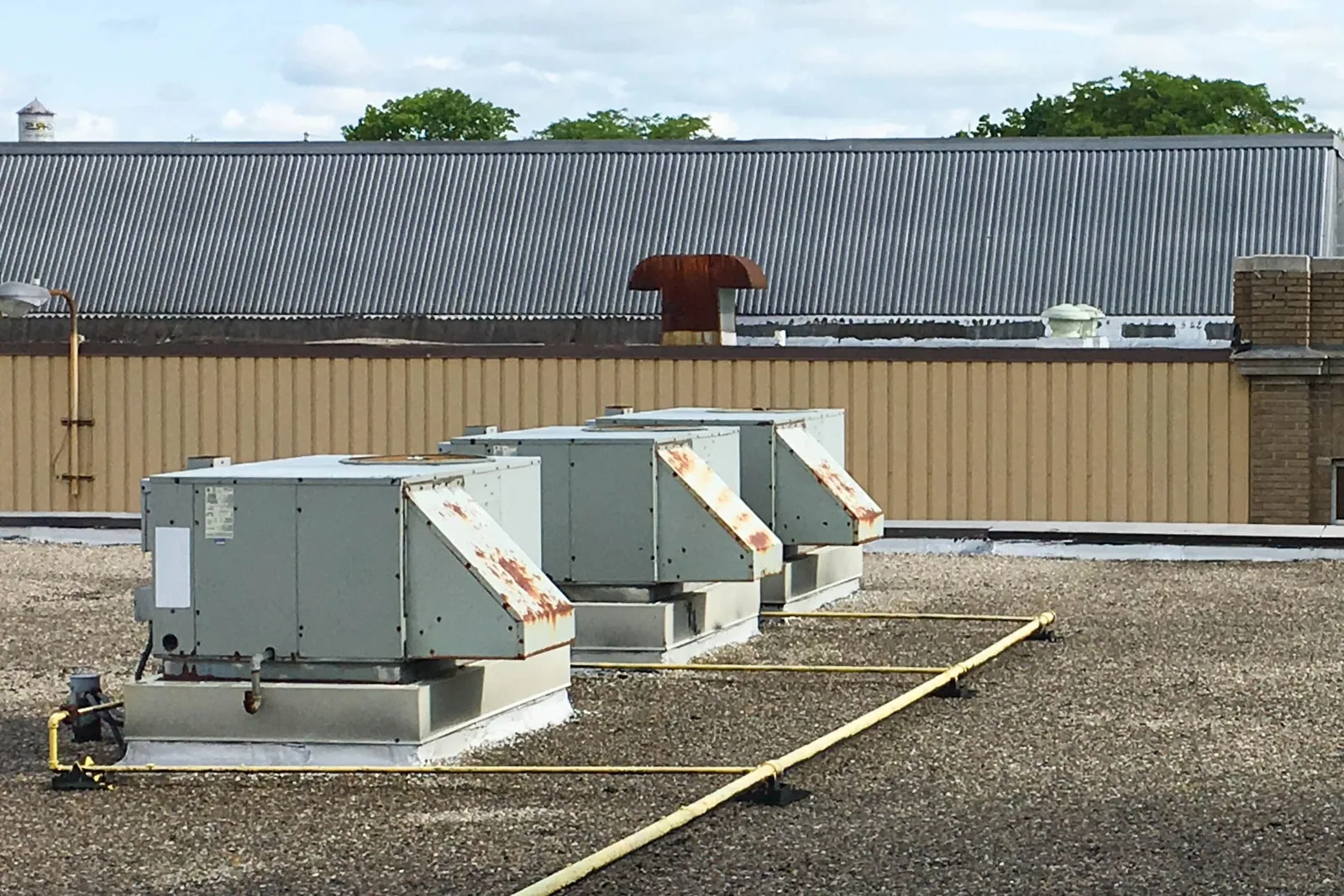
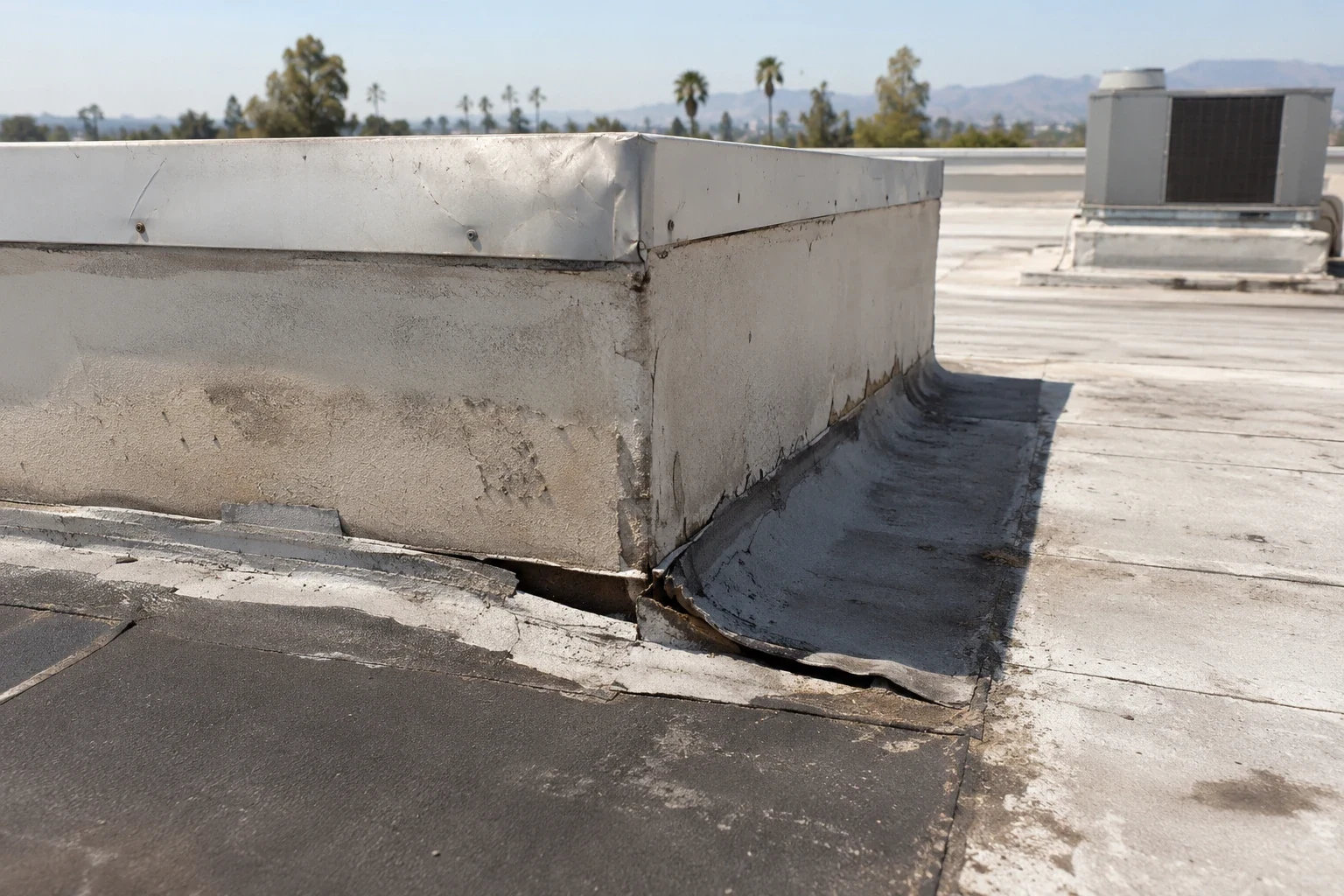
A unit curb that rocks, separates from its flashing, or leaves a gap at the membrane needs a safe inspection before equipment work continues. We identify the affected unit, trace the curb perimeter, and record whether the roof detail or the support itself has moved. The first safe step is to coordinate access and any needed equipment shutdown with the site contact, then protect the area if water is entering. A marked roof plan keeps the finding tied to the right unit.
Huntington Beach, CA, includes manufacturing and warehousing in the Gothard Street Subarea, along with industrial and research-technology uses in the Northwest Industrial Subarea. These settings can involve rooftop equipment, but the building's actual units, supports, and roof assembly must be inspected rather than inferred from its address or use. Nearby Newport Beach Harbor climate normals show a cool coastal baseline, while occasional Santa Ana conditions can alter the work window. We use those facts for planning, not as proof of damage.
Which part of the equipment detail moved?
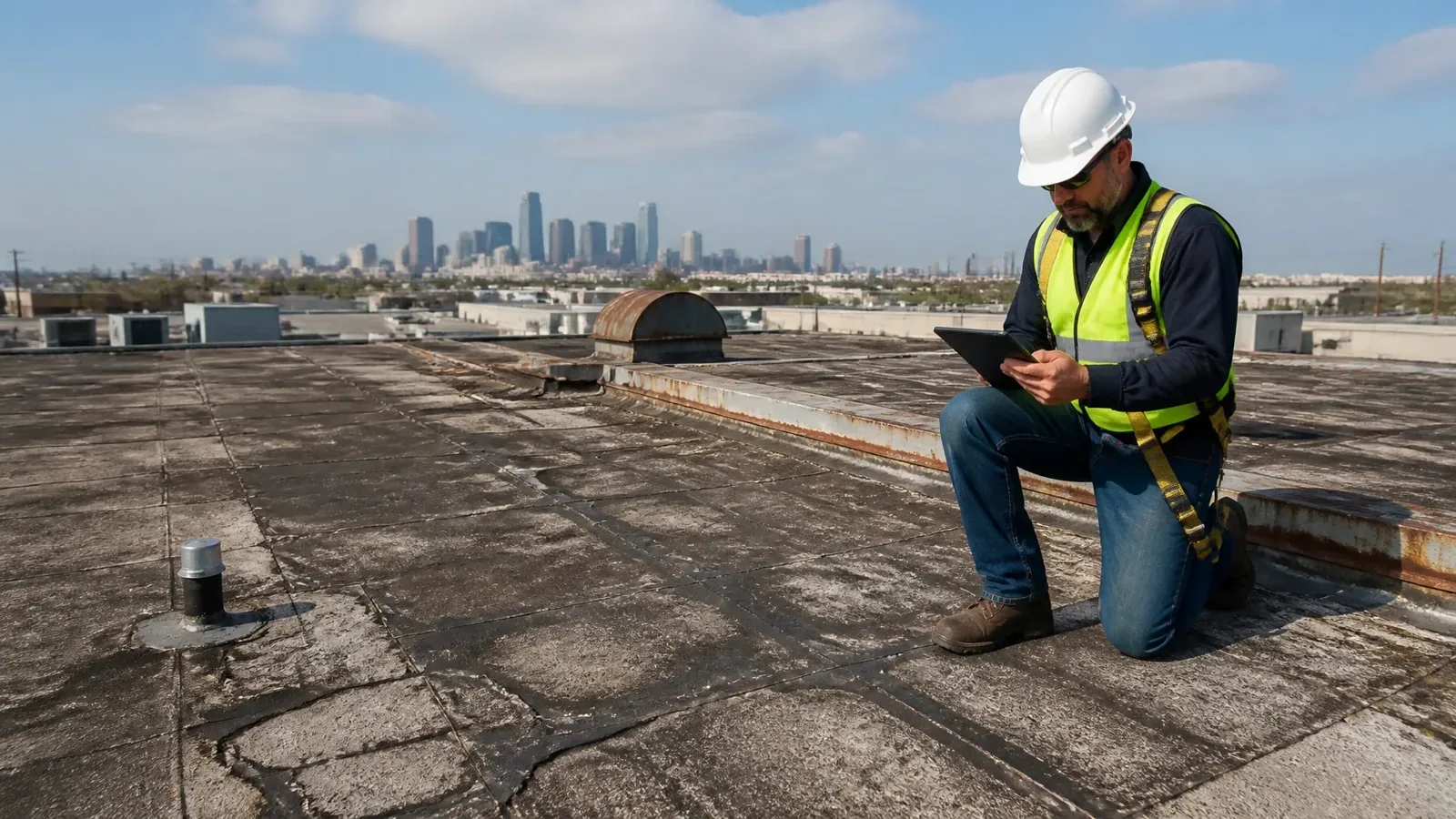
We inspect the curb corners, base flashing, membrane tie-in, counterflashing, and nearby seams before identifying the repair extent. A lifted membrane edge may resemble a loose curb from below, while a shifted piece of equipment can stress an otherwise intact flashing detail. We photograph each side and note the relationship to roof seams, drains, and adjacent supports. If movement or deck condition raises a structural question, we record it for review by the appropriate design professional.
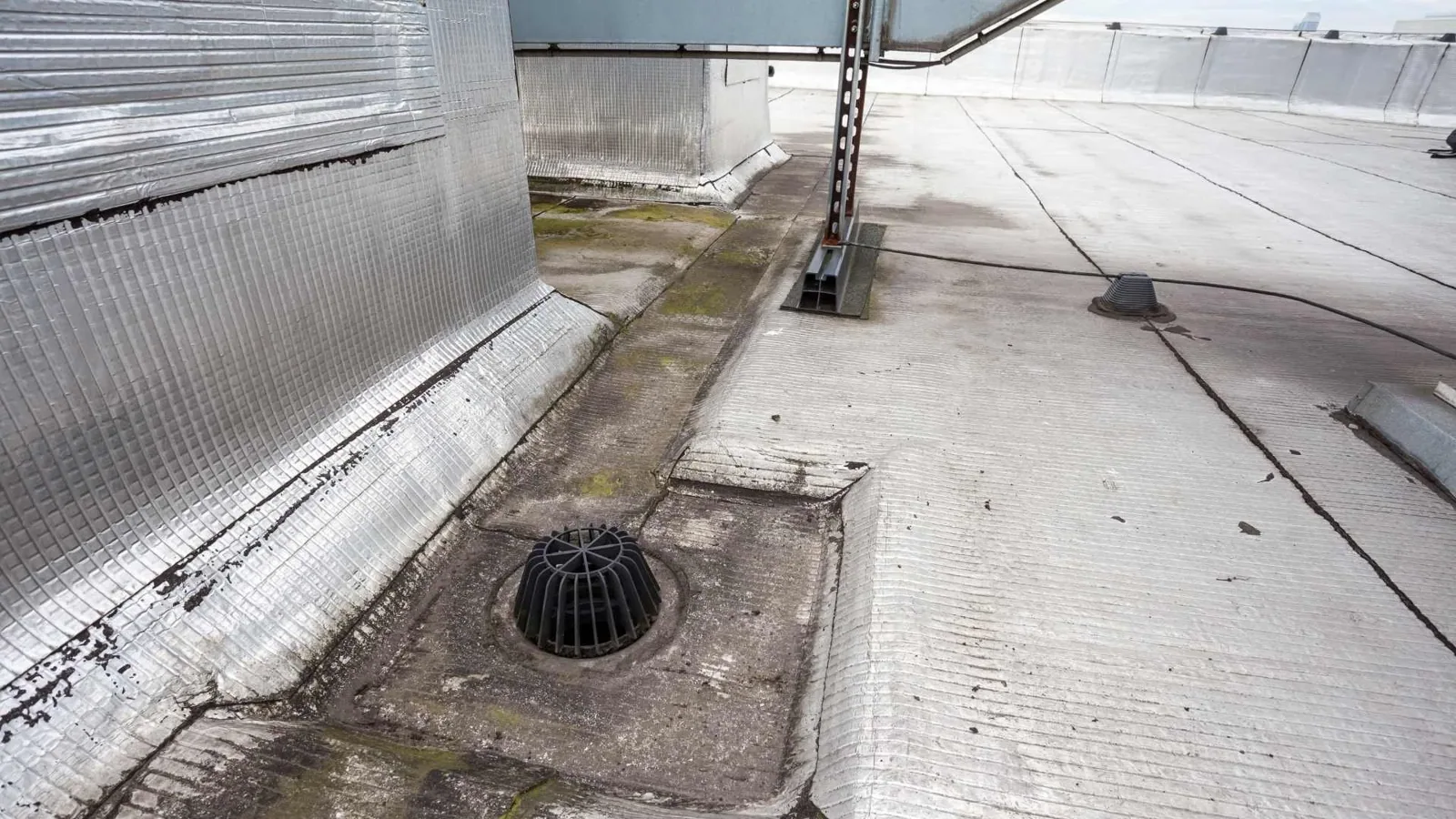
Pipe supports need their own check. We look for worn support pads, concentrated loads, corrosion where visible, and contact that could abrade the membrane. The approved equipment layout and roof plan help locate the components; a roof inspection records the current condition. Where water paths converge near a unit, we also inspect the drain and scupper details rather than treating the curb as the only possible source.
Equipment changes can leave abandoned curb openings or unused supports that still need a weather-tight finish. We compare the present layout with the roof plan and identify each active and inactive penetration. The scope should state whether an old curb will remain, be removed, or be closed with a designed assembly. If a new unit is planned, we coordinate the curb dimensions and flashing sequence before the opening is cut, then document the final detail against the approved plan.
How should water be kept out during the repair?
When a curb is actively leaking, the response begins with interior protection and a temporary cover suited to the opening and weather window. We coordinate any unit shutdown or trade access before removing material. A temporary measure should have a defined boundary and return check; it does not replace a permanent flashing repair. We note what is protected, what remains exposed, and when the site contact should expect the next inspection.
For permanent work, we remove failed flashing only far enough to reach a sound tie-in, prepare the substrate, and install compatible curb or pipe flashing. The detail must preserve drainage around the equipment and avoid blocking a scupper or creating a new low point. If a test opening shows wet insulation beyond the visible defect, we stop at the agreed scope boundary and document the added area for approval before expanding removal.
What must match the installed roof system?
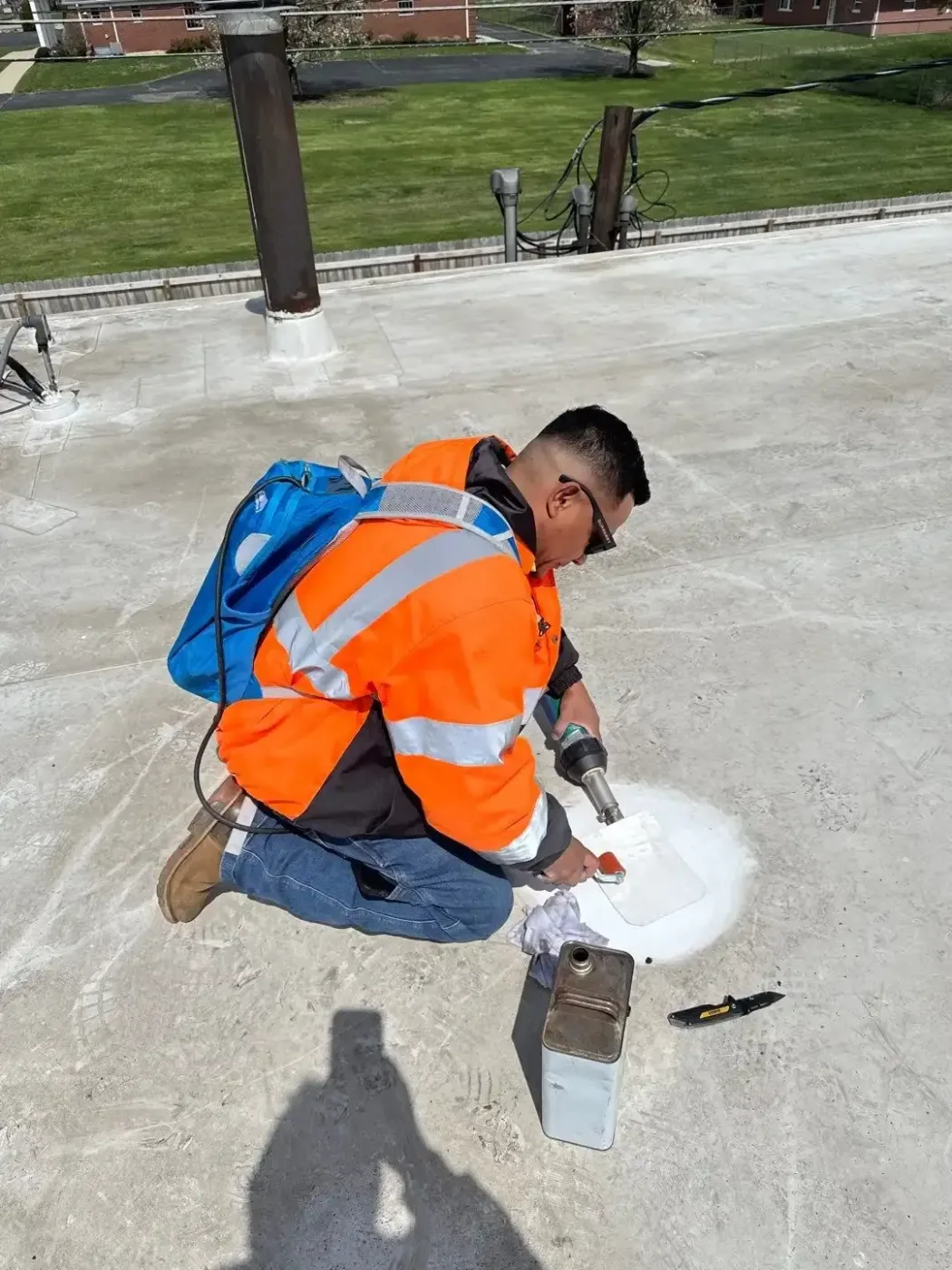
Flashing materials, seam treatment, and attachment vary by membrane and approved assembly. We confirm the roof system and consult project documents before specifying a repair. For a TPO roof, the new detail must be prepared and welded using compatible components and procedures. A PVC assembly has its own material and weld requirements. We do not assume the membrane based on a unit label or on the property's industrial classification.
Where the curb has been altered, the record should show the opening size, membrane termination, counterflashing, and any change in equipment footprint. A flashing review can distinguish a failed tie-in from damage elsewhere in the roof field. If the unit or support location changes, the revised plan should identify who confirms attachment, clearances, and any structural capacity before a new roof penetration is made.
Fasteners and support bases should not concentrate movement or cut through the waterproofing. We inspect for loose attachment, compressed pads, exposed metal edges, and sealant that has pulled away, then show the actual condition in close-up photographs. Sealant alone cannot correct a poorly supported curb. The permanent repair should restore a continuous flashing transition and leave the unit serviceable without placing tools or replacement parts against the membrane.
How do access and equipment schedules affect the work?
The site contact helps set a roof access window, equipment shutdown requirements, lift location, and any restricted area below. In the 422-acre Gothard Street Subarea, industrial uses and a rail right-of-way shape the broader setting; they do not dictate a route at a specific property. In the Northwest Industrial Subarea, offices, business parks, and industrial-spec buildings create different operating conditions. We verify staging and pedestrian protection with the manager before mobilizing.
If multiple units are involved, we index each curb and support so the owner can prioritize active leaks, loose details, and preventive corrections. A photo-backed condition report can connect the unit list to the marked roof areas and approval packet. We sequence repairs so each opening can be closed or temporarily protected before operations resume, and note any unit that needs a return visit.
Where a lift or crane is needed, the property team confirms setup space, overhead restrictions, and how long the roof area will be occupied. We coordinate the lift date with the roofing sequence so an open curb is not left without protection while equipment is placed. If the mechanical contractor changes the unit after the initial walk, we recheck curb height, clearance, and the drain path around the new footprint before closing the roof detail.
What should the final record show?
The scope identifies the curb or support, observed failure, repair materials, and limits of the work. If opening the roof exposes a different condition, the variance log records photographs, added quantities, and owner approval before the repair boundary changes. The closeout packet includes the completed detail, nearby membrane tie-in, and any outstanding structural or equipment coordination item.
Owners can use a maintenance visit to check repaired curbs, pipe supports, and adjacent drainage at an interval tied to the finding. A Gothard Street property or a Northwest Industrial Subarea building still gets its own roof-zone record. Share the unit location, roof plan, leak report, access contact, and operating window to arrange the first safe inspection.
Commercial Roofing Questions
Must operating equipment stop while its curb is flashed?
Sometimes. We review the equipment clearance and work area with the site contact, then identify whether a shutdown or trade escort is needed before setting the repair window.
What if a curb moves after a repair?
We document the movement and check whether the curb, support, deck, or flashing changed. Any structural question is referred for the appropriate design review before the roof detail is rebuilt.
How do you distinguish a leaking curb from a drain problem?
We trace both details in the reported roof zone, photograph the water path, and test or inspect the outlet if the evidence points to drainage. The scope names the finding that supports the repair.
Do pipe supports need to be replaced with the membrane?
Not automatically. We inspect their condition and roof contact, then coordinate any replacement or relocation with the approved equipment plan and support requirements.
Which unit identifiers and tie-in records should facilities retain?
Keep the unit identifier, marked roof plan, before-and-after photos, materials installed, any change approval, and return-check recommendation with the building work order.


Proudly Serving Huntington Beach and Nearby Cities

Commercial Roofers Huntington Beach
Huntington Beach, Westminster, Seal Beach, Fountain Valley,
Garden Grove, Newport Beach and nearby Orange County cities