
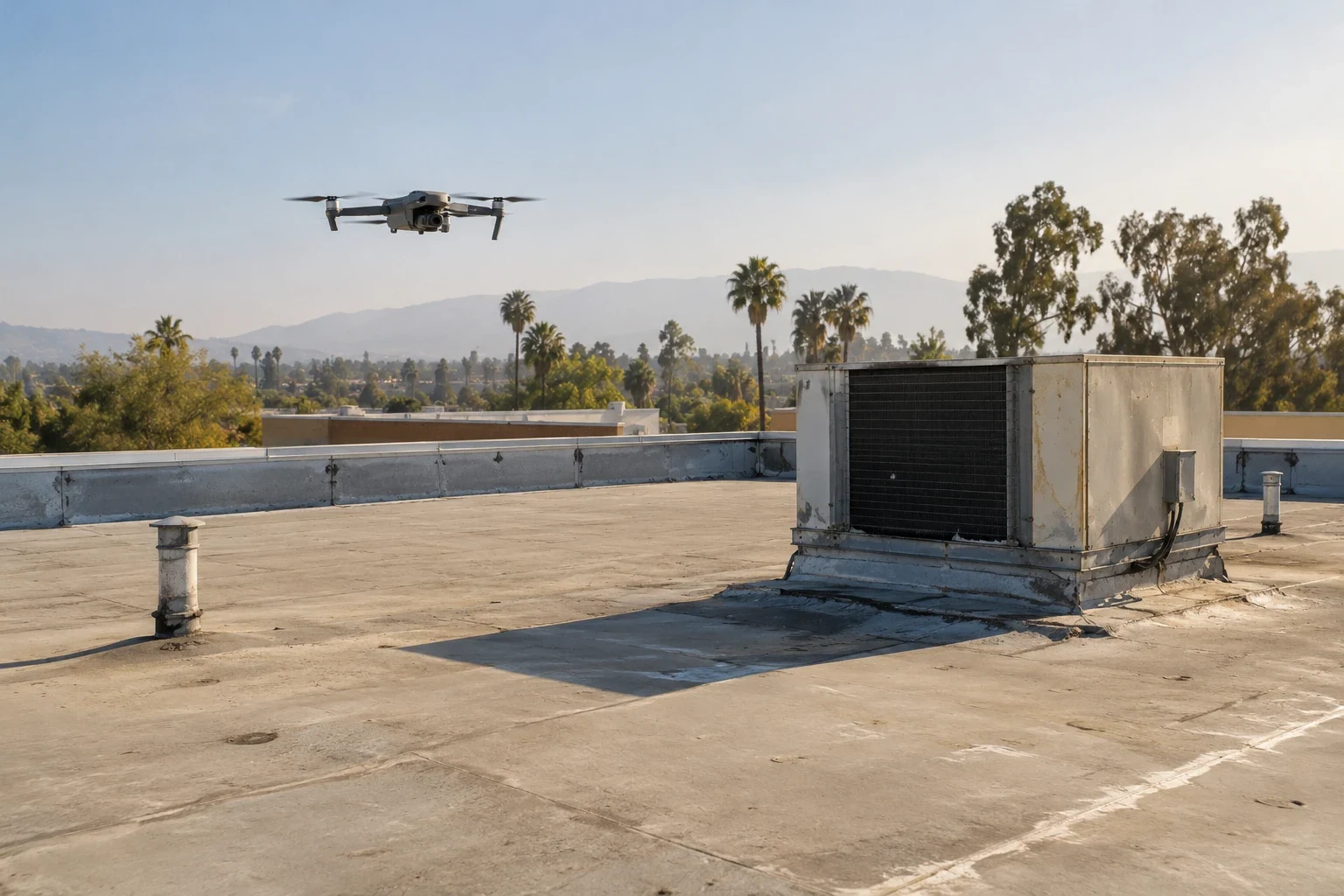
Drone Roof Inspection in Huntington Beach, CA
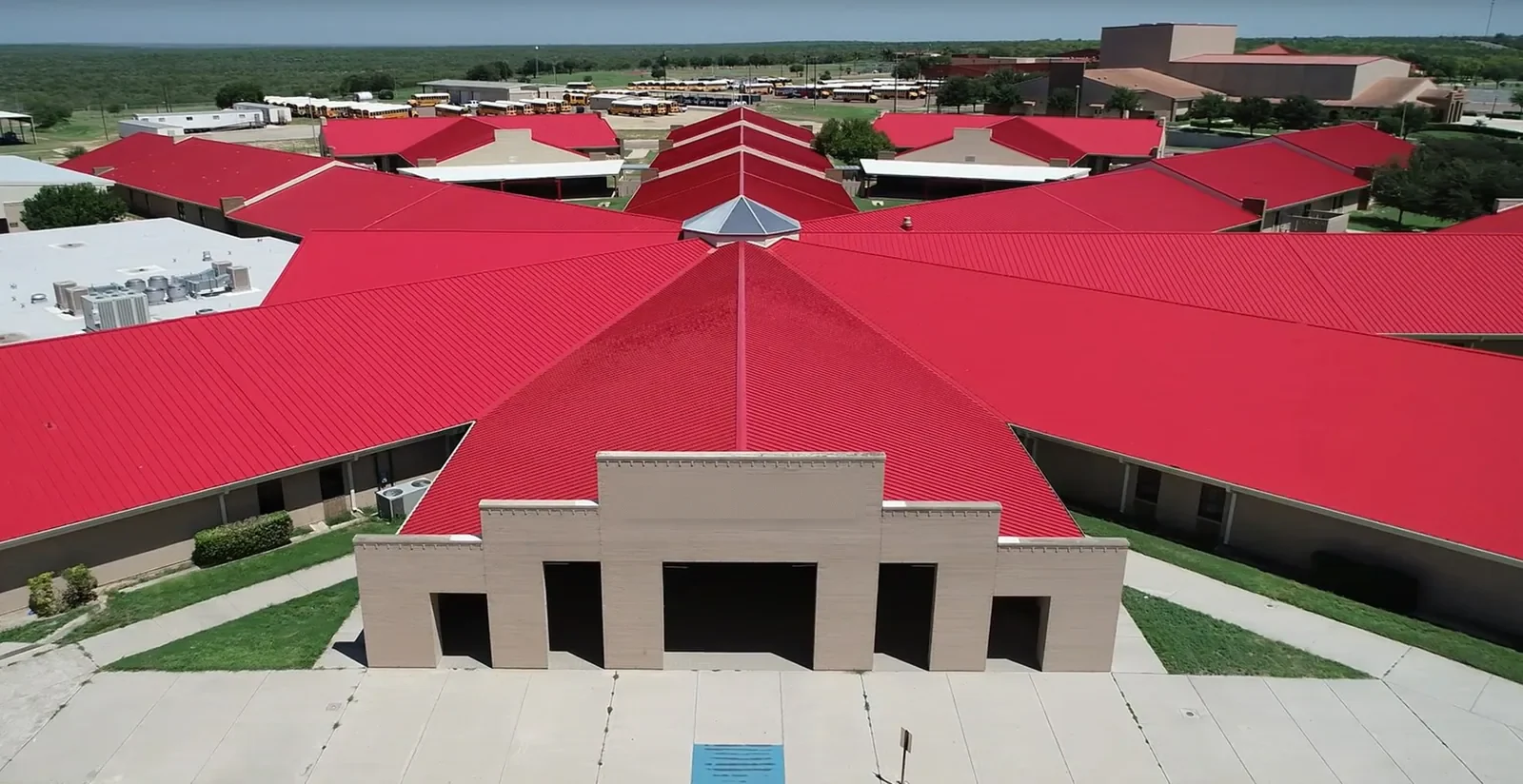
A roof that is too broad or difficult to reach can benefit from an overhead image before the close inspection is planned. Commercial Roofers Huntington Beach provides drone roof imaging in Huntington Beach, CA, to document visible surface patterns and help identify areas for hands-on review. The image set supports a marked roof plan; it does not replace close checks of seams, flashings, drainage or hidden layers.
The Gothard Street Subarea spans 422 acres of manufacturing, warehousing, repair, retail and office property, while the Northwest Industrial Subarea covers a broad mix of offices, business parks and industrial or research uses. Aerial views can help orient those larger roof plans. The actual property contact still sets access and operational limits before flight or roof entry.
What can an aerial view show?
From above, imaging can record broad membrane discoloration, ponding patterns, debris accumulation, rooftop equipment layout and visible areas that may need closer attention. We connect each view with a roof-zone reference and a capture date. This gives a manager a useful overview to compare against repair records or plan the next walk without treating color changes as proof of a leak or wet insulation.
Obstructions, parapets, equipment and lighting can hide details. A view may show where an area needs access, but a close inspection determines the condition of a seam or flashing. If an opening is reported indoors, we combine the room location with the image and inspect the likely water route rather than selecting a repair based on the aerial frame alone.
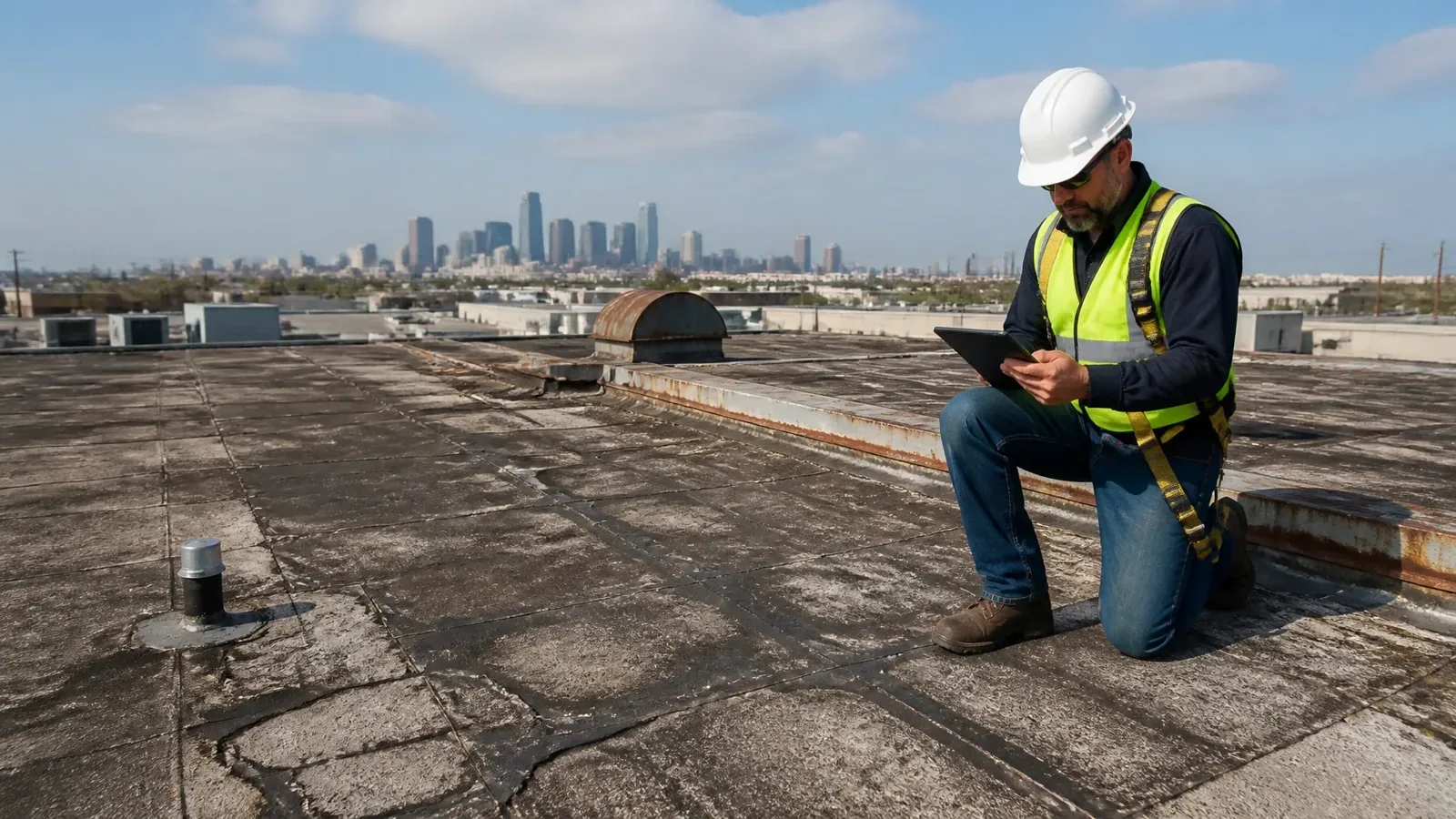
A hands-on commercial roof inspection can follow the image set where an owner needs confirmation of a defect or repair boundary.
How is an image set prepared?
We confirm the property boundary, roof sections to capture, current operations and any access or privacy restrictions with the site contact. A flight plan identifies the viewing angles and the areas that cannot be seen safely. If weather, nearby activity or airspace requirements prevent the planned capture, we reschedule or use an alternate inspection method. The record states the limits so the images are not mistaken for complete coverage.
Huntington Beach includes visitor-serving uses near Pacific Coast Highway and Five Points, as well as employment areas beside arterials and I-405. Capturing over an occupied property requires coordination around people, vehicles and nearby structures. We agree on timing with the site contact and keep the capture area and public access plan clear.
Coastal conditions can change during the day. Newport Beach Harbor climate normals show mild temperatures and little freezing, but Santa Ana events can bring warm, dry offshore winds. The live weather window, visibility and safe operating conditions determine whether imaging proceeds.
What remains a hands-on check?
Aerial imaging does not establish membrane thickness, attachment, hidden moisture, deck condition or the integrity of a concealed detail. The close inspection confirms those issues where they affect the owner’s decision. We identify visible targets in the image, then inspect the seam, curb, drain or edge from a safe access point. If moisture extent matters, testing or an authorized opening can be planned separately.
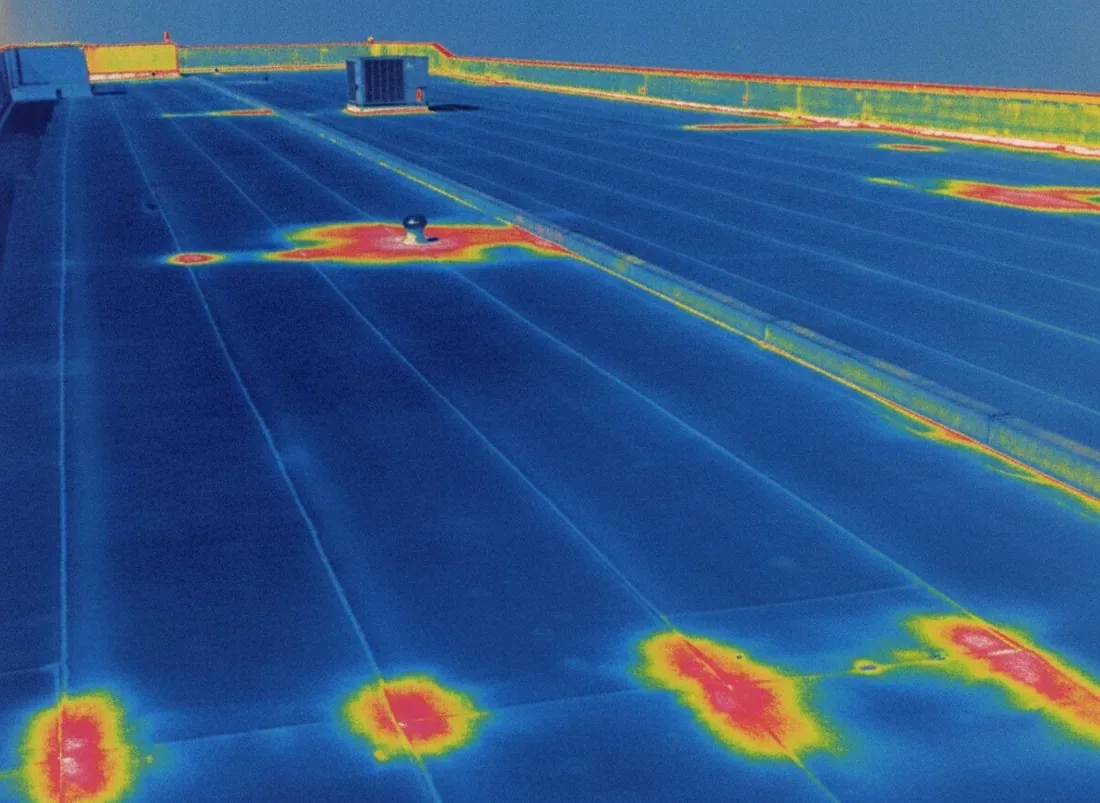
Images may also show rooftop equipment, but not whether a unit operates correctly or whether its curb is structurally sound. A mechanical contractor handles equipment diagnosis. The roofing inspection examines the membrane tie-in and records any trade handoff needed before a repair is closed. Infrared moisture testing can help examine selected areas when conditions support that method.
For large roofs, the image index can organize proposed inspection zones. We mark where further examination is recommended and why, giving the property manager a way to prioritize close access without treating every visible variation as a defect.
How can images support repair and replacement?
Before a repair, an overhead view can help locate the affected section, equipment and nearby water path. After the work, a new view may document broad completion areas, while close photographs show the repaired seam or flashing. We keep those records tied to the same plan marks and dates so a later manager can see what changed.
For replacement planning, aerial views can help coordinate staging, roof zones and equipment positions. They do not identify existing layers or deck damage. Those conditions require records, inspection and testing. Replacement planning uses the verified assembly and marked limits to define removal, protection and new roof work.
A recover also changes drains, edge heights and curbs. A recover evaluation examines those details before an overlay is approved. The image may help locate them, but measurements and close inspection determine the detail design.
What affects access and timing?
Roof height, surrounding buildings, safe launch points, access control, wind, visibility and active site traffic can change when imaging can occur. A site contact identifies sensitive work areas, loading activity and any required notice. We plan the capture to reduce conflict, then state any zone that could not be viewed. A follow-up roof walk can address the blind area if the property decision depends on it.
Gothard Street’s employment map includes a rail right-of-way along the eastern edge of the subarea. Aerial planning near rail or arterial activity requires the property’s current access rules and a safe viewing position. The map helps locate the area; it does not authorize flight over a neighboring property or active right-of-way.
Project cost depends on roof size and geometry, flight and image processing needs, access conditions, and whether a hands-on inspection or moisture test follows. We scope those tasks separately so the owner can decide how much image detail is useful.
How are findings delivered?
The deliverable can pair dated images with a roof-zone index, notes about visible patterns and a list of areas needing closer review. We do not label hidden conditions from imagery alone. When an inspection follows, the report adds the field observation, test location and repair recommendation to the relevant image mark.
For a property in the Gothard Street Subarea, the site contact can identify the roof access point and any yard or service windows before the capture is scheduled. Condition reporting can preserve the image set with hands-on findings and approved work orders.
Send the affected building, roof plan, access contact, operating limits and the decision the images need to support. We will plan a safe capture, identify blind areas and recommend close inspection only where the record leaves a real roof question.
Commercial Roofing Questions
Which leak questions remain unanswered by an overhead image?
Images can help locate visible damage or a surface pattern, but they cannot follow concealed water or confirm hidden moisture. We use the report and image to plan a close inspection of the likely route.
Will the drone cover every part of a large roof?
Coverage depends on access, obstructions, safe operating conditions and any site limits. We identify areas that could not be imaged and recommend another examination when they affect the decision.
Do aerial images replace a roof walk?
No. A close inspection checks seams, flashings, drains, attachment and other details that imagery cannot establish. Aerial views help prioritize where that examination should occur.
Can the images help plan reroofing?
They can document visible roof layout and equipment positions. Existing layers, deck condition, moisture extent and attachment require records, close inspection or testing before the scope is set.
What weather can delay a drone capture?
Wind, visibility and safe operating conditions govern whether the planned capture can proceed. We reschedule or use another inspection approach when the live conditions do not support a safe flight.

Proudly Serving Huntington Beach and Nearby Cities

Commercial Roofers Huntington Beach
Huntington Beach, Westminster, Seal Beach, Fountain Valley,
Garden Grove, Newport Beach and nearby Orange County cities