
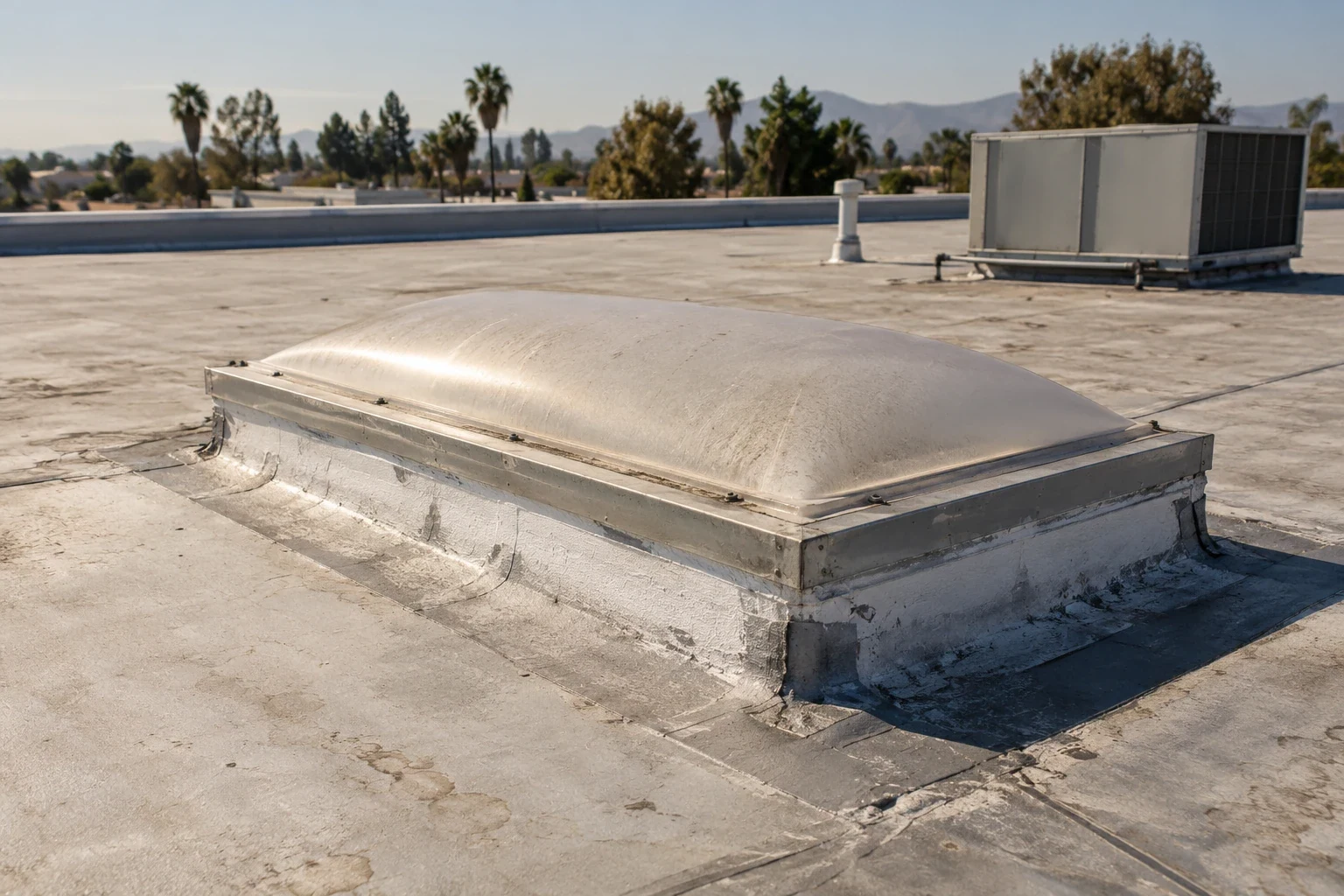
Commercial Skylight and Penetration Flashing in Huntington Beach, CA
Daylight around a skylight can make a roof opening easier to find, but it does not show where water enters. For a skylight in Huntington Beach, CA, we check the glazing, frame, curb, flashing, nearby seams, and drain path before recommending repair. A split corner may need a local tie-in; a failing skylight assembly may need broader work. The scope names the actual roof detail and any access limits so the owner knows what will be repaired.
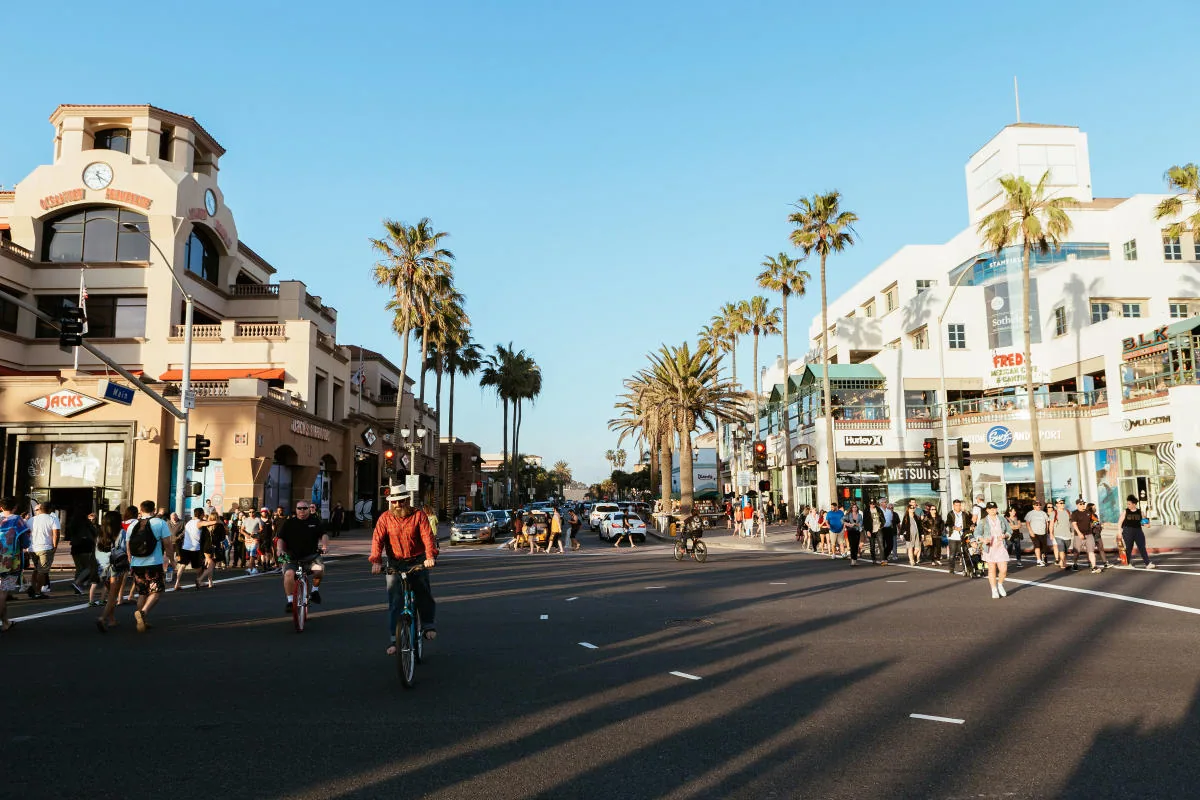
Commercial frontage in the city includes the Warner, Edinger, Adams, and Beach Boulevard corridors; visitor-serving uses also appear around Five Points and Pacific Coast Highway. Roof access and occupied space differ across those settings. Newport Beach Harbor normals concentrate rain in winter, which makes a clear water route useful to check before the next wet period.
Where can water enter around an opening?
A skylight has several transitions: glazing to frame, frame to curb, curb to flashing, and flashing to roof membrane or metal. We inspect each one for cracked seals, loose fasteners, lifted corners, worn gaskets, open laps, or evidence of water tracking. A leak may begin at a nearby pipe, equipment curb, or seam and reach the interior near the skylight. The reported room helps narrow the search but does not prove the frame is the entry point.
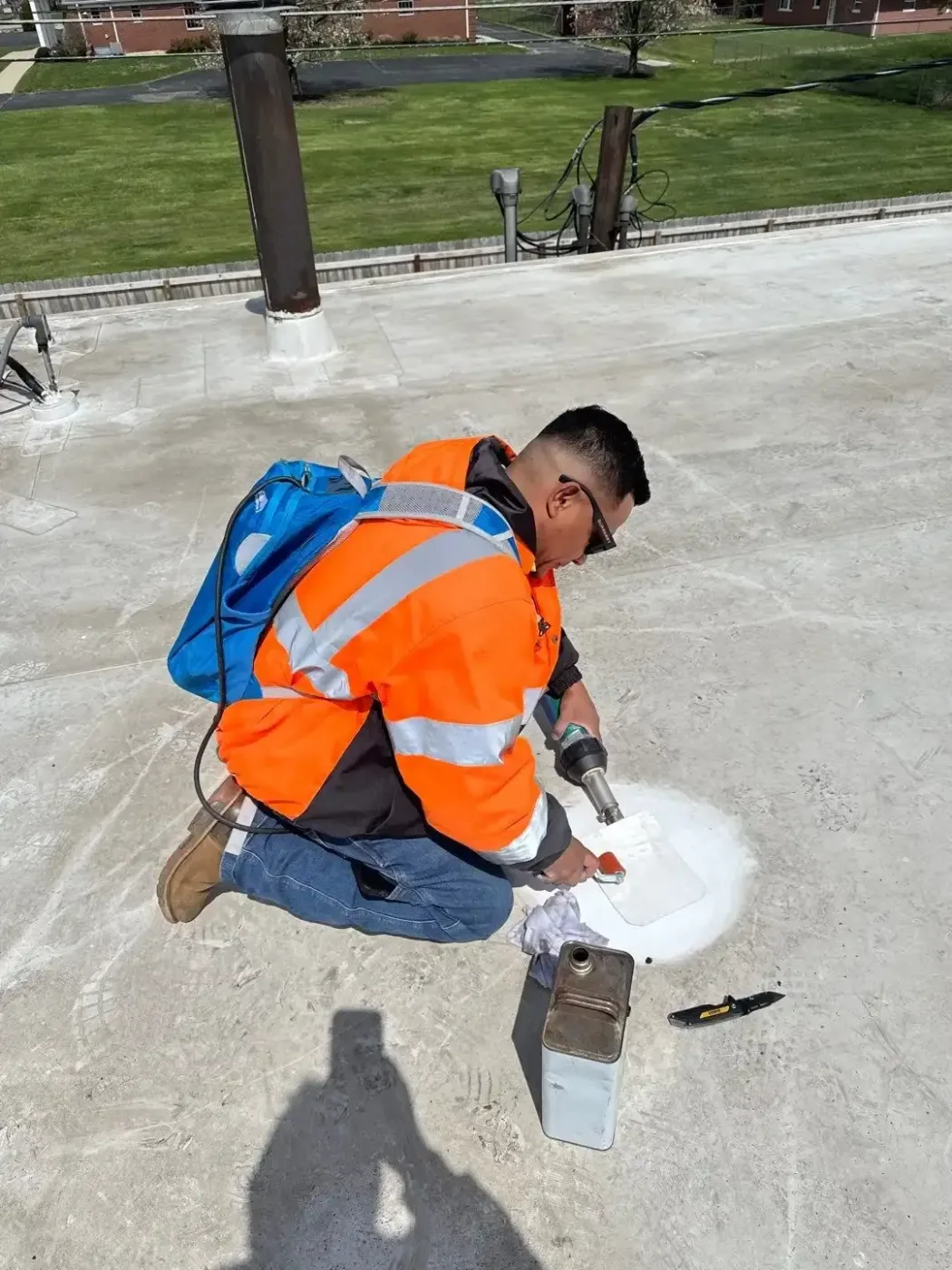
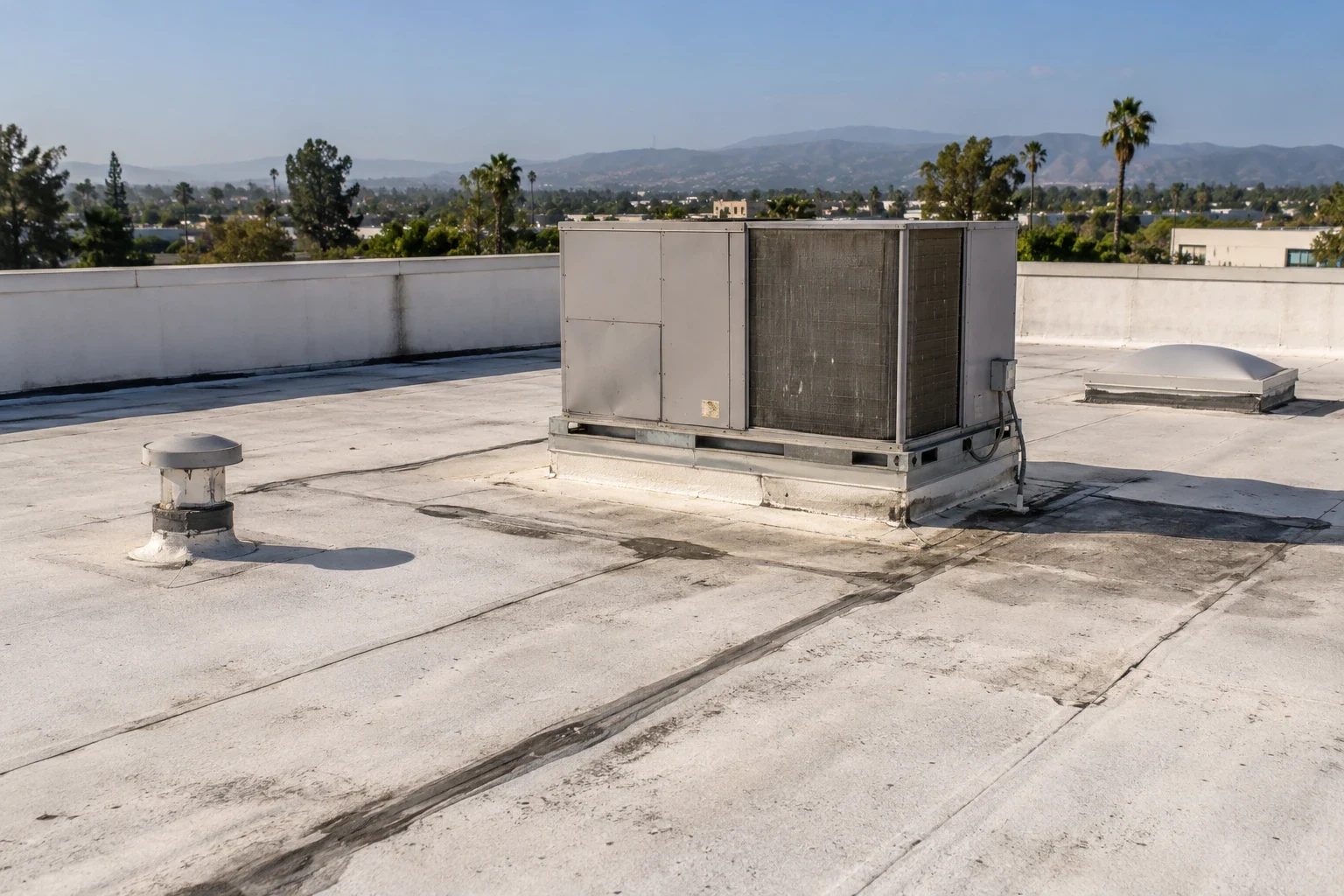
For a pipe boot or equipment curb, we check the full perimeter and the material connection. A patch must bond to the installed system and reach sound roofing. If an equipment vendor moved a support, we coordinate the roofing detail with the responsible trade so the final scope does not leave a loose connection. Curb and support repairs can address a separate equipment transition.
A commercial roof inspection can document the skylight and nearby details by roof zone. If the interior stain appears away from the opening, we trace seams and drainage before opening the roof. We compare visible evidence with any roof plan, previous repair photos, and the building contact's report.
Does the roof material change the repair?
Yes. A heat-welded membrane, adhered EPDM, modified bitumen, built-up roof, and metal panel system each use different flashing approaches. We identify the surface and any older coating or recover layer before selecting material. A repair that looks sealed at the top may still fail if the substrate is wet, contaminated, or incompatible. Where the assembly is concealed, records or a controlled test may help settle the question.
The curb height and condition also matter. A curb that sits too low after later roof work can leave flashing with too little rise or an exposed corner. We check its attachment, slope, counterflashing, and the route for water around the frame. If the skylight is cracked or the frame is distorted, a roofing patch alone may not solve the leak. We identify any glazing or frame work that belongs to a separate specialty contractor.
On a metal roof, panel movement and fastener patterns can affect a curb detail. On a membrane roof, seam orientation and field welds guide where the tie-in can land. We can compare a focused roof repair with broader TPO system work or another assembly-specific approach when the surrounding roof condition warrants it.
How should the water path be checked?
We look uphill from the opening, then follow the roof plane toward drains, scuppers, edges, and any change in height. Newport Beach Harbor's normals show 2.20 inches of precipitation in January and 2.38 in February, with summer monthly averages close to zero. That nearby climate reference helps set a seasonal inspection window; the roof's slope and drainage determine whether water reached the curb or came from another detail.
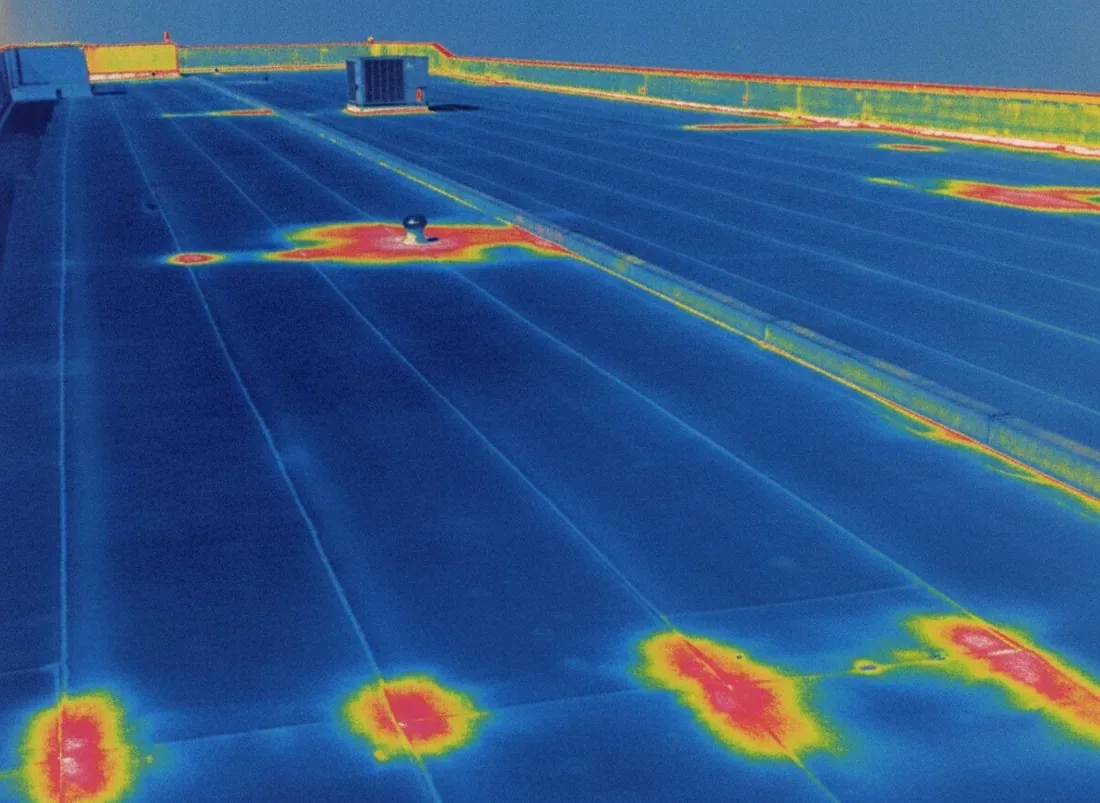
A clear drain does not rule out a low area, and a stained ceiling does not confirm a failed skylight. We photograph the curb, surrounding membrane, nearest seam, and interior report location. Suspected wet layers around the opening can warrant a moisture survey to select meaningful sample points. A test cut should answer a specific question and include a planned restoration detail before it is made.
At a commercial property in Downtown Huntington Beach, the site contact may need to coordinate access through retail or mixed-use areas. An office or industrial building in the Gothard Street Subarea may have separate roof-hatch, equipment, or loading restrictions. We set the field check to the building that reported the condition.
When is replacement better than another patch?
A compatible flashing repair may be sufficient if the frame, curb, and surrounding roof remain sound. Repeated water entry, deteriorated glazing, loose curb attachment, or wet insulation can change that decision. We mark what the inspection confirms and what requires another trade or test. If the opening must be removed, the proposal should describe the temporary protection, curb or deck preparation, new flashing, and interior safeguards.
For an occupied building, we ask how daylight, security, temperature control, and room use affect the work window. The site contact identifies where furniture or equipment needs protection and whether the area can be cleared. We contain debris, protect the opening if rain may arrive, and leave the roof watertight at the end of the shift. A phased occupied-building plan can coordinate larger work around those constraints.
If surrounding membrane or metal has widespread failure, compare a new skylight detail as part of roof replacement rather than patching the opening alone. The scope should identify whether the frame remains, which layers are removed, and who is responsible for glazing or mechanical connections.
What belongs in the repair record?
Keep the skylight or penetration ID, roof zone, material, photos, repair method, and date together. Note whether the frame, gasket, curb, membrane, or metal was included and which conditions were outside the roofing scope. A clear closeout helps the next technician distinguish a repaired flashing detail from a later change to the opening. If another vendor adds a cable or equipment line nearby, mark the new penetration and confirm who will restore the roofing tie-in before the work is closed.
The Gothard Street Subarea spans manufacturing, warehouse, repair, retail, and office uses. A multi-tenant property there may have several roof access contacts or mechanical vendors. We label the opening to match the owner's roof plan and share any remaining observation with the person responsible for follow-up. A maintenance visit can check repaired transitions and nearby drains during the next scheduled inspection.
Active entry at a skylight may require emergency roof response, with access assessed before temporary protection is attached. We return to confirm the permanent detail once conditions are suitable. Share the interior photo, roof plan, past repair information, and access contact to arrange an inspection in Huntington Beach.
Commercial Roofing Questions
Which skylight transitions need checking beyond an unbroken pane?
The frame joint, curb flashing, nearby seams, and other connected openings need examination alongside the pane. Moisture entering beside the frame can follow the concealed curb connection toward an interior finish. We inspect those transitions and the surrounding roof, then identify the failed connection or the additional check needed before assigning a repair.
Do you replace skylight glass as part of the flashing repair?
We handle the roofing and flashing work in the agreed scope. If glazing or a distorted frame needs a specialty contractor, we identify that responsibility and coordinate the roof tie-in.
What if there is no roof plan for the opening?
We can mark its location during inspection using the building layout and roof zones. Photos should show the opening in context and close enough to document the curb or penetration detail.
Should a test opening be made right away?
Only when its result could change the repair boundary or confirm a concealed layer condition. We agree on its location, approval point, and restoration method before opening the assembly.

Proudly Serving Huntington Beach and Nearby Cities
Commercial Roofers Huntington Beach
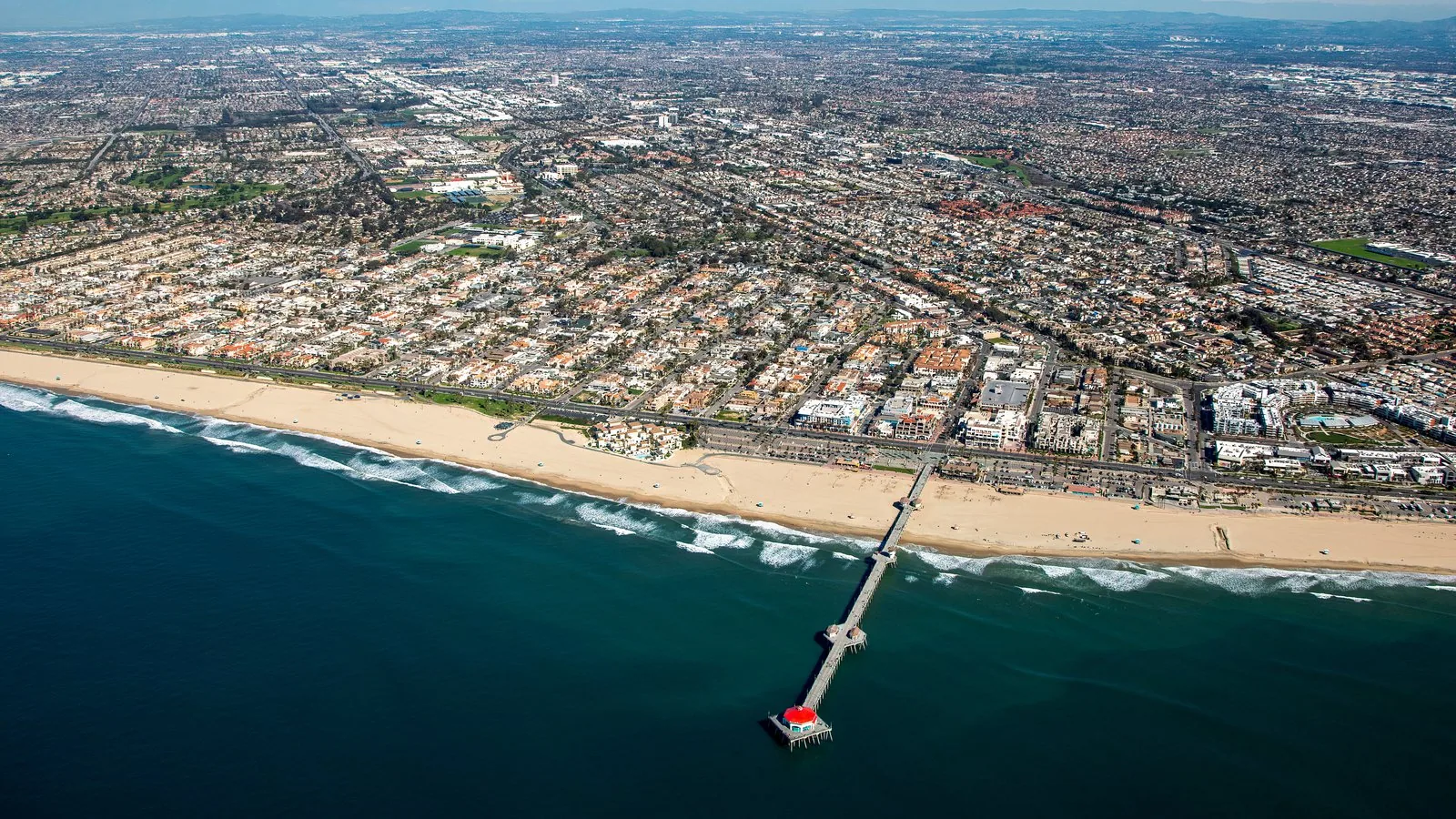
Huntington Beach, Westminster, Seal Beach, Fountain Valley,
Garden Grove, Newport Beach and nearby Orange County cities