
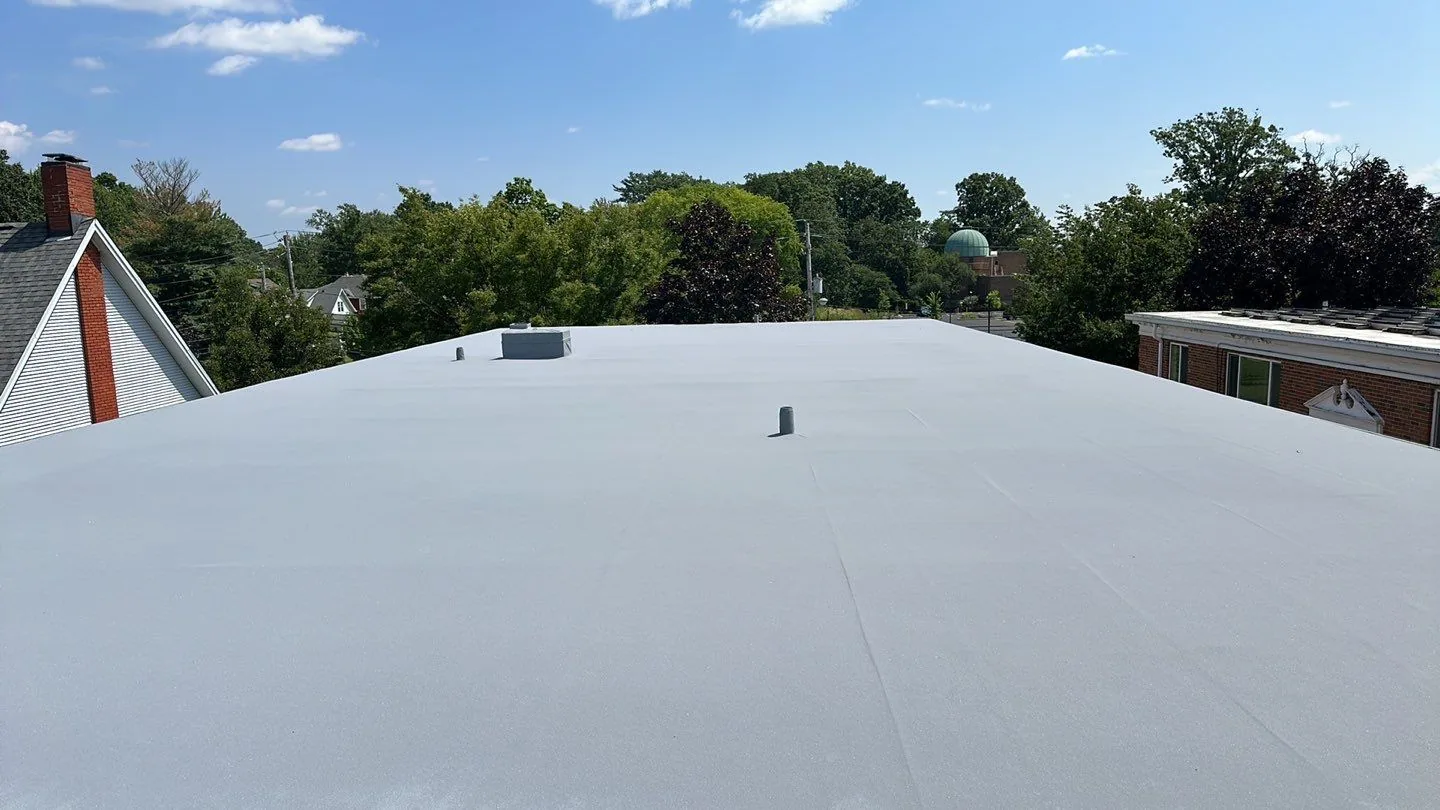
GAF Commercial Roofing in Huntington Beach, CA
A split patch on a roof identified as GAF needs the installed system confirmed before a repair material is selected. Commercial Roofers Huntington Beach inspects and services GAF commercial roofing in Huntington Beach, CA. We compare available roof records with the surface, seams and flashing found on the building. The immediate concern is protecting any active water entry; the permanent scope follows the actual assembly rather than the manufacturer's name alone.
Commercial properties along Edinger Avenue and Warner Avenue bring tenant access into the repair plan. A building contact should identify the wet room, equipment operating nearby and the usable roof entry. For planned work, Newport Beach Harbor's nearby winter-rain pattern helps frame scheduling, while surface dryness and the material's application requirements determine whether installation can proceed.
Which GAF assembly is installed on the building?
GAF's EverGuard TPO and PVC systems use thermoplastic membranes with heat-welded connections. GAF also provides commercial asphalt roofing systems. These assemblies require different repair materials and details, so we identify the installed membrane and supporting layers before making a recommendation. A light surface is not enough to distinguish TPO from PVC, and an old roof record may not describe an addition or later recover correctly.
Product records, labels and a close examination help establish the assembly. We check existing patch materials, curb flashings and edge details for compatibility concerns. Where several roofing systems meet, the transition is evaluated separately. A sound field membrane does not settle the condition of an adjoining wall receiver or asphalt tie-in. The scope identifies how each repair connects to suitable material without mixing components merely because they look similar.
An alternative assembly also deserves its own evaluation. Carlisle single-ply roofing includes different membrane choices; the comparison should address drainage, attachment and future service conditions rather than substituting one brand name for another.
Will the existing surface accept a welded repair?
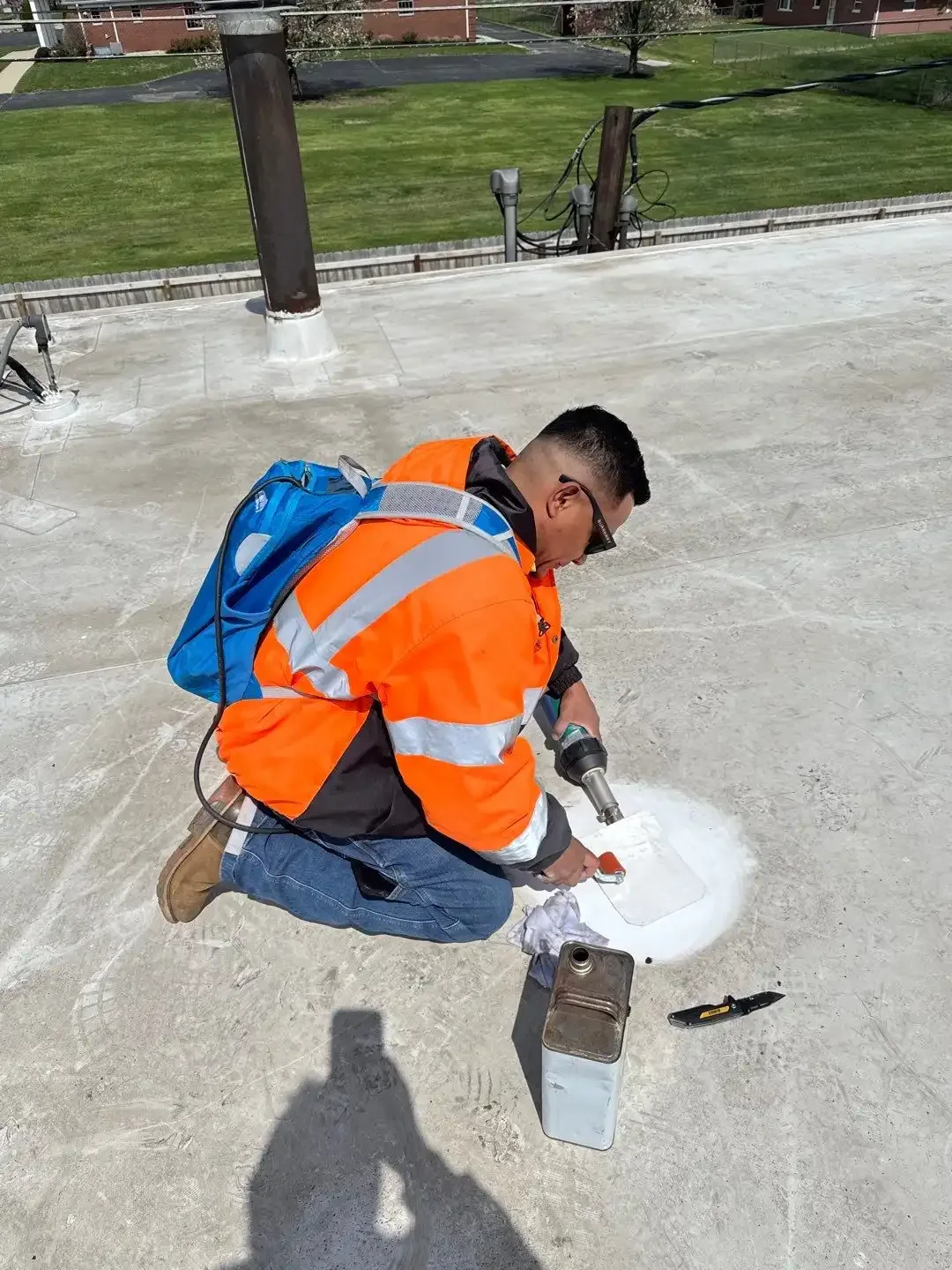
A thermoplastic patch needs compatible membrane and properly prepared receiving material. We clean and assess the repair area, then check whether a usable weld can be achieved. Weathering, contamination and old repair products can affect preparation. A patch welded to poor adjoining material can leave the same water route at its edge. We define the removal needed to reach a sound receiver before choosing the final patch size.
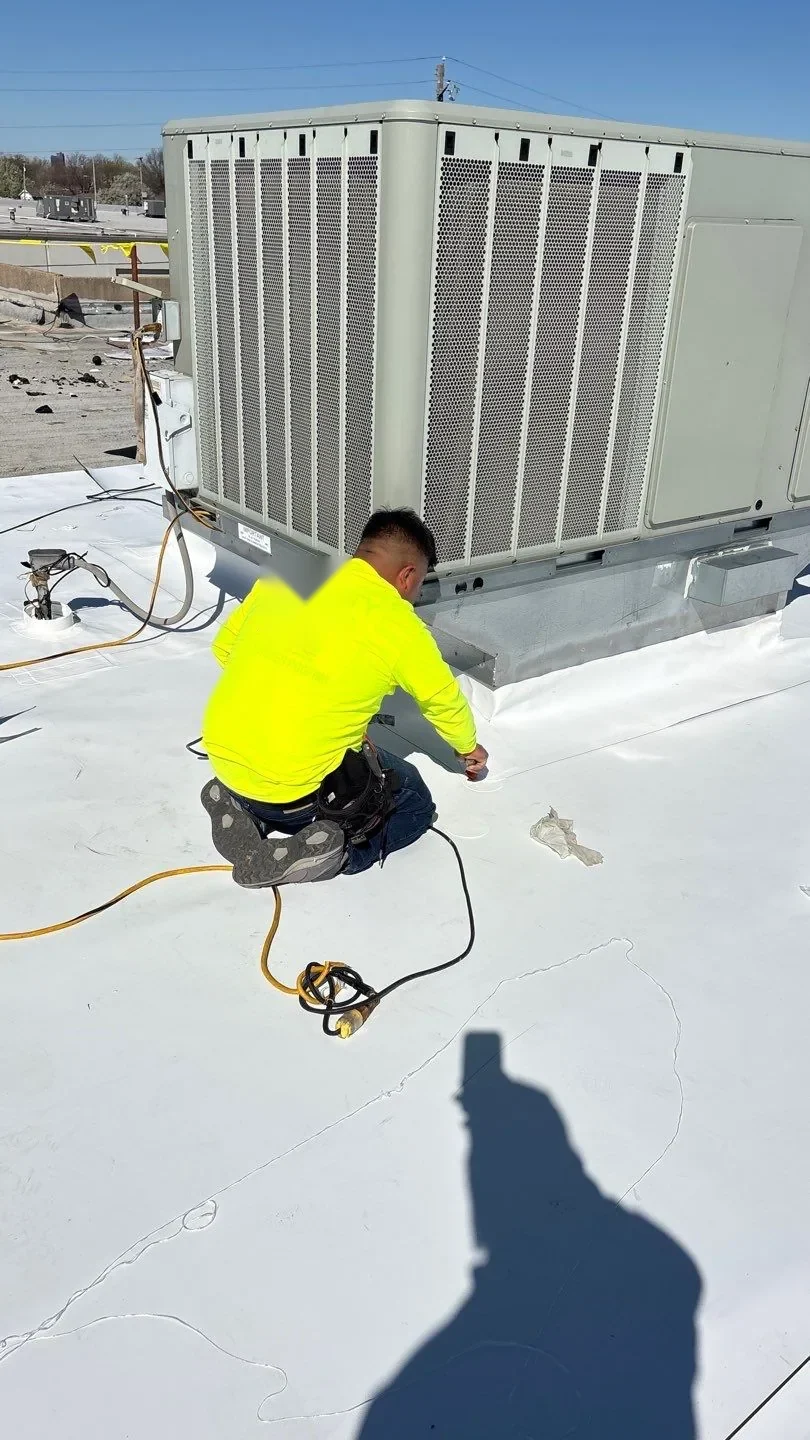
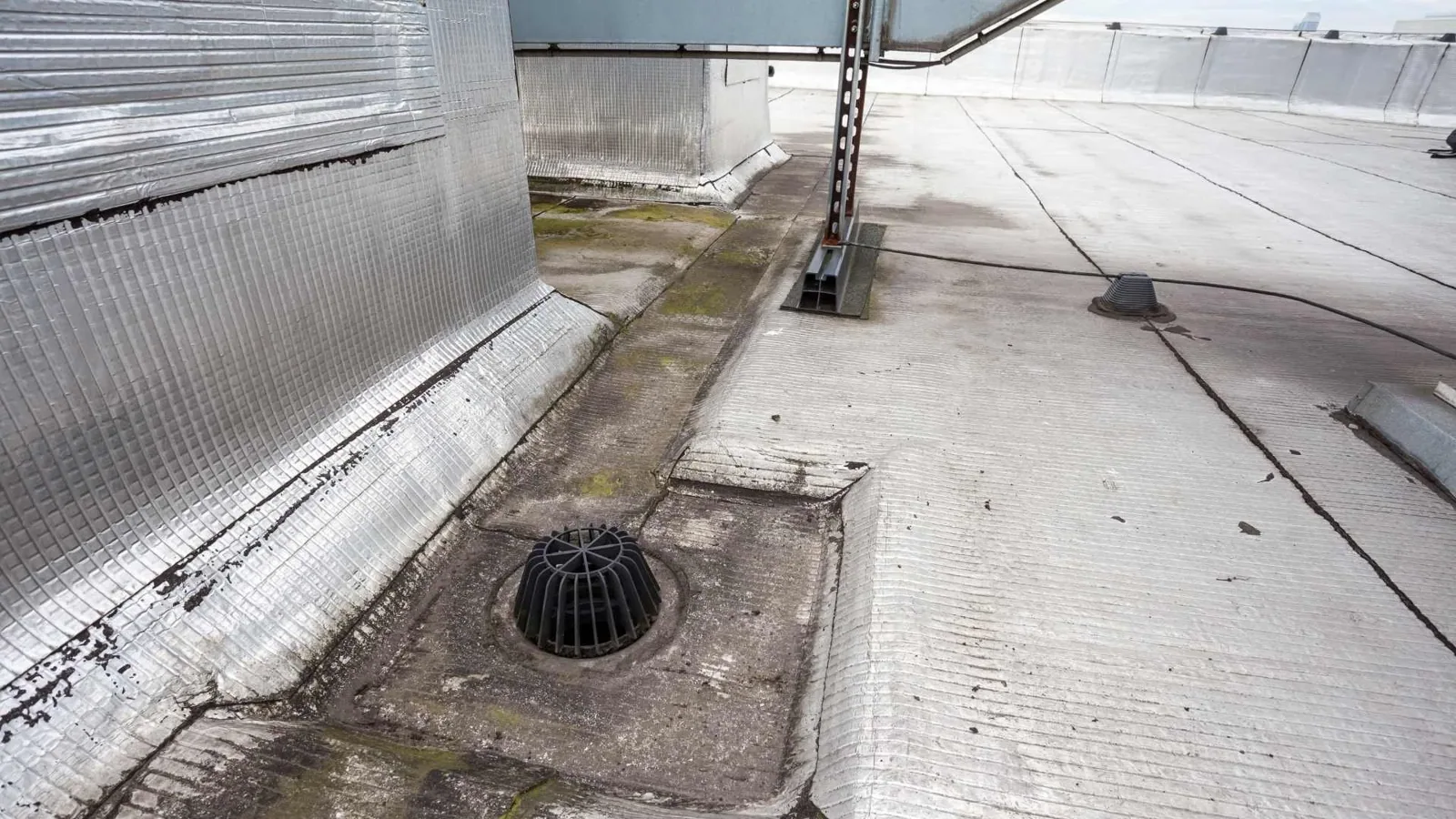
At a curb or pipe, the new flashing must connect correctly to the penetration as well as the field membrane. We inspect corners, termination details and movement at the equipment support. A loose support needs stabilization before its roofing connection is closed. For a TPO membrane repair, the completed weld receives the appropriate field checks after cooling. PVC repairs require their own compatible materials and preparation.
We photograph the completed connection and mark the repair zone for later inspection. If temporary protection was installed first, its limits and the permanent correction remain distinguishable in the service record.
What beneath the membrane changes the recommendation?
Wet insulation, deteriorated decking or failed attachment can turn a small surface opening into a larger construction task. We compare interior water reports with roof defects and examine the supporting assembly where necessary. Testing is selected to answer whether material can remain, not simply to collect another survey. The scope identifies confirmed wet areas and the process for deciding on additional removal if concealed conditions differ.
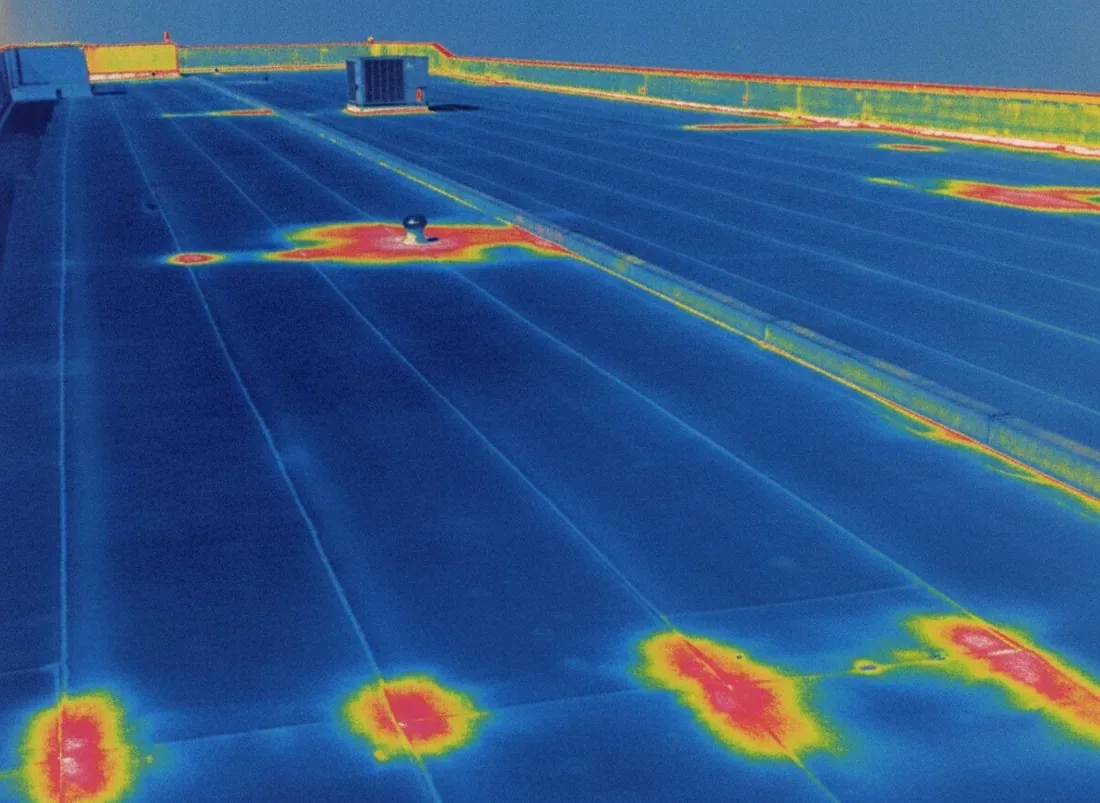
A recover may be viable where retained roofing, moisture condition, capacity and attachment support another assembly. Removing a failed layer may be necessary even if an overlay appears less disruptive. An infrared survey with appropriate confirmation can help locate suspect moisture under suitable conditions. Its findings need to be connected to the proposed retention or removal boundary.
The repair budget should include restoration of test locations, wet material disposal and changes at drains or equipment curbs where required. A membrane-only comparison can leave those necessary tasks outside the owner's construction allowance.
Water held at an outlet can expose a repaired area for longer than its drainage arrangement allows. We inspect the drain connection and low areas with the membrane findings. Drain and scupper corrections may need to proceed with roofing repairs, keeping cleaning, outlet reconstruction and changes in slope distinct in the construction scope.
How is a new GAF system matched to the roof?
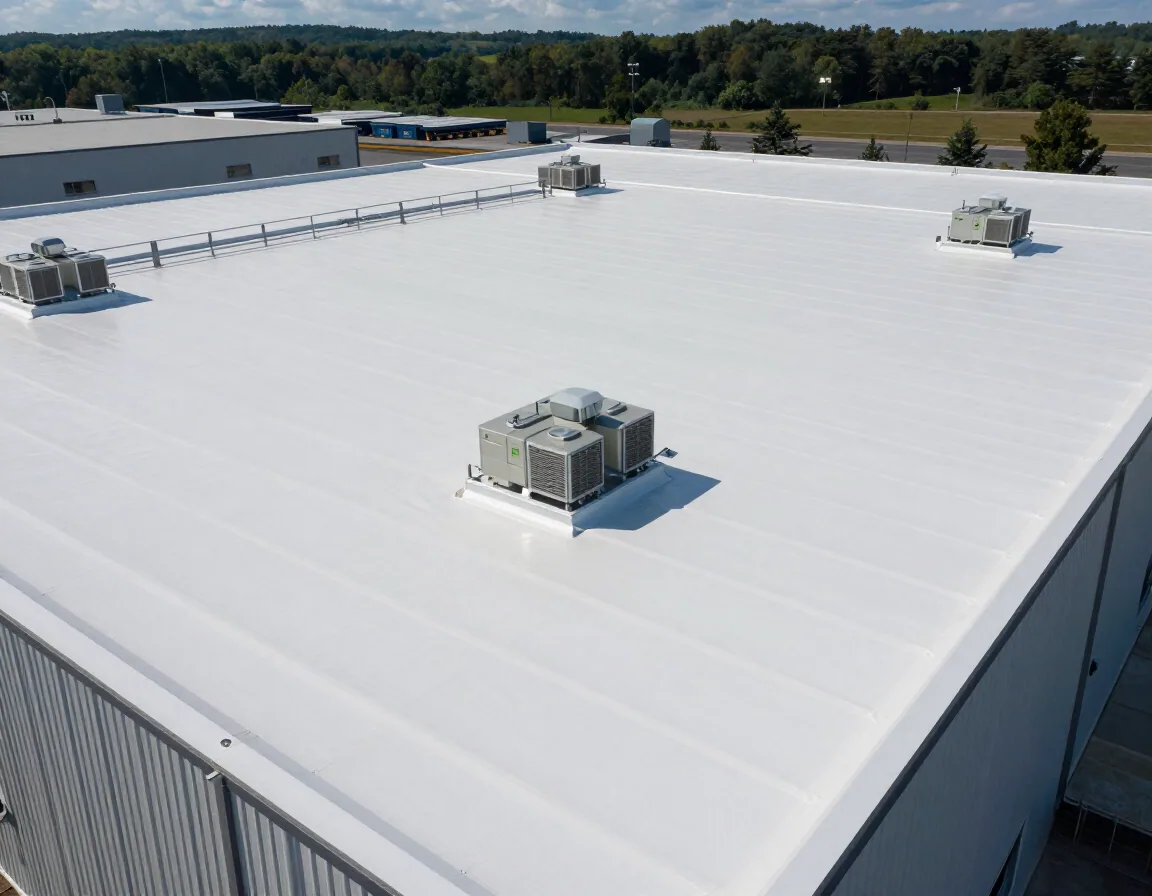
New installation begins with the deck and the performance required of the complete assembly. Insulation, cover board, attachment and perimeter details are selected together. Mechanically attached, adhered and other permitted configurations have different substrate and fastening requirements. We review the building's geometry, wind design and receiving material before selecting an arrangement, then identify the details needed at curbs, drains, walls and roof edges.
For retail or office buildings in the Huntington Beach service area, material staging and intake coordination must match the occupied rooms below. Edinger Avenue and Warner Avenue are commercial corridors, but the actual property determines where deliveries and lifting can occur. We establish that operating window before setting the removal phase and secure the roof if conditions change.
Owners comparing GAF with Johns Manville commercial assemblies should compare the specified insulation, membrane and details together. Installation requirements and the building's maintenance needs matter alongside the product selection.
What keeps later service from damaging the assembly?
Equipment access creates repeated movement over the roofing surface. We identify suitable service routes, protective walk areas and supports that keep equipment loads from damaging the membrane. Loose screws, sharp materials and incompatible patches should be addressed before they become a new leak. If another trade adds a penetration, the roof detail needs a compatible correction rather than a general sealant application over the opening.
The completed work record identifies the installed or repaired material, roof zone and any remaining recommendation. Available warranty documents should be reviewed for the applicable maintenance, repair and notification terms. Product selection alone does not establish what coverage applies to a building. We keep requested inspections and completed work connected to the owner's roof records so future decisions can use the actual assembly and service history.
A Santa Ana event can change coastal wind and heat conditions. Before exposed work continues, we reassess material handling and application conditions. For unexpected leaks, calls are handled overnight and during weekends or holidays, with safe protection followed by a compatible permanent repair.
Commercial Roofing Questions
Can you identify a GAF membrane if our original paperwork is missing?
Visible markings, seam arrangement and material examination can help identify the installed roof. We record what is confirmed and which question needs further testing or records. A repair is selected only after compatibility and the receiving condition can be assessed.
Does an EverGuard roof automatically qualify for recover?
Recover requires a suitable existing assembly, including dry retained material, adequate attachment and capacity, and compliance with applicable requirements. We evaluate those conditions before recommending another layer. The membrane name does not replace the retention assessment or the details needed at drains and curbs.
Can an old coating interfere with a thermoplastic seam repair?
Coating residue can affect preparation and the ability to form a reliable connection. We examine the repair surface and determine whether material must be removed or another compatible method is needed. A test repair can help resolve preparation before the full repair area is committed.
What should be checked after an HVAC contractor adds roof equipment?
Inspect the new curb, support positions, service route and any penetration through the membrane. We assess the roofing connection and identify damage or incompatible temporary sealing. Keep the equipment change with the roof record so later leak reports can be compared with that work.

Proudly Serving Huntington Beach and Nearby Cities

Commercial Roofers Huntington Beach
Huntington Beach, Westminster, Seal Beach, Fountain Valley,
Garden Grove, Newport Beach and nearby Orange County cities