
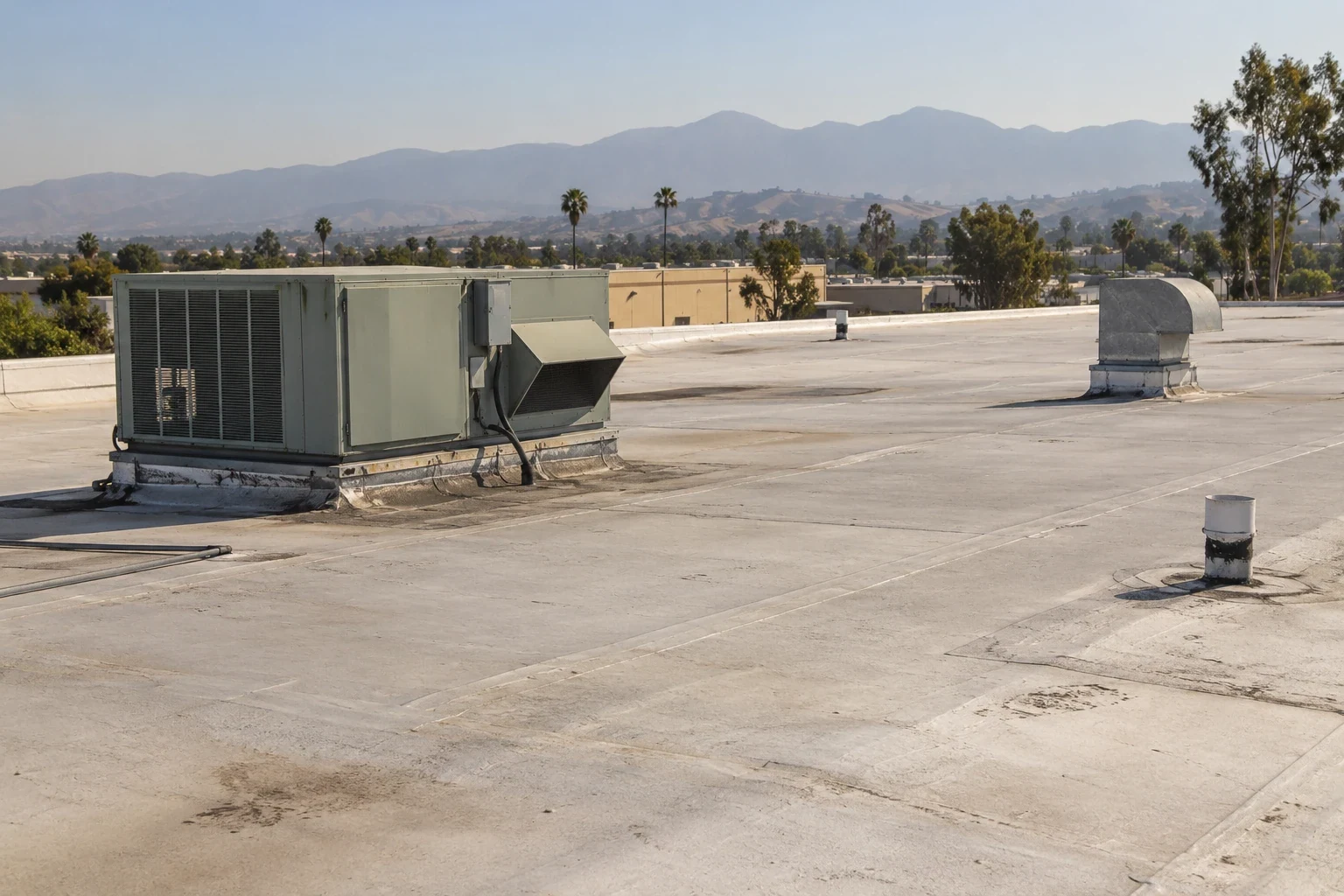
Military Warehouse Roofing in Huntington Beach, CA
A wet storage aisle can interrupt receiving before the roof defect has been located. We establish the stock area at risk, coordinate safe interior protection, and obtain the permitted roof route from the facility contact. Roofing work serving Huntington Beach, CA includes leak repair, moisture investigation, drain correction, restoration, and replacement. For a military warehouse, depot-support building, or motor-pool project, the actual storage and movement pattern determines how the work can proceed.
Naval Weapons Station Seal Beach has a weapons-storage and loading mission with maintenance and assessment support. Joint Forces Training Base Los Alamitos operates logistics and shipping and receiving services. Those are distinct regional support functions, not interchangeable operating plans. We identify the building named in the project and its affected use, then compare the interior report with roof drainage, seams, and penetrations before defining the repair extent or delivery schedule.
Which storage zone needs protection before inspection?
Facility personnel identify the material at risk and determine any movement or covering under their operating procedure. We mark the overhead roof zone, coordinate safe access, and identify ceiling or electrical hazards that require another building team. An active receiving lane can remain separate from the roof investigation if the approved layout permits, but protection should not obstruct a required movement route or an entrance serving the affected area.
Warehouse roof work concentrates on stock protection and accessible work boundaries. Distribution-building roof work adds receiving and dispatch timing where those functions are present. Military storage introduces facility-specific access, handling, and security direction. We do not move stored items or select an interior route independently of that direction. A room or aisle identifier on the roof drawing gives the operating contact a clear relationship between the affected stock zone and the proposed exterior work.
Is the outlet or the membrane keeping water on the roof?
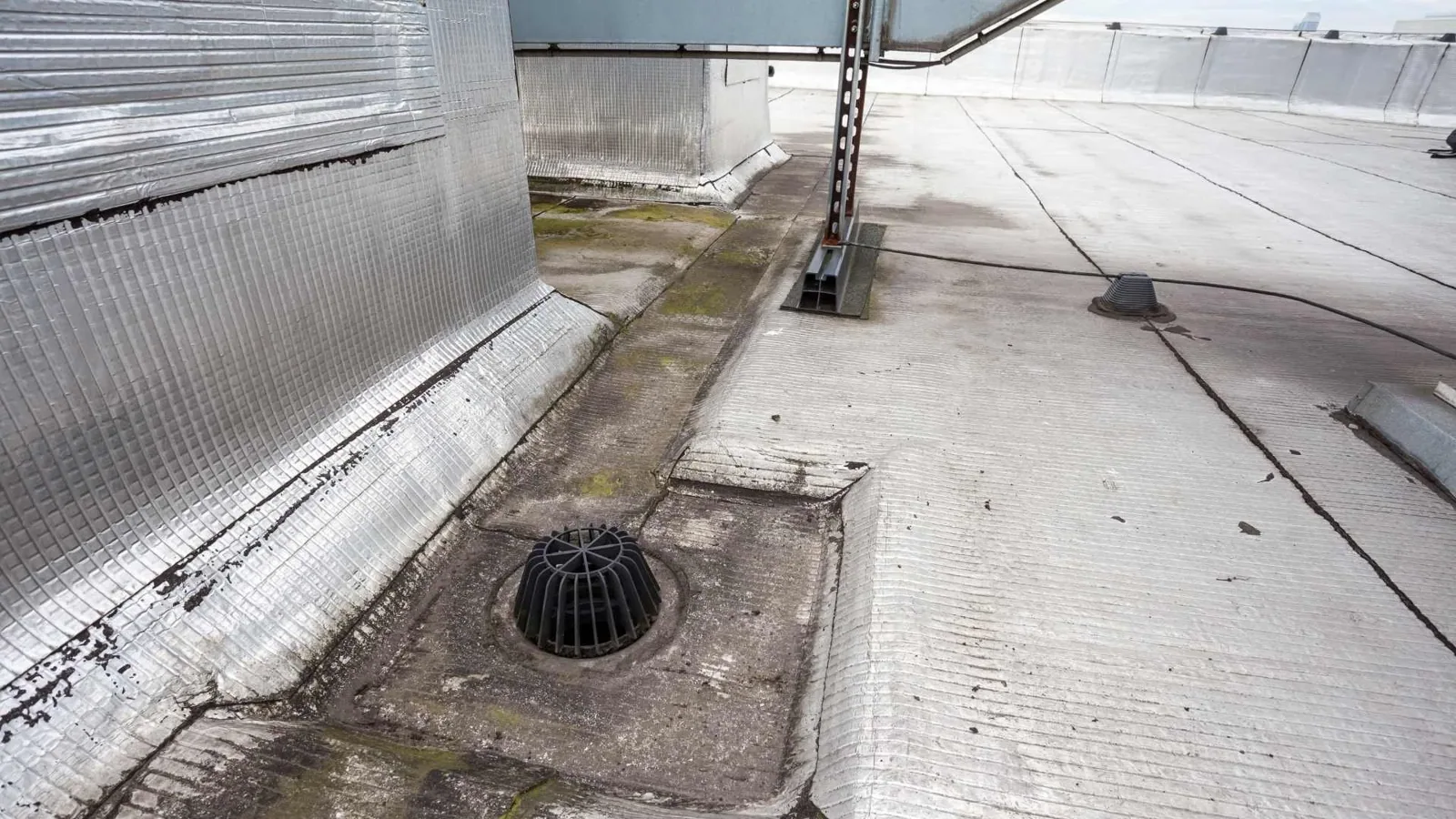
Water marks around a drain can indicate retained runoff, but the inspection must establish why it remains. We examine the basket, flange, surrounding membrane, slope, and nearby raised details. A patch edge can divert flow toward a seam, while a drain connection may have damage even after debris is cleared. The repair recommendation separates the outlet problem from membrane openings and broad low areas so each can be addressed with an appropriate detail.
The Gothard Street Subarea in Huntington Beach includes manufacturing and warehouse properties between Edinger and Ellis avenues. That local stock-and-work context makes drainage and inventory protection practical concerns for surrounding commercial facilities as well. A Gothard Street roofing project still needs its own access and loading plan. For military support buildings, we coordinate roof drain repairs with the authorized contact and identify any interior pipe access before the exterior drain detail is opened.
How far does moisture extend below the visible opening?
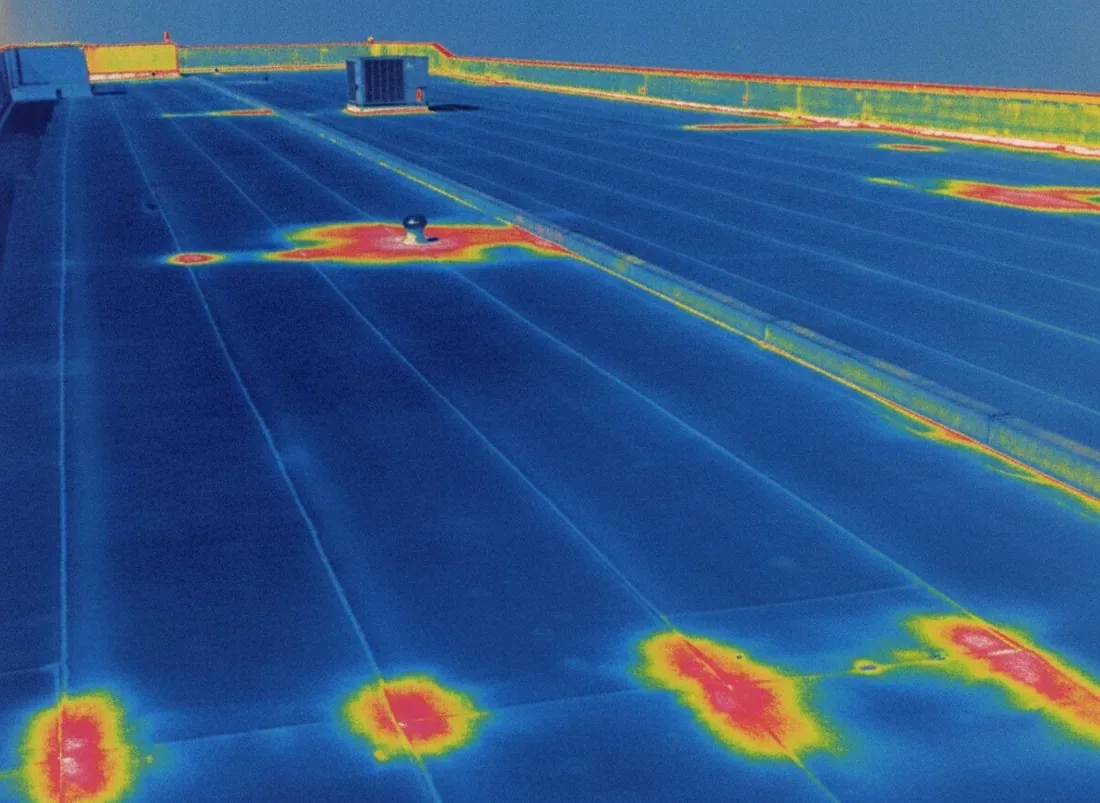
A puncture above one aisle may have wet surrounding insulation beyond the surface repair area. We review the roof assembly records and identify permitted tests that can establish the removal boundary. An infrared survey can direct further investigation under suitable conditions, while selected openings determine the material and moisture found. The investigation is useful when it changes repair quantities, assembly choice, or the amount of interior protection needed.
A roof moisture survey is interpreted with field checks and roof geometry. An equipment shadow, different material, or retained heat can produce a temperature difference unrelated to moisture, so the findings are correlated before specifying removal. The resulting work plan identifies wet layers requiring replacement and surrounding material suitable for a tie-in. Where deck deterioration is encountered, the condition goes to the appropriate project reviewer before additional structural work is undertaken.
Where can materials be handled without interrupting support traffic?
The approved receiving calendar, vehicle entry instructions, and lift location govern roof deliveries. We confirm the unloading interval and material route before a truck arrives, then plan debris transfer separately from active facility movements. Screening or escort time is included in the daily roof window. A work area that appears open during the inspection may be occupied during a later support shift, so the operating contact confirms staging availability for the scheduled date.
Newport Beach Harbor normals put most coastal rainfall in winter with near-zero summer averages. For Huntington Beach work, that seasonal reference supports advance preparation, while the current forecast decides the day's dry-in boundary. Santa Ana events can bring warm, dry offshore winds and alter lift or sheet-handling conditions. We secure staged materials, maintain containment during removal, and reduce the open area where wind or time threatens the planned closure.
Which repair option addresses the warehouse condition?
A limited failed seam can be repaired when the neighboring membrane, insulation, and attachment are suitable. The work includes cleaning, compatible preparation, removal where necessary, and a tie-in to sound roofing. Coating restoration requires an existing system that can support its preparation and adhesion; wet layers and weak attachment still need correction. We compare that approach with the actual moisture and defect pattern rather than offering a surface treatment for an unresolved assembly problem.
A recover changes weight and height and must account for existing layers, deck information, securement, moisture, and drainage. Full replacement removes damaged materials more directly but increases the exposure above stored goods. The warehouse replacement plan therefore defines phase boundaries, insulation work, edge and curb transitions, and disposal access. It also identifies the area that can be closed within the authorized shift without extending the restriction across unrelated stock zones.
Military warehouse projects may include Unified Facilities Criteria and contract-specific material or inspection requirements. We review those requirements with the specified assembly and raise existing-condition conflicts through the authorized project channel. Concealed conditions are described separately from confirmed work, allowing the facility contact to understand what changes the removal quantity, timing, or review needed before proceeding.
What happens before the storage zone is released?
We check the roof closure, repaired details, and drain route against the intended system requirements. Loose materials and debris are contained and removed through the approved path. The handoff identifies the completed area on the building drawing, permitted photographs, installed materials, and any temporary detail still requiring attention. A warehouse roof asset record preserves that work boundary for future maintenance and budgeting.
The interior contact checks the affected stock area through the facility's procedure and reports any continuing water. A return visit can then examine the same roof features instead of beginning with an unlocated aisle complaint. Urgent roof response can be coordinated overnight, on weekends, or during holidays when authorized entry is available. Supply the building identifier, stock area, current water condition, access contact, and receiving restriction to establish the first safe protection and inspection step.
Commercial Roofing Questions
Can a storage aisle remain open below a small roof patch?
Overhead exposure and the repair method set the restriction. We establish the work boundary and protection needed, then coordinate aisle availability with facility staff. Removal, debris movement, or a concealed-layer test may require a temporary closure even when the final patch is compact.
Why should the roof drawing include receiving locations?
Receiving locations help identify material routes, lift conflicts, and the interior areas beneath each roof phase. We use them to separate delivery activity from overhead work and to place staging in an approved area that will remain available during the scheduled shift.
Can moisture mapping reduce unnecessary removal?
A well-correlated survey can help focus permitted tests and establish wet-area limits. We compare thermal indications with actual roof findings before defining removal. The goal is a repair boundary supported by assembly condition, with concealed uncertainties stated clearly.
What makes an interim warehouse cover ready for follow-up?
The handoff identifies its exact roof location, closure detail, responsible contact, and next action. We also record the corresponding interior area so a later water report can be related to that cover. A temporary measure remains separate from the permanent repair scope.

Proudly Serving Huntington Beach and Nearby Cities
Commercial Roofers Huntington Beach
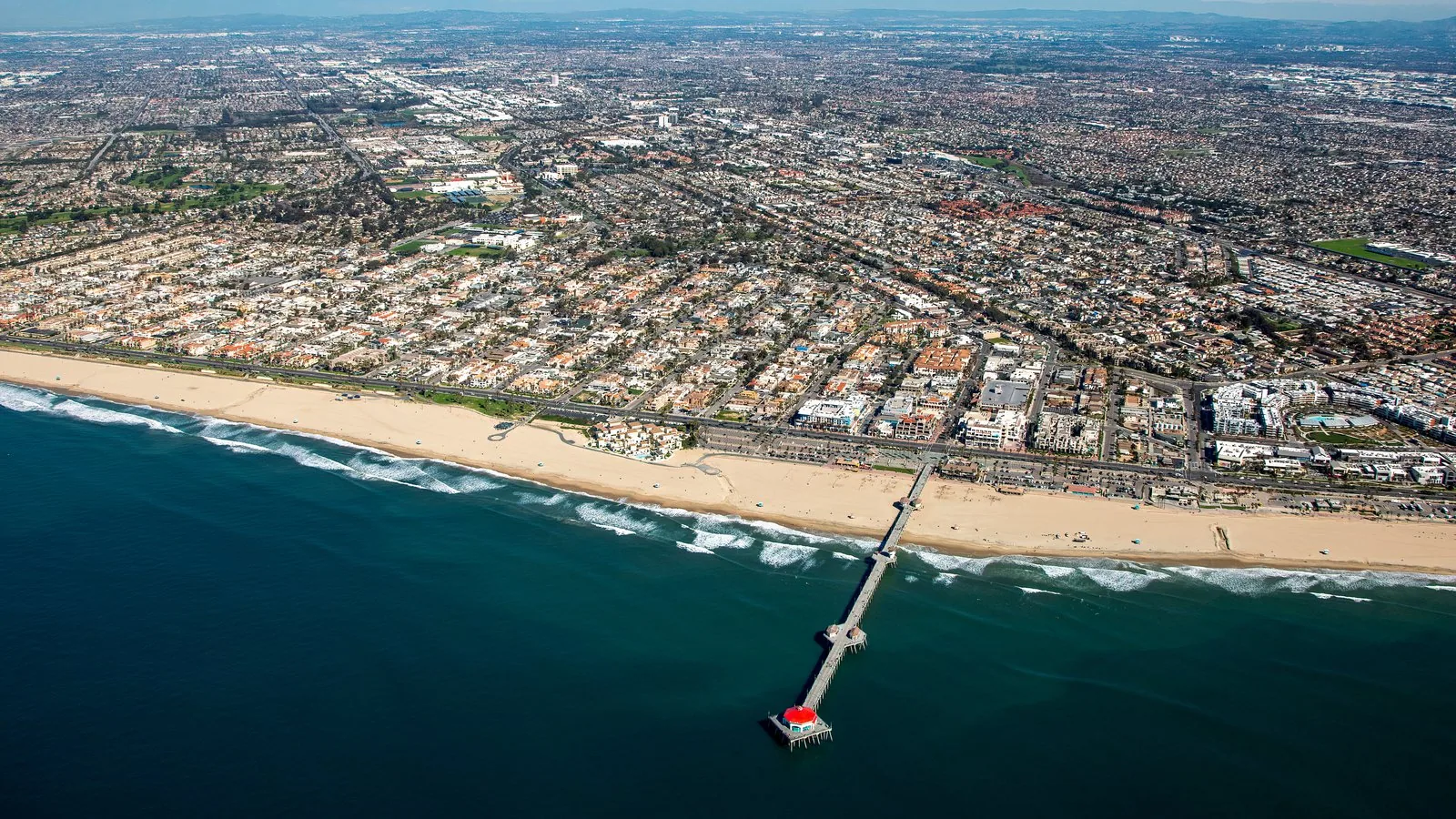
Huntington Beach, Westminster, Seal Beach, Fountain Valley,
Garden Grove, Newport Beach and nearby Orange County cities