
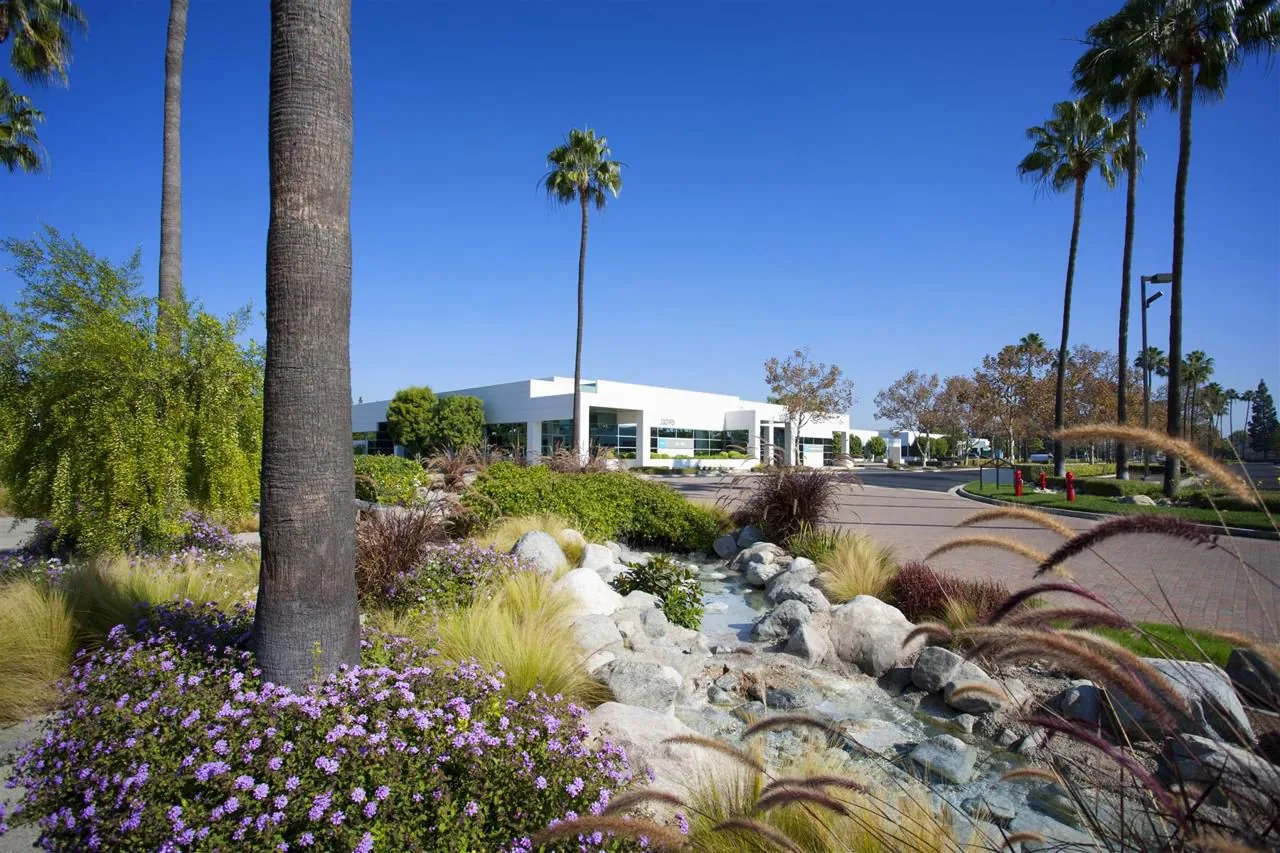
Commercial Roofing in Cypress Business Park, Cypress, CA
Cypress Business Park roofing beside recently serviced equipment needs the curb flashing examined alongside any change in its support or position. We identify the protected interior area, arrange roof access, and examine the curb connection without disturbing sound adjacent material. Commercial Roofers Huntington Beach provides commercial roof inspections, repairs, restoration, and renewal in this broad Cypress business district. The first repair decision follows the actual opening and its receiver.
Cypress planning supports business-park development in the city's southern parcels and continued development of Cypress Business Park. The designation provides geographic context for service, while individual property condition sets the roof scope. From Huntington Beach, CA, we arrange a focused visit with the manager's access contact. The roof diagram, affected room, and operating hours help establish a safe starting area before any controlled opening is made.
What changed before the interior report?
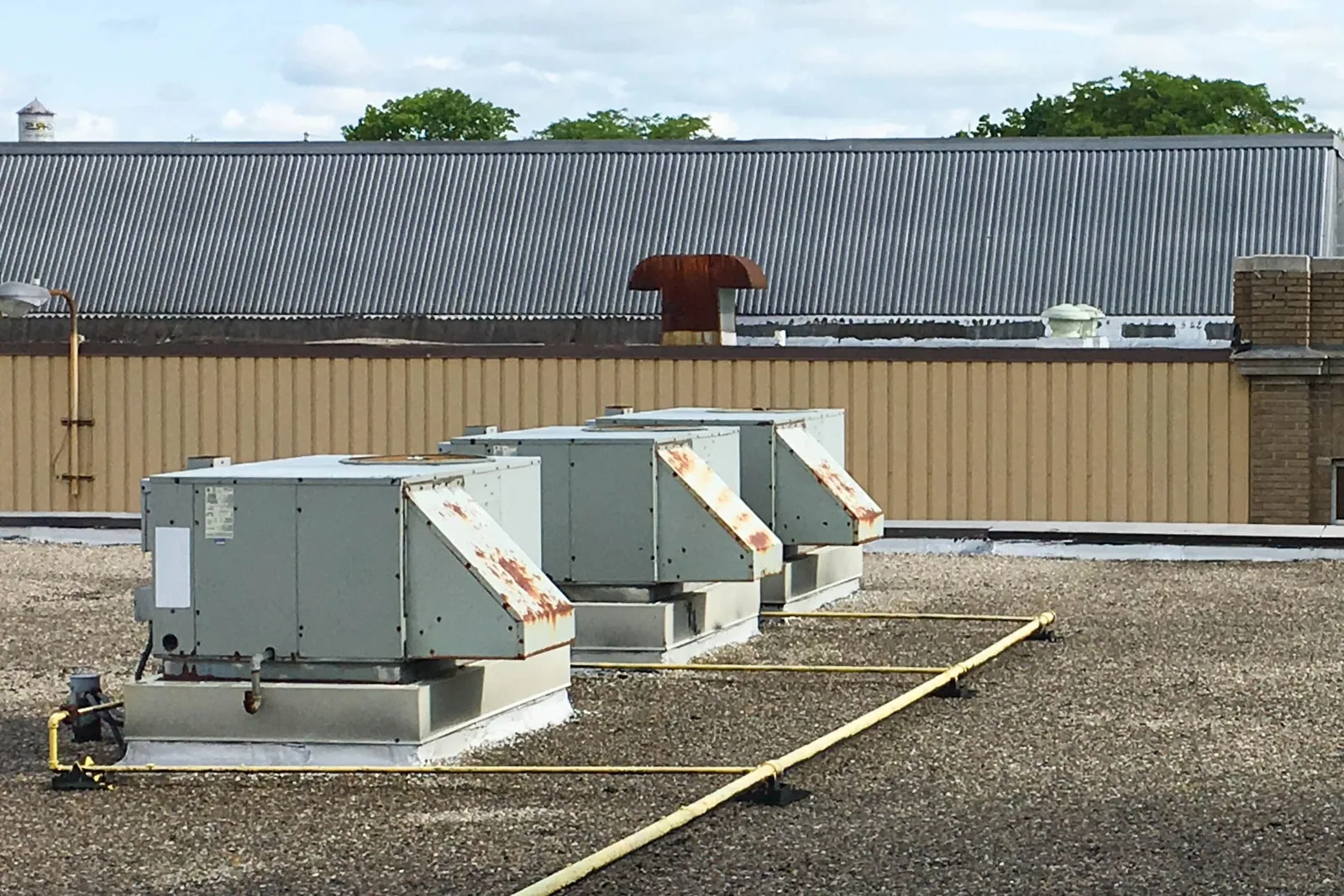
A new service path, moved support pad, or altered curb can help identify where a previously intact roof was disturbed. We examine those positions and compare them with current seam and flashing condition. The interior report provides timing, but the roof finding establishes the proposed correction. An equipment issue may need another trade before membrane work can finish, especially where a loose base continues to move across the repaired surface.
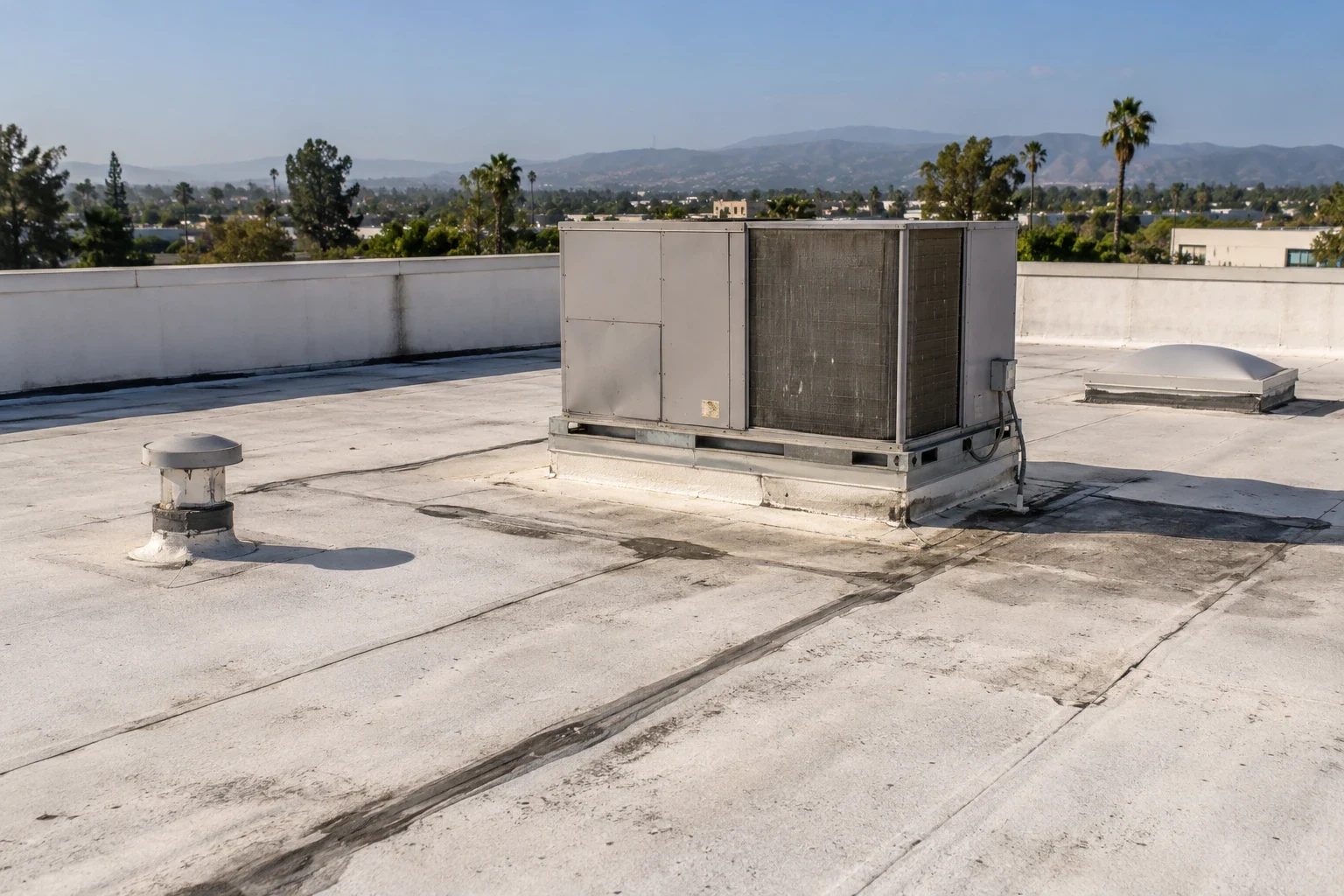
For roofing at equipment curbs and supports, we identify the weather barrier separately from the mechanical connection. The work plan explains who moves or secures equipment, how the opening stays protected, and when final flashing follows. After reinstallation, the surrounding membrane and support contact receive another check. This prevents an unfinished handoff from being mistaken for a completed roof repair.
Can the existing assembly stay beneath a new surface?
A clean-looking membrane can conceal wet insulation or weak attachment. We inspect accessible details and recommend confirmation where concealed condition would change repair or renewal. Moisture screening can help direct the checks under suitable conditions. Physical findings establish which layers can remain and whether localized removal will reach sound construction. The proposal identifies those limits before another roof surface is selected.
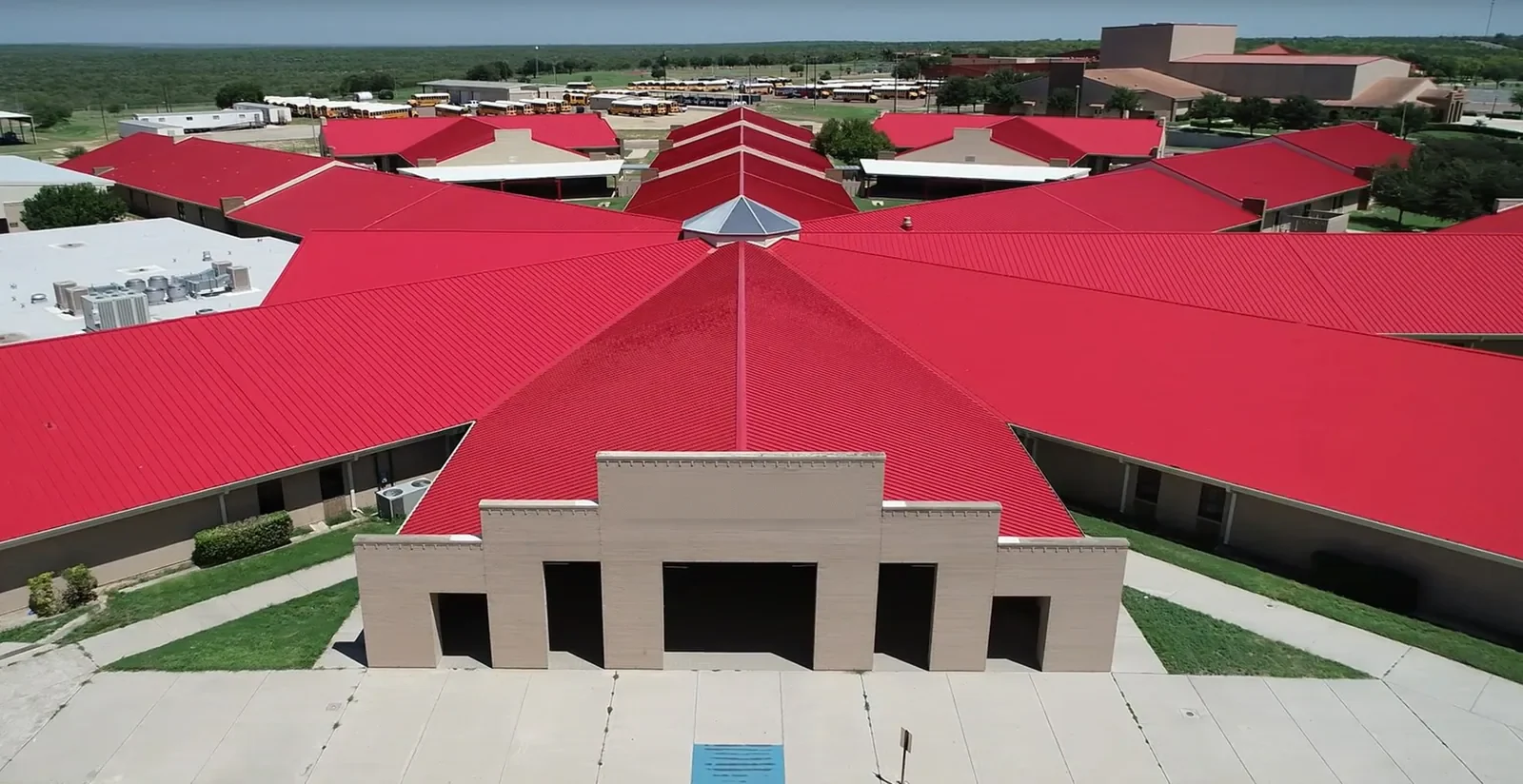
A recover assessment for the existing roof includes drainage, attachment, loading, moisture, and applicable assembly limits. A coating needs a stable, suitable receiver with repaired defects and adequate adhesion. Neither option substitutes for removing saturated material where it cannot remain. Replacement can be the useful comparison when deterioration is broad or the retained construction cannot support the proposed system.
How does renewal fit an established business district?
Cypress describes limited remaining vacant land and an urbanized, nearly built-out community in its planning document. For an existing business property, roof renewal may need to proceed while occupied space remains active. We confirm the building's current use, protected entrances, and rooms affected by removal. The district's development history does not establish a roof installation date, so the inspection relies on assembly information and present condition.
Cypress's zoning connects its Business Park zone with Business Park and Light Industrial land-use designations. We ask the actual operator which activities restrict noise, dust, or equipment interruption before scheduling roofing. An occupied-property reroof plan can divide the work into manageable roof sections. Each section needs safe access and a closure sequence suited to the weather window, with the interior exposure addressed before the roof is opened.
Is drainage limiting the repair option?
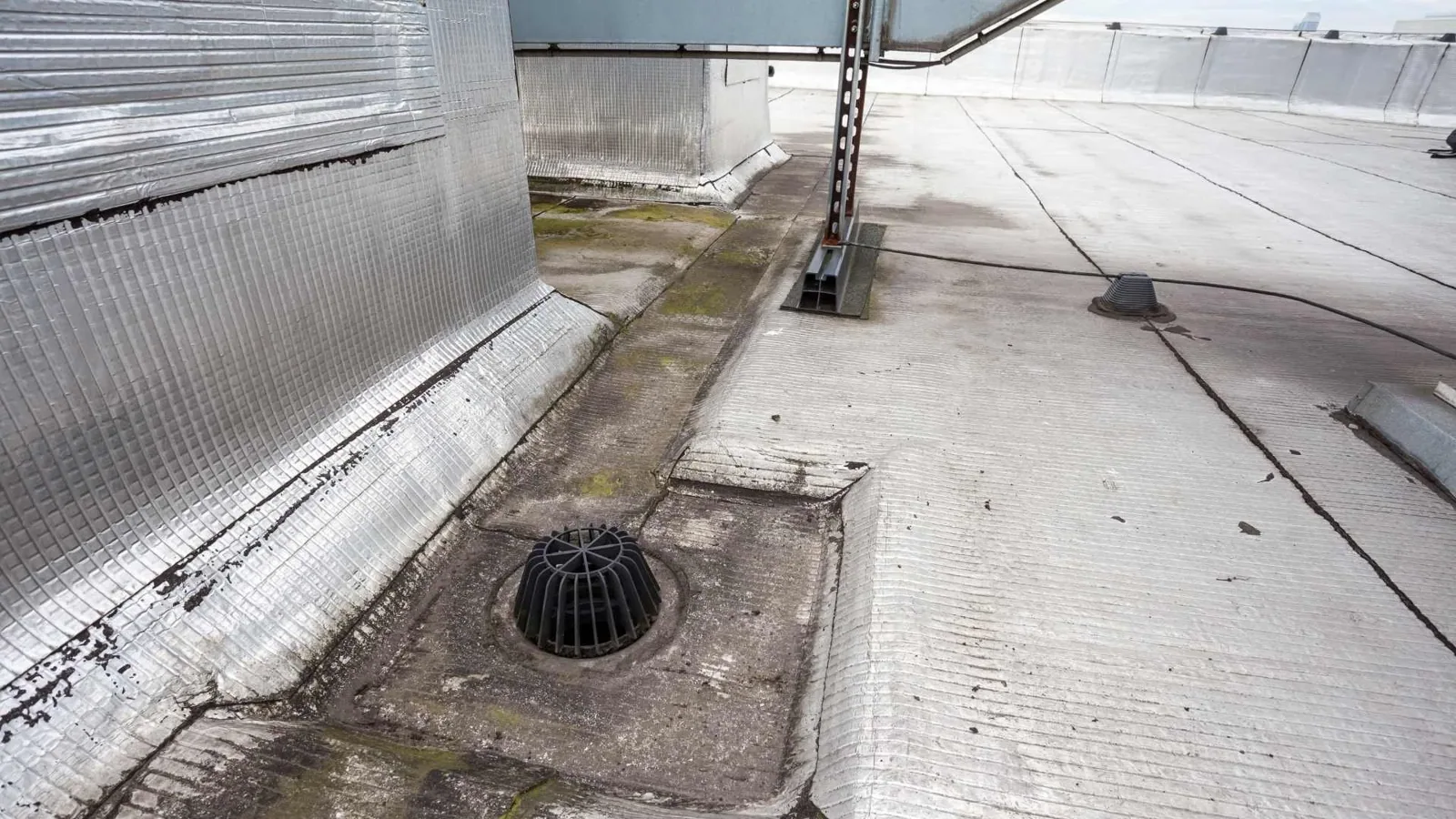
A low area collecting water beside an equipment platform can indicate a restricted route rather than failure across the entire roof. We examine the slope approaching nearby drains and scuppers, check the inlet condition, and inspect membrane connections at the fittings. Cleaning can restore a debris-blocked path. If retained water persists, the underlying plane or compressed material may need a correction that surface sealant will not provide.
Newport Beach Harbor normals concentrate precipitation in cooler months and show almost no summer rain. That nearby coastal reference supports checking drainage in advance, while the forecast for the Cypress property determines installation timing. Repairs at roof outlets can be paired with adjacent membrane work when one defect affects the other. Secondary discharge remains part of the review so a blocked primary outlet has an available relief route.
We also check for sediment beside the approach to the outlet. Its position can help locate a recurring low area after the roof dries, giving the next visit a specific place to compare following cleaning or slope correction.
Which access details belong to each property?
A manager coordinating roofs in Cypress Business Park and Westminster can share approval procedures without assuming the buildings have identical assemblies. We retain a roof diagram, access contact, and operating boundary for each property. Related work in Huntington Beach can be planned alongside it. The individual inspection establishes the repairs, retained material, and any further testing needed before each scope is finalized.
Ground access affects material handling and debris removal. We confirm available staging space, delivery windows, roof height, and entrances that need protection. Wet-layer removal and separate equipment tasks can extend duration beyond a simple surface patch. The proposal identifies those drivers so the manager understands which parts of the schedule depend on roofing and which depend on another trade's availability.
What must be settled before the new assembly is ordered?
A larger alteration may involve energy and permit requirements affecting material or insulation selection. California's current nonresidential energy standards apply to covered alterations, so the applicable decisions belong ahead of procurement. We coordinate the planned assembly with the inspected drainage and equipment details. A system choice should explain how it connects to the building, including any removal needed to create a suitable receiver.
Final photographs identify each completed repair and its position on the roof. Open drainage or equipment items remain assigned for follow-up. The manager can compare the next interior observation with the same repair location rather than treat every wet ceiling as one continuing defect. A return check after equipment service can also reveal new abrasion, displaced supports, or debris that needs prompt attention.
Active leakage can receive response during evenings, weekends, and holidays as well as normal business hours. We establish a safe protection area and return the permanent correction when installation conditions permit. Temporary work remains distinct from completed roofing so the owner can plan the follow-up. Interior drying and finish restoration are coordinated separately with the building's responsible trades.
Commercial Roofing Questions
Can the roof investigation include recent mechanical work?
Recent equipment changes are useful inspection positions when they connect to the reported area. We examine support contact, curb flashing, and nearby service routes, then coordinate any mechanical correction needed before roofing finishes. The permanent repair follows the observed condition rather than assuming the equipment work caused every symptom.
Does the business park's development history identify roof age?
The roof's own construction records and inspected layers establish its installation history where available. We assess present condition and previous repairs even when that history is incomplete. A district development period does not replace the assembly information needed to select compatible repair materials.
How should we schedule a repair beside a protected entrance?
Entrance use needs a defined work boundary and delivery arrangement. We review the approach with the site contact and identify any short closure or protected route required. Overhead exposure, material movement, and the available roof access window determine which tasks can proceed while the entrance remains usable.
Could a recover leave the existing drainage problem in place?
Adding membrane without correcting a low plane can preserve the same retained water. We assess outlet position, slope, and layer condition before proposing recover. The scope should include the drainage correction required, with retained materials accepted only after moisture and attachment review.
Proudly Serving Huntington Beach and Nearby Cities
Commercial Roofers Huntington Beach
Huntington Beach, Westminster, Seal Beach, Fountain Valley,
Garden Grove, Newport Beach and nearby Orange County cities