
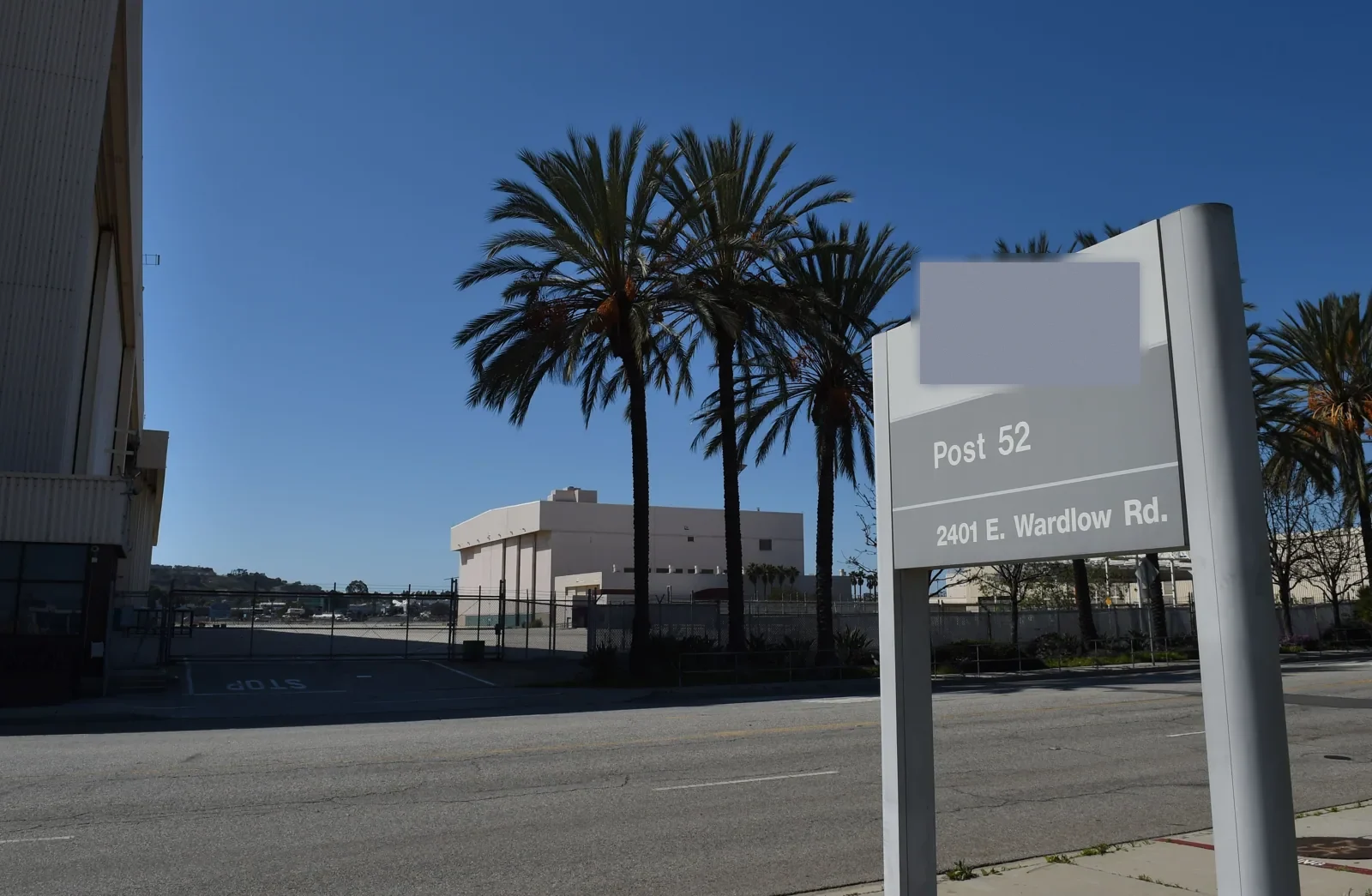
Commercial Roofing in Globemaster Corridor, Long Beach, CA
Globemaster Corridor roofing at an open joint needs a defined repair boundary and protection for the active work area below. We identify the interior consequence, examine safe roof access, and inspect the joint with adjacent drainage and equipment connections. Commercial Roofers Huntington Beach handles repair, maintenance, restoration, and roof replacement across this Long Beach district. The starting decision is what must be secured before a larger inspection or removal proceeds.
The Globemaster Corridor covers a broad north-central Long Beach area along Cherry Avenue and Spring Street. Its commercial and industrial uses make operating hours and delivery access useful details to establish early. We arrange service from Huntington Beach, CA with the site's responsible contact. A district-wide planning framework gives context for the operation, while the roof's actual layers and condition determine the proposed work.
A clear roof diagram also identifies changes in level and shared wall connections. We check those positions where water can move between adjoining roof zones, then assign any needed examination to the accessible work area.
Can delivery space stay clear while roofing proceeds?
A work area next to an active loading entrance needs a defined separation between roofing delivery and the business's own traffic. We confirm where material can arrive, where removed roofing will leave, and which pedestrian route must remain available. A lift position cannot be selected solely from the roof drawing. The ground approach, overhead clearance, and operating schedule need an on-site check before the sequence is fixed.
The corridor's plan identifies I-405 and Long Beach Airport as nearby regional access features. The building still needs its own workable staging arrangement, independent of that broader access context. We identify restricted hours and the person authorized to adjust them. A roof scope over distribution operations can be phased by the affected area, while adjacent commercial rooms may require another protection boundary.
What connects the roof field to the equipment?
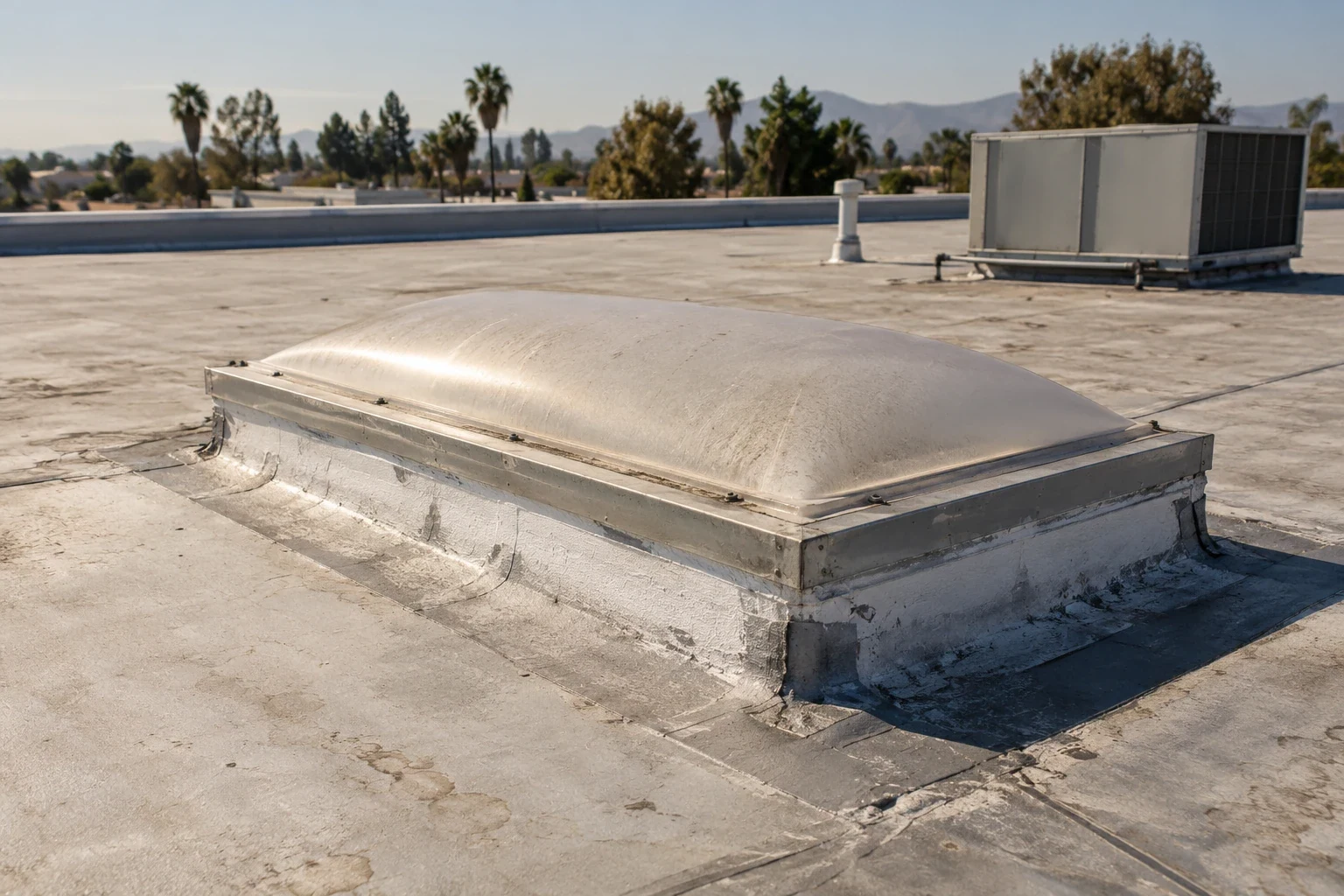
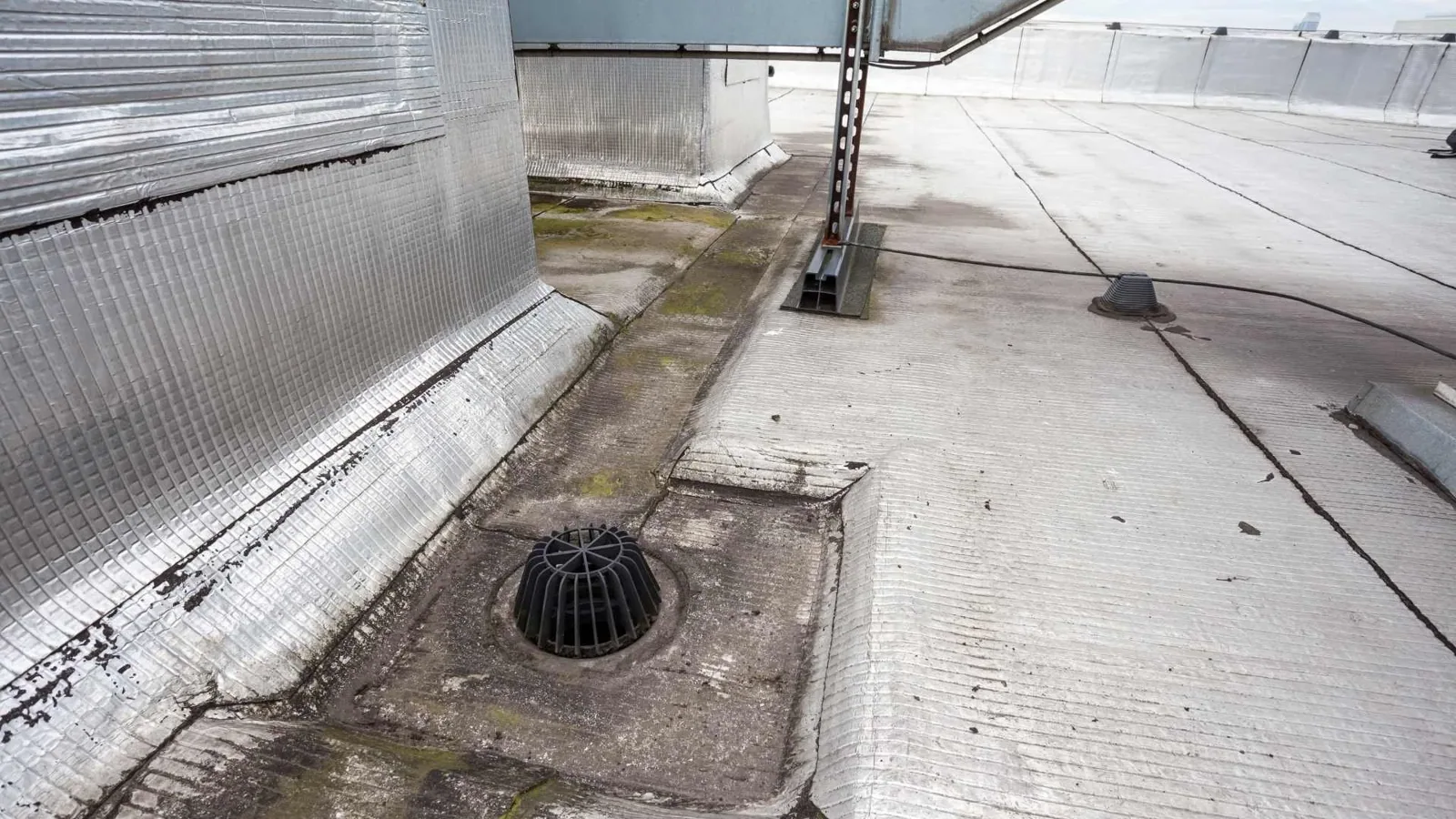
A loose curb termination can admit water behind vertical flashing even when the surrounding membrane looks intact. We inspect the top connection, corners, counterflashing, and field tie-in together. At pipe and conduit supports, contact points can create abrasion or hold debris across the drain path. The field finding identifies which component has failed and which surrounding material can receive a compatible repair.
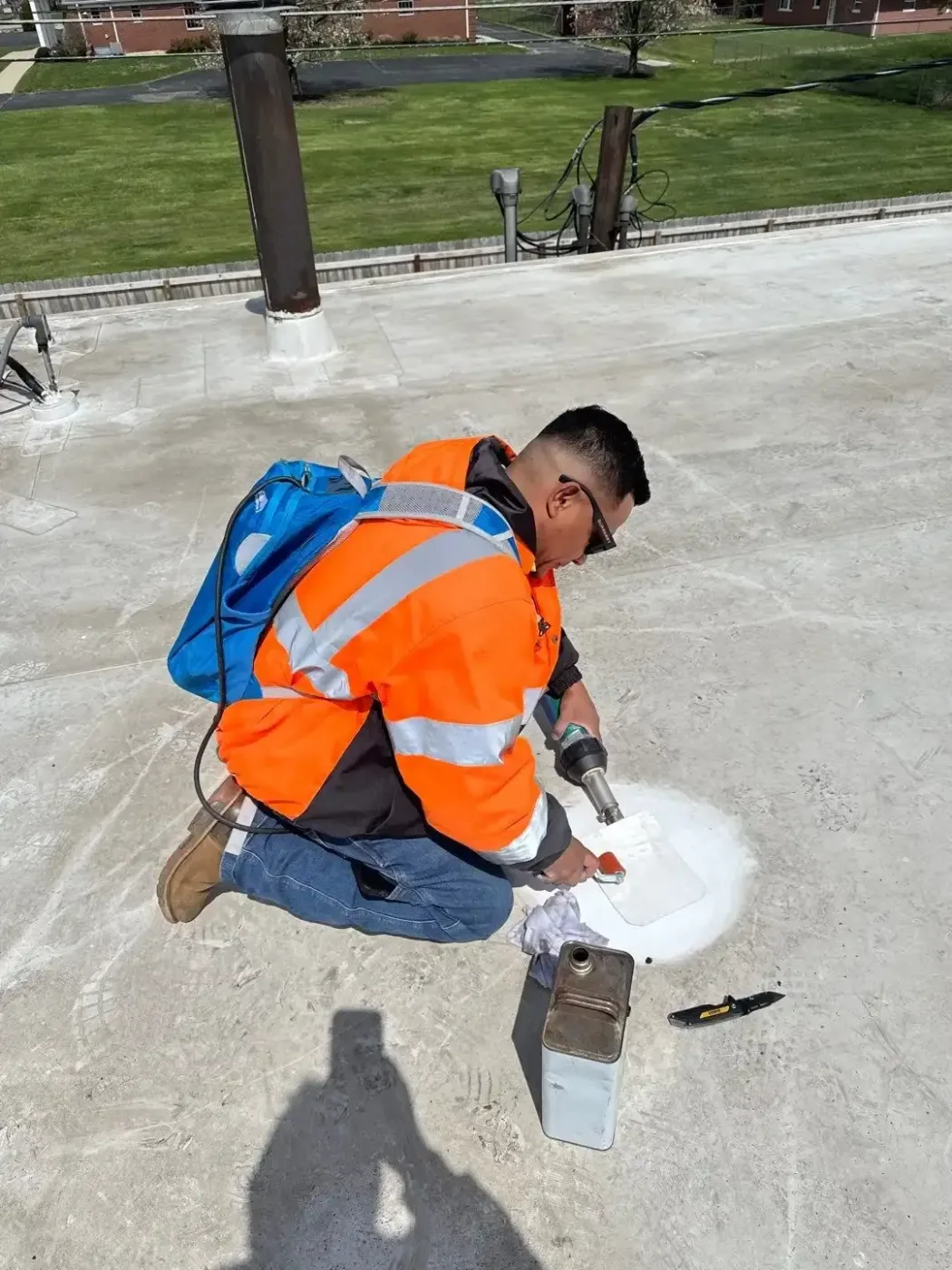
Roofing material is established before the new detail is chosen. Thermoplastic sheets need suitable welding surfaces; rubber and bituminous systems use different compatible preparations. Old repair compounds that interfere with adhesion may need removal inside the work boundary. Repairing roof-opening flashings can include several related transitions, but the scope should identify each one rather than group intact details into an unexplained roof-wide replacement.
Does a changing commercial district require a different roof plan?
The Globemaster planning area includes regional-serving and community-commercial uses along with industrial and neo-industrial activity. A building changing its operation may also change rooftop equipment or service traffic. We ask which units, penetrations, and access paths will be altered before defining the final roof connections. The proposed business use can inform coordination without establishing the age, roof type, or condition of an individual property.
An owner with buildings elsewhere in Long Beach or in nearby Signal Hill can coordinate inspections while retaining separate findings. The Globemaster roof record should distinguish current condition from planned equipment alterations. If a larger project includes those changes, we sequence curb work and membrane installation so completed connections are not reopened by the next trade. The daily dry-in boundary remains tied to actual closure capacity.
Which layers can support restoration or recover?
A coating proposal needs a suitable, stable receiver rather than an appealing surface appearance alone. We inspect attachment, deteriorated areas, and prior patches, then test adhesion where appropriate. Wet layers need confirmation and correction before restoration is considered. An infrared survey can help locate screening patterns under suitable conditions, while physical checks establish what material is present and whether it is sound enough to remain.
For a recover over the retained assembly, moisture, drainage, loading, attachment, and applicable layer limits all require review. Local removal may be needed even when the wider roof can remain. Replacement can be appropriate where sound construction cannot otherwise be reached. We describe how each option handles the failed details, not just which new surface would be installed above them.
Where will water go after the repair is finished?
A repair spanning a drain approach can leave a raised edge that interrupts runoff if the detail is poorly fitted. We follow slope into accessible drains and scuppers, check the membrane connection, and inspect secondary relief. Debris restriction is corrected separately from a persistent low plane. If the outlet is open but the same area retains water, the proposed remedy may involve the assembly geometry rather than another cleaning visit.
Newport Beach Harbor normals show rain concentrated in cooler months and very little normal summer precipitation. That nearby coastal context supports preparing outlets ahead of winter; the Long Beach forecast still governs actual work. Correcting drainage transitions can be coordinated with membrane repair when they share the affected area. We confirm preparation conditions and leave opened roof sections protected if wind or surface moisture changes the installation window.
What should the owner know before approving removal?
Roof height, receiver condition, insulation depth, separate work areas, and equipment movement change the labor and timing required. We identify which of those tasks are established by inspection and which need additional confirmation. A small visible split can call for broader removal when saturated layers extend beyond it. Conversely, sound surrounding construction can keep the permanent repair contained. The proposal ties those differences to field findings.
California's current nonresidential energy standards can affect covered alterations, so larger renewal needs applicable material and insulation decisions before ordering. The operating sequence identifies protected rooms and the closure limit for each day. At completion, photographs show both the finished detail and its roof position. Drainage and equipment work still pending retain separate follow-up actions rather than disappear into a general completion statement.
For sudden water entry, our response remains available throughout nights, weekends, and holidays. Temporary cover is followed by a permanent repair plan once safe access permits. Keep subsequent interior reports with the original room and roof position. A return check can then compare the same transition after weather exposure or equipment service, helping the manager decide whether further work is needed.
Commercial Roofing Questions
Can a new equipment layout be coordinated with corridor roof renewal?
Equipment geometry should be resolved before its final flashing is completed. We coordinate supports, penetrations, and service paths with the responsible trade, then restore the roof connections after changes. Temporary protection keeps unfinished openings secure during that handoff, and the final inspection checks surrounding membrane contact.
How does a loading restriction affect the roof schedule?
Delivery and debris removal may need short windows separate from business traffic. We confirm those restrictions at the building and size daily work accordingly. A restricted ground approach can change lift use and material staging even when the roof repair itself is straightforward.
Could industrial use alone justify replacing the existing membrane?
Condition and assembly findings determine replacement need. We examine attachment, moisture, drainage, and failed details instead of using the land-use description as a roof diagnosis. Operating use affects the protection and work sequence, while the inspected construction establishes what material can remain.
What should be checked after an outlet repair and equipment move?
The return visit should examine the repaired drain connection, clear water route, support pads, and adjacent flashing. We compare those positions with the completion photographs and later interior observations. New abrasion or debris from equipment work receives its own correction before it develops into another opening.

Proudly Serving Huntington Beach and Nearby Cities

Commercial Roofers Huntington Beach
Huntington Beach, Westminster, Seal Beach, Fountain Valley,
Garden Grove, Newport Beach and nearby Orange County cities