
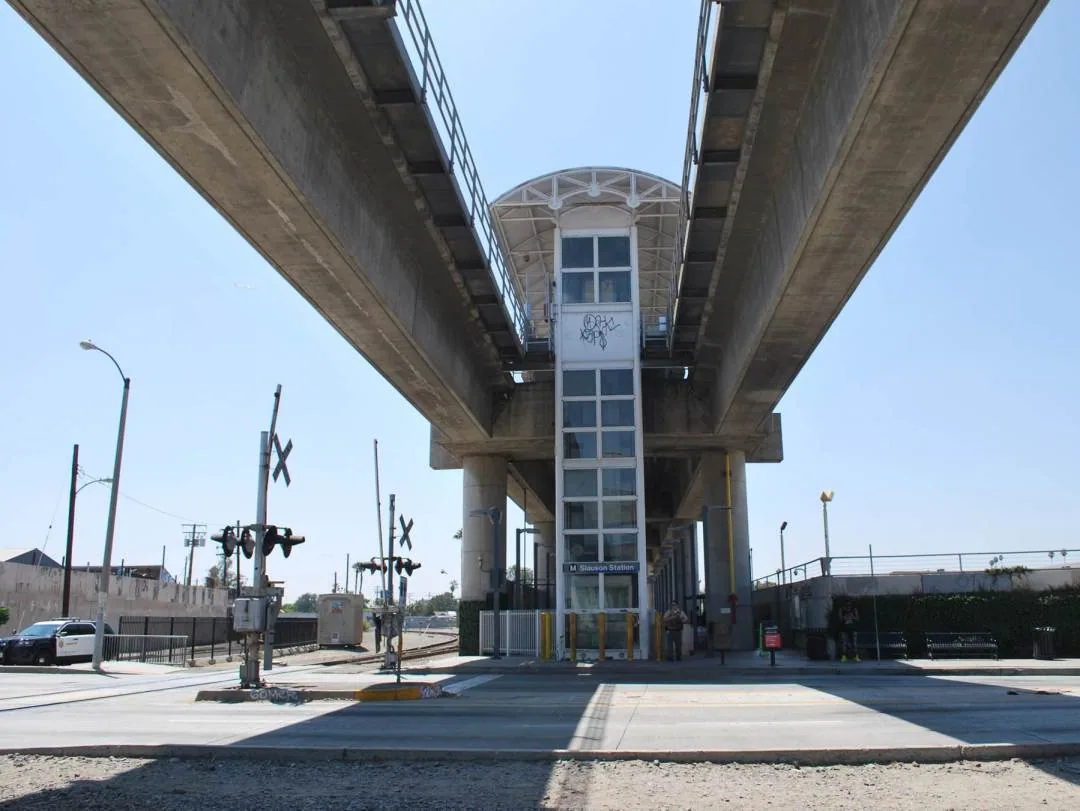
Commercial Roofing in Harbor Corridor, Santa Ana, CA
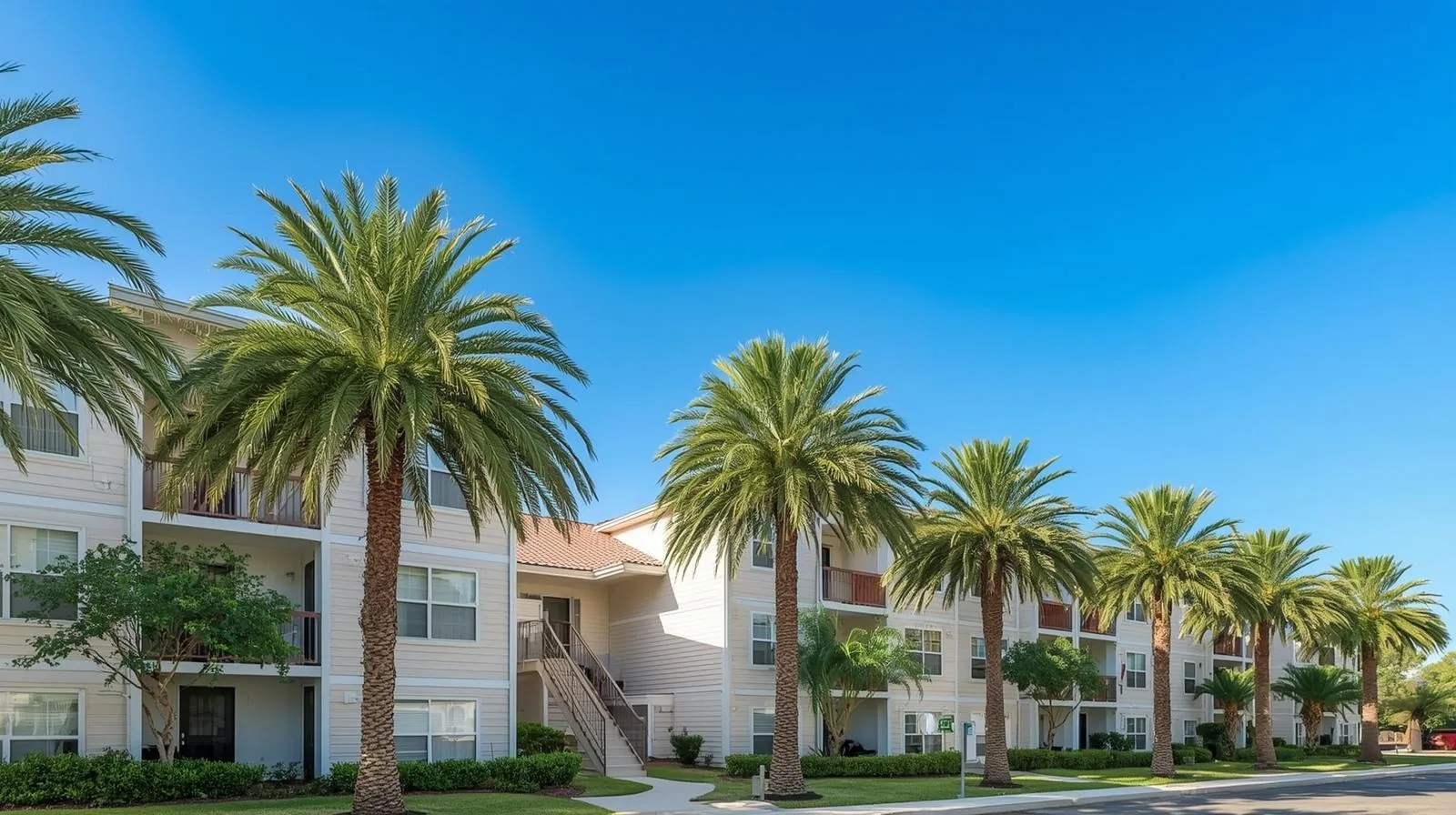
Roof work above mixed occupancies in Harbor Corridor, Santa Ana, CA, starts by identifying which rooms share the affected roof area. The corridor is a District Center where commercial and residential uses form part of the planning framework. Commercial Roofers Huntington Beach repairs and replaces commercial roofing there, establishing interior protection and safe access before the permanent work is selected. A building contact connects the room report, roof plan and operating limits.
Santa Ana identifies Harbor Corridor as a 125-acre planning area and one of its major development areas. A roofing decision for an existing property still needs its actual assembly examined. Planned alterations may change equipment or roof interfaces, while an active leak may need a smaller immediate correction. We separate those tasks so protection does not wait for an unrelated development decision.
Who needs to coordinate a roof shared by different occupancies?
A property with office, retail and residential portions can have different managers and operating hours. We establish a roofing contact who can confirm access and communicate the work window to the affected occupants. The roof phase is marked against the rooms below, including air intakes, entrances and service paths. That makes the actual restriction clear instead of applying one broad shutdown instruction to the whole property.
Material deliveries and removal need a route that keeps people away from lifting and debris operations. A residential entrance may need a different arrangement from a retail service door. We review the position and timing with the building contact before the crew arrives. Any temporary alternate route must remain practical for emergency access and normal circulation.
For roofing above residential rooms, noise and intake considerations belong in the phase review. A room that remains occupied needs protection appropriate to the actual task, with work timing communicated before exposed roofing is opened overhead.
Where can a shared roof develop separate water routes?
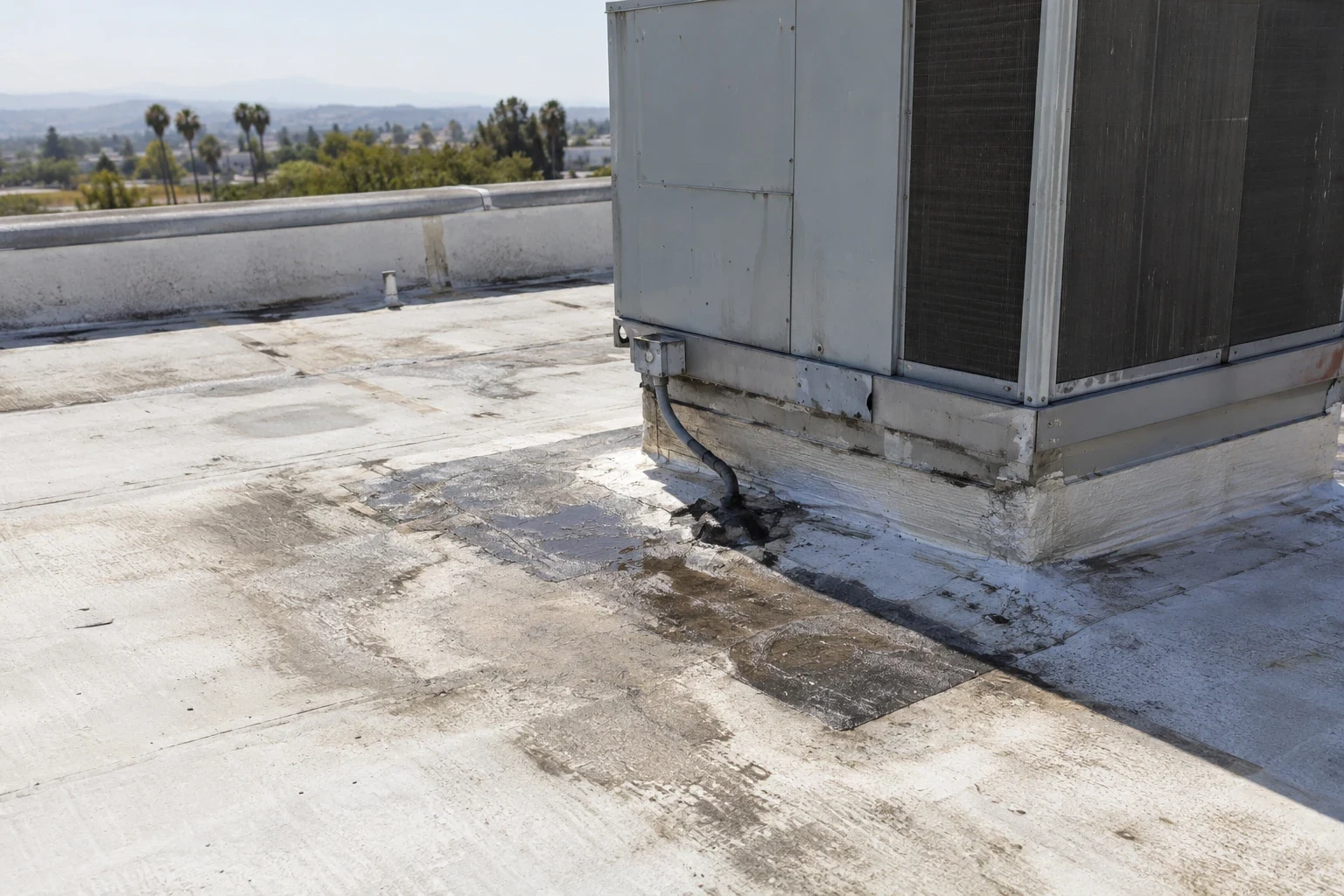
A roof height change, wall receiver or equipment penetration can create a water route distinct from a nearby field seam. We compare the interior report with those details and inspect their connections at close range. Water timing may help identify equipment discharge or another building component. Each affected room is marked until the roof findings show whether several reports are linked or need separate repairs.
A compatible correction of the identified roof opening requires a sound receiver. We examine old patch material, membrane weathering and movement in the adjoining support. If a wall component or curb shifts, the responsible stabilization needs to happen before roofing closes tightly against it. Adding material over the visible split alone can leave the same stress in the repair.
For adjoining roof assemblies, the transition receives its own description. Rubber, thermoplastic, asphalt and metal details require appropriate connections, and their differences must be resolved before the scope treats the area as one continuous repair.
Service traffic needs attention where repeated visits cross repaired details. We identify a practical inspection route and suitable protective areas, then record equipment changes that create new penetrations. Keeping those changes with the roof history helps locate a later water report.
How should an alteration fit the existing roof?
Harbor Corridor sits among Santa Ana's major development areas alongside Metro East, Downtown and Transit Village. Planned changes to an existing building can require a roof-interface review before equipment, curbs or supports are installed. We inspect the present assembly and identify what the new work must connect to. A proposed opening also needs a closure sequence that leaves the occupied space protected between trade visits.
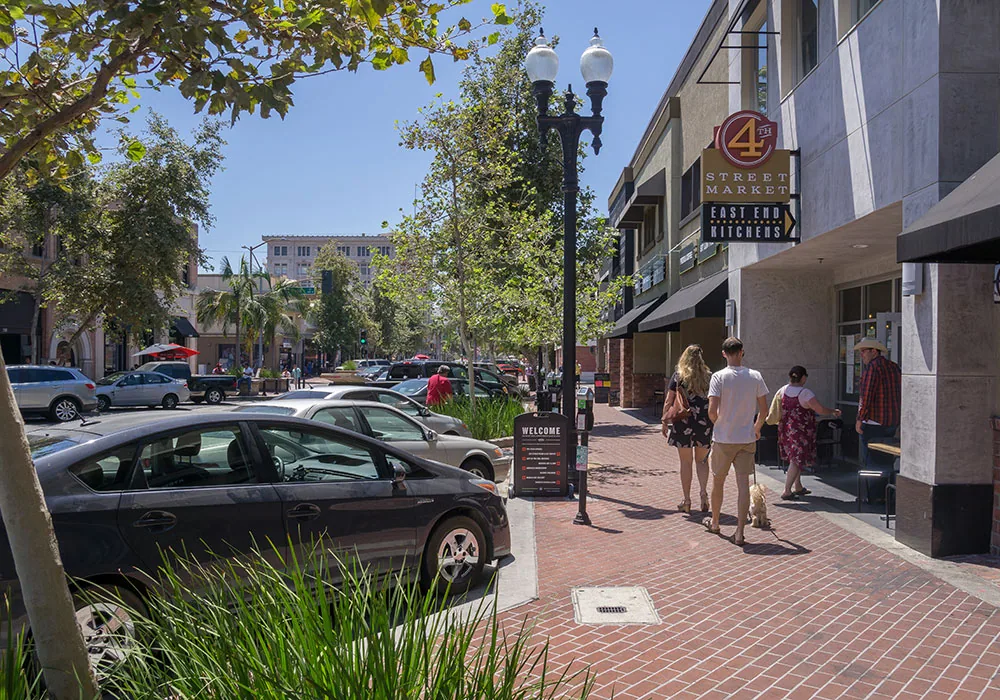
Owners comparing work across Santa Ana properties can use consistent building identifiers while keeping construction tasks specific to each roof. A property in the Downtown District Center has its own access and occupancy review. The planning designation provides local context, but the roof condition and operating contact establish the usable phase for the actual building.
An insulation change can raise the surface relative to drains and curb flashings. We identify those interfaces while the alteration can still be designed coherently. Roofing should not be left to improvise a connection after another trade installs a support at an unsuitable height.
Can sound roofing remain through a phased project?
A local defect can support repair where surrounding material remains suitable and concealed layers are dry. We assess the receiver and mark investigation needed where moisture or attachment changes the decision. Retaining useful roofing can reduce unnecessary removal, but wet insulation or broad failures may require a larger scope. The owner receives the observed condition supporting each recommendation.
Recover and coating are different retention options with their own prerequisites. Recover needs suitable layers, attachment, capacity and compliance with applicable requirements. Coating requires compatibility, adhesion and repaired details on a stable substrate. We examine these conditions before comparing either with removal and replacement work, including drainage and height changes that affect the rebuilt assembly.
The construction allowance should identify wet material disposal, equipment coordination and repeated setup for occupied phases. Those tasks can change effort and timing even where the membrane installation itself is straightforward. Uncertain concealed material is described with a confirmation step and an agreed procedure for additional findings.
What protects the building between construction visits?
An opening left for another trade needs a defined temporary closure and a return item. We limit removal to an area that can be secured within the available conditions, then inspect the dry-in boundary and drainage path before leaving it. A temporary covering should shed water without directing flow into adjoining unfinished roofing. The site contact knows which area remains temporary and which connection has received permanent repair.
Newport Beach Harbor's nearby coastal rainfall normals give a seasonal reference weighted toward winter. For Harbor Corridor work, actual weather and roof-surface condition determine installation timing. Offshore Santa Ana conditions can change wind and heat during an otherwise usable window. We reassess lifting, application and exposed materials before continuing a phase that depends on those conditions.
Urgent roof reports are accepted overnight, on weekends and during holidays. A marked condition and repair record then connects temporary protection, permanent corrections and any remaining recommendation. Completed work should be findable on the roof plan so future maintenance can review the same zone rather than restarting with an unlocated room description.
Commercial Roofing Questions
Can shared entrances remain usable while a roof phase is open?
The entrance and material route must be reviewed before removal. We identify overhead work, lifting and debris risks with the building contact, then establish a safe alternative where needed. A phase can proceed only when the protection and circulation arrangement suit the actual operation.
Does a mixed-use alteration require replacing unrelated roof sections?
Each affected assembly is evaluated on its own condition and the proposed change. Sound roofing may remain where a compatible transition can be built. Wider removal needs roof findings or design requirements that support it, rather than the mixed-use designation alone.
What if the equipment trade cannot return before the next rain?
A defined temporary closure is needed before the roof opening is left for that handoff. We describe its limits, drainage arrangement and the permanent work still required. The sequence is revised with the building contact so the remaining opening is not treated as completed roofing.
How do we keep a partial replacement separate from older roofing?
Mark the replacement boundary and the transition on the roof plan, with photographs and assembly information retained together. We identify the remaining areas needing maintenance or investigation. That record helps future service distinguish new construction from the older assembly beside it.

Proudly Serving Huntington Beach and Nearby Cities

Commercial Roofers Huntington Beach
Huntington Beach, Westminster, Seal Beach, Fountain Valley,
Garden Grove, Newport Beach and nearby Orange County cities