
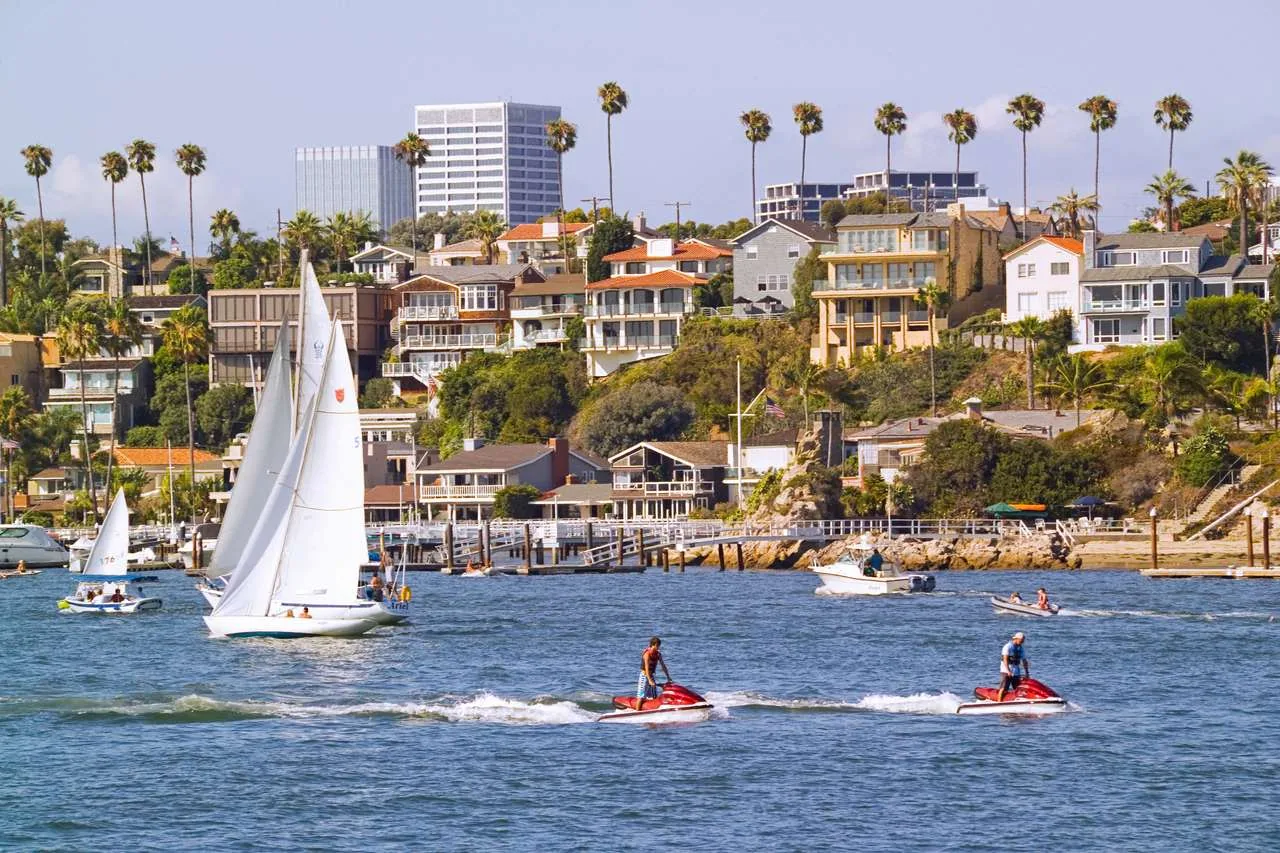
Commercial Roofing in Newport Beach, CA
Commercial roof work in Newport Beach, CA starts with the building in service beneath it. An office, visitor-serving property, or mixed-use building needs the affected room and operating limits established before the roof opens. Commercial Roofers Huntington Beach provides inspections, repairs, and replacement in Newport Beach. We connect the reported condition to the actual roof detail, arrange interior protection where needed, and identify the decision that the first inspection can support.
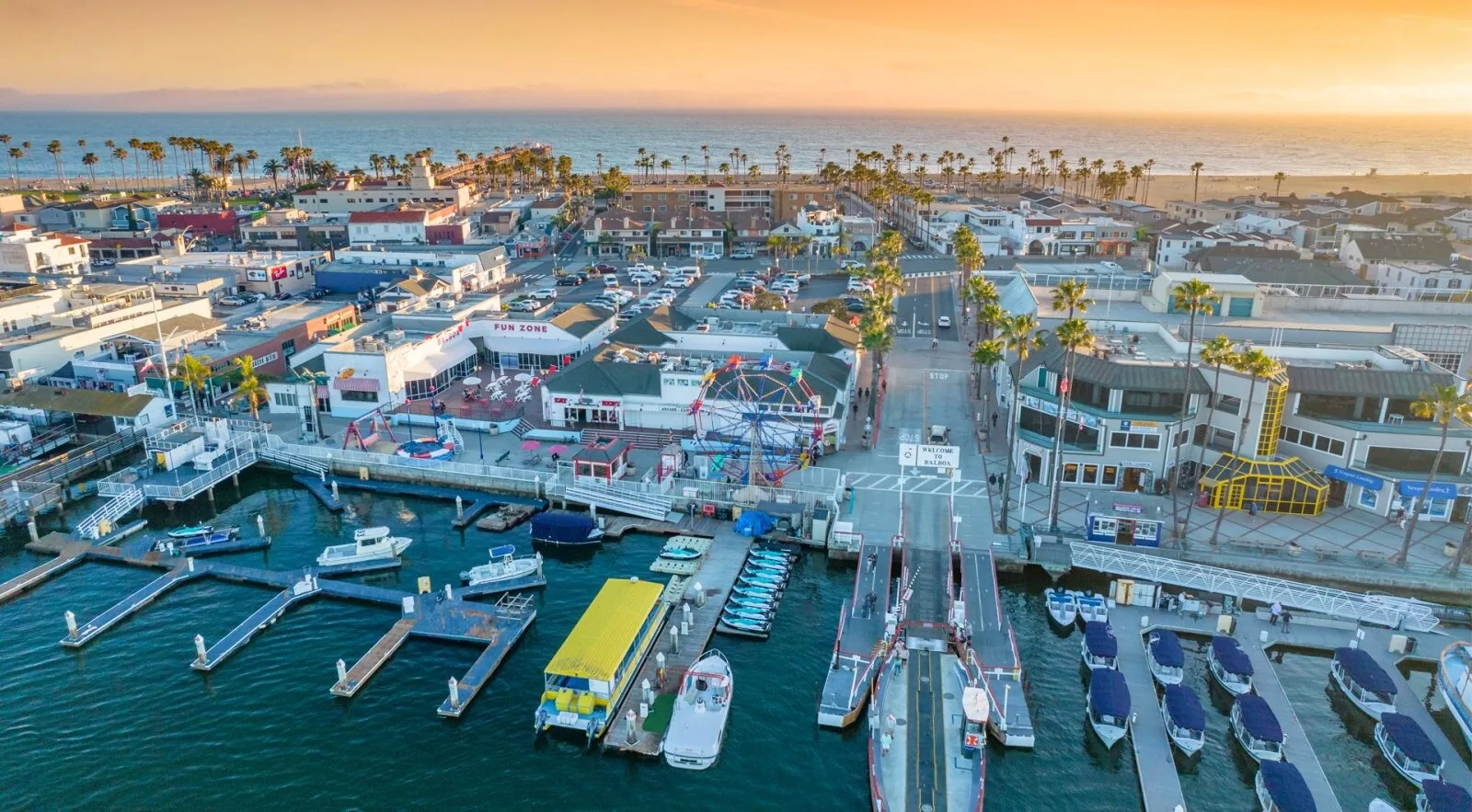
The city's land-use framework includes office, commercial, industrial, mixed-use, visitor-serving, and public areas. Its distinct districts include the Airport Area, Newport Center, and Balboa Peninsula villages. That variety makes a property-specific roof plan more useful than an assumption about a single coastal building type. We identify the assembly, drainage layout, access contact, and working window for the building requesting service.
Which drainage details deserve attention before winter?
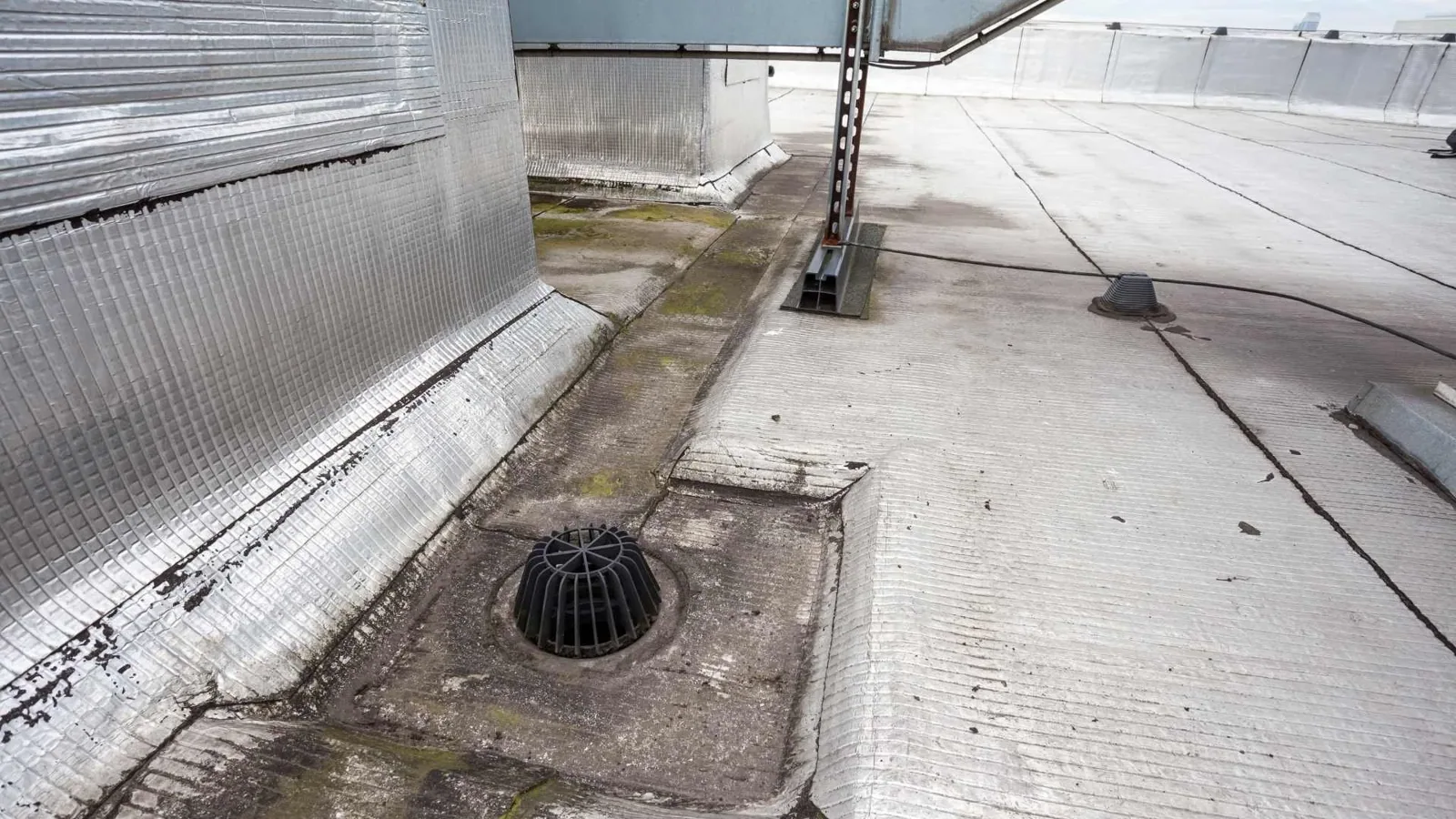
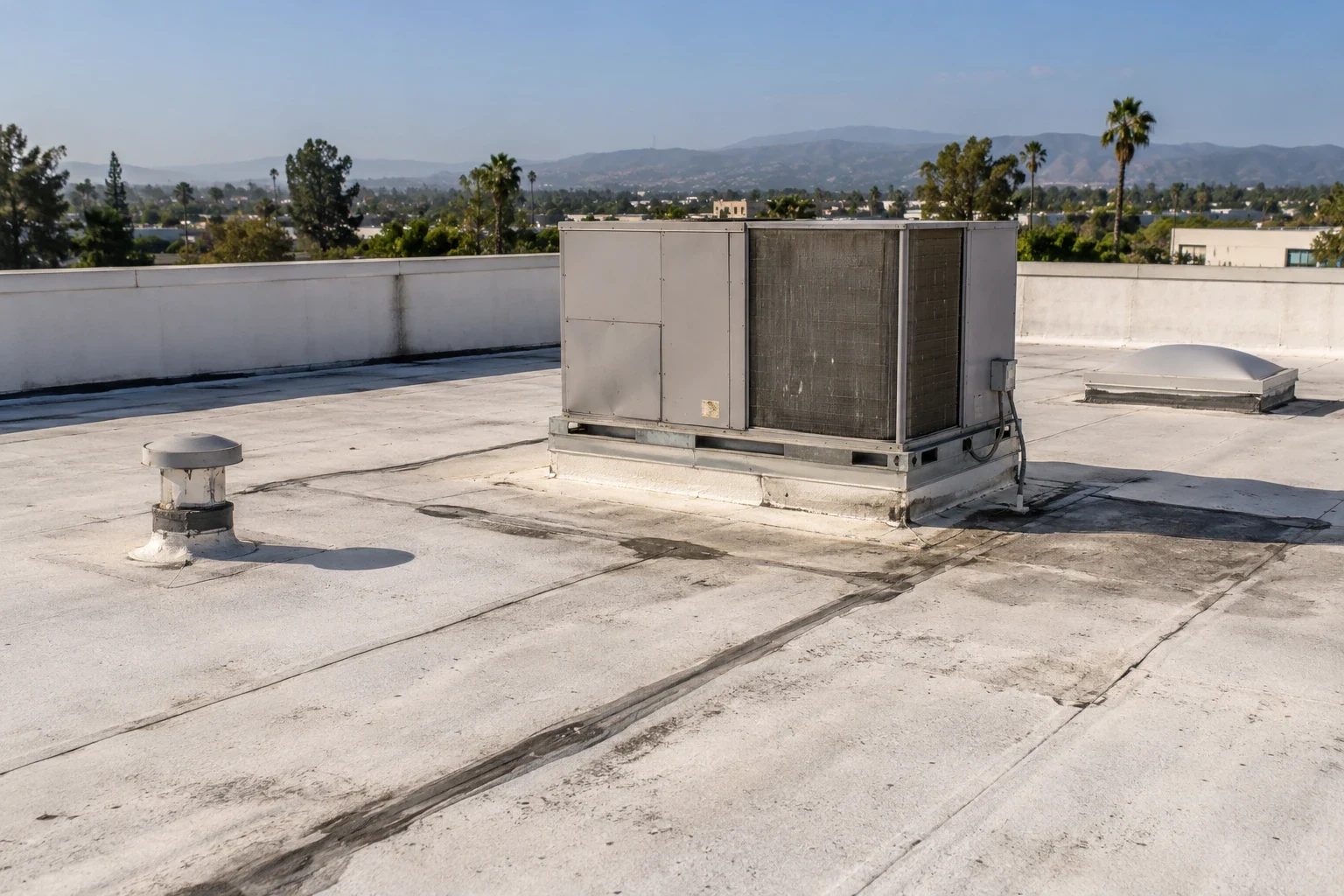
A shallow low area can retain debris even after the drain basket is cleaned. We trace runoff across the roof surface, checking where equipment supports, earlier patches, or changes in slope interrupt flow. The inspection includes the outlet connection and secondary discharge where present. An open membrane at the drain requires a compatible waterproofing repair; a continuing low plane requires a separate decision about slope or underlying conditions.
Newport Beach Harbor normals identify January and February among the wetter months, while summer precipitation averages are near zero. That named coastal record supports planning drainage preparation ahead of the cooler season. It also helps explain why a summer surface inspection benefits from prior interior leak reports. Service at roof drains and scuppers records the actual outlet, work performed, and any retained low area, so later rain can be compared with a known condition rather than a general maintenance entry.
Where should an interior drip be investigated?
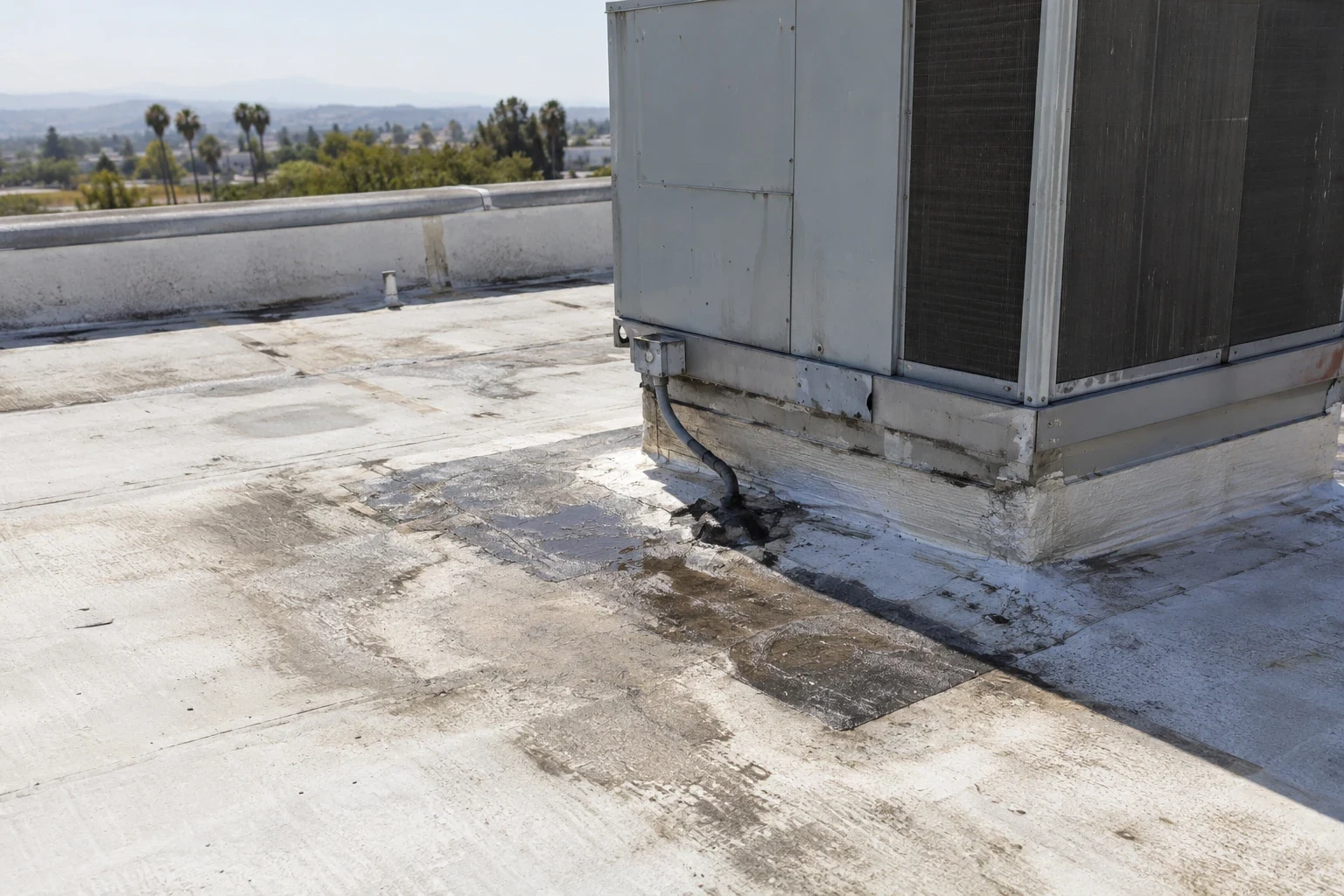
A report beside a wall or equipment grille needs both interior and roof observations. We record the affected room and timing, inspect nearby seams and flashing, and examine the water route toward drains. A mechanical or wall interface may need another trade's examination while the roofing connection receives its own check. The repair boundary follows the observed defect and concealed findings, rather than an assumed vertical path from the ceiling stain.
A targeted leak examination can identify a suitable test or authorized opening where the route remains uncertain. Any immediate protection is coordinated with the building contact and the space at risk. We can respond after normal working hours, including holidays and weekends, when safe access is arranged. The owner receives a clear distinction between a temporary measure that controls current entry and permanent work that restores the affected roof detail.
How does the building's setting change access?
An inspection that needs interior entry should be scheduled with the person responsible for that room as well as the roof hatch. Delivery routes, lift positions, exits, and equipment servicing can compete for the same space during construction. We identify those constraints before choosing a work area. A neighboring occupied suite remains outside the removal boundary unless the agreed protection plan permits work above it. That makes the roof sequence understandable to the people using the building.
Within Newport Beach, Newport Center and the Balboa Peninsula commercial villages are distinct planned districts. We confirm the requested property's entrance and staging arrangements instead of transferring a layout from one district to another. For an owner comparing several buildings, each inspection retains its own roof positions, room restrictions, and equipment details. Shared scheduling can coordinate visits without turning separate roof conditions into a single construction recommendation.
Which condition makes a repair worth pursuing?
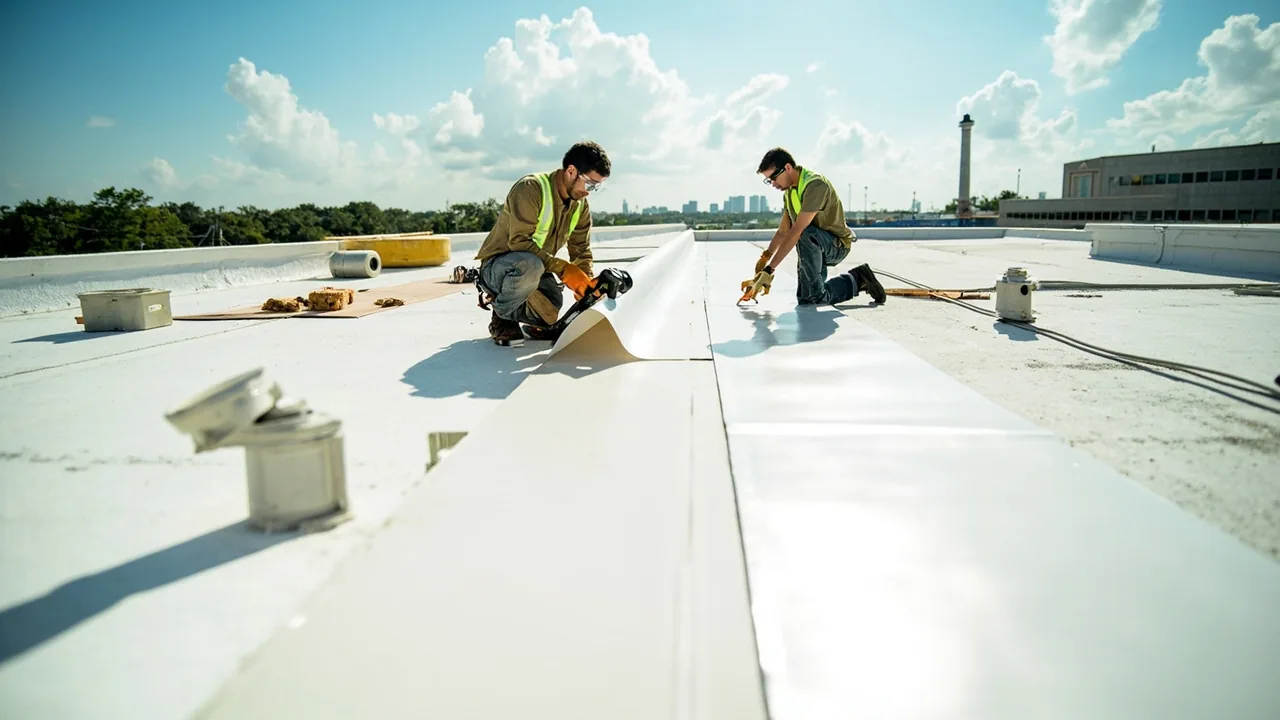
A contained puncture, open lap, or damaged flashing may support repair where the surrounding material and attachment remain sound. We examine the detail and identify moisture or substrate issues that could enlarge the work. Repeated failure across connected areas can justify testing or a broader scope. The proposed repair describes preparation, compatible components, connection to retained roofing, and any insulation removal, so the owner knows which assembly layers are addressed.
Coating, recover, and replacement have different prerequisites. A coating needs a sound prepared surface; a recover needs acceptable existing layers, moisture condition, attachment, and detail heights. Replacement exposes the supporting construction for necessary correction. Where a thermoplastic membrane is under consideration, PVC roof construction needs its own complete assembly review. We compare these paths using the field findings and operating limits, with unresolved concealed conditions identified before an owner authorizes a larger project.
What should be settled before a replacement starts?
Removal depth, insulation, deck work, drainage, perimeter details, and equipment transitions need a defined scope before installation begins. The replacement also requires the applicable permit and design review for the building. Newport Beach's 2050 General Plan was adopted in June 2026 and addresses land use, circulation, safety, and coastal planning. The roofing project follows the relevant property review, with the actual alteration and jurisdiction determining its requirements.
California's 2025 energy standards apply to covered nonresidential permit applications submitted beginning January 1, 2026. We identify the review that the planned work requires, including assembly and energy questions that affect material selection. Application timing also follows current conditions. Santa Ana events can bring warm offshore conditions to coastal areas; wind and surface requirements can change a planned opening. Phased roofing over an occupied building therefore needs a workable stopping detail and daily closing limit before tear-off.
What lets the owner compare the finished scope with the proposal?
Cost differences often reflect different removal boundaries, concealed corrections, equipment access, or interior protection rather than membrane selection alone. We make those assumptions visible in the proposal and record approved changes when field conditions require them. The completion record shows which roof sections were rebuilt, repaired, or retained. Drainage and flashing photographs are tied to their locations, with any temporary work or remaining investigation identified separately.
A roof condition report with marked findings supports both the initial decision and later maintenance. A return examination can revisit the changed water route after suitable rain or a controlled test. The owner can also arrange a check following equipment service that affects the repaired curb. Send the available roof plan, room report, and repair history so the next visit can focus on a known detail and an actionable decision rather than reconstruct the previous work from memory.
Commercial Roofing Questions
Can a summer inspection still help with a roof that leaked last winter?
Prior room reports and repair records give the inspection useful locations even if current conditions are dry. We examine seams, flashing, drainage, and concealed questions at those positions. A test or later rain check may be needed to settle the route, and the report identifies that next step.
Should an office roof and a visitor-serving roof use the same work schedule?
The actual entrances, occupied rooms, equipment, and permitted operating restrictions set each schedule. We identify interior protection and daily closing limits separately for the buildings. Similar roofing materials can still require different removal phases because the activities beneath them have different needs.
What would rule out another coating over an existing roof?
Unsuitable surface condition, incompatible earlier materials, trapped moisture, or an unstable supporting layer can make coating inappropriate. The restoration decision follows a receiver examination and the testing necessary to resolve compatibility or concealed moisture. A drainage defect also needs its own correction; a new surface layer does not create the missing slope.
How do you distinguish urgent protection from the final repair?
Immediate work addresses the exposed opening or space at risk under safe access conditions. Permanent work follows the material, moisture, and connection findings. We record the temporary measure and the remaining action separately so the manager knows whether another visit, test, or reconstruction step is still required.
How we inspect, scope and complete this work

Proudly Serving Huntington Beach and Nearby Cities

Commercial Roofers Huntington Beach
Huntington Beach, Westminster, Seal Beach, Fountain Valley,
Garden Grove, Newport Beach and nearby Orange County cities