
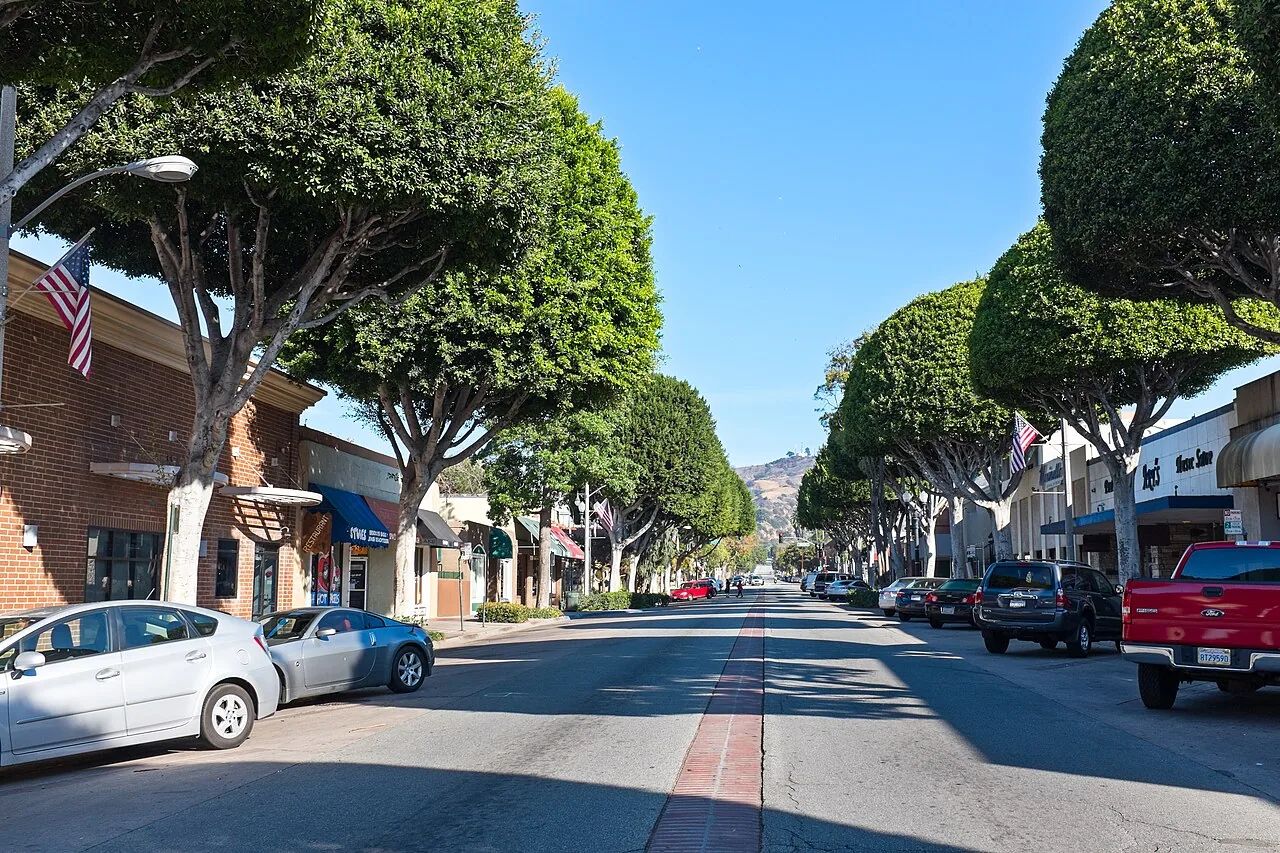
Commercial Roofing in Whittier, CA
A ceiling report over an occupied Whittier office needs a safe access window and a roof position that can be inspected. We protect the affected interior area, compare the room with the roof diagram, and examine nearby drainage and transitions. Commercial Roofers Huntington Beach provides commercial roof repair, inspection, maintenance, and replacement. The immediate scope distinguishes the opening needing protection from the additional findings that may affect permanent work.
Whittier maps commercial, mixed-use, office, medical, innovation, and general-industrial land uses across the city. Each building has its own operating limits and roof construction. We arrange service from Huntington Beach, CA with the person responsible for roof access and the occupied space below. A current room report and material history can help focus the first visit without substituting for the field examination.
Which occupied rooms need a different work window?
A medical or office operating area can require control of noise, dust, and access while roof removal proceeds above it. We identify the actual use with the manager and mark which rooms fall beneath the proposed opening. Roof work that requires equipment movement or interior access may need a coordinated closure. Unaffected space can remain outside the boundary where safe separation and routes are available.
For roofing over a medical office, the building contact identifies any scheduling restrictions that change the work. We coordinate roofing with the appropriate responsible trades instead of assuming every operation can remain unchanged. Interior protection is established before controlled openings or wet-layer removal. The daily roof section is then sized to what can be closed securely within the available operating and weather window.
A hatch reached through occupied rooms also needs a clear interior travel route. We confirm where tools and removed material can pass safely, and identify a different access arrangement when that route conflicts with the operation.
What roof connection matches the reported water route?
A damp ceiling near a wall can connect to a wall flashing, nearby penetration, or water moving through the assembly. We examine accessible transitions and compare their condition with the interior timing. Separated terminations, open seams, loose metal joints, and prior patches receive their own roof positions. The permanent repair follows an observed defect or further examination needed to establish it, rather than a guess based solely on the room stain.
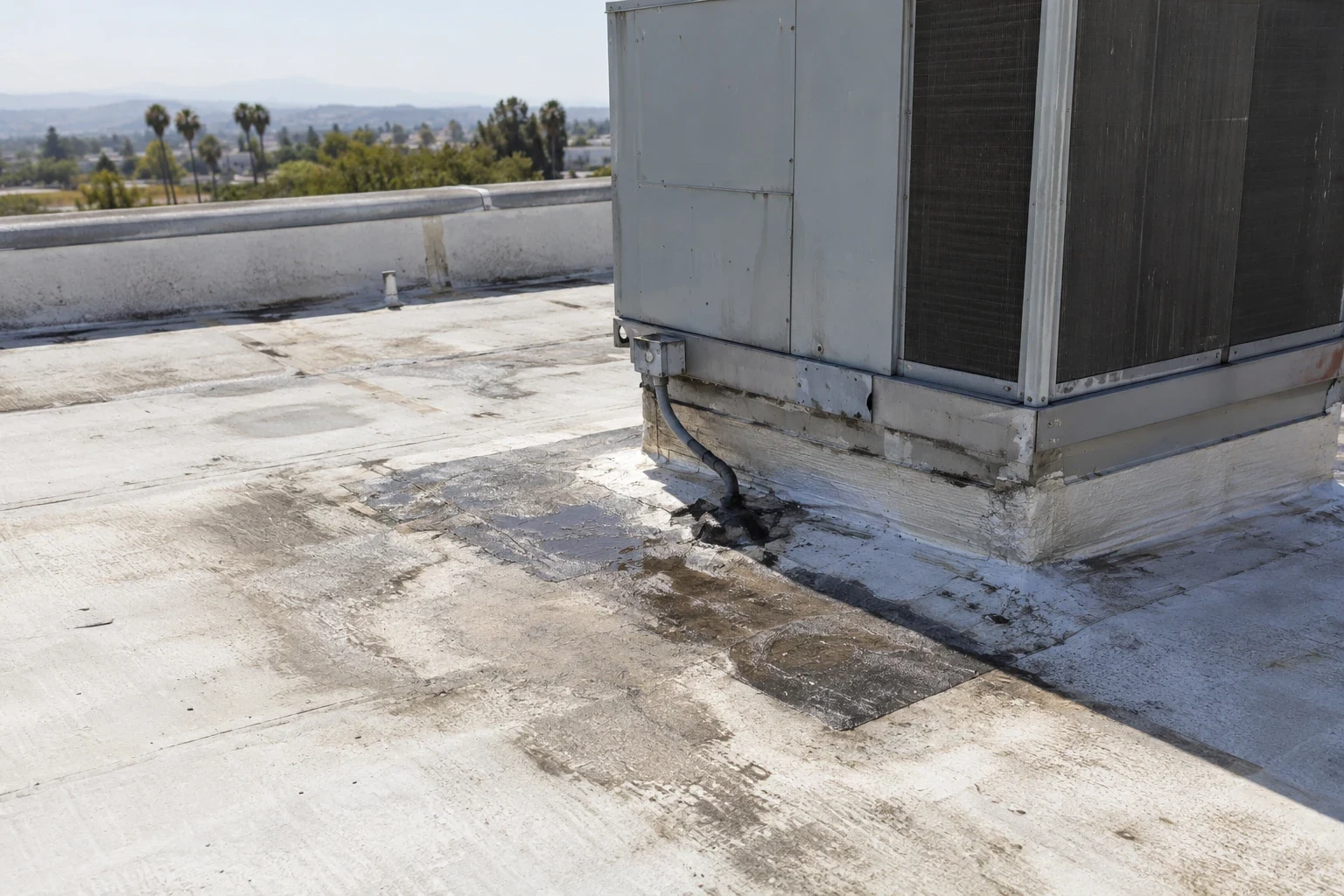
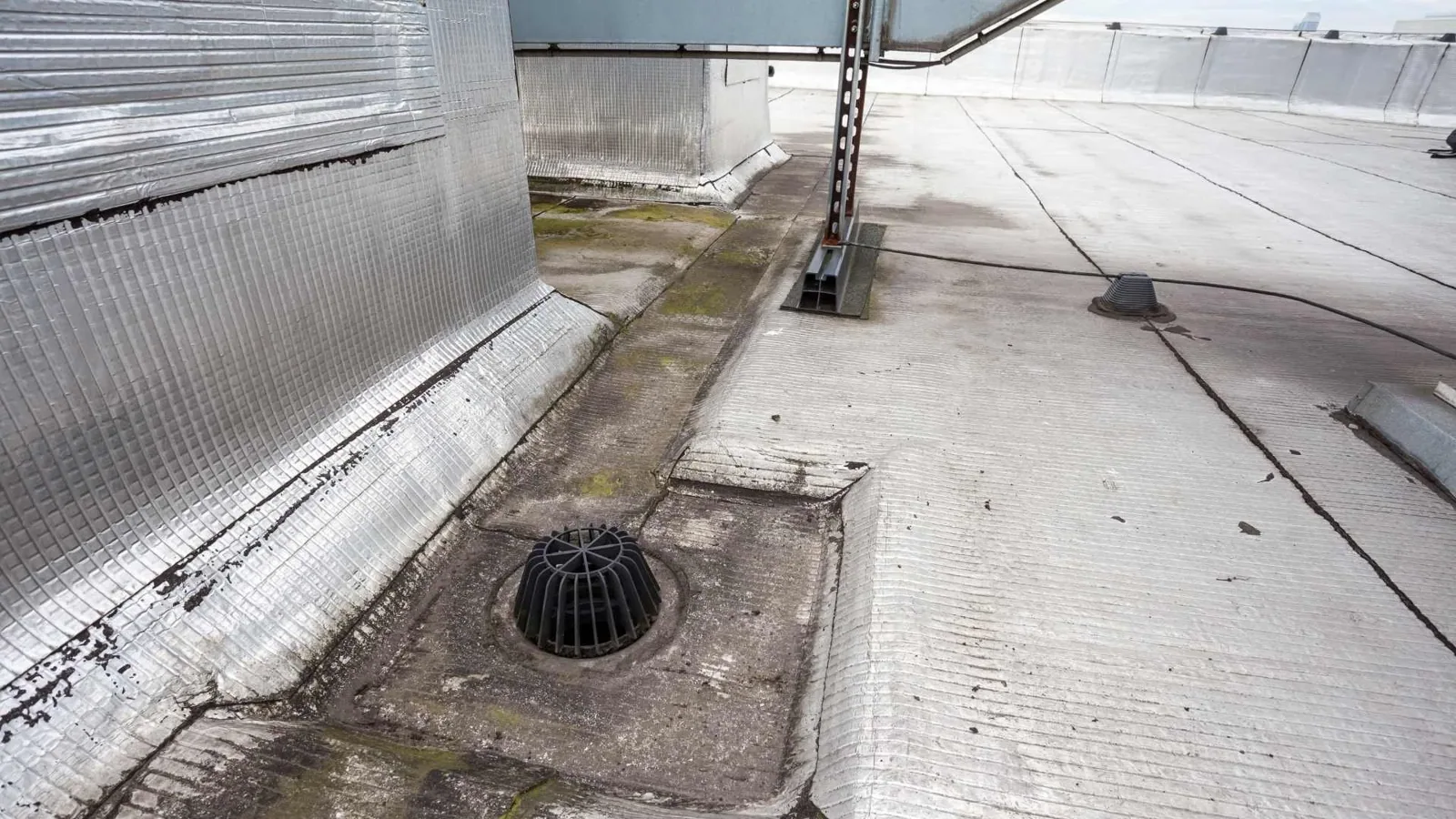
Tracing and correcting the roof leak can include examination of the connected drain path. A blocked inlet may hold water against a weakened joint, so closing the joint without restoring flow can leave the assembly exposed to the same stress. We identify both tasks when they are related and record any separate concealed question that would change the repair limit.
How do separate Whittier locations keep their own roof decisions?
Whittier's mapped employment grid includes Whittier Boulevard, Greenleaf Avenue, Broadway, Lambert Road, Santa Fe Springs Road, and I-605. At each property, the available entrance, staging position, and overhead clearance determine roofing delivery. We confirm those conditions with the site contact before scheduling a lift. A useful proposal relates access tasks to the work area rather than simply describe the building as accessible from a major route.
Service in the Whittier Boulevard corridor and Uptown Whittier can be coordinated for one manager. Each roof still receives a separate diagram and condition record. Different operating windows, rooftop equipment, and retained assemblies can call for different scopes. Grouped inspections help the owner compare priorities while preserving the building-specific removal and protection decisions needed to complete the work.
What determines whether existing material can stay?
A soft receiver or wet insulation found beneath a split can change a contained patch into deeper removal. We confirm moisture where its extent matters to the choice and inspect the attachment of surrounding material. Infrared screening can help locate positions for examination under suitable conditions. Controlled checks then establish which layers can remain and how the new assembly will join them without trapping an unresolved wet zone.
A suitable coating receiver needs corrected defects, stable attachment, and acceptable adhesion. Recover requires assessment of drainage, loading, moisture, retained layers, and applicable construction limits. Removing and renewing the roof assembly is the comparison where sound material cannot otherwise be reached. The owner receives the specific preparation and removal tasks for each viable option, including how equipment and occupied space affect the sequence.
Can outlet work be completed before broader renewal?
A damaged drain connection can be corrected as a defined task when the surrounding receiver is suitable. We inspect the fitting, membrane tie-in, strainer, and accessible discharge, then trace the water route approaching it. Debris blockage needs cleaning; a low plane remaining afterward needs another diagnosis. Secondary drainage stays open while work proceeds, and discarded material is kept away from the inlets.
Newport Beach Harbor's normal precipitation is concentrated in cooler months, with very little summer rainfall. That nearby coastal pattern provides scheduling context, while the conditions and forecast at the Whittier building determine actual installation. Repairing roof drainage connections ahead of a larger project may reduce an immediate opening without settling the condition of the rest of the roof. We identify what that local task corrects and which renewal decisions remain.
What needs an owner decision before materials arrive?
Roof height, staging limitations, number of separate defects, insulation removal, and curb work affect cost and duration. We list those tasks with the condition finding that requires them. A larger alteration can also involve permit and energy requirements affecting the chosen assembly. California's current energy standards can apply to covered nonresidential alterations, so the relevant material and insulation decisions need resolution before procurement.
Once work begins, the daily dry-in boundary controls removal. Another trade's equipment change receives a protected handoff and final roofing connection after geometry is settled. Completion photographs identify the repaired detail and its position, while remaining drainage or equipment tasks keep a next action. A return check compares the same roof zone with later room observations and any changes made after roofing was completed.
Our urgent response is available through overnight hours, weekends, and holidays for active water entry. Safe access and interior protection come first; temporary work leads into a permanent correction when installation conditions allow. Keep the room, time, and progression of each interior report with the roof repair record. That comparison is useful after drying or finish restoration changes the visible ceiling condition.
Commercial Roofing Questions
Can an office roof repair avoid a building-wide closure?
A contained work area may be possible when overhead hazards, access, and interior exposure can be separated. We establish that boundary with the manager before opening the roof. Equipment shutdowns or shared routes can still require a short coordinated restriction even when other rooms remain usable.
How should a manager prioritize roofs at different Whittier properties?
Located findings distinguish active openings from preventive corrections and larger renewal needs. We connect each action to its interior consequence and any moisture or attachment question still unresolved. The owner can then approve immediate protection while arranging the testing and access needed for longer-term decisions.
Will an infrared image define the complete removal boundary?
Screening patterns direct confirmation under suitable survey conditions. We examine selected positions to establish the actual layers and moisture state before finalizing removal. The proposal ties its retained and removed areas to those findings, keeping screened patterns separate from confirmed construction condition.
What information is useful after interior finishes are restored?
The original room position, leak timing, and roof repair location should remain in the building file. We add completion photographs and return-check findings so a later symptom has a useful comparison. New equipment work or roof penetrations should be recorded as changes to that same history.

Proudly Serving Huntington Beach and Nearby Cities
Commercial Roofers Huntington Beach
Huntington Beach, Westminster, Seal Beach, Fountain Valley,
Garden Grove, Newport Beach and nearby Orange County cities