
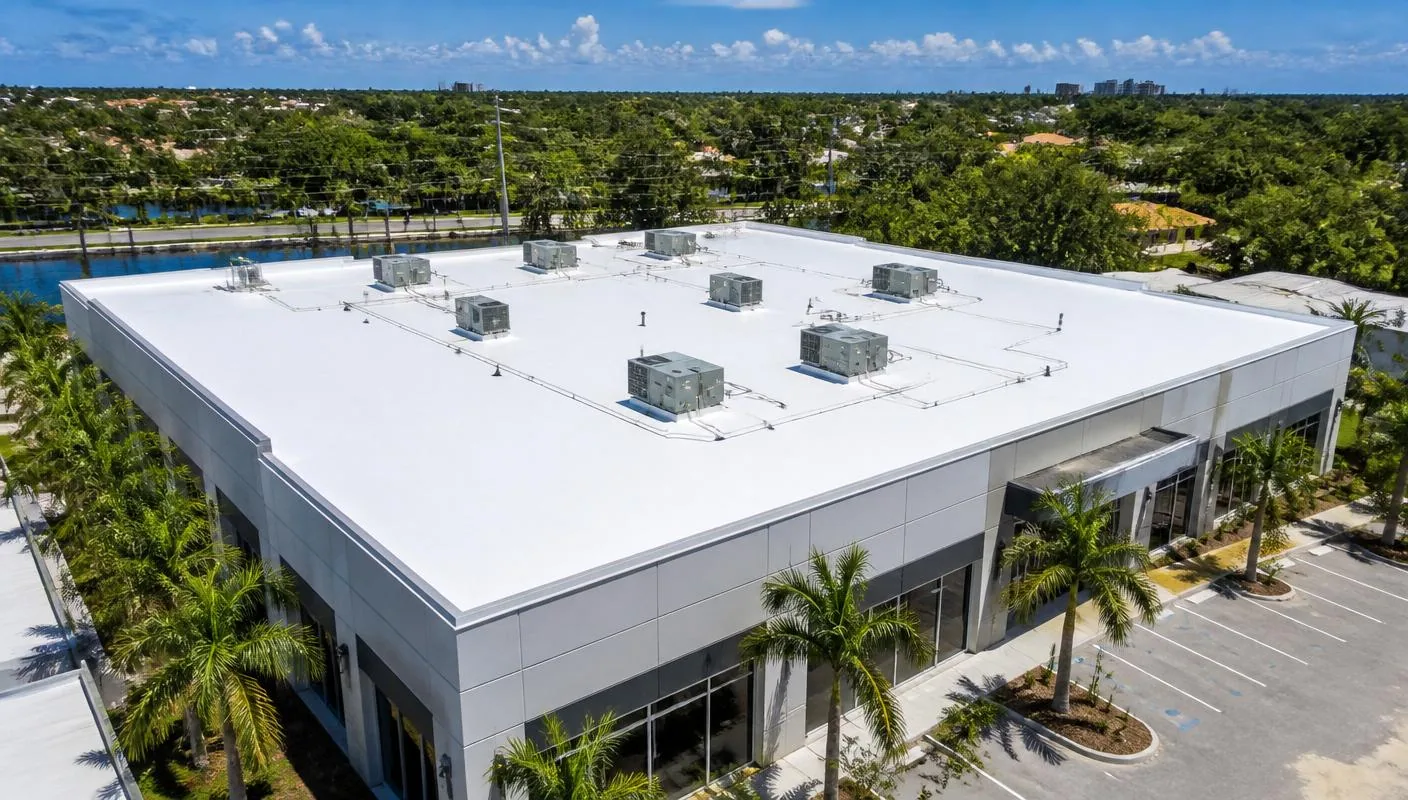
Cool Roof Installation in Huntington Beach, CA
Before choosing a reflective finish, we establish what the existing roof can retain and which building goal the proposed work must serve. We inspect membrane condition, moisture, drainage, edges, and penetrations, then compare a compatible cool-roof finish with other repair or replacement paths. Newport Beach Harbor normals show a cool marine baseline, with relatively moderate daily highs and most normal rain concentrated in winter. Those regional readings describe air and rainfall patterns, not the temperature or energy use of a specific roof.
The commercial setting in Huntington Beach, CA, ranges from industrial buildings in the Northwest Industrial Subarea to visitor-serving properties near Beach Boulevard and Pacific Coast Highway. Each has its own operating hours and roof conditions. We document the reason for considering reflectivity, identify any energy-code question for the design team, and state what the selected work will change. The first step is an inspection that tells the owner whether the existing surface can accept the proposed system.
What does the current roof allow?
A cool-roof coating is only an option when the membrane or substrate is dry, sound, and suitable for preparation and adhesion. We look for open seams, trapped moisture, loose surfacing, damaged flashings, and prior coating layers that could affect the bond. Areas with ponding water or repeated movement need correction before a finish is applied. The scope marks repairs and exclusions separately so the owner knows what the coating is intended to address.
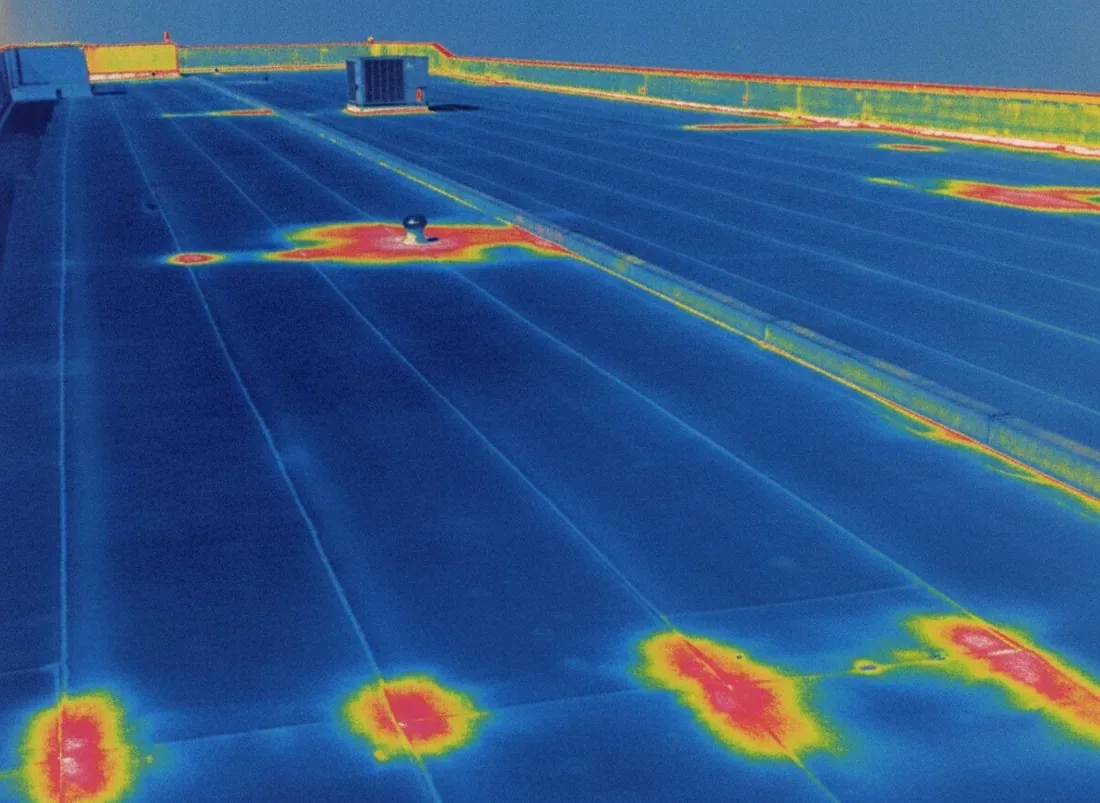
A commercial roof inspection records the field condition, while an infrared moisture survey can help locate areas for confirmation when wet insulation is suspected. Test results guide the preparation limit and the material decision; they do not substitute for opening or verifying a questionable area when the assembly remains uncertain. The repair boundary should include details that connect the roof field with curbs, walls, drains, and edges.
Which performance goal should the finish serve?
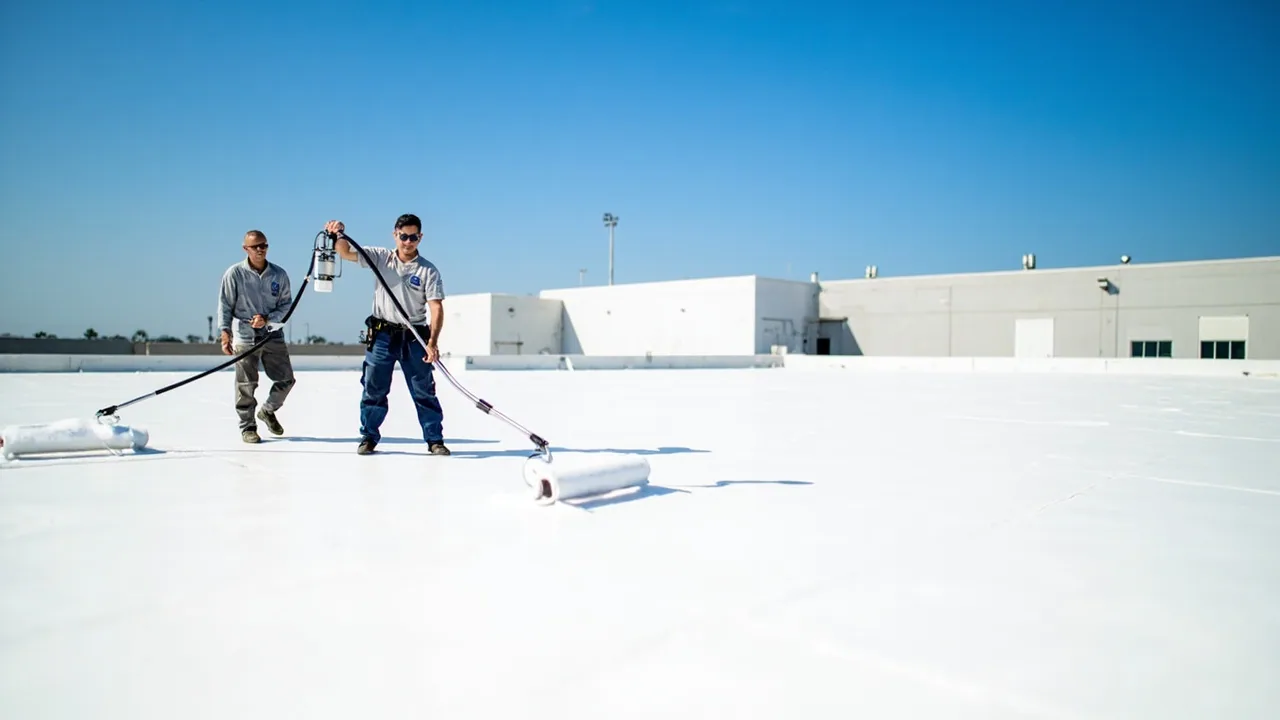
Reflective finishes reduce the amount of solar energy absorbed at the roof surface, but that characteristic alone does not predict a building's utility use or indoor temperature. Insulation, air movement, roof color, equipment, operating hours, and building controls all affect the result. We clarify whether the owner's priority is to meet a project specification, renew a serviceable surface, or coordinate a broader energy upgrade before recommending a material.
California's 2025 Building Energy Efficiency Standards apply to covered nonresidential permit applications submitted on or after January 1, 2026, including covered additions and alterations. The design professional and local building department determine how the standards apply to the project. We provide roof assembly information and coordinate the roofing scope; we do not replace energy modeling or code review. A roof insulation assessment can help the team review substrate, insulation, and cover-board conditions alongside the finish choice.
How should the coating match the assembly?
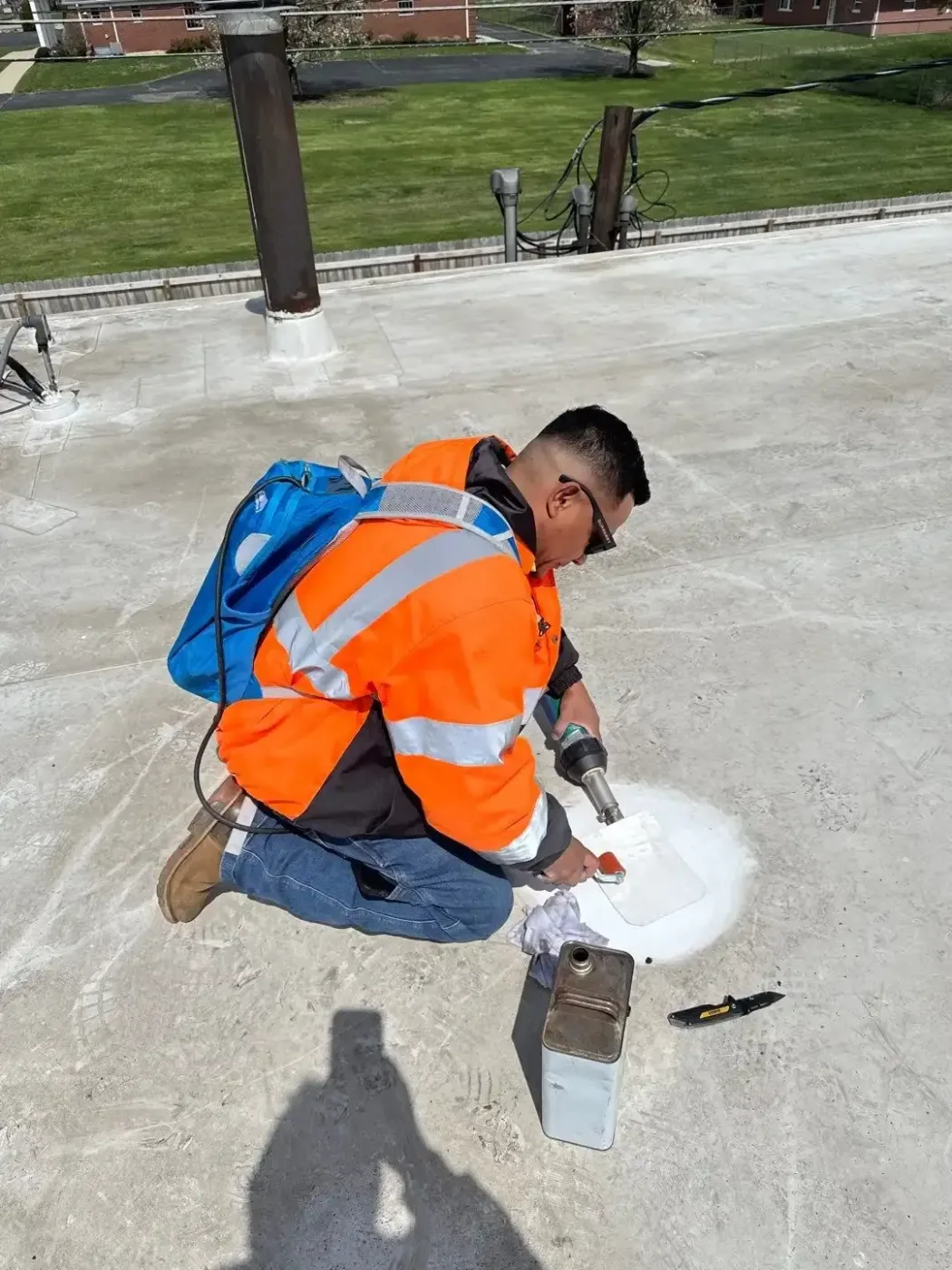
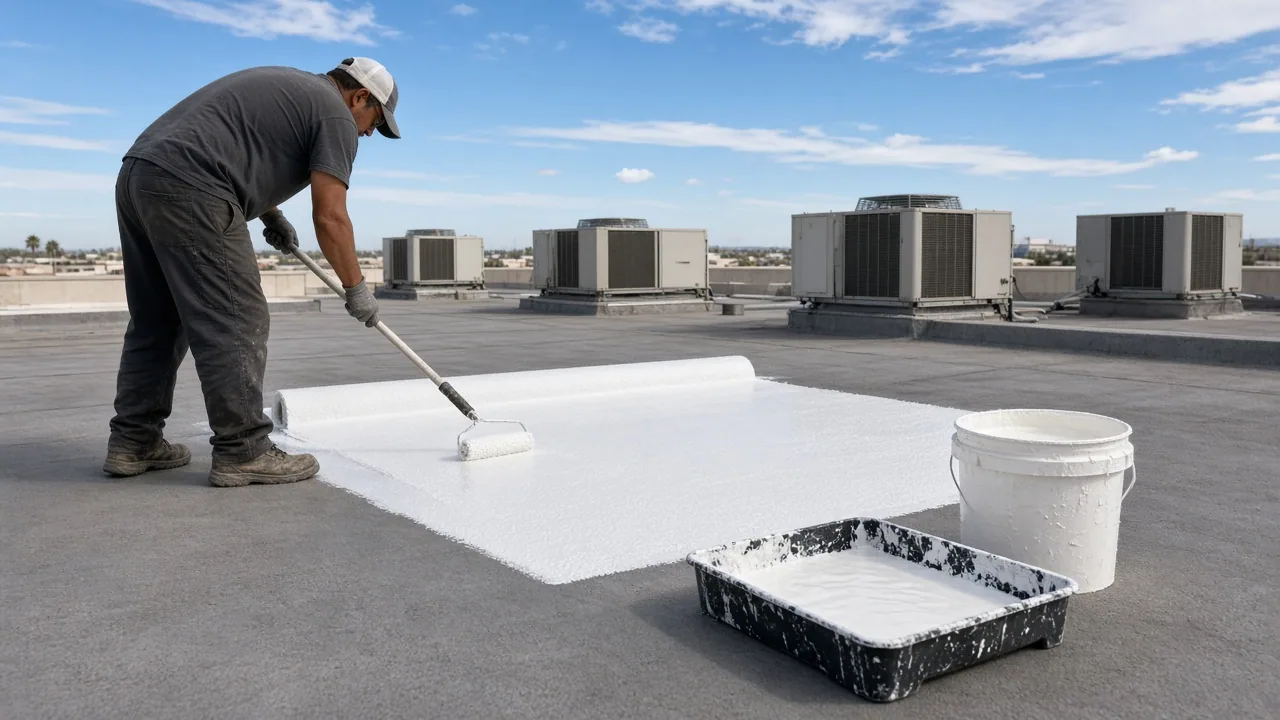
Coating selection depends on the existing membrane, its surface preparation, moisture condition, and details. We verify compatibility with manufacturer instructions and project documents, then identify where primer, reinforcement, or repaired flashing is required. An acrylic roof coating or silicone system may suit different conditions; neither is appropriate by default for every roof. We document the selected system and the substrate it will cover.
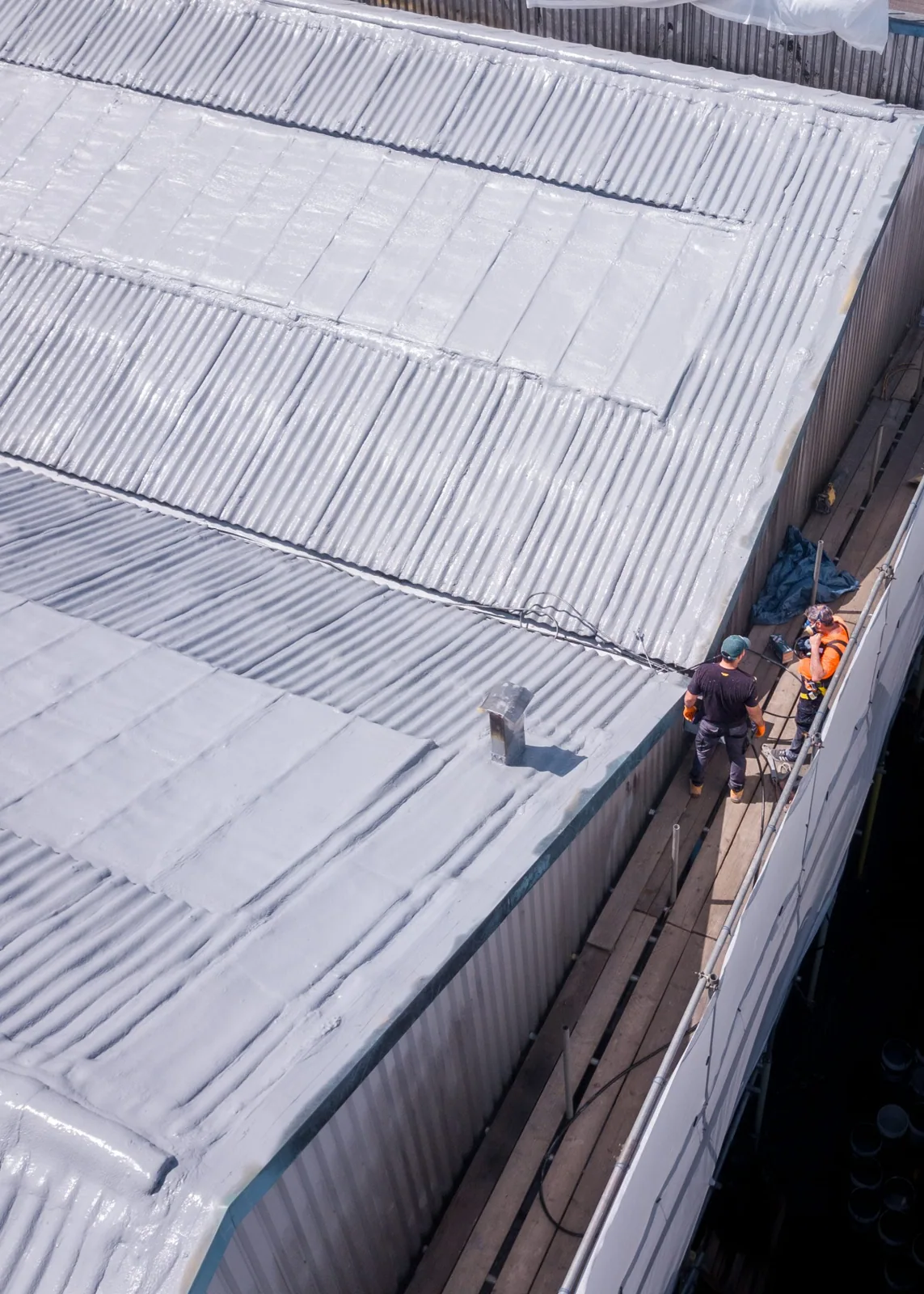
At a roof with open seams or failing penetration details, coating over the defect can conceal rather than correct the water path. We repair those locations and confirm surface readiness before application. Film thickness, coverage, cure conditions, and detailing follow approved product requirements. If the existing system is not a suitable coating base, a roof restoration assessment can compare a broader renewal or replacement scope instead of forcing a coating into the plan.
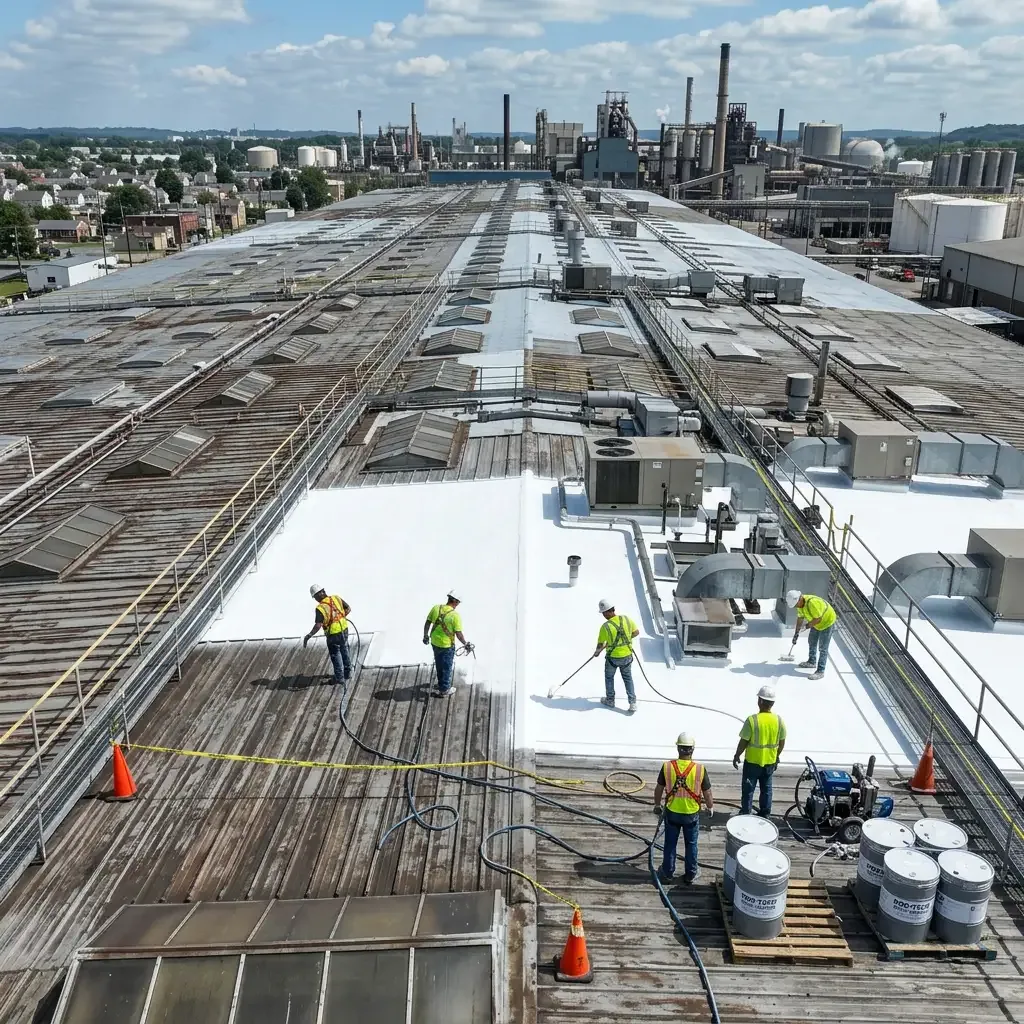
At the perimeter, the coating has to end at a compatible edge detail rather than form a thin film over loose metal or failed sealant. We check terminations, drains, curbs, and vertical transitions during preparation and note which components need separate repair. The work plan identifies areas that must remain clear during application and how pedestrian or equipment access will be controlled. These boundaries help the crew leave each completed roof zone continuous and traceable.
When does Huntington Beach weather affect application?
Newport Beach Harbor normals average most precipitation in the cooler months, including 2.20 inches in January and 2.38 in February, while summer averages are near zero. We use the pattern to plan work windows, but we check the project forecast and surface conditions before applying any material. A cool coastal day is not proof that a coating will cure as expected; substrate temperature, moisture, dew, and product instructions still govern the work window.
Santa Ana events can bring warmer, drier offshore conditions and affect coastal temperatures. We plan crew timing and exposed-area protection around the forecast rather than assuming the coast has one steady climate. The Pacific Coast Highway coastal corridor includes visitor-serving uses, while the industrial subareas have their own staging needs. We confirm site-specific access, protect adjacent equipment, and close each prepared area according to the approved sequence.
What if coating is not the right renewal path?
Replacement may be a better fit when insulation is wet, the membrane has widespread separation, or critical details cannot be restored as part of surface preparation. Retaining old layers below a new reflective assembly requires suitable moisture findings, sound securement, and details that accommodate the added elevation. We compare those options using the marked condition, removal assumptions, drainage details, and project requirements. A replacement scope should show the new assembly and transitions; a recover review should establish that the existing roof can remain.
Cost and schedule change with preparation, repairs, access, protection below, penetrations, roof area, and weather. We state these drivers in the estimate and identify any test or design approval needed before application. For buildings in the Northwest Industrial Subarea or along Huntington Beach's commercial corridors, the site contact confirms operating hours and material staging. We document assumptions rather than promise a generic reduction in energy use or future maintenance.
What should the owner retain after application?
Closeout should identify the system installed, areas prepared, repairs made before coating, application limits, photographs, and any surface or weather condition that changed the sequence. We provide a marked roof plan and note whether details outside the coated area still need work. If follow-up is recommended, it should identify what to check, such as a repaired seam, curb flashing, or a drainage path.
Share the roof plan, prior coating history, leak reports, equipment locations, access contact, and project goal when requesting an inspection. We will determine whether a reflective finish fits the existing roof and give the owner a clear comparison with repair, recover, or replacement. That record can support maintenance and energy-code coordination without overstating what the roof finish alone will deliver.
Commercial Roofing Questions
Will a reflective coating lower our energy bills by a set amount?
Roof color alone does not establish a savings figure. Building insulation, equipment, controls, schedules, and climate all affect energy use; an energy professional can evaluate the expected building result.
Can a cool-roof coating go over any existing membrane?
No. We verify the substrate, moisture, adhesion, and manufacturer requirements first, then identify preparation and repair work needed before application.
Do the 2025 energy standards apply to every roof coating project?
Applicability depends on the permit, scope, and project documents. The design team and building department confirm requirements for the specific nonresidential alteration.
What if the roof has ponding or wet insulation?
We document those conditions and address them before treating the surface as coating-ready. A moisture test or drainage correction may need owner approval first.
How is the application window selected?
We check the current forecast, substrate condition, and product instructions for temperature, moisture, and cure requirements, then set the exposed-area sequence.
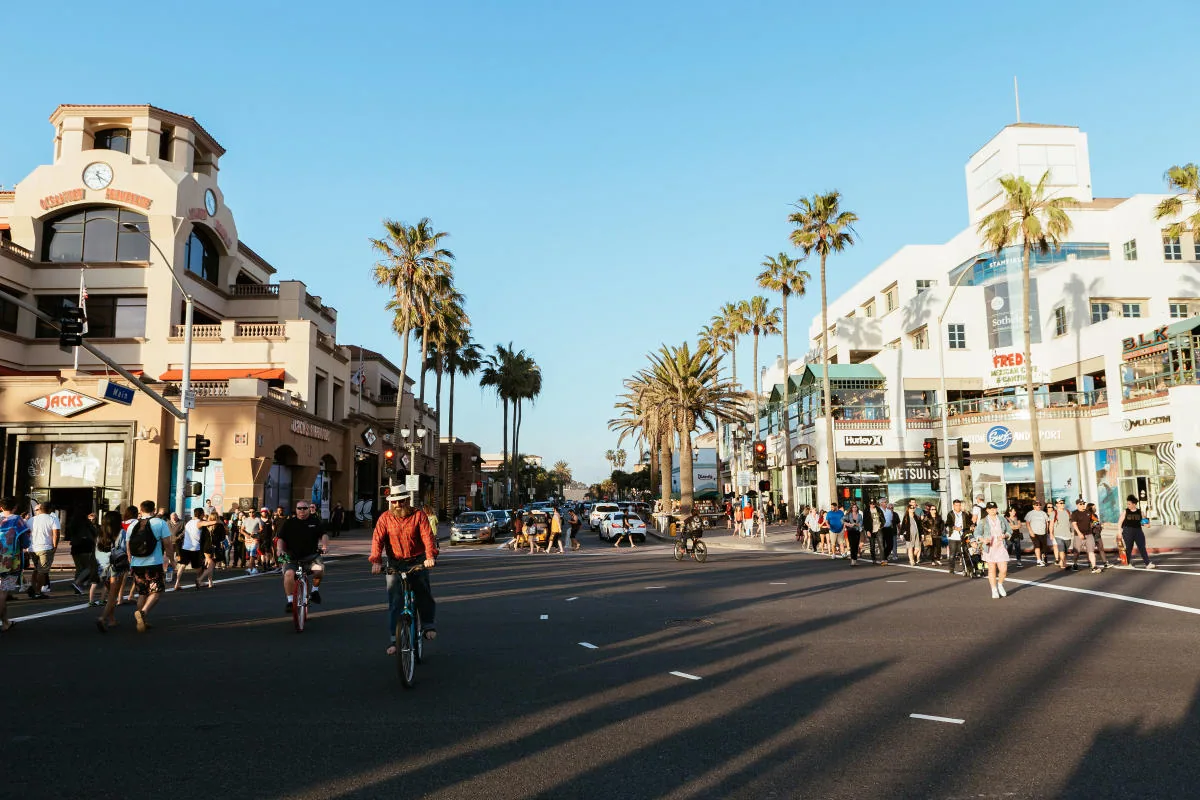
Proudly Serving Huntington Beach and Nearby Cities
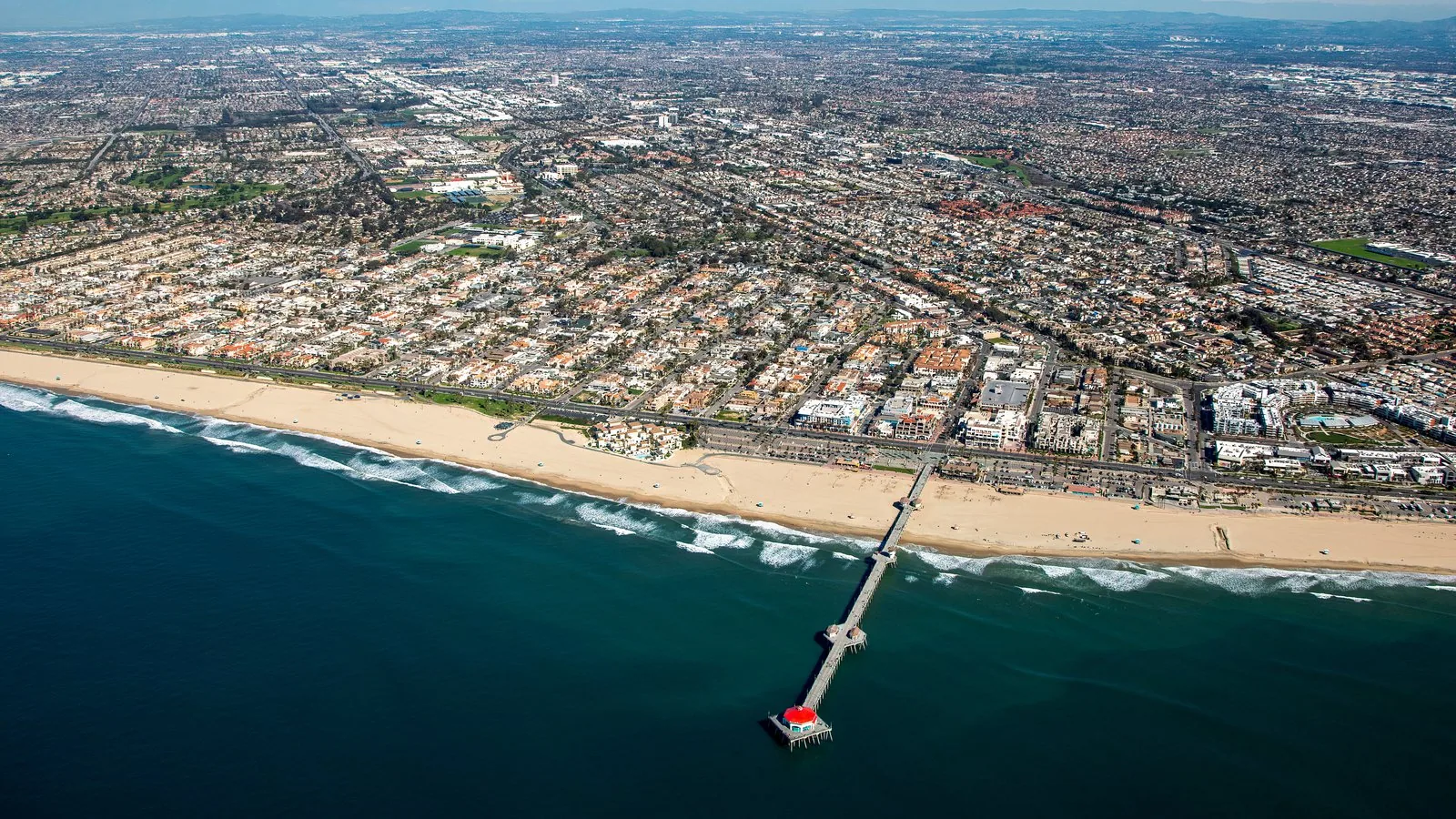
Commercial Roofers Huntington Beach
Huntington Beach, Westminster, Seal Beach, Fountain Valley,
Garden Grove, Newport Beach and nearby Orange County cities