
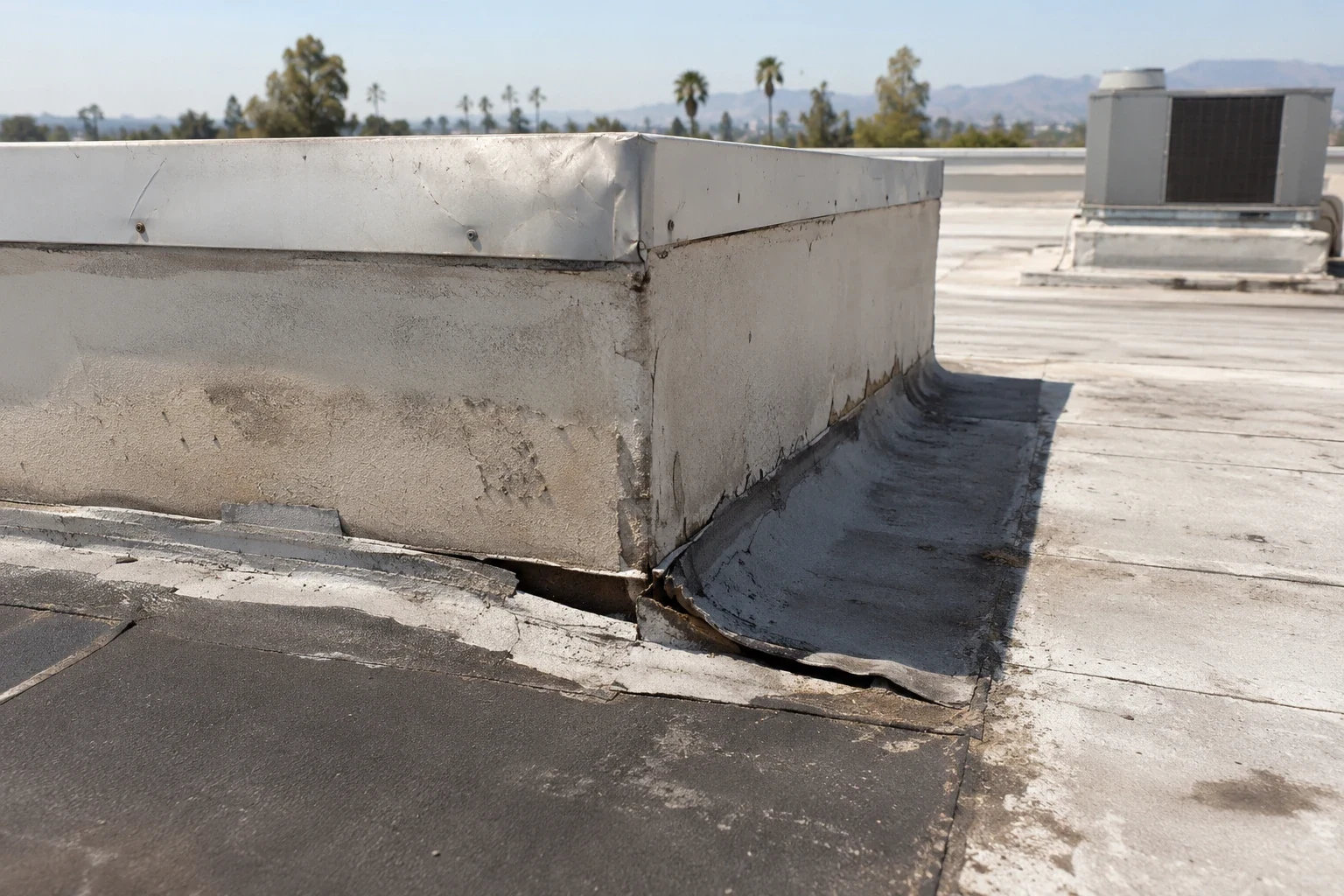
Flashing Failure Repair in Huntington Beach, CA
A gap beneath the counterflashing leaves a wall connection exposed even when the roof field looks intact. We examine the upper termination and the membrane below it before choosing a patch. Flashing failure repair in Huntington Beach, CA starts by locating the reported interior water and establishing safe access to the wall, curb, or penetration involved. The site contact identifies nearby equipment and rooms needing protection so the opening can be assessed without creating another operating problem.
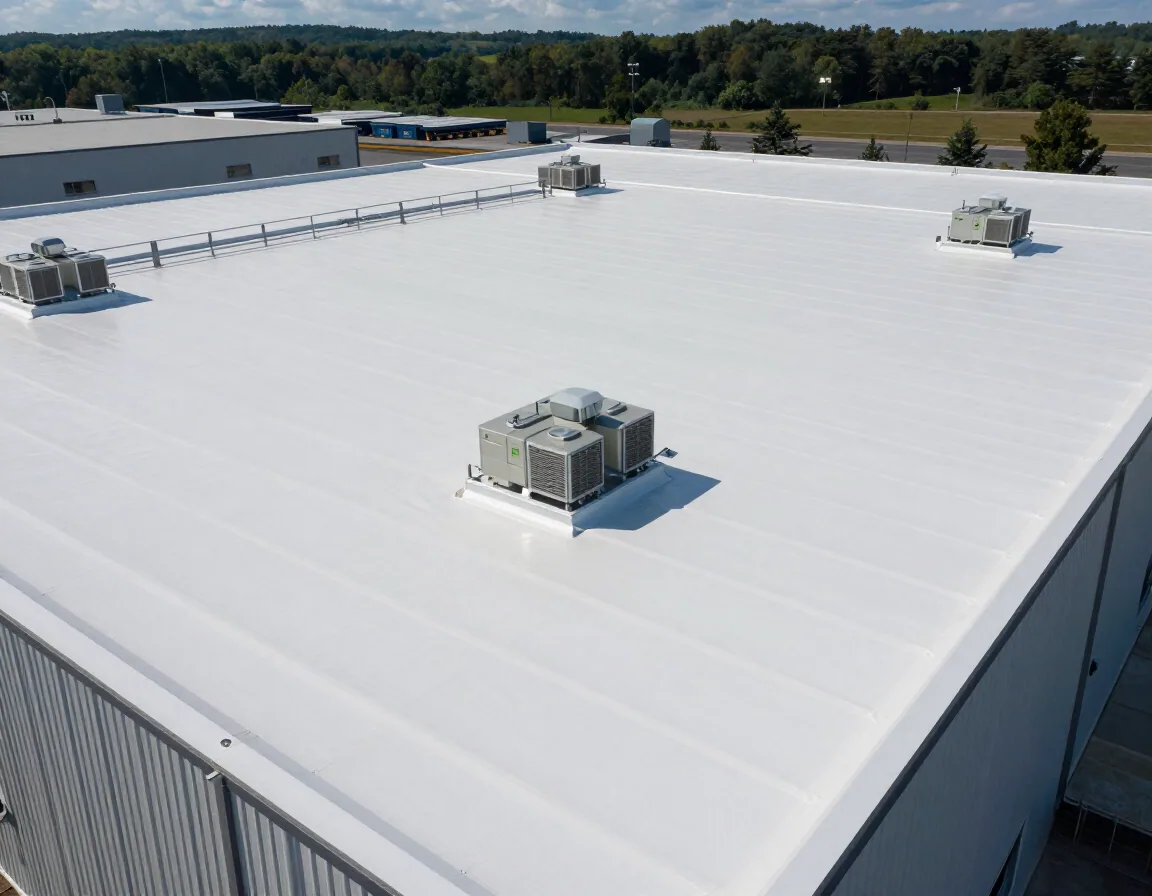
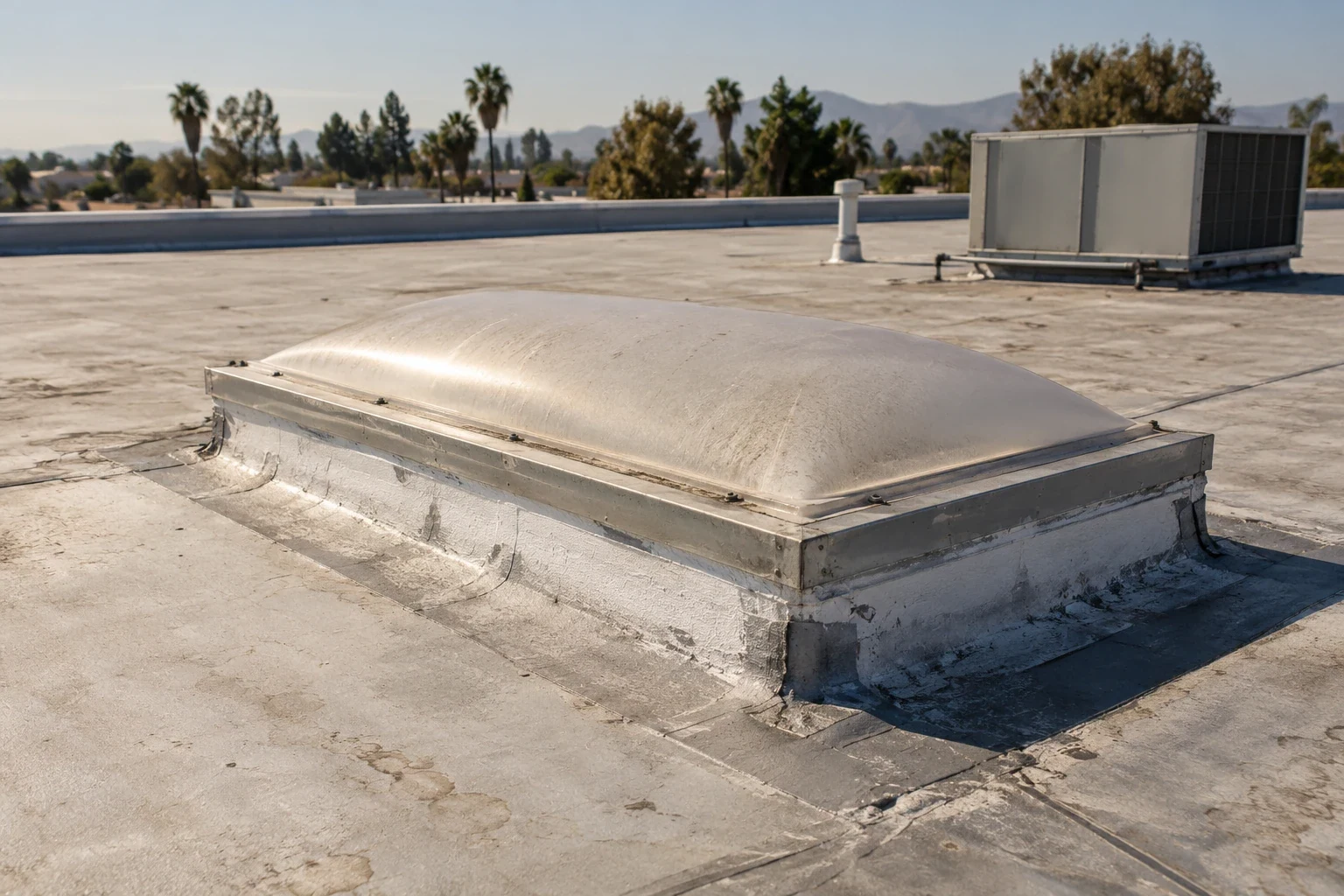
Commercial Roofers Huntington Beach restores roofing connections at parapets, rooftop units, skylights, and pipes. We distinguish failed roofing material from a moving support, loose metal, or water entering through an adjoining wall. Each condition leads to a different repair extent. A temporary cover can protect an active opening when conditions permit, with emergency response available throughout the week and overnight, including holidays. The permanent detail follows the inspected connection rather than the outline of the previous patch.
Where does the flashing stop shedding water?
Water running down a wall should pass over the flashing termination, not behind it. We inspect the fastening, counterflashing, sealant joint, and adjoining wall surface to find where that path changes. A loose termination bar or missing cover can expose an otherwise serviceable membrane. Cracks higher on the wall may require another trade to correct the entry. We document the connection from top to bottom so the roofing repair reaches the part that has actually failed.
At a curb, corners and height changes need close examination. A wrinkle, split, or unsupported transition can become the opening while the straight runs remain sound. We check the membrane tie-in and nearby seams that have opened beside the flashing. Water held near a low curb also calls for assessment of the adjoining ponding area. The scope should connect the vertical repair to the roof field and drainage rather than addressing each symptom in isolation.
Is the roof connection failing because the support moves?
A rocking equipment base, unstable pipe support, or displaced metal edge can pull at flashing after it has been repaired. We examine the support condition and identify movement needing correction before new roofing material is installed. Sealant placed over a moving joint can separate again because it has not addressed the cause. Structural attachment questions are recorded for the appropriate review, while mechanical access and shutdown needs are coordinated with the building team.
Huntington Beach’s Northwest Industrial Subarea includes offices, business parks, industrial-spec buildings, and commercial pads. Within the Northwest Industrial employment district, roof equipment and tenant operations vary by property. We confirm the unit footprint and access clearance at the inspected building, then coordinate curb and support corrections where the findings require them. An altered unit can also leave a flashing height or corner arrangement that needs revision before the roof connection is closed.
Pipe penetrations need room for compatible flashing without restraining movement the detail is intended to accommodate. We inspect old boots, clamps, pitch pockets, and surrounding membrane as applicable to the installed system. Abandoned penetrations should receive a complete closure suitable for the assembly. Removing the visible pipe and spreading material over the remaining hole does not establish a continuous roof or a sound supporting surface.
How does the installed material change the repair?
A thermoplastic flashing connection needs compatible components and a properly prepared welded tie-in. Rubber membrane flashing uses its own cleaning, bonding, and seam treatment. Bituminous roof details require a repair suited to the existing layers and application method. We identify the material before removing the failed area, then define how far the work must extend to reach a sound receiver. A mixed roof needs attention to the transition between materials as well as the damaged detail.
For TPO roof flashing, surface condition and welding preparation affect the new connection. For an older detail with accumulated patches, removal may be needed to inspect concealed moisture or poor attachment. Wet insulation cannot be made dry by covering its upper edge. We explain the testing and removal needed to restore the connection, including any deck or wall condition that must be corrected before compatible flashing can be installed.
What must be closed before the work window ends?
The rainfall record at Newport Beach Harbor is weighted toward winter, with summer averages near zero. That nearby seasonal pattern makes a dry interval useful for exposing and rebuilding roof transitions. The daily forecast, receiving surface, and size of the opening still control the work. A wall detail left unfinished can admit water behind the roof assembly, so the planned removal must fit the available closure window.
Santa Ana events can bring dry offshore winds and warmer coastal conditions. We recheck handling of loose flashing material, application requirements, and roof access if those conditions develop. Along Beach Boulevard and Pacific Coast Highway, Huntington Beach identifies visitor-serving businesses with operating needs distinct from industrial space. At an occupied property, the site contact helps separate customers from wall-side staging and any lift position. The repair plan states which connection will be permanently closed that day and which area remains protected for another visit.
What shows that the connection has been rebuilt?
Finished flashing should have a continuous tie-in at the roof and a properly closed upper termination. We inspect the repaired corners and connections, then photograph them from positions that show the relationship to the wall or unit. Skylight and penetration repair also requires attention to the surrounding roof material, not just the visible frame or pipe. Any unresolved equipment or wall correction stays identified rather than being concealed in the closeout.
Costs and timing change with access height, patch removal, wet insulation, equipment shutdown, and how much adjoining material must be rebuilt. We explain those drivers before extending the work. A photo-backed record of the repaired roof connection keeps the finding, removal, completed detail, and follow-up together. After rain, a return check compares the original interior symptom with the repaired location. Future equipment service should use a route that avoids tools and parts bearing against the new flashing.
Commercial Roofing Questions
Can the loose flashing be sealed without removing it?
A localized seal may be suitable where the material and attachment remain sound and the joint is designed for that treatment. We inspect what lies behind the loose edge first. Detached membrane, wet material, or movement requires a different correction, so covering the visible gap should follow the inspected condition rather than replace the inspection.
Why did new flashing split after an equipment change?
A changed footprint, support movement, or service activity can stress the roofing connection. We compare the equipment position with the damaged detail and identify what needs adjustment. Mechanical or structural correction should be coordinated before the flashing is rebuilt so the new roof connection is not placed against the same unresolved movement.
Do wall leaks belong in the same repair as roof flashing?
Water entering higher on the wall can reach the roof termination or interior, making both connections relevant to the report. We inspect the accessible wall-to-roof transition and document evidence of an adjoining entry. The scope separates roofing work from wall work while coordinating the sequence needed to keep the opening protected.
Will replacement roofing need taller curb flashing?
Added insulation or a changed roof surface can reduce the available vertical clearance. We measure the proposed assembly relationship to the curb and check the required detail before installation. If the existing curb needs alteration, that work should be included in the equipment and roofing schedule rather than discovered after the membrane reaches it.
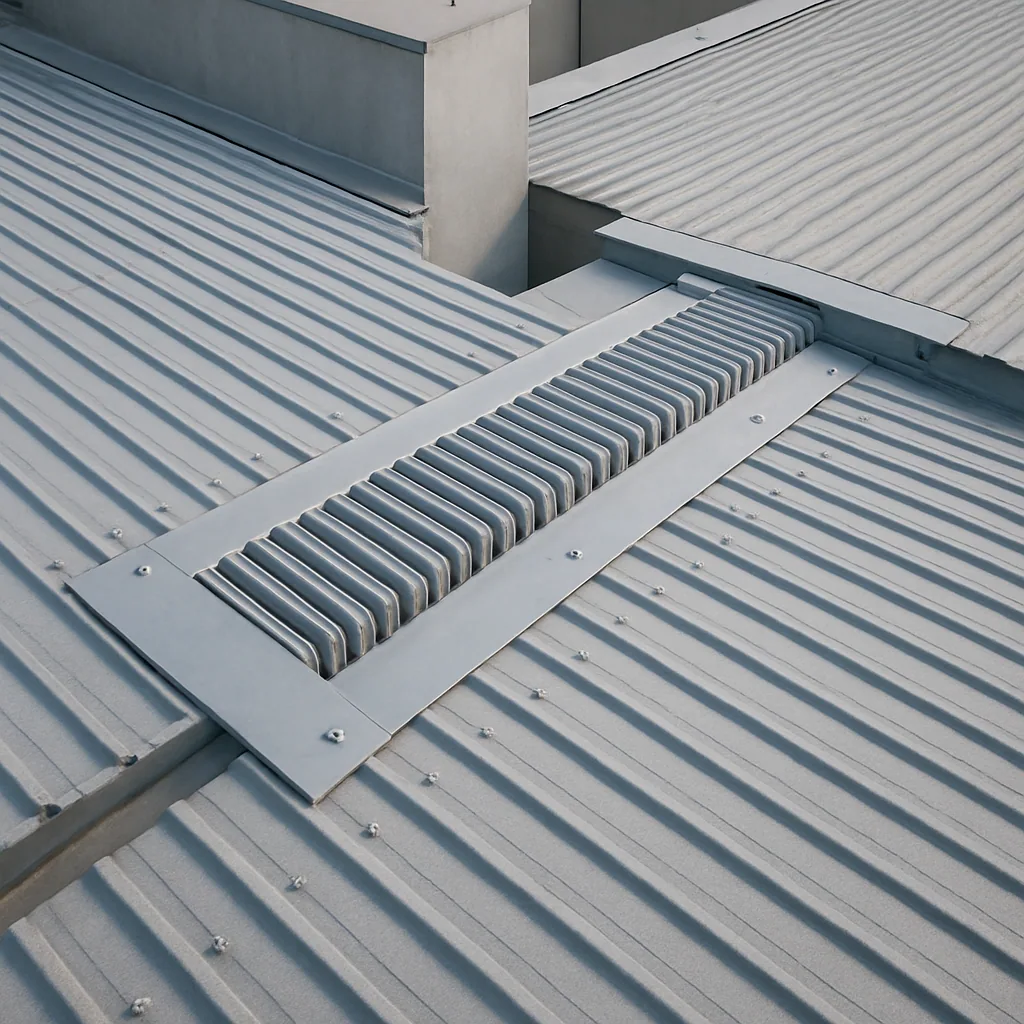
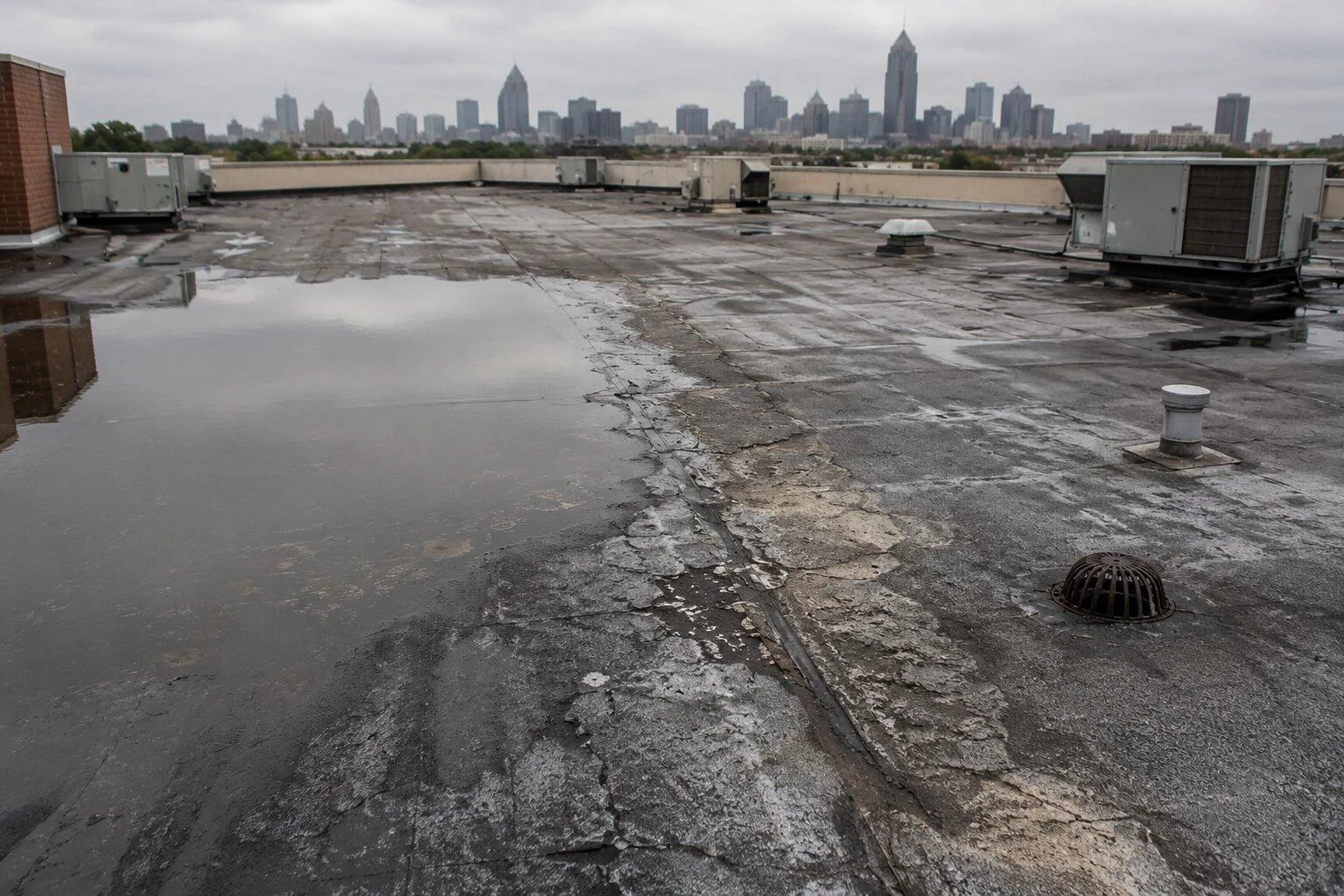

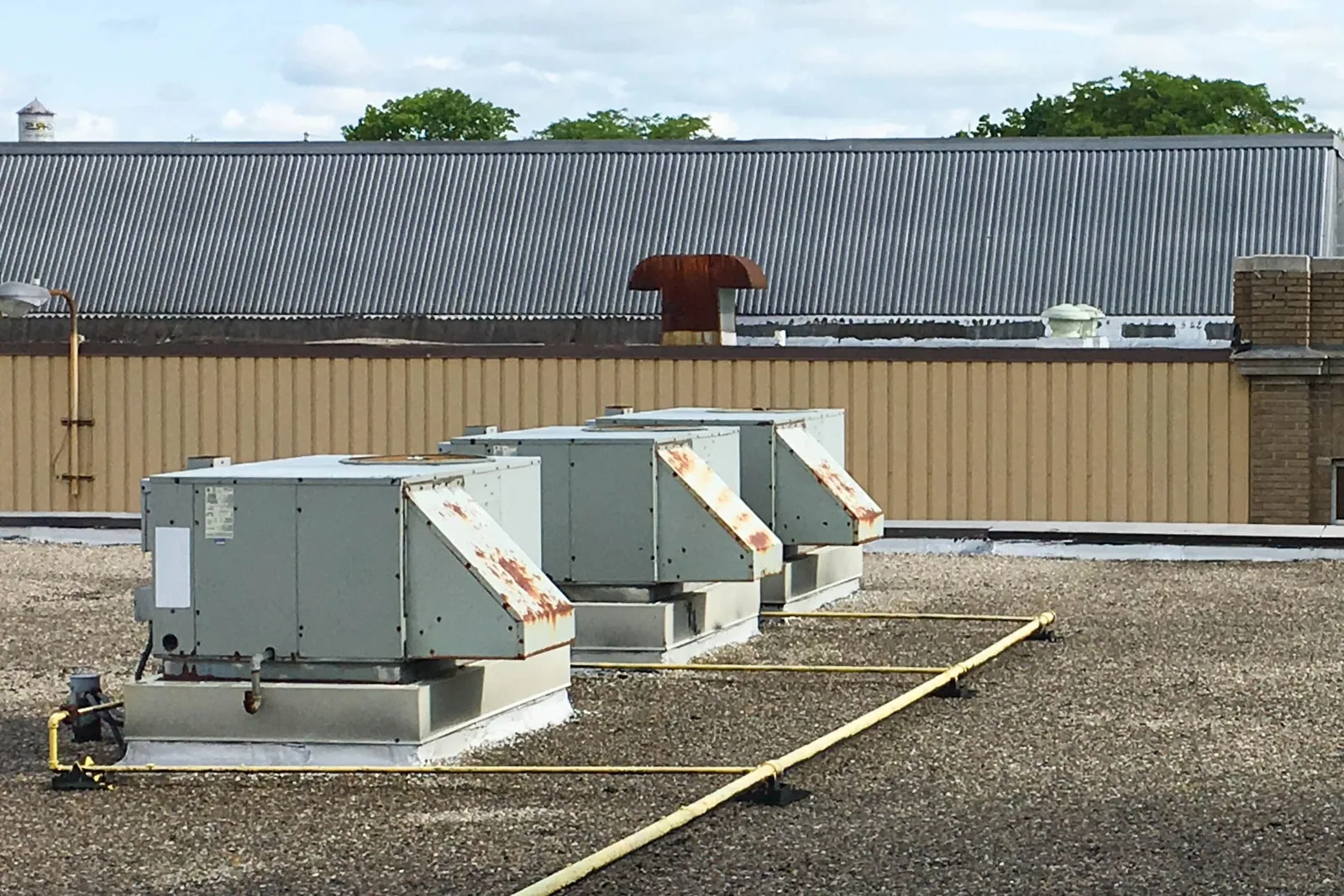

Proudly Serving Huntington Beach and Nearby Cities

Commercial Roofers Huntington Beach
Huntington Beach, Westminster, Seal Beach, Fountain Valley,
Garden Grove, Newport Beach and nearby Orange County cities