
Roof Membrane Puncture Repair in Huntington Beach, CA
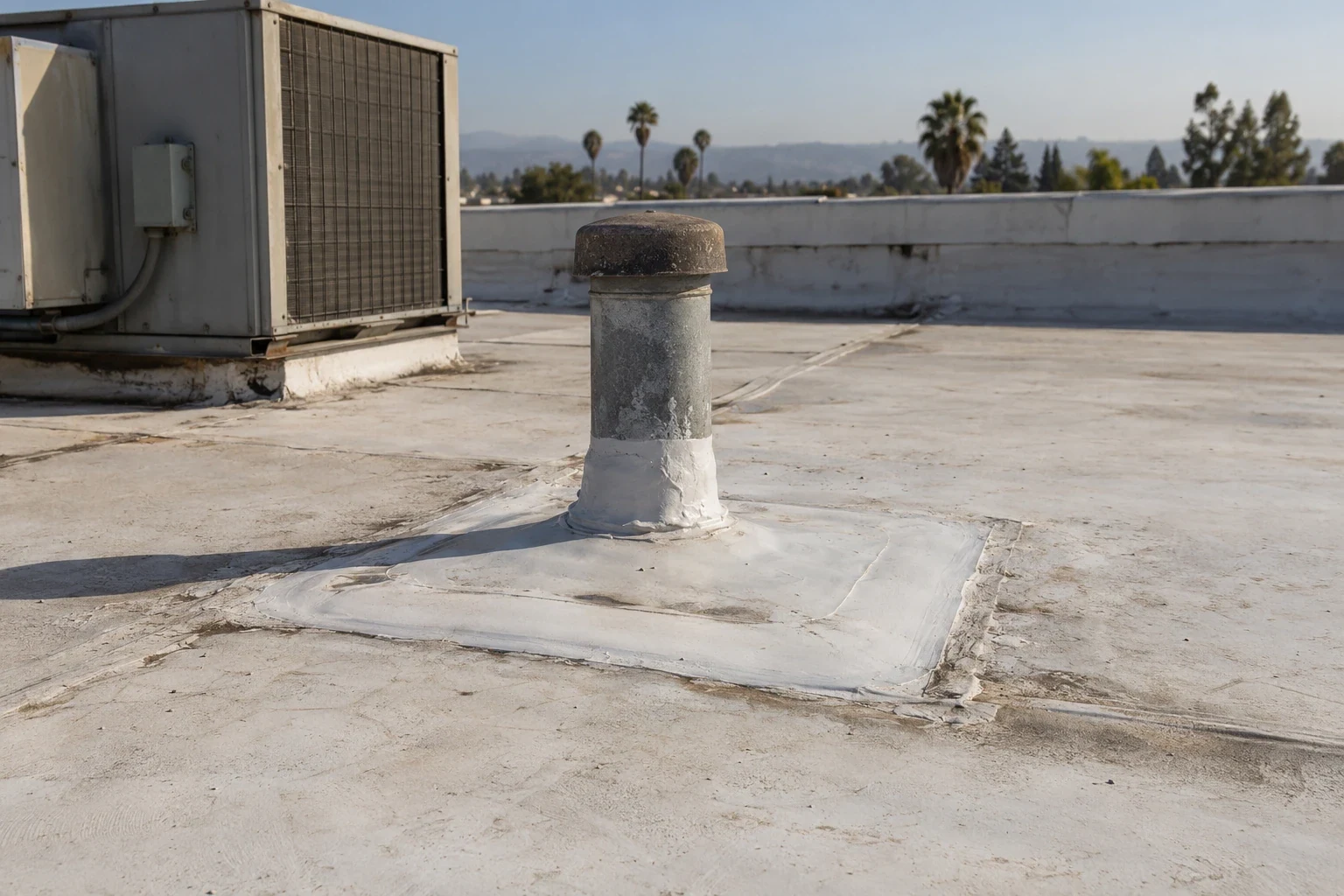
A sharp object beside a fresh roof opening needs to stay out of the repair area until its position has been recorded safely. We mark the puncture, check the space below, and decide whether immediate protection is needed before inspecting the surrounding membrane. Commercial Roofers Huntington Beach repairs roof membrane punctures in Huntington Beach, CA, with attention to the material, the condition beneath the opening, and the activity that exposed the surface to damage.
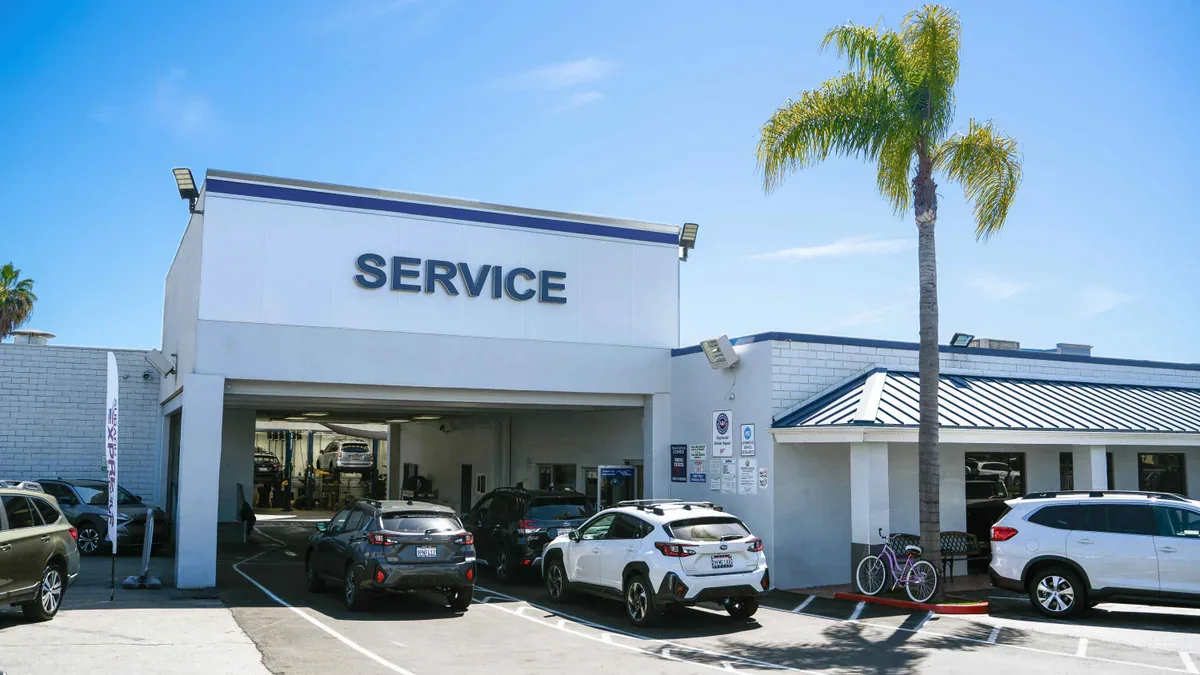
The Gothard Street Subarea combines manufacturing, warehousing, auto repair, retail, and offices. Those different building uses can place service workers, equipment, and maintenance supplies on a roof for different reasons. We establish the actual service route at the property instead of treating all roof traffic alike. A dropped tool, a displaced support, and abrasion beside a unit each call for a different check before the permanent patch is selected.
How far does the damaged surface extend?
A small hole may have a longer split beneath its curled edge, while a scuffed surface may still be intact. We clean enough of the area to examine the opening and inspect nearby seams, corners, and previous patches. The check includes the underside where an authorized opening is needed. A surface mark receives a repair only after the inspection establishes which layers are affected; we do not enlarge sound roofing just because it looks different.
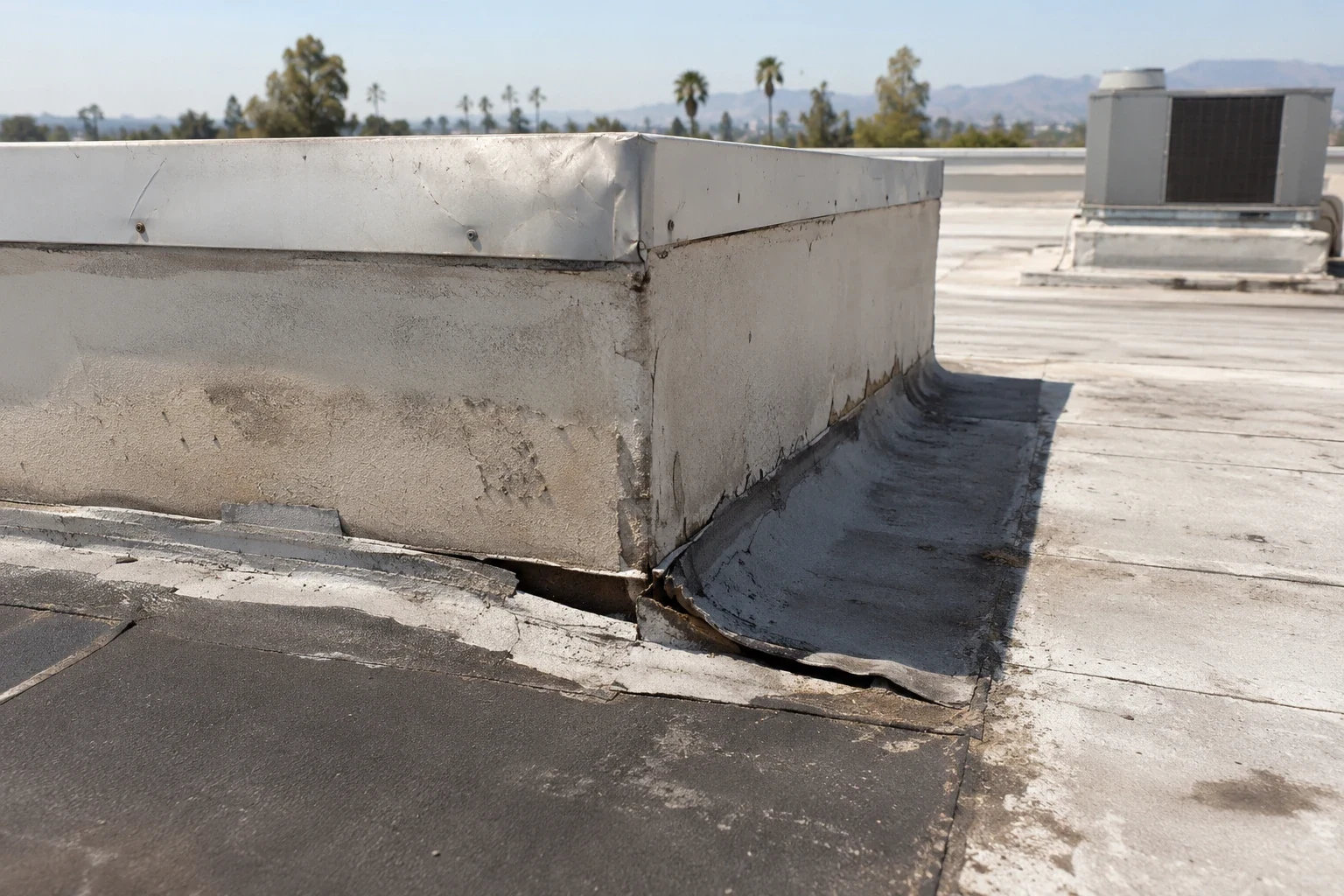
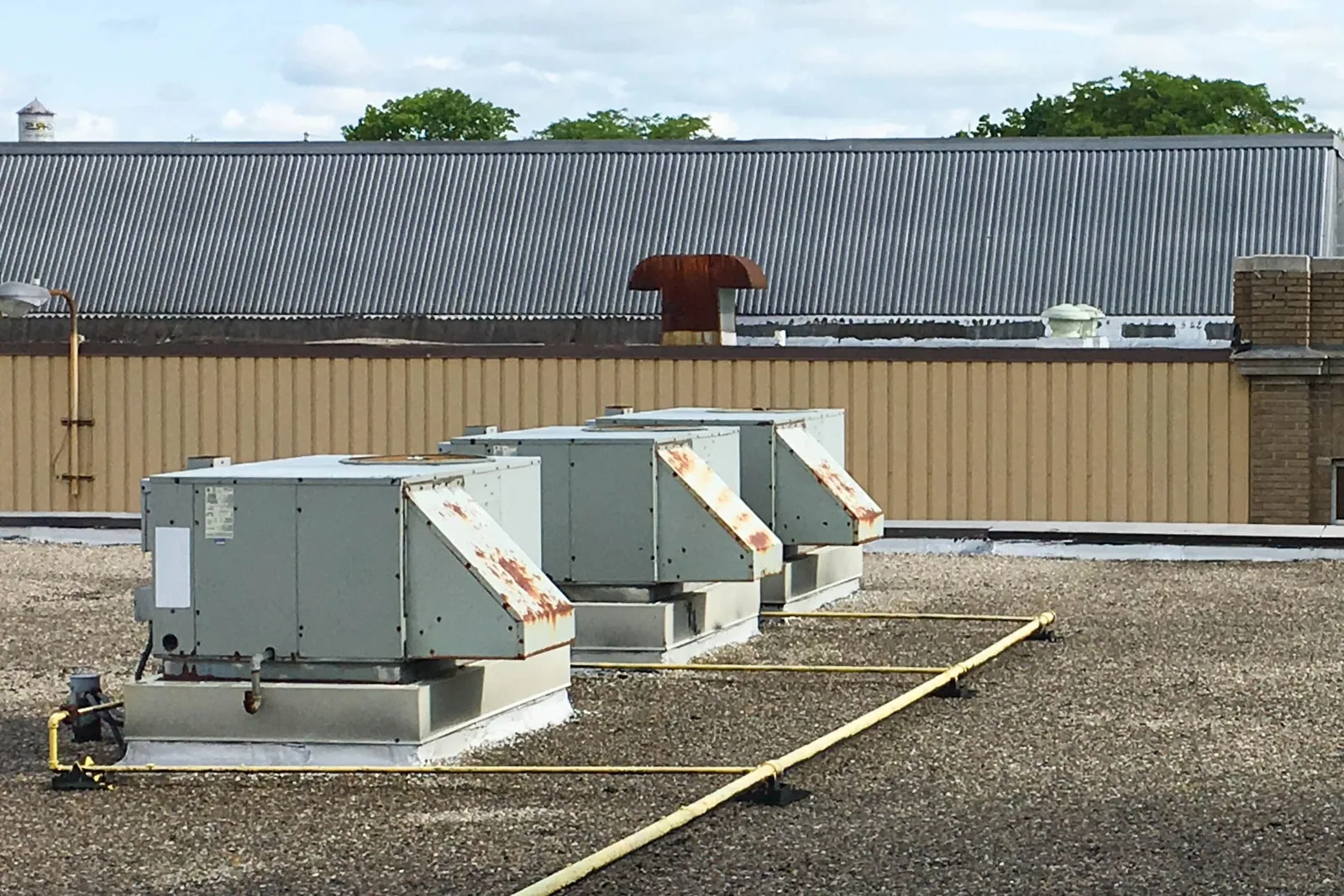
Sharp fragments, metal shavings, and screws can remain beside rooftop equipment after another trade finishes. We remove loose hazards under the agreed work scope and examine their contact points. Repeated damage along a walking route can indicate missing protection rather than several unrelated incidents. An open membrane seam needs a seam repair suited to the joint, while a tear at a curb transition requires repair of the flashing connection. Identifying that difference determines the preparation and tie-in.
Did water reach insulation through the puncture?
A puncture found after rain may have admitted water before anyone reported a ceiling drip. We compare its position with roof slope, nearby outlets, and interior observations. The repair boundary expands if insulation beneath the opening is wet or the substrate cannot support a lasting bond. Wet material should be removed to a defined limit rather than trapped beneath a new patch. The opening must then close with compatible layers and a suitable connection to retained roofing.
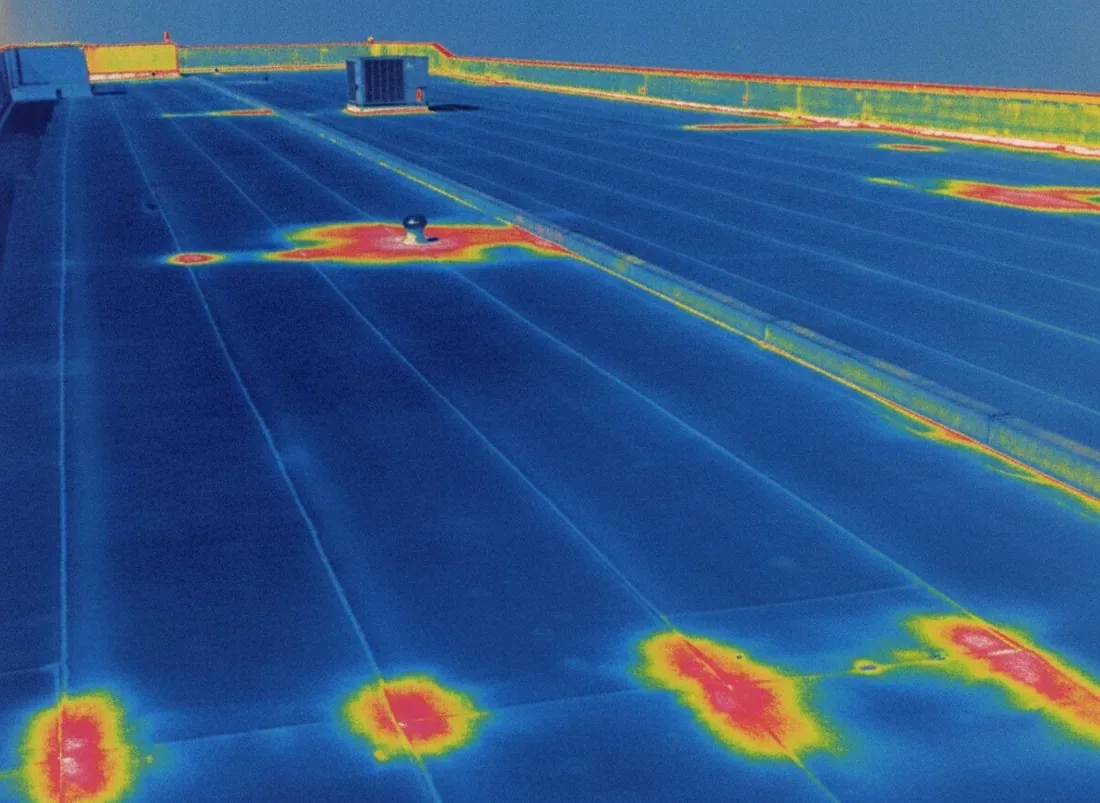
For a larger suspected area, a moisture survey with confirming checks can help determine where sampling belongs if the assembly and conditions suit the method. The report distinguishes a moisture indication from the result of an authorized sample. Nearby Newport Beach Harbor normals place rainfall mainly in the cooler months, with very little summer rain. That pattern makes early inspection useful before another wet period, but the opening's condition and recent weather determine the testing needed.
Which repair material will bond to this membrane?
The existing roof material sets the patch method. Thermoplastic membranes require compatible material and a prepared welding surface where welding is appropriate. EPDM repairs use the specified preparation, primer, and repair components for that rubber assembly. Modified bitumen and built-up roofing need their own compatible details. A product described as general roof sealant does not establish that it belongs on the membrane in front of us. We identify the assembly before preparing the surface.
Contamination, weathering, and remnants of an earlier repair can limit a bond. We inspect those conditions and extend preparation to sound material, leaving adequate room for the required patch connection. A test of adhesion or a trial weld may be needed under the relevant repair procedure. For TPO membrane work, the finished repair includes an appropriate weld check after cooling. Each patch must restore the waterproofing detail without creating a raised obstruction that holds water against the edge.
What will keep service traffic off the repaired area?
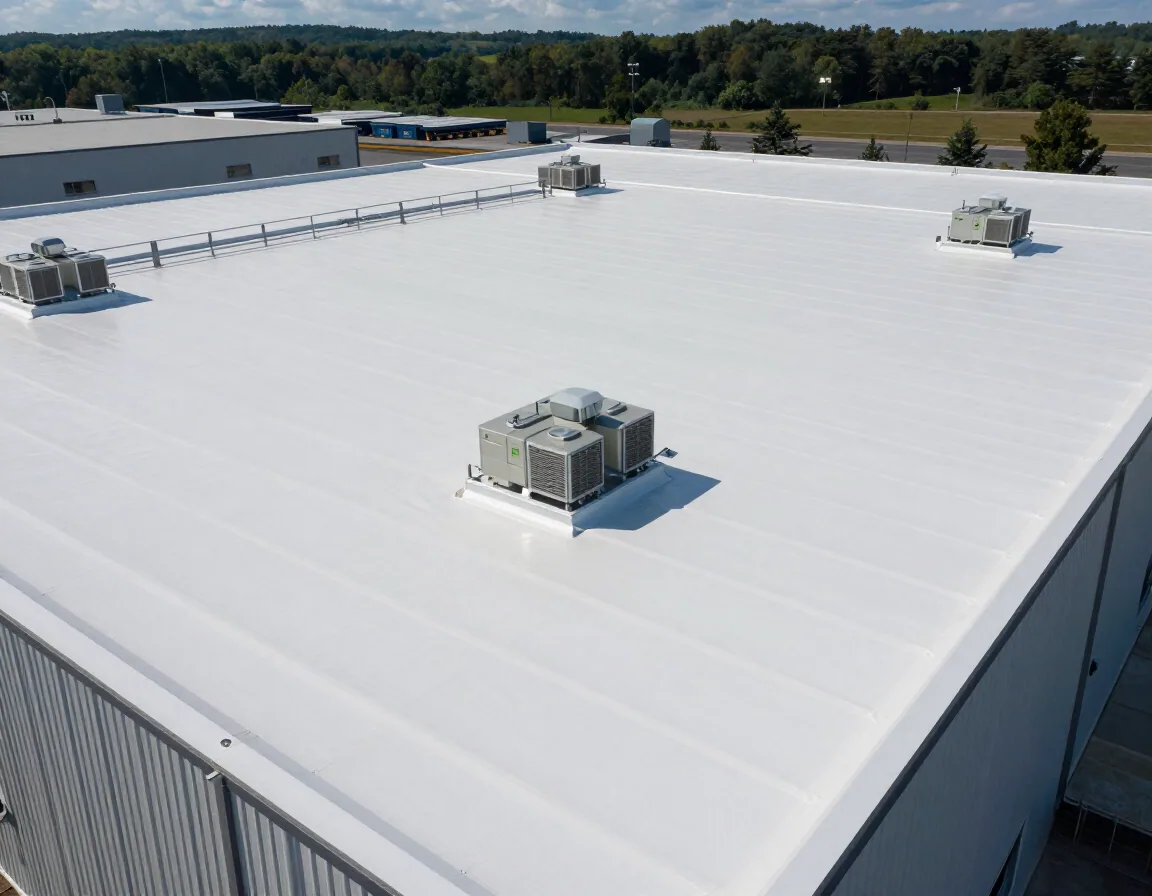
A new patch beside an equipment unit remains vulnerable if the same hard-edged stand returns to it. We identify where technicians step, place tools, and set replacement parts, then agree on a protected route and suitable equipment support. Walkway products must be compatible with the assembly and positioned so they do not dam runoff. The route should reach service points without requiring workers to step across a fragile flashing or squeeze against a roof edge.
The Northwest Industrial Subarea includes large offices, business parks, and industrial or research uses. Buildings in that area can have different mechanical access arrangements from smaller properties in the Gothard Street employment district. We examine the property's actual service pattern and any recurring damage locations. Corrections to rooftop supports and curbs can address a contact point that would otherwise damage the repaired membrane again, with the equipment trade involved where movement is required.
Can the puncture be closed during the first visit?
A dry, accessible opening with sound material nearby can sometimes receive permanent repair during the initial visit. Moisture, uncertain membrane identification, concealed damage, or unsafe access can require temporary protection and another step. We explain which condition affects completion and what the return visit will accomplish. A temporary covering is secured in a way appropriate to the roof and weather, and the work record states its location and required permanent action.
Warm, dry offshore Santa Ana conditions can change roof access and material handling along the coast. We check the forecast, wind, and product application requirements before committing to an exposed opening. Interior protection also needs a clear boundary below the repair, particularly near electrical equipment or occupied workstations. Our emergency response remains available during nights, weekends, and holidays; the site contact provides access and operating restrictions so the first visit can address the immediate risk safely.
What should a completed puncture repair show?
The completed record identifies the opening, membrane material, preparation, repair components, and any insulation or substrate removed. Close and wider photographs locate the patch beside permanent roof features. We also record the observed cause when it is supported by the inspection, and any protection added to the service path. A return check can examine the same edge after rain or equipment service, keeping the next visit focused on the repaired detail.
Several punctures across unrelated roof areas may require more than a collection of patches. We compare the membrane condition, maintenance routes, moisture findings, and attachment before recommending a wider scope. Maintenance of roof service paths can revisit vulnerable contact points and clear debris before it creates another opening. Share the affected roof area and interior report, including recent equipment work if known, so the inspection can determine both the repair extent and the practical protection needed afterward.
Commercial Roofing Questions
Should we pull a screw out of the membrane before you arrive?
Keep workers clear of the opening and record the position safely. Removing an embedded object can enlarge damage or expose an active water route. We examine the object and surrounding material, then remove it as part of a repair or protection step that can close the opening.
Will a patch hold if the old membrane has an earlier coating?
The coating and underlying membrane need identification before the bond method is chosen. We check adhesion, compatibility, and available sound material. Preparation may require removing an incompatible repair layer or enlarging the working area so the new detail connects to a suitable surface.
Why inspect inside when the roof hole is already visible?
Interior observations help establish whether water has affected occupied space and where protection belongs. We also examine the concealed assembly when moisture or substrate condition could change the repair. Closing the visible hole alone would leave wet insulation or another damaged layer untreated.
Can walkway pads cover the puncture instead of patching it?
Walkway protection belongs over an intact roofing assembly and must allow drainage. We repair the opening and address affected underlying material first, then select compatible traffic protection. Its placement should lead technicians toward service points while leaving the patch and nearby outlets accessible for later examination.

Proudly Serving Huntington Beach and Nearby Cities

Commercial Roofers Huntington Beach
Huntington Beach, Westminster, Seal Beach, Fountain Valley,
Garden Grove, Newport Beach and nearby Orange County cities