
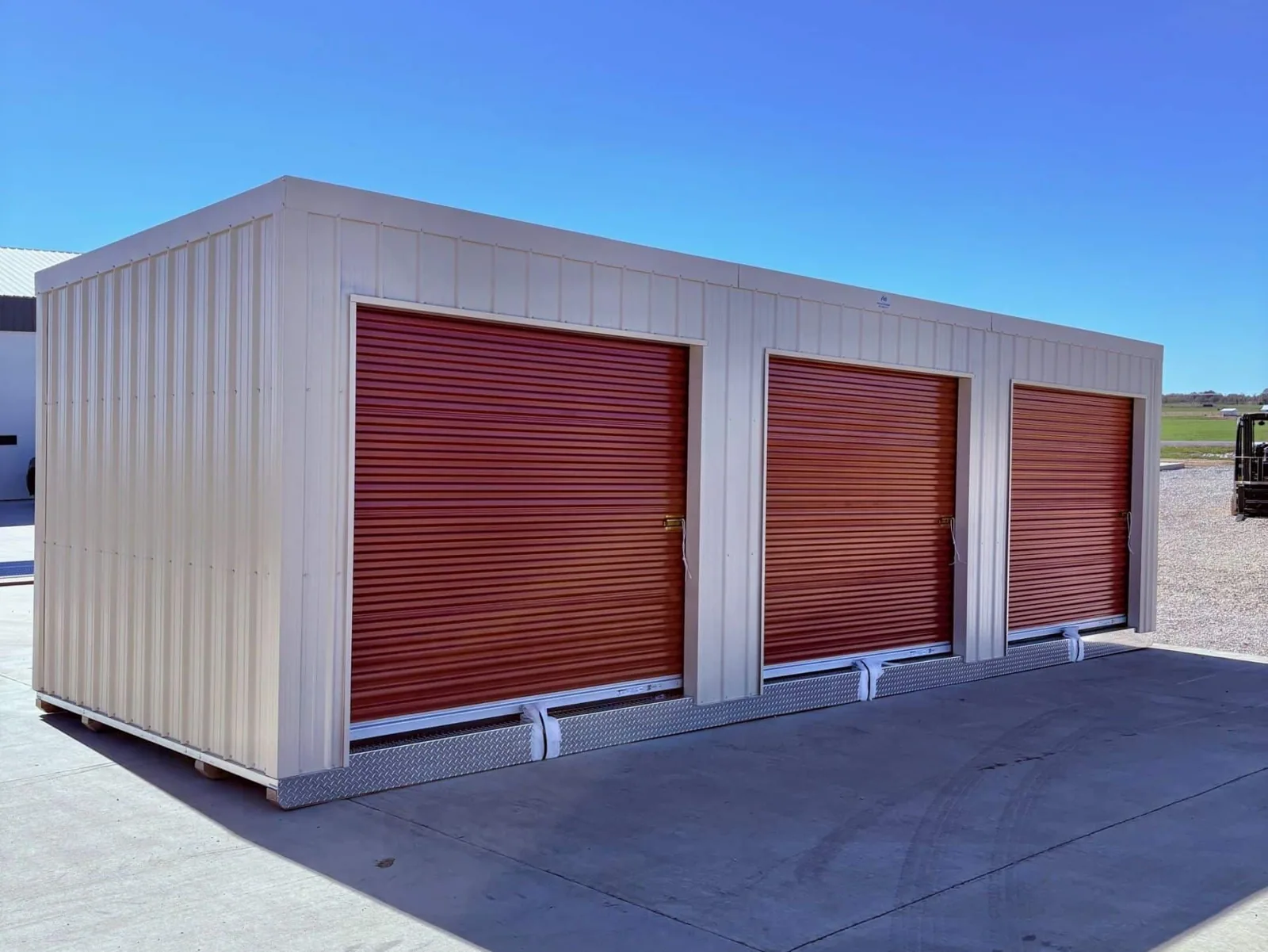
Self-Storage Roofing in Huntington Beach, CA
A wet unit needs its own roof position, even when the office has reports from several tenants. We begin self-storage roofing in Huntington Beach, CA by matching the affected unit numbers to the building plan and checking whether water is entering through the roof, a wall junction, or a doorway. The manager identifies safe access to stored contents while we establish an inspection route above. Interior protection comes first where belongings or electrical equipment are exposed.
Commercial Roofers Huntington Beach repairs and replaces roofs on storage facilities with attention to tenant movement, locked spaces, and separate building rows. A single office report can conceal different conditions across the property. We separate active entry from older staining, mark the affected roof boundaries, and explain which openings need immediate closure. Emergency calls are answered day and night, including weekends and holidays, with access and weather conditions setting the first field step.
Which unit numbers belong to the same roof problem?
Repeated stains along a partition line can point toward a shared water route, but the inspection needs more than the unit list. We examine seam direction, roof slope, gutter outlets, wall transitions, and penetrations relative to each report. On a metal building, water can travel along a panel lap or supporting member. On a membrane roof, wet insulation can distribute moisture beyond the visible opening. We photograph the roof position and the corresponding interior symptom before setting the repair extent.
Drive-up units and enclosed corridors require different access arrangements. For drive-up storage, the manager can identify a protected work zone outside the affected doors. Interior corridors need a route that keeps tenants clear of wet flooring and overhead work. Conditions shared with warehouse roofs protecting stored goods make moisture boundaries important, while an attached office roof needs its own inspection if the assembly changes at the connection.
Where will the next winter rain collect?
Newport Beach Harbor records most normal precipitation in the cooler months and very little during summer. That nearby coastal pattern makes the dry interval useful for examining clogged gutters, damaged downspouts, and membrane connections before winter rain returns. We follow each drain path to its discharge and identify restrictions near doors or circulation lanes. Clearing debris is only part of the work if a sagging gutter or low roof area continues to hold water.
Beach Boulevard and Edinger Avenue carry commercial frontage in Huntington Beach. For a storage property using an arterial entrance, delivery staging and customer access need a confirmed separation before roof materials arrive. We plan work at the property itself, then relate outlet and drainage corrections to its circulation plan. Discharge that crosses a tenant walkway needs attention alongside the roof defect. Changing roof slope or drainage capacity can require design review rather than a larger sealant patch.
Can the existing roof remain under a new surface?
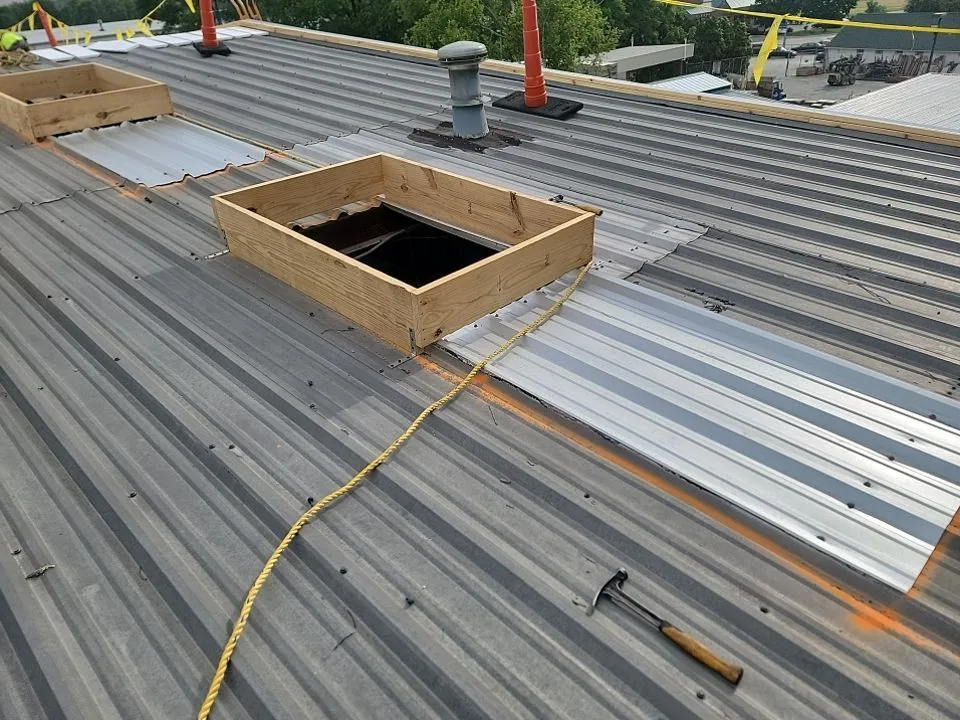
Wet insulation, weakened decking, and loose attachment change the answer before a coating or overlay is priced. We identify the existing assembly and inspect representative problem areas, then use test openings where concealed condition will decide what remains. A metal panel with an isolated failed fastener seal calls for a different correction than a panel with deteriorated laps or damaged support. The proposal should distinguish material repair from work needed to correct the receiving structure.
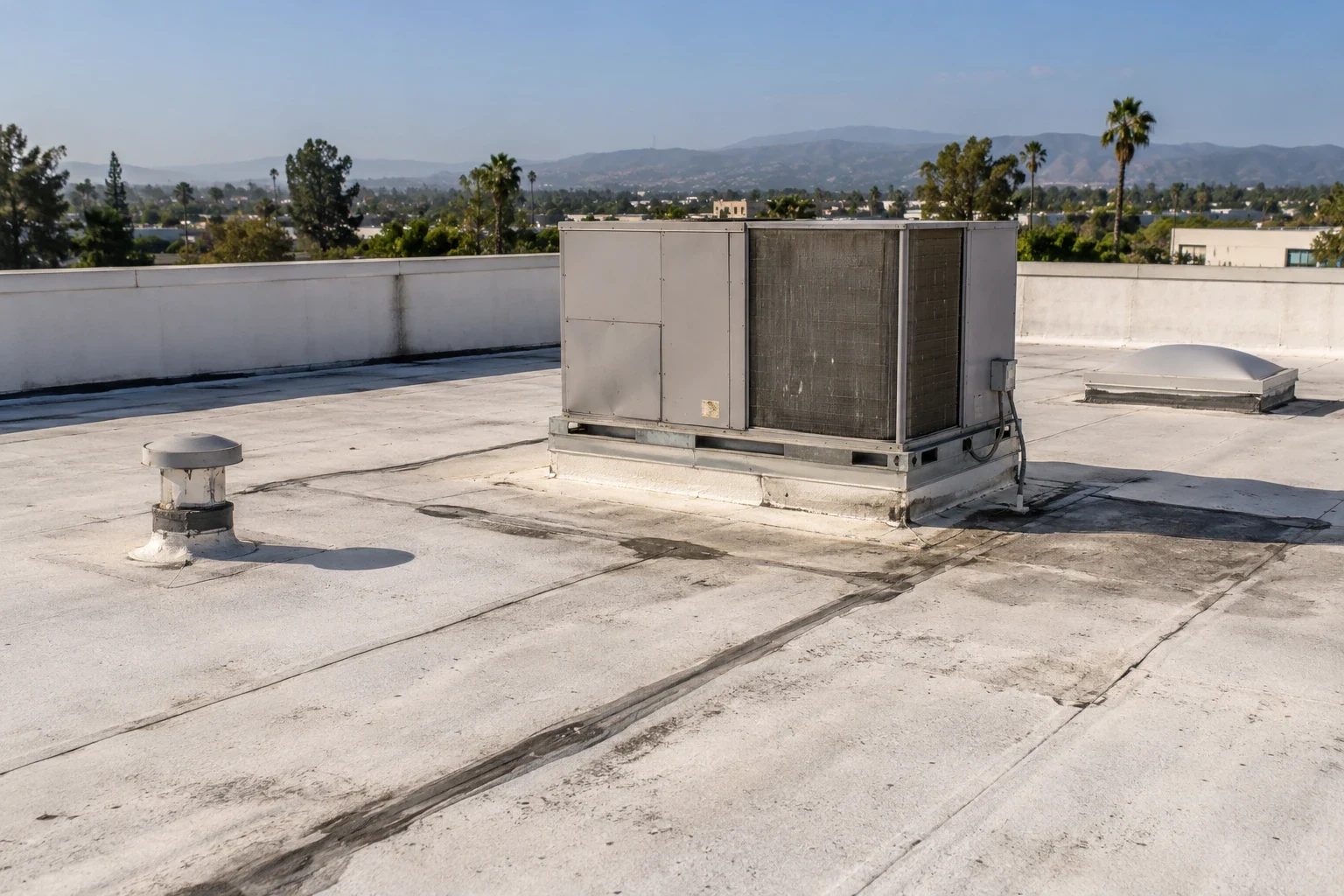
A suitable metal roof retrofit can renew a sound roof after failed details are addressed. A membrane recover requires dry, stable retained layers and adequate flashing heights. Full removal becomes useful when concealed wet material or repeated detail failure would be carried into the new assembly. We compare these choices by removal extent, access disruption, preparation, and future maintenance. A low initial scope loses its advantage if it leaves the reason for recurring leaks untouched.
Climate-controlled storage adds another assembly question: where warm, moist air meets a cooler surface. We examine insulation continuity and visible air leakage at transitions when condensation is suspected. More insulation alone does not close an air path around a wall or penetration. Any proposed change should account for the indoor conditions, ventilation, and existing vapor control. We coordinate those findings with the building team so the roofing scope addresses the water mechanism and leaves mechanical adjustments assigned to the appropriate trade.
How can roof work leave storage access usable?
A closed drive aisle affects more than the unit directly below the repair. We review gate hours, vehicle turning space, tenant appointments, and loading areas with the site contact before establishing the work zone. Materials and removed debris need a route that stays outside customer movement. For a tear-off, the daily opening is limited to what can be protected and closed within the available weather window. The manager receives the affected row and access restrictions before work begins.
The Gothard Street Subarea contains manufacturing, warehousing, auto repair, and offices, making commercial access a useful planning consideration for nearby properties. At a particular storage facility, we check its actual yard and entrances before placing equipment. Roof replacement over occupied space also requires a plan for dust, vibration, and any interior access. Tenants should receive building-specific directions from management, including which doors remain usable and where temporary restrictions end.
What should the manager keep after the repair?
Repair quantities grow with wet material removal, difficult roof transitions, restricted staging, and the number of separate work areas. We show those drivers in the scope so the manager can compare a localized correction with a row-wide project. Photographs identify the removed defect and completed tie-in; a roof plan connects the work to the unit reports. Any area still needing a tenant appointment or a concealed-condition check stays clearly listed for the return visit.
A building-by-building condition record helps separate maintenance on one row from replacement planning on another. Keep the repaired unit numbers, photographs, materials, and drainage observations together. After rain, management can report whether the original units stayed dry or whether a new symptom appeared elsewhere. That comparison guides the return check and avoids enlarging a repair based only on an unlocated tenant complaint. During later equipment work, use the same roof plan to protect completed details.
Commercial Roofing Questions
Do we need to open every storage unit for a leak inspection?
Start with the reported units and adjacent areas needed to trace the water. We coordinate those appointments with management and expand interior access only when the findings justify it. Roof observations can reduce unnecessary entry, but concealed moisture or a shared partition route may require another unit check before the repair boundary is settled.
Can a long row of metal units be coated without replacing panels?
Sound panels and connections can support restoration after damaged fasteners, laps, and flashing are corrected. We examine metal condition and coating adhesion requirements first. Perforation, weakened support, or moisture trapped in the assembly requires additional work; applying a surface over those conditions would leave the underlying problem in place.
Why did water appear in a unit during dry weather?
The timing directs the inspection toward retained rainwater, condensation, plumbing, or another building component. We compare the report with roof drainage and interior conditions, then identify the next useful test. A condensation issue needs attention to air movement and the assembly, rather than repeated patches at an intact roof seam.
Should roof replacement include the gutters between storage rows?
Gutter condition belongs in the replacement assessment because roof work changes the nearby edge details. We check attachment, corrosion, slope, and outlet capacity, then separate repairable lengths from replacement needs. Keeping a deteriorated gutter can leave the same discharge problem after the new roof is finished.

Proudly Serving Huntington Beach and Nearby Cities

Commercial Roofers Huntington Beach
Huntington Beach, Westminster, Seal Beach, Fountain Valley,
Garden Grove, Newport Beach and nearby Orange County cities