
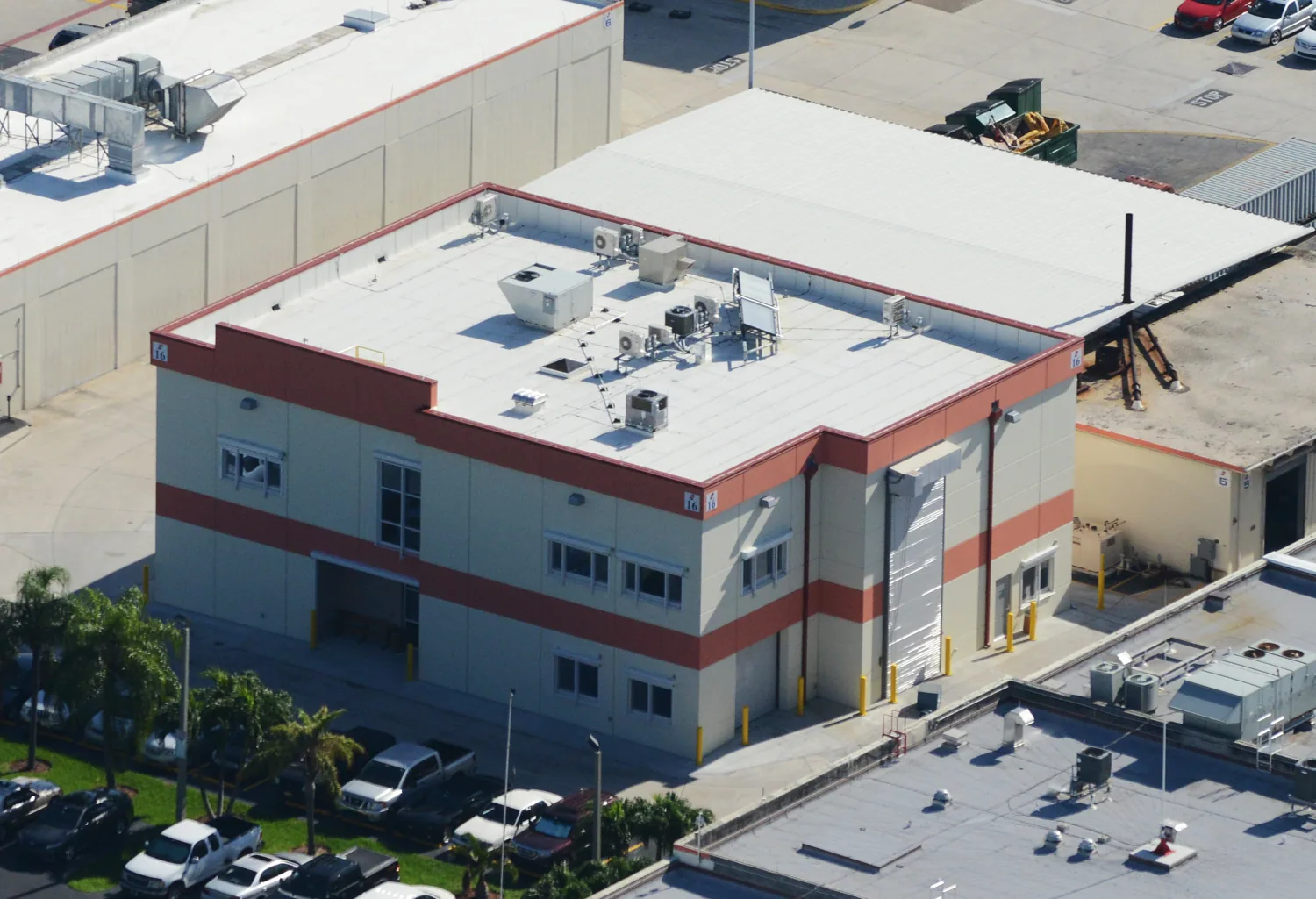
Coast Guard Facility Roofing in Huntington Beach, CA
A roof leak above cutter-support work needs an operating contact who can identify the affected equipment and safe work boundary. We start with interior protection and a permitted roof inspection, then determine how the repair can proceed without interfering with the support activity. Commercial Roofers Huntington Beach provides low-slope and metal roofing services for Huntington Beach, CA and surrounding service areas. A Coast Guard project requires a building-specific access plan alongside the roof investigation.
U.S. Coast Guard Base Los Angeles/Long Beach is on Terminal Island in San Pedro and serves as a cutter homeport. Its maintenance-building context makes roof protection over support work a practical regional need. The affected building may involve workshop equipment, stored parts, offices, or service circulation as confirmed by the project contact. We use that information to establish the interior restriction and the exterior repair boundary before selecting a material or scheduling removal.
Which maintenance task is exposed to the water?
The interior report should identify the work area, time of the leak, nearby electrical equipment, and any ceiling movement. Personnel stay clear of sagging material and electrical hazards while the designated facility staff arrange protection. We compare the location with roof drains, equipment openings, and wall transitions. An equipment operator may need to release a work area before a ceiling examination or overhead repair can begin.
A workshop roof can carry exhaust equipment or service penetrations that affect the repair route. We check each opening near the reported area and identify the trade responsible for any equipment disconnection. For roofing above active maintenance processes, dust and debris control belong in the removal method. A military support warehouse needs a different interior plan for parts and stock movement. We confirm those distinctions in the affected building rather than presuming a common shutdown arrangement.
What needs examination at the roof perimeter?
A loose coping joint can admit water behind a wall even when the membrane field appears intact. We examine joints, fasteners, sealant, and the membrane termination at the perimeter. Metal deterioration is recorded by component and condition, with attention to exposed backing and connections. A repair that stops at the visible joint may leave the water route open behind it, so the detail is assessed as a connected assembly.
At a coastal support building, actual exposure and material condition guide corrosion work. We check coating breakdown, compatible metal connections, and drainage before specifying replacement. The coastal setting does not establish uniform damage across every component. Perimeter metal repair may involve replacing deteriorated pieces and correcting their tie-in to the roof, while sound adjacent pieces can remain if the specified assembly allows that transition. The scope identifies both the removal limit and the final attachment detail.
How can drainage interfere with a support building?
A roof outlet that drains slowly can increase exposure at laps, curbs, and temporary terminations. We check the outlet opening, surrounding slope, and water marks for the actual route. An obstruction, damaged drain flange, and broad low area require different interventions. Removing debris is useful, but it will not correct a membrane transition that rises across the flow path or a drainage layout that leaves a persistent basin.
Newport Beach Harbor provides a nearby coastal reference with normal rain concentrated in winter and minimal summer precipitation. That pattern helps plan roof preparation serving Long Beach and Huntington Beach, while the project forecast sets the daily exposure limit. Before rain, temporary closures need a route for runoff and a secure connection to existing roofing. We also check whether drain work would affect an interior pipe or occupied area that requires coordination with the facility's plumbing staff.
Which assembly condition changes the repair decision?
Dry, securely attached roofing around a puncture can support a compatible patch. Saturated insulation, deteriorated curb backing, or a weakened fastener location expands the required work. We inspect enough surrounding material to establish a stable tie-in and explain the repair extent to the operating contact. Where testing is needed, the proposed opening has a purpose: resolving moisture, layer count, attachment, or the supporting condition beneath the failed detail.
Restoration can extend serviceability where preparation and the coating system suit the existing roof, but it does not remove wet concealed layers. A recover similarly needs an assessment of the existing assembly, attachment, added height, and drainage. For a full replacement, equipment curbs and insulation transitions need coordinated heights and details. We compare these choices in terms of the observed roof condition and the amount of support-space disruption each phase requires.
Coast Guard roofing specifications may include federal design criteria, project drawings, and inspection requirements. The responsible reviewer confirms the applicable assembly and any proposed change. We present existing-condition conflicts with the necessary repair information before departing from approved materials or details. Product installation requirements still govern preparation, fastening, seams, and curing at the roof.
What keeps roof work within the support shift?
An approved roof access window needs room for setup, safe material movement, installation, and closure. We establish staging and debris routes with the site contact, keep operational circulation clear, and agree on any short interruption near the work area. The removal phase is sized to the amount that can be sealed before entry or overhead access ends. A partial closure is recorded as temporary protection with a defined follow-up action.
Hot, dry offshore winds during a Santa Ana event can alter material handling and work conditions. We check gusts before lifts and secure lightweight materials during the shift. Roof phasing above occupied support spaces also considers air intakes, odor, and vibration where they affect the active building. A changed support schedule can require a different removal zone or another work period; the roof is protected before that shift in sequence is made.
What should the support team receive after closure?
We provide a work record tied to the building and identifiable roof features, using only the photographs and information handling permitted for the project. It describes repaired seams, flashing, metal, and drainage details, along with the materials installed. A roof repair condition report keeps remaining observations separate from completed work so facilities staff can plan the next inspection without repeating the same uncertainty.
The handoff identifies any temporary measure, who will monitor the corresponding interior area, and which condition triggers a return visit. For permanent work, we compare the closure and drainage details with the specified requirements before releasing the roof zone. Roof emergency assistance can be arranged during nights, weekends, or holidays through the authorized access contact. The response starts with the affected function and safe protection, then develops the permanent repair after the roof condition is established.
Commercial Roofing Questions
Can roof removal continue while equipment maintenance is underway below?
The facility contact and the work method set the permitted overlap. We assess dust, vibration, falling-debris protection, and equipment sensitivity, then propose a restriction or separate roof phase where needed. Active work below is confirmed before each overhead removal period.
Does a coastal building need all of its metal replaced?
Component condition determines the scope. We examine coating breakdown, joints, fasteners, and connections, then distinguish pieces suitable for repair from those requiring removal. The membrane tie-in and supporting material are checked at the same time.
How can a drain repair be scheduled without disturbing the workshop?
Start with the drain location and interior pipe route. We coordinate any access to the space below with facility staff, protect the affected area, and select a work interval that allows the drain connection and roof flashing to be completed together.
What information helps you respond outside the normal support shift?
A current interior report, building identifier, roof plan, authorized entry contact, and operating restriction help prepare the response. Identify equipment or electrical exposure early so the first visit can concentrate on safe protection before permanent work is priced.

Proudly Serving Huntington Beach and Nearby Cities

Commercial Roofers Huntington Beach
Huntington Beach, Westminster, Seal Beach, Fountain Valley,
Garden Grove, Newport Beach and nearby Orange County cities