
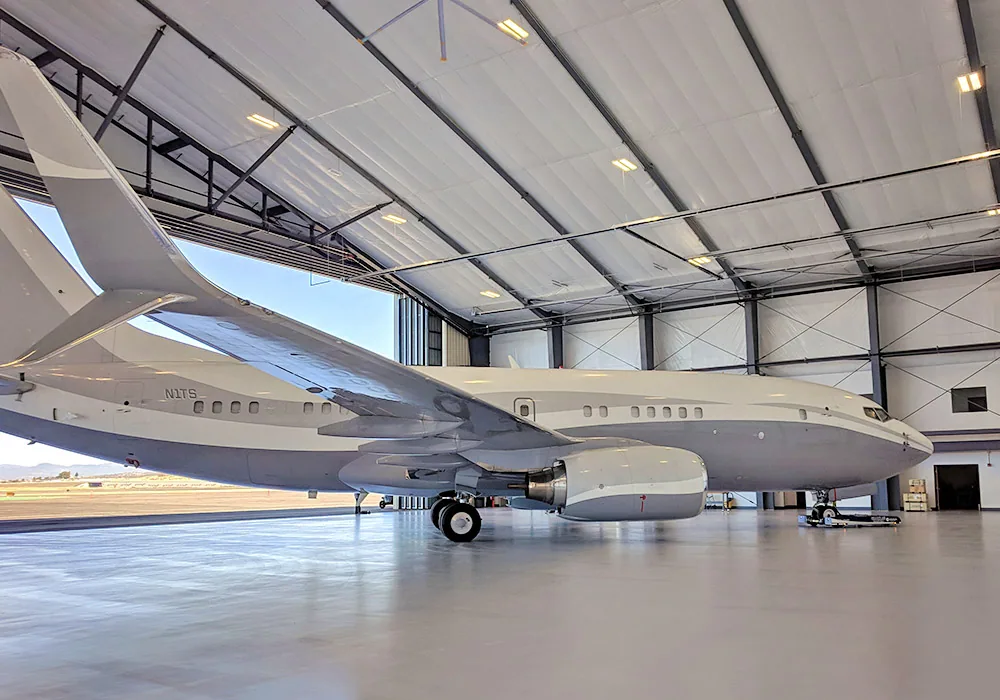
Military Hangar Roofing in Huntington Beach, CA
A drip above an aircraft maintenance position needs the aircraft protection and roof inspection planned together. We identify the affected bay, overhead hazards, and permitted access before moving material or opening the assembly. Commercial roofing services serving Huntington Beach, CA include metal repairs, membrane work, moisture investigation, and replacement. For a military hangar, the aircraft movement schedule and the authorized roof route are part of the repair decision.
Joint Forces Training Base Los Alamitos is an active airfield with hangars, flightline pads, and aviation-fuel infrastructure identified in its installation plan. That setting makes aircraft movement and loose-material control relevant to roofing coordination. We obtain the actual hangar drawing and operating instructions from the project contact, then match the reported interior location with roof panels or membrane, gutters, penetrations, and wall transitions. The first inspection remains within the authorized area and avoids interference with flightline operations.
What has to move before overhead work starts?
An aircraft or maintenance platform beneath the removal area can restrict the roofing method. The facility team determines aircraft movement and protects equipment through its operating procedures. We define the roof work zone and anticipated debris path so that team can assess the required clearance. A bay may need to be released for only one phase, but the safe boundary must account for material handling and potential falling objects as well as the repaired detail.
Hangar roof repairs require care at doors, tall elevations, and overhead service space where present. Maintenance-process roof work also involves equipment penetrations and ventilation coordination. We inspect the actual roof geometry rather than selecting a removal method from the building label. Any crane, lift, or staging near an aircraft route is approved with the operating contact before mobilization, including the time needed to move equipment clear.
Which roof joint is admitting water into the bay?
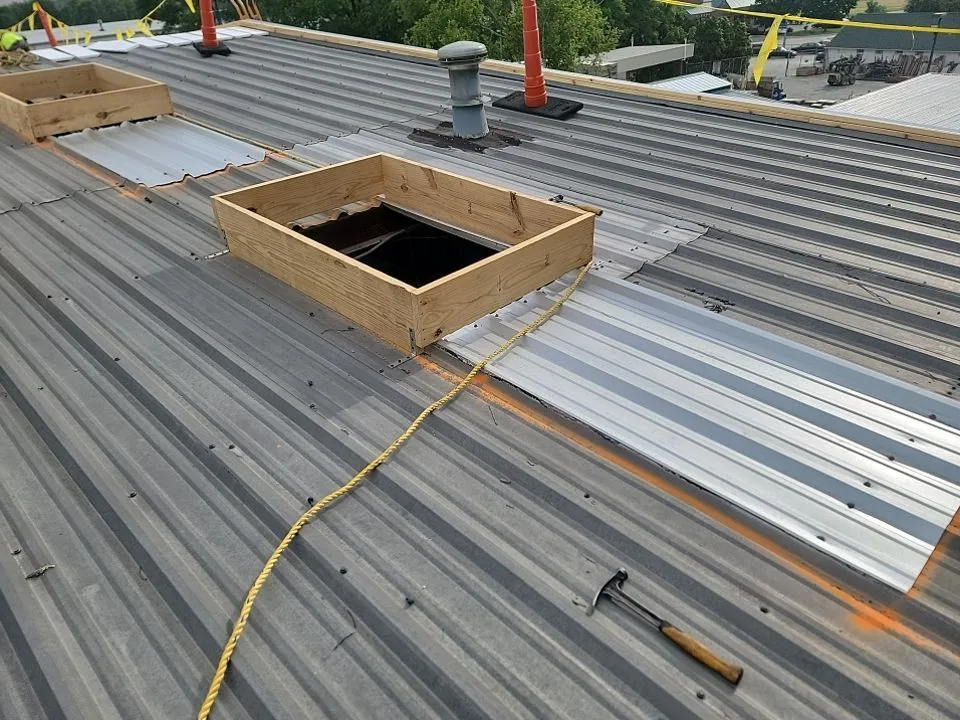
Water on a beam or overhead fixture may have traveled along a metal panel connection before reaching the maintenance area. We examine panel laps, fastener locations, closures, penetrations, and transitions to gutters or adjacent membranes. Sealant deterioration is recorded separately from loose attachment or corrosion. A surface treatment alone may be inadequate where movement has opened the connection or the supporting material can no longer hold the specified repair.
For a membrane roof, we check seams and equipment flashings against the observed water route. The inspection marks the suspect area to the hangar drawing and identifies where permitted testing would change the scope. Penetration flashing repair connects the opening detail to the field roofing and supporting curb. Work near large doors also needs attention to the roof-to-wall connection, with a repair detail that accommodates the existing geometry rather than leaving a concealed transition unresolved.
How will roof access fit the airfield schedule?
The available access window may exclude aircraft movements, maintenance tasks, or a restricted operating period. We confirm that calendar along with badging, escorts, vehicle access, photography, and delivery screening. Loose materials are controlled during transfer and staging, with the approved debris route established before removal. The crew checks the work area at the end of the shift so fasteners and scraps do not remain outside containment.
The Northwest Industrial Subarea in Huntington Beach includes industrial and research-technology uses alongside offices and business parks. Those varied functions provide a nearby commercial context for equipment and delivery coordination, while military airfield work follows the installation's own operating direction. We assign lift locations and material arrival times to that direction. If the operating schedule changes, the roof phase is adjusted before more material is removed, preserving a clear closure boundary and safe equipment clearance.
Can the existing metal or membrane be retained?
A localized failed lap or flashing can permit repair where adjacent material remains suitable. We examine the panel or membrane, its supporting connection, and the moisture condition below before proposing that approach. Deteriorated fastener locations or wider corrosion may require panel or detail replacement. The proposal identifies the component removed, replacement material, movement allowance, and the connection to existing roofing.
A metal roof retrofit needs an assessment of the existing assembly and proposed support system, including attachment, moisture, loads, drainage, and edge conditions. Added height changes curb and perimeter relationships. For a full replacement, deck access and protection above the maintenance bay are planned before removal. Insulation and cover-board decisions are made with the selected assembly, not added later as an unrelated line item.
Military hangar specifications can include Unified Facilities Criteria and project-specific requirements for fire classification, attachment, and inspections. The responsible project reviewers establish the applicable design. We compare the observed roof condition with the specified details and submit conflicts before making a material change. The resulting scope addresses the complete connection between field roofing, penetrations, edge metal, and drainage.
What limits the amount of roof opened in one shift?
High access, complex transitions, and the route for removal can reduce the area that can be closed during a shift. We include those tasks in the phase size along with insulation and seam work. A temporary termination must connect to sound existing material and preserve runoff while the next phase remains closed. The facility contact receives the status of any interim detail and the next available work window before the bay is released.
Newport Beach Harbor normals show winter-concentrated rainfall and almost no normal summer rain, which supports seasonal preparation planning near Huntington Beach. Actual rain and wind conditions decide the daily opening. Santa Ana events can bring warm, dry offshore winds, making sheet handling and lift use more difficult. Gutter and perimeter work is phased so exposed edges are secured before a work interruption, and materials remain controlled during changing conditions.
Which checks belong in the hangar handoff?
We check completed joints, flashings, terminations, and drain routes against the specified system details. The work area is examined for loose materials before it is released under the operating procedure. Photographs or drawing marks permitted by the installation identify the repair location and any inspection result. A hangar roof condition record connects those details to the affected bay and distinguishes finished roofing from temporary protection.
The next interior observation should identify the same bay and weather condition so a return check can compare like areas. Active water entry can be reported outside the usual working day, including weekends and holidays; response is arranged with the installation's authorized access contact. Send the aircraft movement restriction, affected maintenance position, roof diagram, and current report so the first action can protect the operating space and establish a focused repair extent.
Commercial Roofing Questions
Can aircraft remain under a hangar roof repair?
The work method and authorized operating plan establish the required clearance. We define overhead exposure, debris handling, and lift needs, then coordinate with the facility team that controls aircraft movement. Removal above an occupied maintenance position proceeds only within the agreed protection boundary.
Why does a metal joint leak after a previous sealant repair?
Movement, deteriorated backing, loose attachment, or incompatible preparation can reopen the water route. We examine the entire connection before choosing another treatment. The permanent detail must suit the panel movement and connect to material capable of supporting the repair.
What does a roof retrofit change at hangar equipment openings?
Additional roof height affects curb exposure, flashing transitions, and drainage around the opening. We inspect those relationships before specifying the retrofit and coordinate any equipment modification with the responsible trade. A field membrane choice alone does not resolve those details.
How is debris controlled during restricted flightline work?
Approved containment and transfer routes are established before removal. We keep loose fasteners and scraps within the work controls, secure staged material, and check the area before release. The installation contact confirms any additional operating restrictions for that roof zone.

How we inspect, scope and complete this work

Proudly Serving Huntington Beach and Nearby Cities
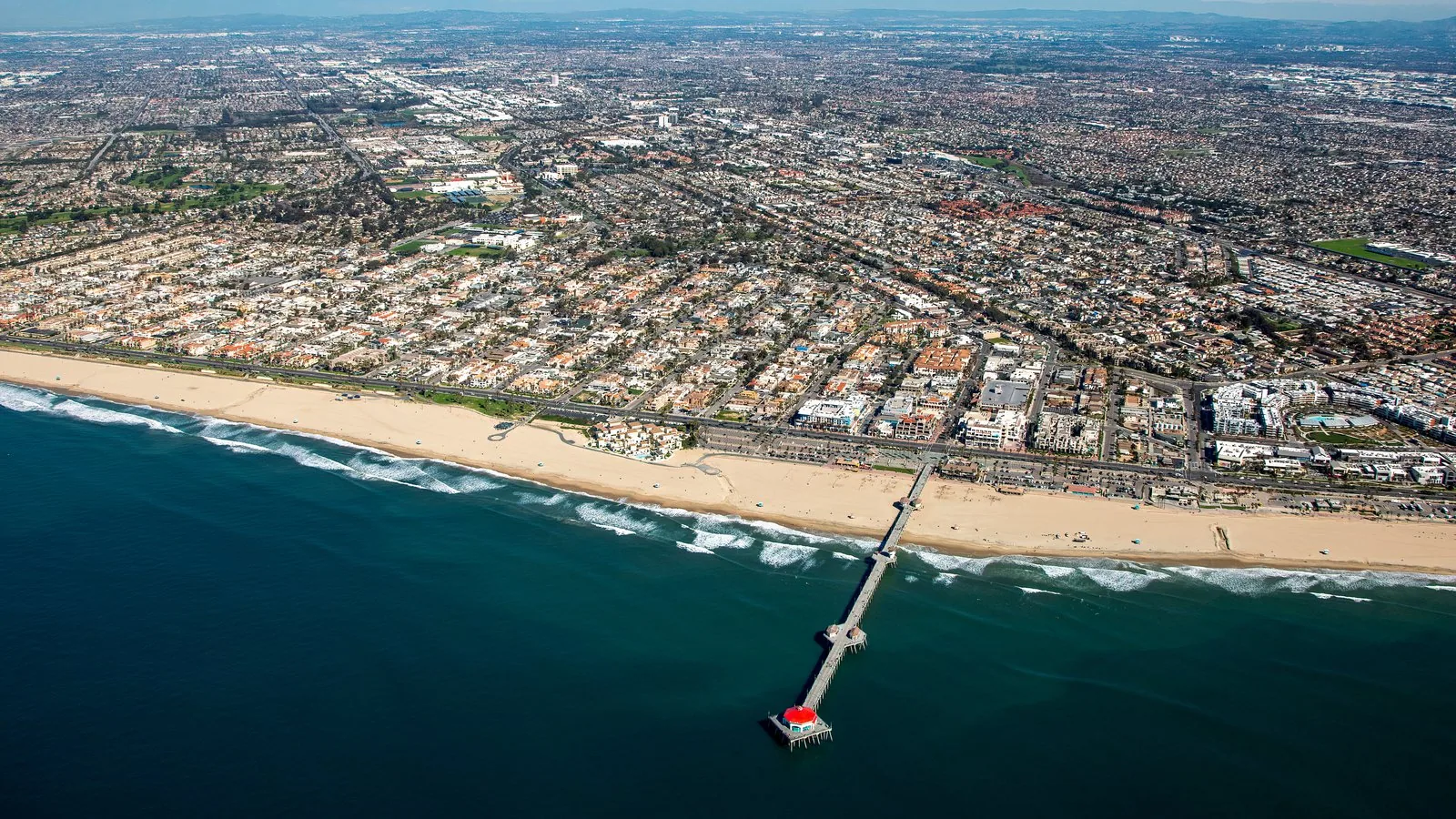
Commercial Roofers Huntington Beach
Huntington Beach, Westminster, Seal Beach, Fountain Valley,
Garden Grove, Newport Beach and nearby Orange County cities