
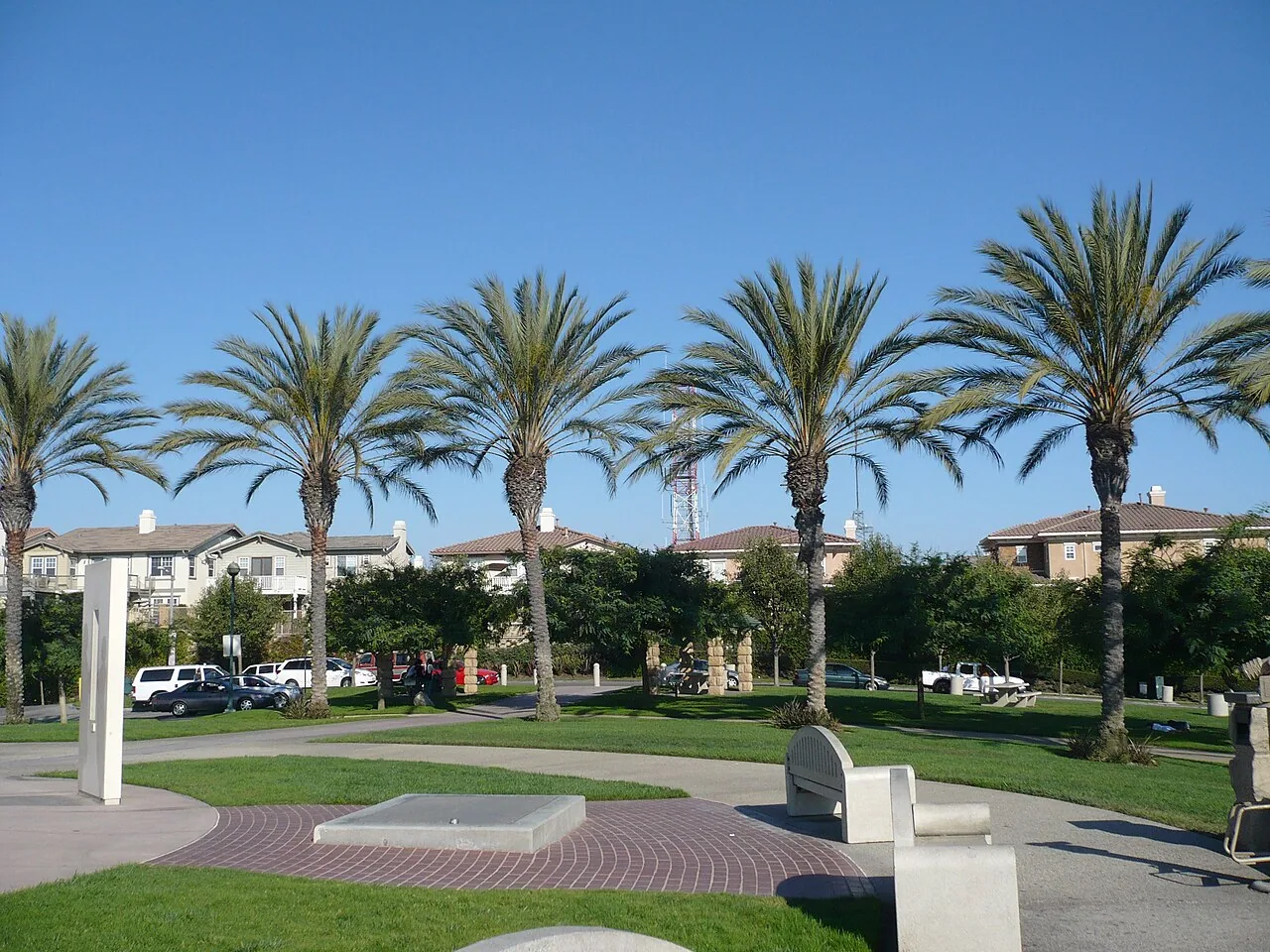
Commercial Roofing in Central Commercial-Industrial Area, Signal Hill, CA
Central Signal Hill roofing above adjoining sales and production spaces requires a separate protection review for each operation. We establish which interior space needs protection, confirm roof access, and inspect the accessible detail before setting removal limits. Commercial Roofers Huntington Beach provides commercial roof repair and renewal in Signal Hill's Central Commercial-Industrial Area. The work sequence follows the occupied building and its actual water-entry route.
The Central Neighborhood combines retail activity with manufacturing, warehousing, distribution, and service uses. Its commercial-industrial designation allows manufacturing with retail sales and warehousing with limited retail sales. That combination makes the separation between customer routes and operating space a useful starting point. From Huntington Beach, CA, we arrange a focused roof visit with the person who controls both access and the affected operating zone.
Which entrance must remain usable?
A delivery entrance next to a sales entrance needs a staging plan that keeps roof material away from people and moving equipment. We identify where a lift can stand, how debris will leave, and whether an overhead work zone requires a protected passage or a temporary closure. The site contact confirms the route before delivery. A roof access hatch inside an active workroom may need a different operating window from exterior access.
For a property with retail and production under one roof, we divide the interior consequences by work area. Dust, odor, noise, and overhead exposure can reach beyond the repair itself. An occupied-building roof sequence identifies which sections can be opened and secured without disrupting unrelated space. The permitted daily opening follows safe closure capacity, including a change in weather, rather than the amount of material delivered that morning.
What is concealed beneath the old repair?
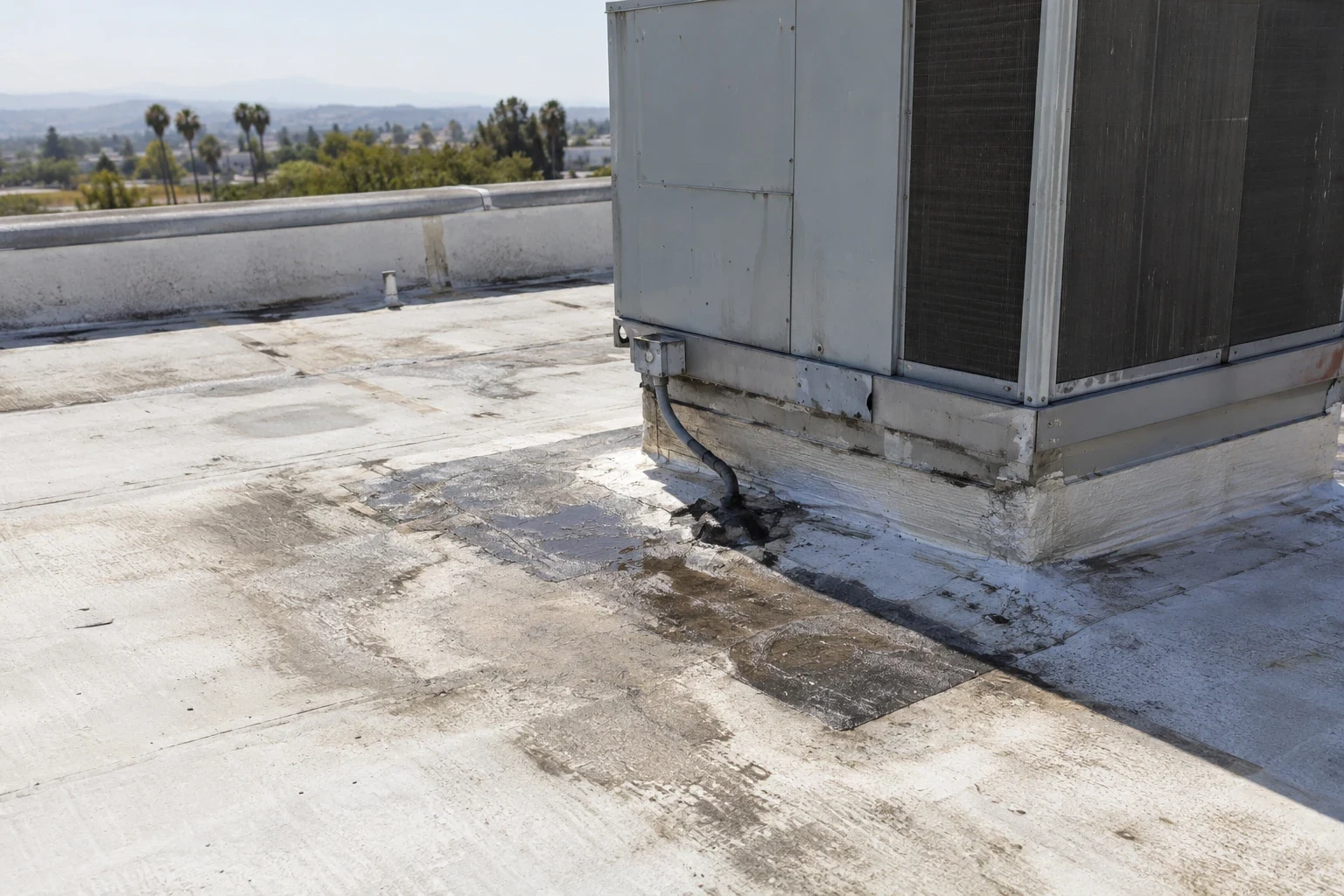
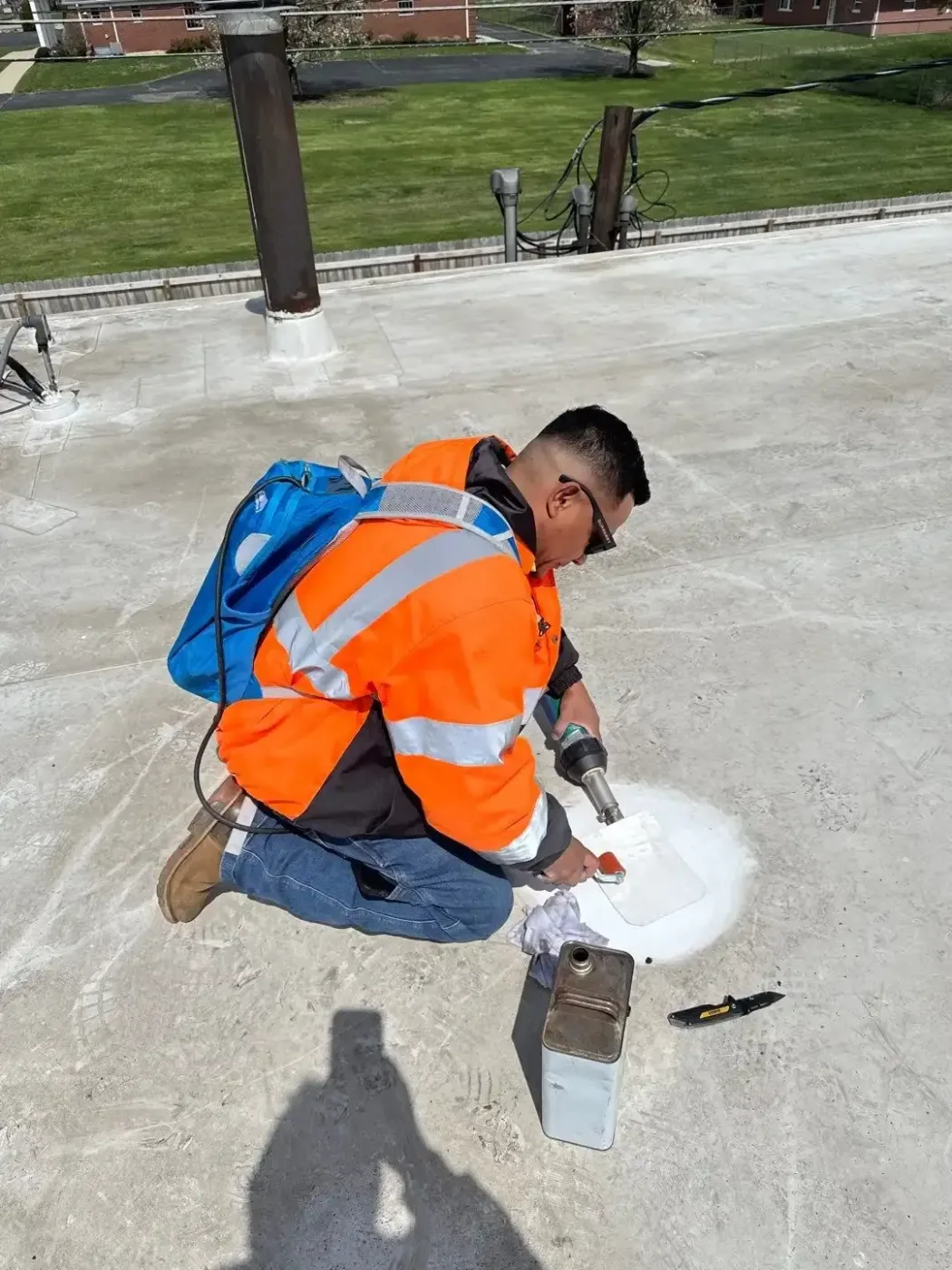
A built-up patch near a curb can hide the original flashing and moisture below it. We inspect the surrounding receiver and identify whether controlled removal is needed to establish the assembly. Loose compounds and incompatible layers must be addressed before a new connection can hold. An authorized opening can show wet insulation or a deteriorated deck surface that changes the work from local surface repair to a deeper correction.
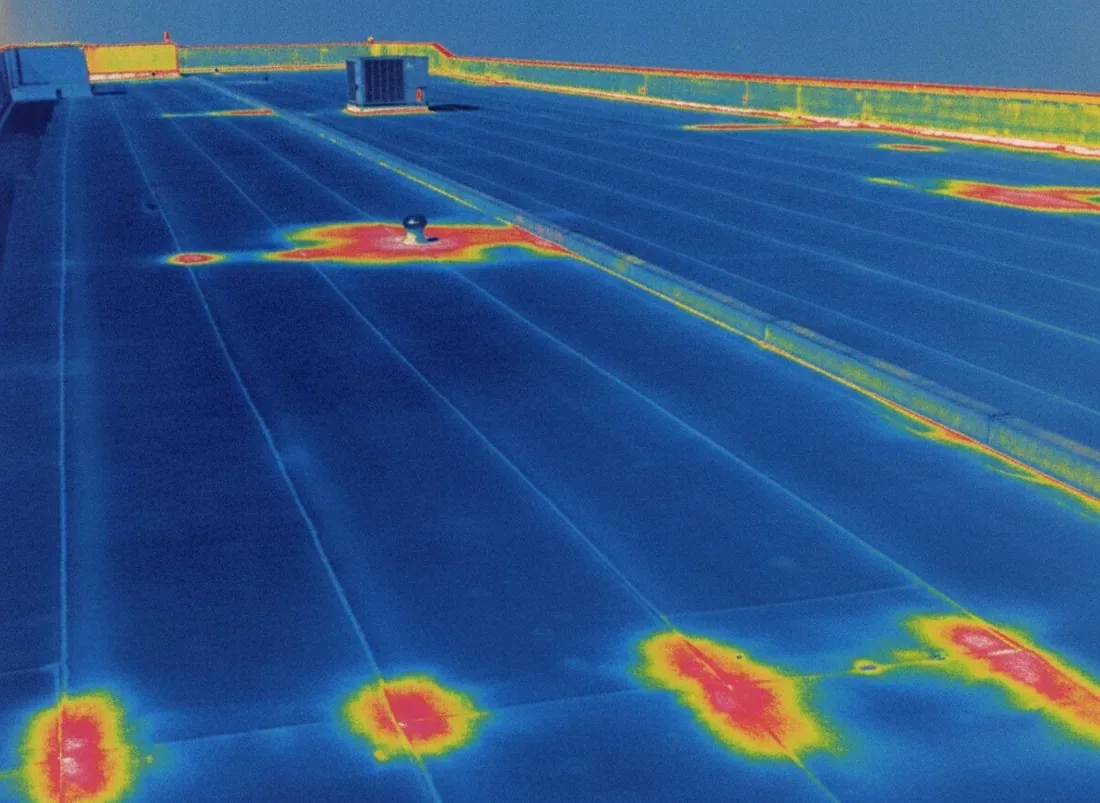
Moisture screening under suitable conditions can help target confirmation positions where the wet area remains uncertain. We connect the findings to the proposed removal limit. Dry layers with secure attachment may remain; saturated material needs a correction that reaches sound construction. Where deck condition raises a structural question, the owner can arrange the appropriate assessment before the new roofing assembly is finalized.
Which joint is actually admitting water?
An equipment curb, wall flashing, and adjacent membrane seam can be close together while failing separately. We examine each accessible transition and compare it with the interior report. A lifted top termination requires a different repair from an open field seam. The scope identifies the connection to restore, compatible preparation, and the firm surface where new material will finish. Wider patches should not conceal movement that remains unresolved beneath them.
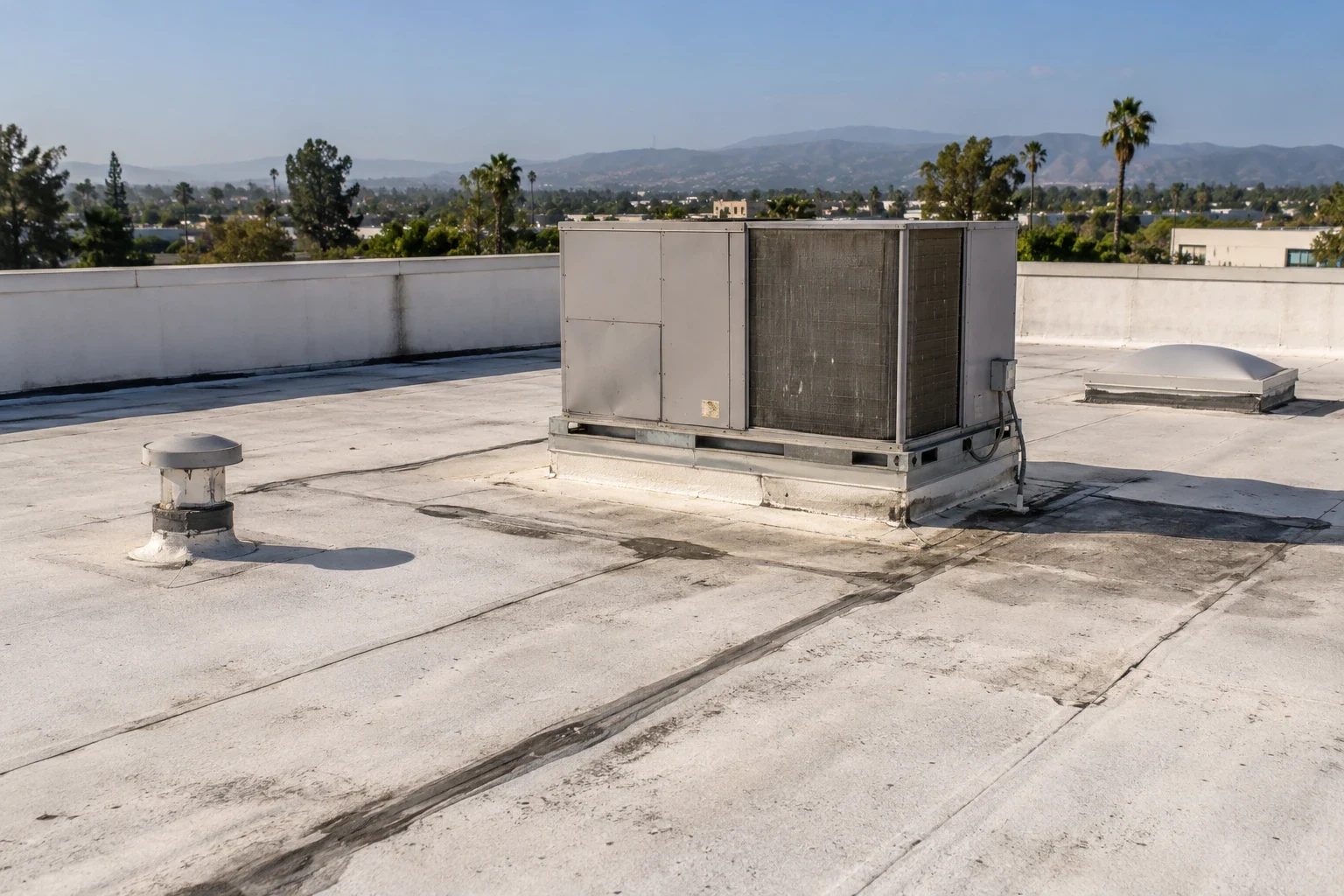
Roof service traffic can disturb support pads or drop sharp debris near equipment. We inspect those contact positions and coordinate moving equipment before completing roofing connections. For a focused leak repair, the field check should establish the repair extent and any nearby testing needed. We leave service access usable so the next equipment visit does not force a technician across a vulnerable new detail.
How does central industrial activity change project timing?
Signal Hill describes freeway access as an advantage for Central Neighborhood businesses. At the building, loading schedules and movement through the service area decide whether roof deliveries can use the same approach. We confirm the available staging position and the hours it can be occupied. The geographic access advantage does not replace an on-site check of the entrance, overhead clearance, and pedestrian separation needed for this job.
Work in the wider Signal Hill service area and the Light Industrial Area can be coordinated for the same owner while retaining separate building plans. In the central district, manufacturing and limited retail activity may need different interior protection. We place those restrictions beside the relevant roof section in the proposal. That lets the manager approve a realistic operating sequence instead of a roof-wide closure without a stated reason.
Can drainage be corrected before the wetter period?
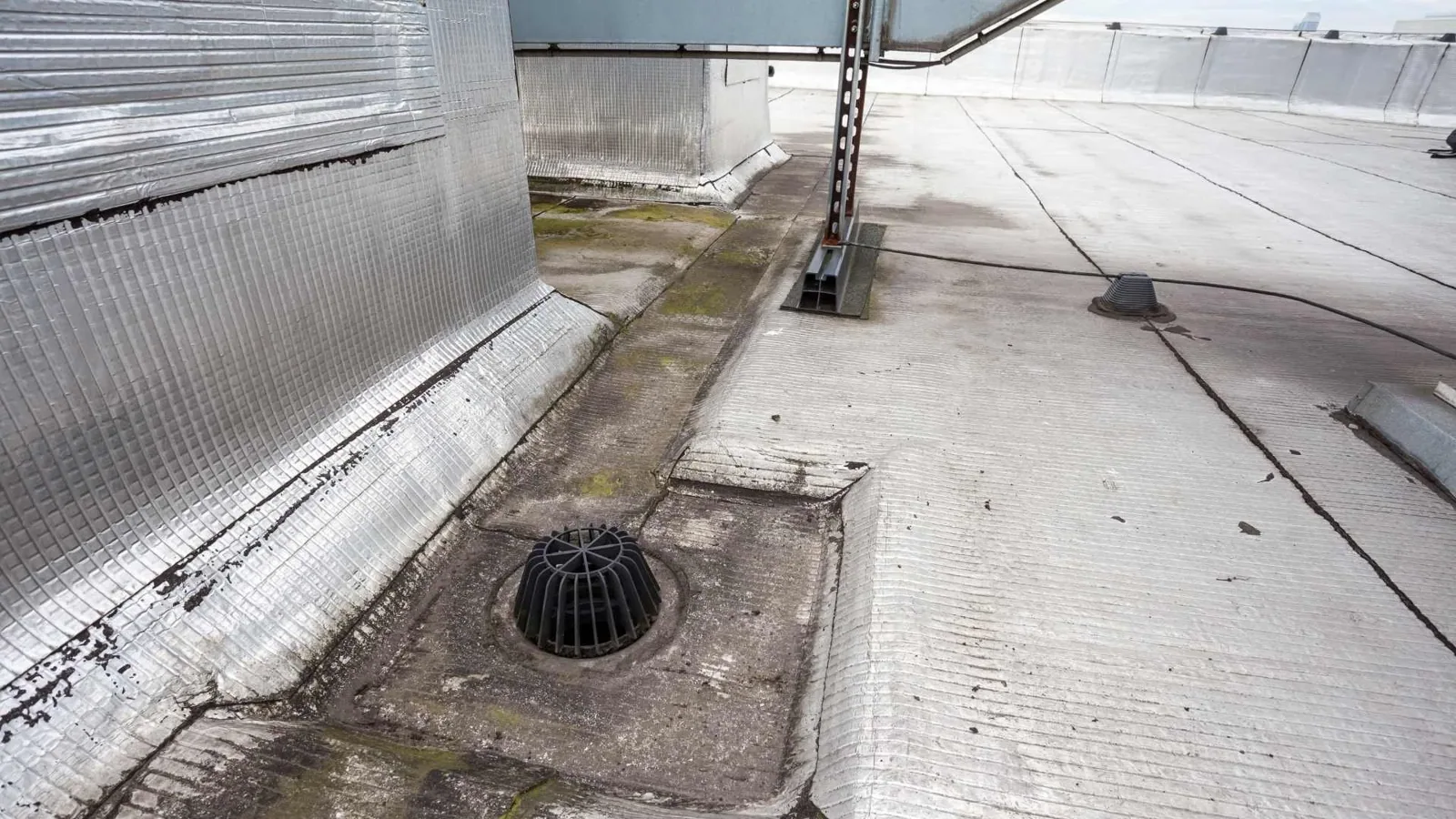
A blocked drain above stored goods should be cleared with attention to the fitting and its membrane connection. We check the bowl, strainer, clamping components, and nearby slope. If water remains after the blockage is removed, the low area needs further examination. Secondary drainage must remain open, and a temporary repair should not create a raised dam across the roof's intended water route.
At nearby Newport Beach Harbor, the normal rainfall pattern is winter-weighted, with a dry summer baseline. Those nearby conditions make advance outlet work useful, while the forecast at the Signal Hill building determines preparation and cure timing. We can pair outlet and scupper work with corrections at the adjacent membrane. During hotter, drier Santa Ana conditions, wind can change safe material handling and the amount of roof opened during a shift.
What would move the owner from repair to replacement?
Repeated defects across several areas can change the value of continued local repairs. We compare seam condition, moisture extent, attachment, and drainage with the owner's operating limits. A sound roof with a small number of failures can support a contained scope. More widespread wet layers or unstable attachment may justify removal, especially where a new surface alone would preserve the same concealed problems.
Repair cost changes with roof height, receiver preparation, number of work zones, insulation removal, and trade coordination. A larger renewal also needs decisions about material, energy requirements where applicable, and how daily work is secured. We explain those tasks before the owner selects an option. After work, photographs connect the finished detail to the original finding, and any remaining equipment or drainage item keeps its own follow-up action.
Active leaks can be reported during holiday periods, weekend shifts or overnight hours. The crew assesses a safe interim closure, then defines the conditions and return task needed to install the permanent roofing correction. A later return check should examine the same detail and compare interior observations, preserving the distinction between stopped entry and residual drying inside the building.
Commercial Roofing Questions
Can we keep the sales side open while roof work affects production?
The separation must match overhead hazards, dust, and safe customer routes. We examine the roof work area with the site contact and identify whether the sales space can remain outside it. Deliveries and debris removal may need a different entrance or a short restricted window even when the sales room itself is unaffected.
Does a thick old curb patch need to be stripped away?
Preparation depends on adhesion, compatibility, and the condition concealed beneath the patch. We remove failed material within a controlled boundary and inspect the receiver. If wet layers extend beyond that position, the permanent scope expands to correct them rather than placing another surface layer over the same defect.
How can a manager compare recurring leaks across central-area properties?
Located photographs and room reports make each incident comparable. We identify completed repairs, open equipment issues, and later changes separately for each building. That record helps determine whether a returning symptom involves one previously repaired connection or reflects deterioration at additional roof positions.
Will cleaning the outlet be included with a membrane correction?
A defined scope can include both tasks when inspection shows they are related. We specify the outlet cleaning, fitting condition, and membrane repair individually so completion can be checked. Persistent low areas or discharge defects remain separate decisions if simple cleaning does not correct the water route.

Proudly Serving Huntington Beach and Nearby Cities

Commercial Roofers Huntington Beach
Huntington Beach, Westminster, Seal Beach, Fountain Valley,
Garden Grove, Newport Beach and nearby Orange County cities